
How does a semi-automatic washing machine work?
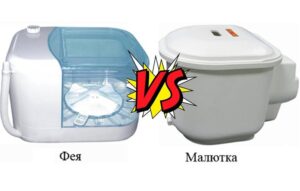
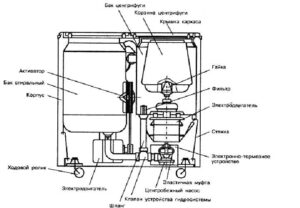 Semi-automatic washing machines, despite their less widespread use, differ quite dramatically in appearance, and the selection of models is quite extensive. However, when it comes to the design of semi-automatic washing machines, they are very similar internally. Therefore, using one model as an example, we can demonstrate the internal components of all the others. Let's consider the Fairy washing machine, with its separate centrifuge and wash tub.
Semi-automatic design
Absolutely all semi-automatic washing machines have the following components:
- belt drive system;
- body made of plastic;
- an activator that rotates clothes during washing;
- mechanical timer.
- If there is a spin function, a separate centrifuge.
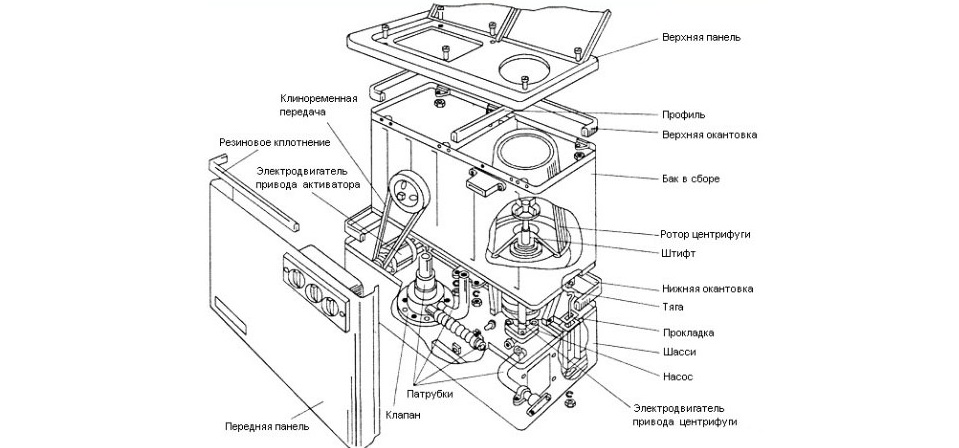
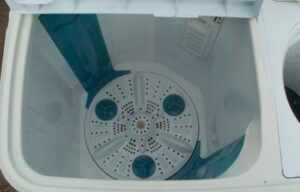
Since the Fairy is equipped with a spin function, the drum is divided into two sections: one for washing and rinsing, and the other for spinning. This means that the user first heats the water themselves (if the model has a heater, you can use cold water), then adds detergent and loads the dirty laundry.
Please note: Semi-automatic machines typically have a small load capacity (2-4 kg), but some have a 6 kg capacity. It all depends on the tank size.
The wash cycle is started by turning the timer knob. Some models have multiple modes (usually 2-3), such as standard, gentle wash, and quick wash. The main difference between the programs in semi-automatic machines is the cycle length. After washing, change the water and rinse the laundry. Now transfer the laundry to the spin compartment and turn the timer knob again to start the spin cycle. The entire wash cycle takes about 20 minutes.
Water is drained through a hose at the bottom of the machine. From the spin compartment, water either drains into a tray through a special hole or into the wash tub, where it drains with the rest of the water through a drain hose.
Advantages and disadvantages of semiautomatic rifles
No matter how simple or sophisticated a washing machine's design, both have their pros and cons. What are the advantages of semi-automatic machines?
- Lightweight, lightweight, and inexpensive. This means ease of transport and mobility. The machine can be easily moved between rooms and even taken long distances without any problem. It's lightweight and has reasonable dimensions. A semiautomatic machine is affordable for anyone of any budget.
- Reliability due to the absence of a complex electronic system and due to the simple mechanism of action.
- No problems with connecting to utilities; no need for a separate network, plumbing, or water supply.
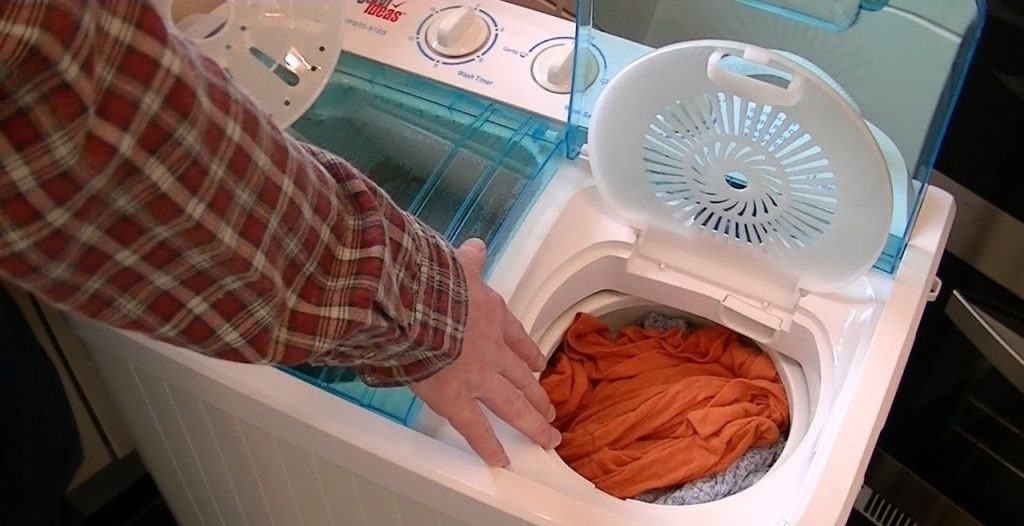
- Easy to operate and intuitive.
- Overall time savings when doing laundry.
However, there are plenty of disadvantages too. Previously, people didn't consider them because they didn't see a better alternative, but now these factors can be a deterrent to discerning homemakers.
- Small capacity. While small items can be washed in several batches, large blankets and thick down jackets will have to be washed and wrung out by hand.
- Low spin speed. Although some semi-automatic models have decent spin speeds.
- Lack of a wide range of modes and, as a result, the ability to wash delicate fabrics and items.
- The drainage system is imperfect. After spinning, water can drain poorly, and a drain hose that breaks off at the wrong time can flood your neighbors.
- Unreliable plastic case.
Thus, everyone decides for themselves whether it's more convenient and better to use an automatic or semi-automatic washing machine. Both types of washing machines have their own competitive advantages.
Interesting:

Readers' comments
Headings
Washing machine repair




For buyers




For users


Dishwasher




Add a comment