
How does a tumble dryer work?
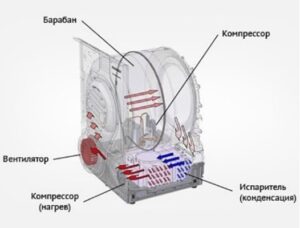 A tumble dryer helps you dry a pile of clothes quickly and easily without hanging them on a clothesline. Installing this type of equipment prevents excess humidity, which can lead to mold. We'll explain how a tumble dryer works and how it works.
The main structural elements of the dryer
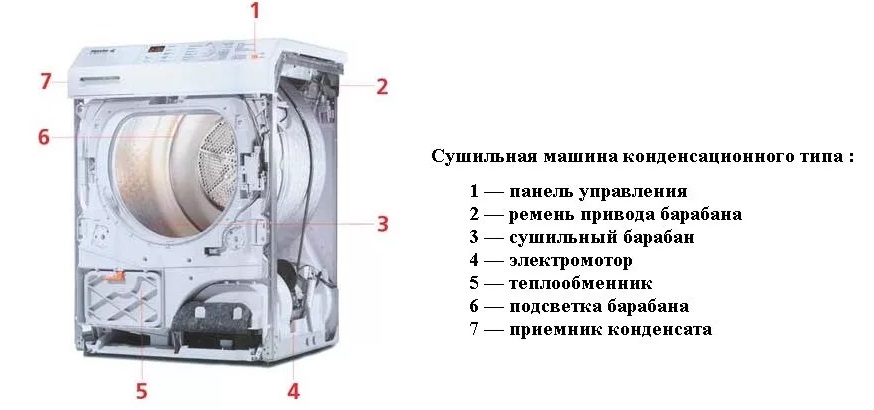
The drum design of condenser dryers is simple. Operating the equipment is straightforward. Dryers consist of a number of components.
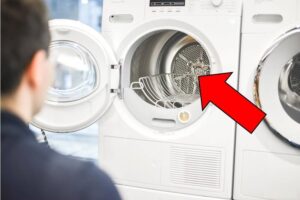
- The dryer drum. This is the main component of the dryer. The drum contains the laundry. Many machines have additional lighting, making loading and unloading easier, as well as monitoring the laundry.
- Control panel. Most models feature an electronic display and buttons for selecting drying programs for different types of laundry, as well as for activating auxiliary functions.
- Electric motor.
- Drive belt. Connects the tank to the electric motor.
- Air intakes. Equipped with special lint filters to remove dust and debris from the air. To ensure the dryer operates properly, the air intakes should be cleaned at least once a month.
- Fan. Directs air inside the appliance.
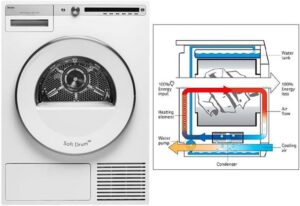
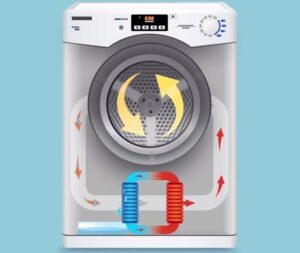
- Heat exchanger. It has two channels through which hot and cold air flows without mixing. The heat exchanger allows the air to cool and condensate to settle more quickly.
- Tubular electric heater (TEN). Designed to heat the air flow entering the dryer drum containing the laundry.
- Condensate container. In most dryer models, it's located on the front panel, at the bottom, or in the same area as the detergent drawer in washing machines.
Condensation accumulates while the dryer is running. Make sure the designated collection container does not overflow. If the appliance is connected to a sewer system, the moisture drains automatically.
How does a dryer work?
To understand how a clothes dryer works and how it operates, compare it to a washing machine. The core element of both machines is the drum. The difference is that in washing machines, water is supplied to the drum, while in dryers, heated air is used to dry the clothes. The drum's rotation speed also differs. In dryers, the maximum speed is 100 revolutions per minute.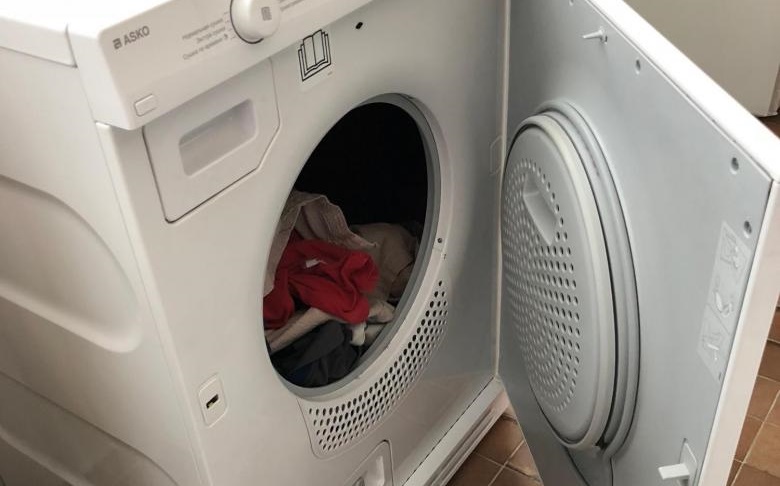
When entering the unit, the air is first cleaned by lint filters. Then, a fan directs it to the heating element. The purpose of the heating element is to increase the airflow temperature to +50°C.0-700 C. An additional fan blows air into the drum. The hot air dries the wet laundry, removing moisture, and then enters the heat exchanger. The air temperature decreases, the moisture is removed, and it is directed back to the heating element. This is how air circulates throughout the dryer.
Important! The appliance's power consumption per cycle can reach 4 kW. However, most models consume between 1500 and 2300 W.
What types of dryers are there?
Depending on the method of moisture removal after drying, tumble dryers are divided into several types: vented, condensation, and heat pump. Some units exhaust moist air outside, while others collect the condensate in a special container. To understand the operating characteristics of the various types of tumble dryers, it's worth examining each one separately.
- Ventilation dryers. These are characterized by their simple design. Moist air is removed from the units using a special hose connected to the ventilation ducts.
A significant disadvantage of using ventilation-type machines is that their installation requires assembly work.
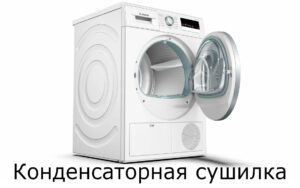
- Condenser dryers. These models are easy to install and come with separate water collection tanks. These tanks need to be emptied regularly.
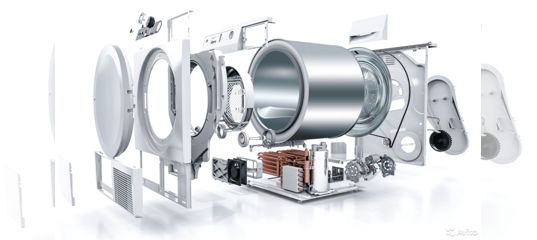
- Electric dryers with heat pumps. These units have a cooling circuit that quickly cools the air flow, creating condensation.
Most tumble dryer manufacturers have abandoned vented dryers. Condenser dryers are considered more modern and practical. Electric dryers with heat pumps provide the fastest drying results.
Interesting:


Readers' comments
Headings
Washing machine repair




For buyers




For users


Dishwasher




Add a comment