
How to clean a washing machine's detergent drawer from hardened powder?
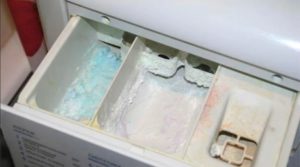 A washing machine itself requires periodic cleaning. Without regular cleaning, dirt and grime will accumulate inside the machine, eventually leading to clogs or overheating. The detergent drawer is one of the first to suffer: detergent residue, along with impurities from the water supply, settles on the walls of the dispenser, blocking water flow. Washing with a clogged dispenser is impossible—you must first clean the washing machine drawer of the hardened detergent. Let's figure out how to do this efficiently and quickly.
Why do you need to clean often?
Any household appliance gets dirty over time and needs maintenance. Each manufacturer must specify the details and frequency of cleaning in the factory instructions. Without following these recommendations, the machine will fail faster.
Many users believe that cleaning the detergent drawer is unnecessary—it's far more important to take care of the drum or debris filter. However, this isn't true: the dispenser controls the water supply to the machine. If the pipes and drawers are clogged with hardened detergent, the water flow is disrupted, the drum won't fill, and the system will display an error.
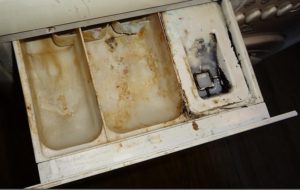
Soap and limescale deposits constantly build up on the tray walls. There are several reasons for this: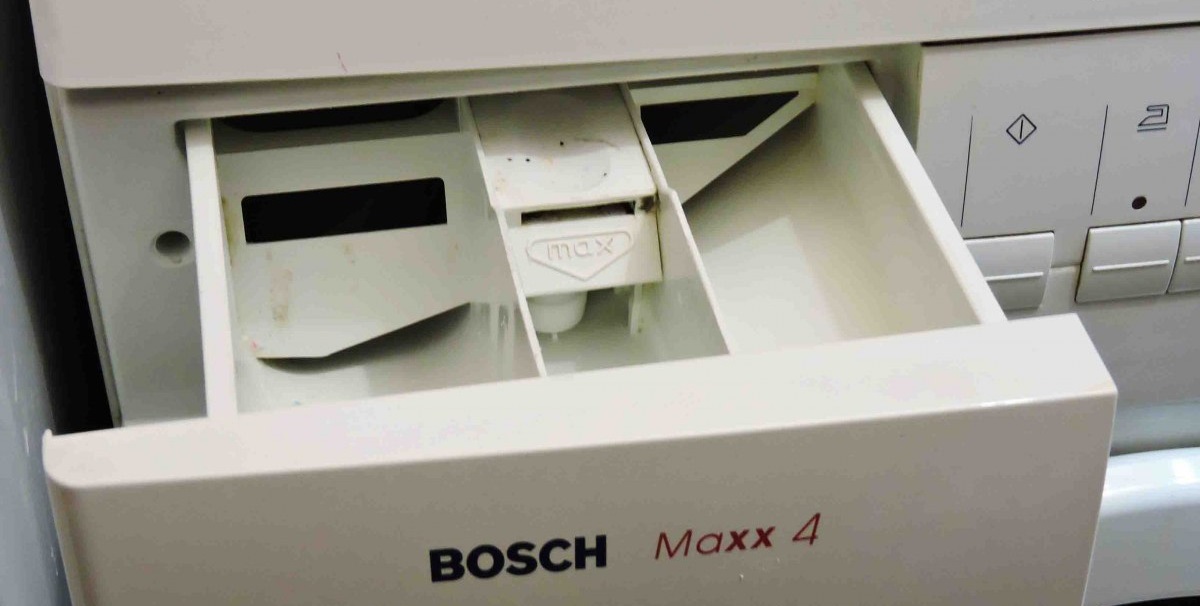
- hard water with a large amount of impurities and dirt (all of this settles on surfaces and hoses);
- low-quality detergent (poor powder dissolves worse);
- weak pressure in the risers (the powder is not completely washed off);
- exceeding the dosage (the water does not have time to wash away the entire handful of product during the allotted time).
The situation is exacerbated by the use of bleaches and fabric softeners. These products have a sticky texture that leaves a sticky film on the walls of the detergent drawer. This film hardens and attracts dust, dirt, and limescale.
It is recommended to wash the washing machine powder dispenser every week!
Gradually, the layer of dirt thickens, eventually clogging the detergent drawer or its pipes. A clog can result in the washing machine failing to start a wash or even completely failing, as the drawer overflows and floods the control board. It's best to play it safe and constantly monitor the dispenser.
Mechanical cleaning of the tray
The detergent drawer is considered one of the dirtiest parts of a washing machine—only the tub and hoses get dirtier. But unlike its counterparts, the drawer is easier to clean: most of the drawers are easily removed from the machine. There are no difficulties with visual inspection of the dispenser; it is always visible, so it is easier to control the degree of its contamination.
Anyone can clean the detergent drawer. You just need to figure out how to remove the drawer from the housing. On most washing machines, the dispenser is removed as follows:
- the tray opens all the way;
- in the central cuvette there is a locking tab (usually it is red);
- the tongue is pressed;
- The powder receptacle is pulled out of the machine.
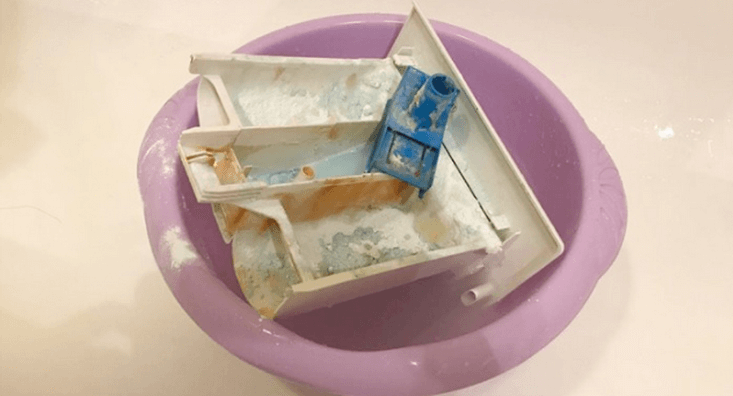
Indesit and Aristont washing machines are an exception—they have unique powder drawers. Some upright models also have built-in drawers. However, even in these models, the dispensers can be removed. Just be sure to read the instructions carefully.
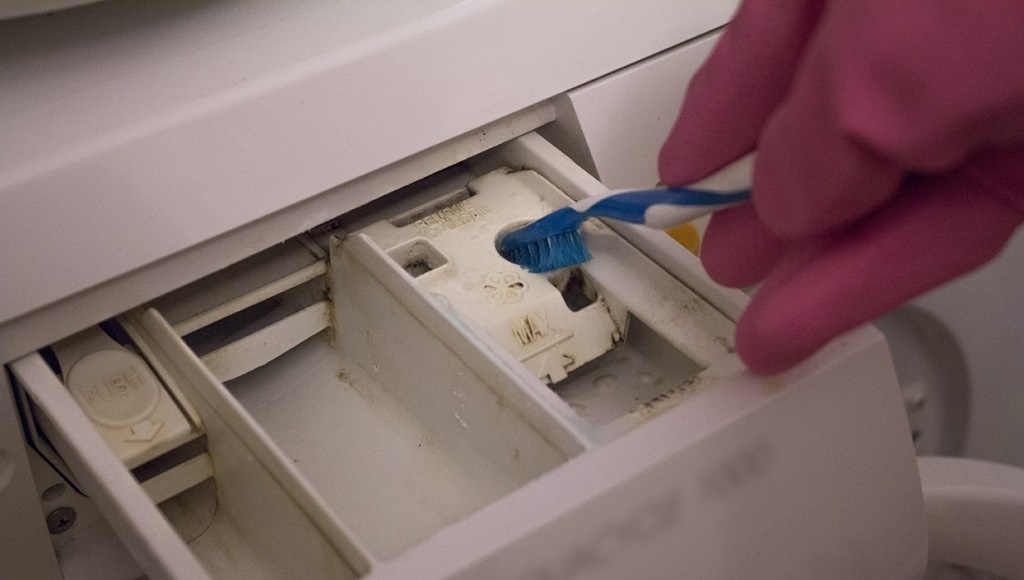
To clean the powder dispenser you will need laundry soap and a toothbrush!
After "disassembling," the tray should be cleaned. The procedure is as follows:
- rinse the container thoroughly under the tap;
- go along the walls of the tray with a soapy sponge or brush;
- rinse the element;
- wipe dry.
To remove plaque from hard-to-reach areas, use an old toothbrush. Rub with moderate force to avoid scratching the raised dosing marks. If the stain is stubborn, soak the toothbrush tray in a warm lemon solution for 2-4 hours.
Use of special cleaning agents
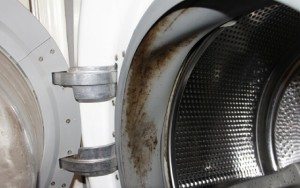
Sometimes manual cleaning doesn't help, and a layer of powder, limescale, or slime remains in the litter tray. Mold, rust, and unpleasant odors can also persist. In these cases, soaking won't help—only specialized household chemicals are needed.
To dissolve deposits and remove mold, special products are needed. These are called washing machine cleaners, available as powders or gels, and are capable of removing any dirt while disinfecting the entire machine. They clean not only the dispenser but also the rest of the system.
Before using washing machine cleaner, carefully read the instructions on the product packaging!
The cleaners are used as follows:
- the required dosage is calculated (it is necessary to follow the instructions so as not to overdo it);
- the product is poured into the powder container;
- the washing machine drum is emptied of clothes (washing is running empty);
- any mode with water heating up to 60-95 degrees is selected;
- additional rinse is activated;
- the cycle starts.
That's it! Once the washing machine completes its cycle, the cleaning process is complete. All that's left to do is wipe the tray and drum dry. However, if the machine is heavily soiled, the cycle will need to be repeated. Use instead of cleaner Galgon is not suitable – it only softens water, but does not dissolve limescale and plaque.
Keep the litter box clean
It's easier to prevent a clogged detergent drawer than to clean out hardened powder. To avoid contamination, it's important to regularly maintain the drawers and the washing machine as a whole. Generally, the following guidelines are sufficient:
- use high-quality detergents;
- watch the dosage of powder;
- Rinse the tray and wipe dry after each use of the washing machine;
- leave the compartment open until completely dry;
- Every 6-10 washes, clean the dispenser from scale and plaque.
It is recommended to leave the tray open after each wash until completely dry!
The detergent drawer must be clean. This will ensure the detergent reaches the drum completely, and the machine won't stall due to a clog.
Interesting:


Readers' comments
Headings
Washing machine repair




For buyers




For users


Dishwasher




Add a comment