
The Aquastop function in my Bosch dishwasher has been activated.
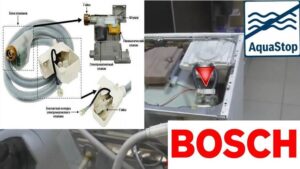 Aquastop is a safety system that helps prevent flooding in the event of a leak. This is a very useful feature found in all modern dishwashers. Many users are confused when they notice that the Aquastop system has been activated in their Bosch dishwasher. We'll explain what to do in this situation.
What do we do without delay?
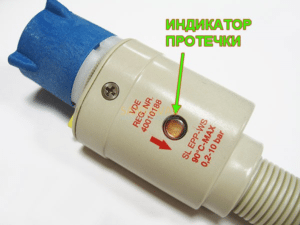
You can find out how your Bosch dishwasher notifies you when the Aquastop system is activated by reading the user manual. Typically, the machine displays a corresponding error code on the display. The indicator on the dishwasher's inlet hose also changes color—it turns red.
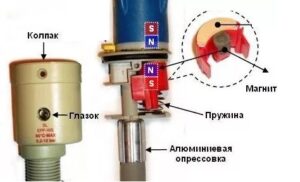
Aquastop system sensors come in different types. The first type is mechanical. They can be reused after being triggered. To do this, simply release the spring and push the valve membrane inward.
Some Aquastop hoses are disposable – once activated, they cannot be used further.
If the sensor is disposable, it will fail immediately after the indicator turns red. The element is replaced along with the inlet hose. The equipment manual details the specific type of sensor installed in your Bosch dishwasher.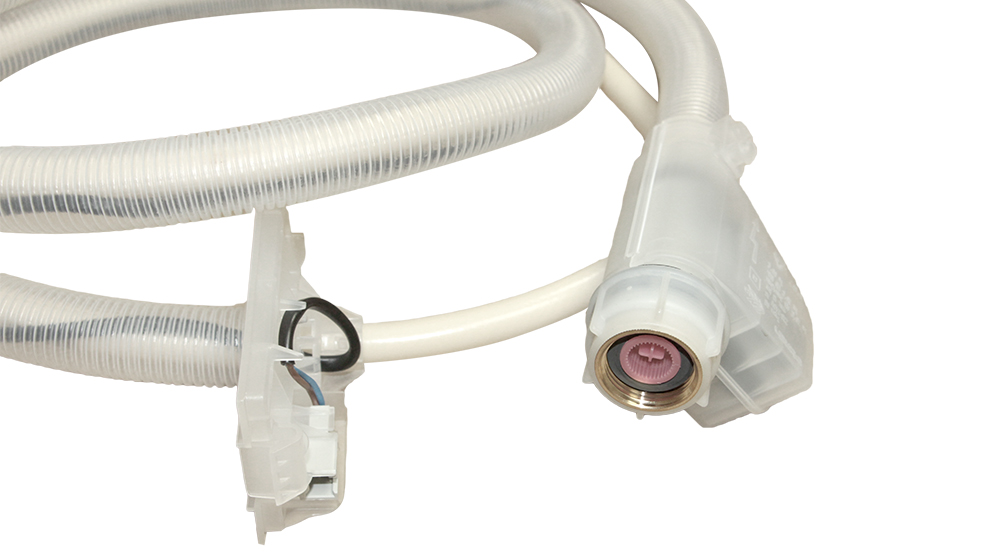
Replacing the Aquastop hose on a Bosch dishwasher is very easy. You will need:
- turn off the water supply to the dishwasher;
- unscrew the old hose;
- connect the new pipe in the same way.
Some dishwashers are equipped with an electromagnetic Aquastop system. In this case, you'll need to connect an additional cable with an electrical connector to the leak detection sensor. The cable exits the protective element, and the groove in it is located near the machine's inlet valve.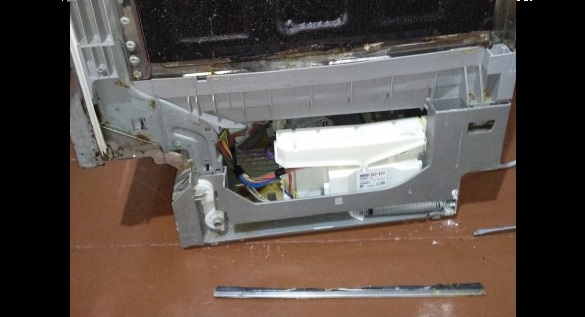
What should I do if Aquastop is activated due to water being detected in the dishwasher's tray? How do I unblock my "home assistant"? PMM Bosch, having detected a leak, displays the error code E15 on the display. The float located at the bottom rises, and the “intelligence” immediately activates the protective system.
When the Aquastop system is activated, the dishwasher drain pump starts automatically.
The pump begins pumping water from the machine into the sewer system to prevent flooding. Also, when the E15 error message appears on Bosch dishwashers, the "Tap" indicator always flashes. This indicates that the machine has shut off the water supply to the system.
Why did water end up in the washing machine tray?
What should you do if your dishwasher detects a leak? First, wait for the pump to drain the water from the machine into the drain. Second, turn off the power, close the shutoff valve, and try to find the cause of the problem. We'll explain in which cases you can fix the problem yourself, at home.
- External leak. Check for leaks in the plumbing or pipes near the dishwasher. Someone in the household may have recently spilled water on the floor or countertop beneath the dishwasher. This could have caused water to leak into the dishwasher's tray, triggering the Aquastop system. Fix the cause, drain the tray, and the E15 error will disappear.
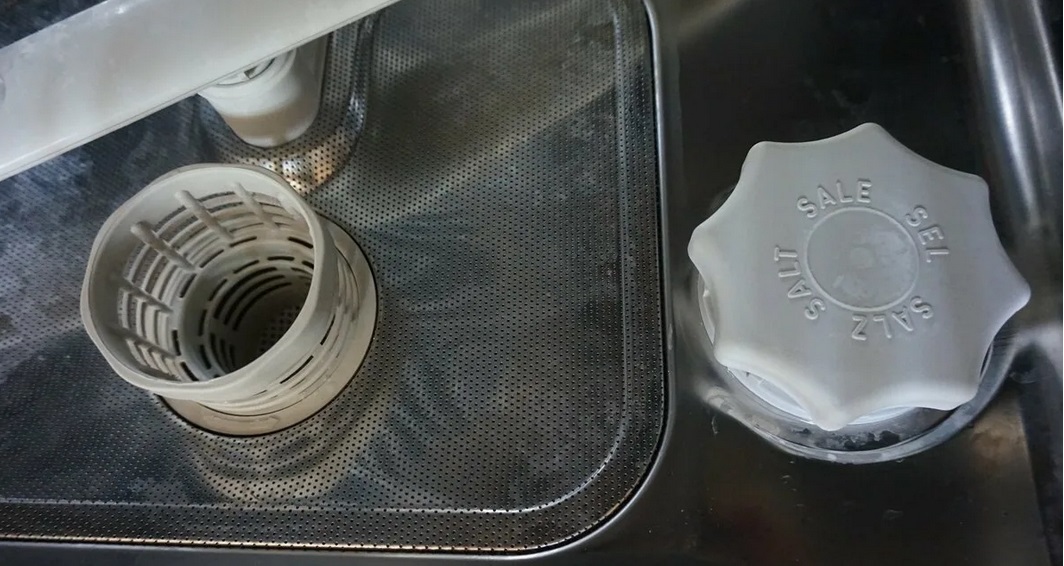
- Clogged filter elements. This not only leads to difficult drainage but also disrupts water circulation in the dishwasher, causing it to overflow. As a result, water overflows into the tray, the float rises, and the Aquastop sensor is activated. Cleaning the filters is the solution. Bosch recommends doing this after each use, and also remember to remove any food debris from the dishes to prevent it from clogging the screens.
- Using household detergents for hand washing. Sometimes, users unknowingly pour regular dishwashing gel, like Fairy, into their dishwasher. This detergent foams excessively, which is unacceptable for the appliance. As a result, the foam ends up in the tray, causing the machine to display an E15 error. In this situation, you should immediately unplug the appliance, unload it, and let it air dry for 2-3 days. Excessive foaming is fraught with not only the activation of Aquastop, but also damage to all the electronics of the dishwasher.
- Excessive dosage of dishwasher detergent or use of low-quality specialized detergents. Even if you use household chemicals designed specifically for dishwashers, this does not eliminate the possibility of the E15 error. Adding too many granules can also lead to excessive foaming. This will end up in the tray, and Aquastop will be activated. The problem is "treated" in the same way.
- Water backing up from the drain pipe. A relatively rare problem. It can only occur with Bosch dishwashers whose drain hose is connected to the sink's drain trap. A clogged drain can cause wastewater to back up into the dishwasher. The dishwasher responds with the familiar E15 error code. To fix this, locate and remove the clog, restoring normal drainage.
To prevent wastewater from backing up into the dishwasher, raise the dishwasher's drain hose to the sink level (by creating a loop). It's also recommended to install a check valve to prevent wastewater from the sewer from backing up into the appliance. Another option is to connect the dishwasher directly to the drain, bypassing the trap.
Once you understand the reason for the E15 code appearing on the display, you need to drain the liquid from the drip tray. This can be done by tilting the machine backwards or removing the side panel. Alternatively, you can simply leave the dishwasher idle for 2-3 days to allow the water to dry naturally.
Problems that the technician looks for and fixes
It's not always a simple problem that you can fix yourself. Sometimes, a professional's help is needed. What problems does a professional solve?
- Leaks inside the dishwasher. Drain pipes or water circulation lines are often the cause, and less commonly, the inlet hoses. A technician will diagnose the leak, tighten the clamps, and replace the seals and gaskets. This work is inexpensive.
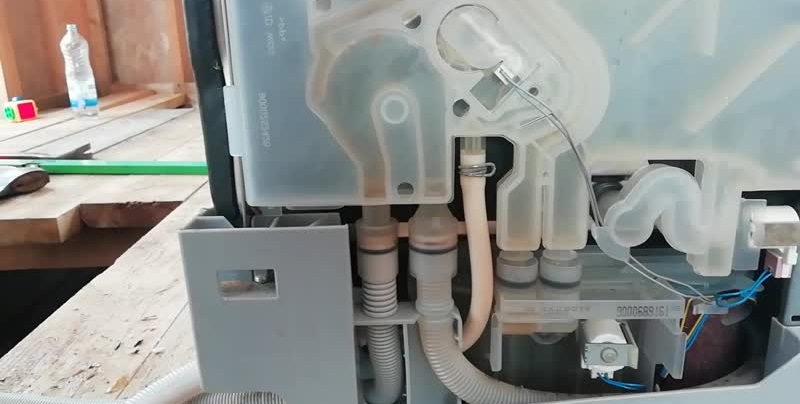
- A leaking pan gasket in the wash chamber. This is a common problem with Bosch dishwashers that have been in use for more than 5 years. The seal wears out and begins to leak, allowing water into the pan. In this situation, the seal needs to be replaced. A specialist will use a pan repair kit to fix the problem. This work is also inexpensive.
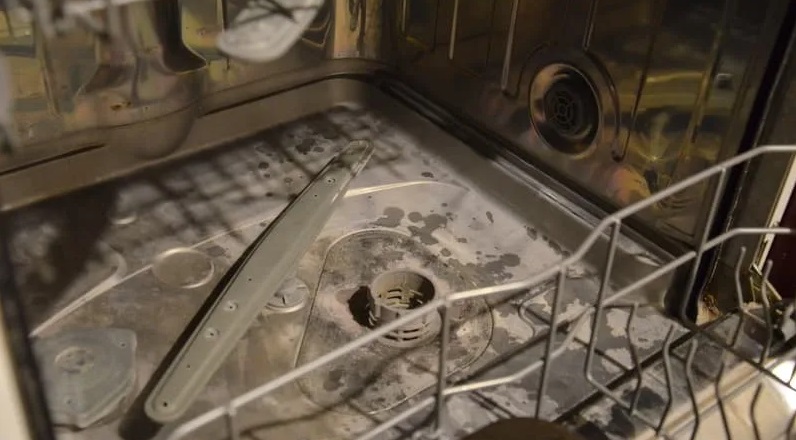
- Corrosion and leaks in the wash chamber. This problem is relatively rare and can only occur in Bosch machines that have been in use for a long time, 7-10 years. The stamped areas on the bottom of the bin, near the glass, rot and begin to leak. These holes are small. A temporary solution is to seal the cracks with a special compound. This will extend the life of the dishwasher by about another year. To completely eliminate the leak, you will have to replace the entire dishwasher tub.
- The regenerating salt reservoir is cracked. The heat exchanger canister is damaged. There's always some water in the dishwasher. If you leave the machine in a subzero room, the liquid will freeze. The ice will rupture plastic parts, tubes, and hoses. A technician will run diagnostics and determine the specific component that's faulty. Repairs will involve replacing the components.
- The Aquastop sensor is faulty. The element may be stuck and falsely indicating a leak. In this case, the Aquastop hose will need to be replaced. You can do this yourself, and only pay a technician for the dishwasher's diagnostics.
In any case, you should no longer use a dishwasher that displays the E15 error. This is unsafe. A leak can lead not only to flooding but also to a short circuit and fire.
Interesting:
Readers' comments
Headings
Washing machine repair




For buyers




For users


Dishwasher




Add a comment