The washing machine fills with water when turned off.
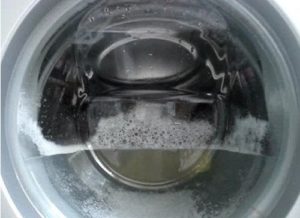
A washing machine can spontaneously fill with water even when turned off. This is a serious problem that can result in flooding your apartment, and if this happens when you're not home, it can also harm your downstairs neighbors. Every automatic washing machine owner should know the reasons why a washing machine suddenly overflows, and how to fix and prevent them.
Causes of malfunction
When a washing machine malfunctions, water can enter the drum from either the sewer or the water supply. You can tell by the color and smell; if cloudy water slowly appears in the drum, it's definitely sewer water.
However, when the machine is filling with water from the water supply without stopping, the Aquastop system will not save you from the drum overflowing with water.The leak protection sensor is attached to the washing machine's tray, but water will leak onto the floor. Therefore, even the most advanced protection will be ineffective in this case.
But what's the reason the machine is filling with water? There are two reasons:
water supply valve malfunction;
malfunction of the siphon valve or its absence;
a blockage in the drainage system, causing water to flow back into the drum through the drain hose.
Important! If this problem is caused by an improperly connected washing machine drain, your warranty will be denied. You will have to fix the problem yourself or at your own expense.
Troubleshooting
So, if you notice your washing machine filling with water after it's turned off, immediately turn off the water supply. Only then should you begin troubleshooting. Don't forget to unplug the machine. If the solenoid valve is the cause of the filling, it needs to be replaced with a similar one. This is easy to do yourself.
Please note! If your washing machine is under warranty, the valve must be replaced by a service technician. Otherwise, attempting to tamper with the inside of the washing machine yourself will void the warranty.
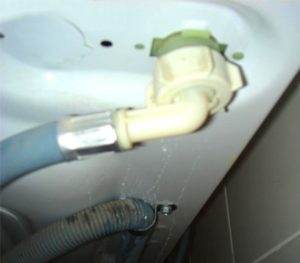
The fill solenoid valve is easy to reach. In front-loading machines, it is located under the top cover of the housing, which is what needs to be removed. For upright machines, you'll need to remove the side cover. First, turn the machine for easy access and disconnect the water supply hose. Once you've located the valve, unclip the hoses and electrical wires, noting the polarity of the wires. Unscrew the valve from the machine body and remove it.
Please note! On some washing machine models, removing the inlet valve requires removing the plastic box underneath the detergent drawer. This may complicate the replacement process.
Since the solenoid valves cannot be repaired, we take a new part and connect it to the hoses. We use new clamps to ensure a secure connection. Then, observing polarity, we connect the electrical wires and secure the inlet valve.
Before closing the lid of the washing machine, connect the inlet hose and run a test wash. Check the connections for leaks. Once you're sure everything is in order, reassemble the machine and install it.
If the drum is filling with water from the sewer, first clean the trap to which the washing machine drain hose is connected. If the problem lies in the drain connection, read the article. Siphon for a washing machine.
Precautionary measures
And finally, how to avoid situations where the machine fills with water while it's off. It's quite simple:
After washing, close the water supply tap; if there is none, be sure to install one.
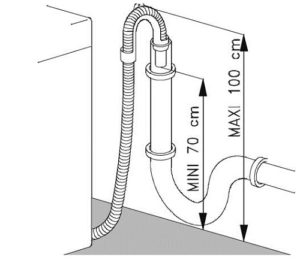
Connect the anti-siphon valve, which will prevent waste water from flowing back into the machine.
Use a leak protection system installed on the floor. As we noted, the washing machine's protection system won't protect you in this situation.
We hope the information in this article will help you prevent flooding, identify the cause of water in the drum, and quickly eliminate it. Good luck!
Could you please tell me if the machine can fill with water when it's turned off due to poor water pressure? To give you an idea, a 1.5-liter kettle takes about a minute to fill.

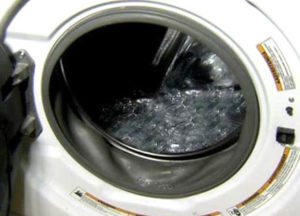 A washing machine can spontaneously fill with water even when turned off. This is a serious problem that can result in flooding your apartment, and if this happens when you're not home, it can also harm your downstairs neighbors. Every automatic washing machine owner should know the reasons why a washing machine suddenly overflows, and how to fix and prevent them.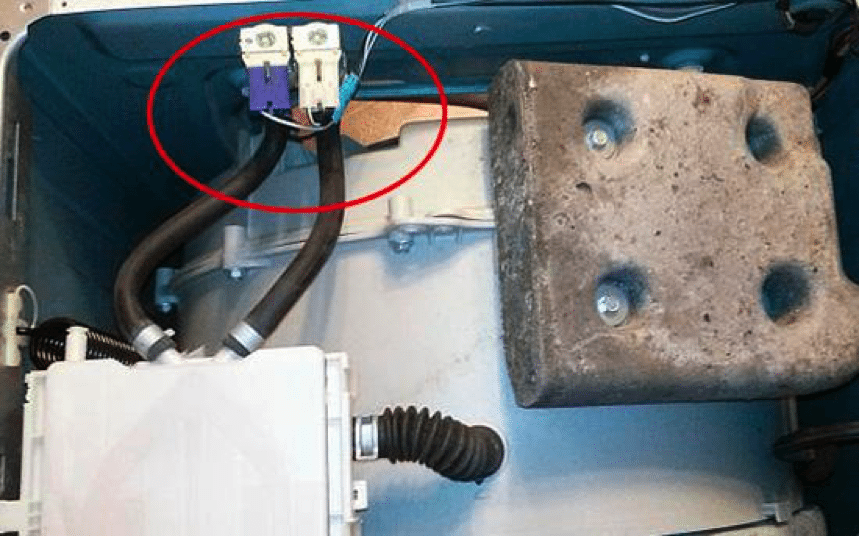
 And finally, how to avoid situations where the machine fills with water while it's off. It's quite simple: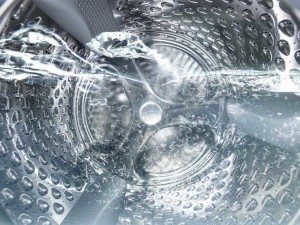
















Everything is very clear, thank you very much.
Thank you very much.
Thanks for the article and video, very useful.
Thanks. I'll try with the valve. The water seems clear. It probably isn't holding up.
Water is leaking even though the pump isn't pumping. What could this be? Can you tell me?
Could you please tell me if the machine can fill with water when it's turned off due to poor water pressure? To give you an idea, a 1.5-liter kettle takes about a minute to fill.