
How much does a tumble dryer weigh?
 The weight of a dryer is a concern for many homeowners, as this appliance is often installed on top of a washing machine. If space is limited in the bathroom, this option is often the only solution.
How heavy is the dryer?
How much does a tumble dryer weigh? The answer to this question is complex, as the weight of different brands can vary greatly. When looking at dryers from the most famous brands, it becomes clear that their average weight ranges from 40-50 kg.:
- LG (El Gee) DC90V9V9W – 55 kg;
- Gorenje (Burning) DE82/G – 50 kg;
- Electrolux ("Electrolux") EW9H1R88SC - 48 kg;
- Samsung (“Samsung”) DV90T5240AT – 47 kg;
- Bosch ("Bosch") WTM83261OE - 39 kg;
- Hotpoint-Ariston (“Hotpoint Ariston”) NT CM10 7B RU – 34 kg;
- Bosch ("Bosch") WTH85201OE - 60 kg.
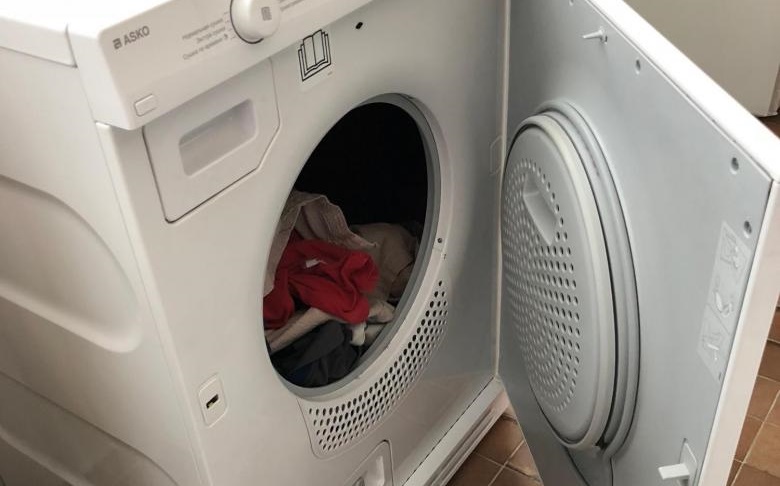
However, there are also heavier models. Their weight, reaching 60-70 kilograms, makes it impossible to install such units on top of washing machines.
Important! Each dryer comes with detailed instructions on how to install it on your washing machine using the included mounting hardware.
Installing a dryer on a washing machine
Stacking a dryer on top of a washing machine can simplify the process of transferring damp, freshly washed items. However, before doing so, ensure the washing machine is installed correctly: it should be level, preferably on a concrete floor. Carpet, linoleum, or other flooring will increase vibration and lead to rapid failure. If the floor is wooden, it should be reinforced with additional reinforcement. It is recommended to use special slats for this purpose.
After the washing machine is precisely leveled, a special, appropriately sized tray should be installed on top. It should be securely bolted in place. Next, apply a layer of high-quality rubber sealing material to prevent vibration of the upper unit while the lower unit is operating.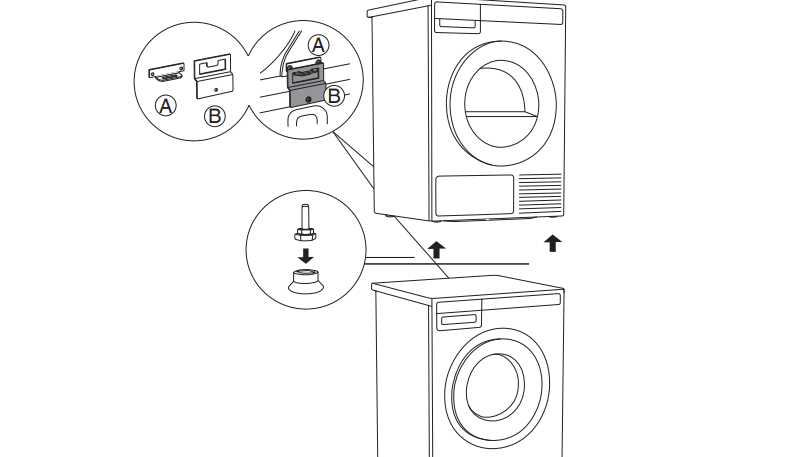
When installing the dryer, ensure that its feet fit neatly into the four grooves (notches). This complex and crucial step requires special attention, as its proper execution will determine the safety of the dryer, the safety of property, and the well-being of the occupants. After installation, the outer grooves are sealed with plugs.
As you've already seen, stacking washing machines on top of each other without using sturdy fasteners is absolutely prohibited. Otherwise, an accident could occur while one of them is in operation, and the entire structure would simply collapse. This could also damage the electrical wiring. In this case, along with the flooding, a short circuit could occur, leading to a fire.
There are two available options for securing a dryer: using mounting hardware (sold with the dryer) or using additional rails (mounted to the wall directly above the washing machine). The latter method is rarely used.
Interesting:





Readers' comments
Headings
Washing machine repair




For buyers




For users


Dishwasher




Add a comment