
How to turn on an Ariston dishwasher and start the wash
 Buying a brand new dishwasher is a true celebration, as it means washing dishes by hand is finally a thing of the past. However, before loading it with a mountain of dirty dishes and heading off to a well-deserved rest, it's important to carefully study the operating instructions for this smart device to avoid damaging either your dishes or your "home helper." Therefore, don't rush to turn on your Ariston dishwasher immediately after purchasing it – first, carefully review all the recommendations outlined in this article.
General procedure for activating PMM Ariston
We'll start with the most basic steps—turning on the appliances—to briefly describe the general procedure. How do you properly start the dishwasher on an Ariston dishwasher?
- Open the water tap.
- Open the dishwasher door slightly, press the power button, after which a short signal will sound, and the power button itself and the control panel of the appliance will light up with a soft light.
- Add detergent, rinse aid and salt to the machine.
- Place dirty dishes inside the washing chamber in special baskets for cutlery.
- Depending on the type of dishes and the degree of contamination, select a washing mode.
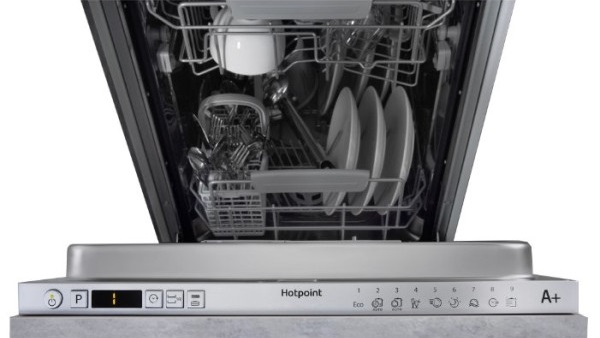
- If necessary, activate additional options, such as pre-soak or half load function.
- Close the dishwasher door to start the wash. A long beep will indicate that the cycle has started.
- When the cycle is complete, the machine will indicate this with two short beeps and one long beep. The display will then show the completed wash program number.
- Open the dishwasher door, turn off the appliance using the power button, close the water tap and unplug the dishwasher from the power supply.
- Wait about five minutes for the dishes to cool before you begin removing the cutlery.
It's that simple, if you don't get into all the nuances and subtleties, you can wash dishes using a dishwasher.
Changing the mode, adding dishes
An important question that beginners often ask is: is it possible to change the washing mode while working? If you made a mistake in selecting the operating cycle, or simply forgot to change the mode after the last wash, then it can only be changed if only a couple of minutes have passed since the start. To do this you need to:
- carefully open the dishwasher door so as not to get burned by hot steam;
- hold down the power button for a few seconds until the machine turns off after a long beep;
Do not try to simply turn off the dishwasher, as the smart equipment remembers the interrupted program and will start it immediately after turning it on.
- Now you can turn on the machine, select the correct mode and activate the operation by closing the washing chamber door until it clicks.
Loading an extra batch of dirty dishes, if you remember at the last minute, is even easier – just open the dishwasher door and, without turning the machine off, add the forgotten dishes, and then close the door for the machine to continue working.
Detergents and other substances
The cleaning result depends not only on the correct operating mode but also on the correct dosage of detergents. The "more is better" rule doesn't apply here, as excess household chemicals won't affect the cleaning quality, but they will contribute to environmental pollution. Therefore, detergent, rinse aid and salt should be added in the proportions specified by the manufacturer. For example, if a cycle requires two 3-in-1 tablets, the first one should be placed in the detergent compartment and the second one should be placed at the bottom of the chamber.
It is very important to use specialized chemicals designed exclusively for dishwashers, and not detergents for hand washing, which foam too much and leave marks on dishes.
To add detergent, open the wash chamber door and locate the plastic dispenser located on the inside of the door. It has two compartments: one for tablets and powder, and the other for rinse aid. The first compartment contains a large compartment specifically for the main working cycle, which requires a full dose of powder, gel, or a whole tablet or capsule, while the second small compartment is designed for situations where a pre-wash is required. A little to the right is the place for rinse aid, a product that gives dishes a bright shine.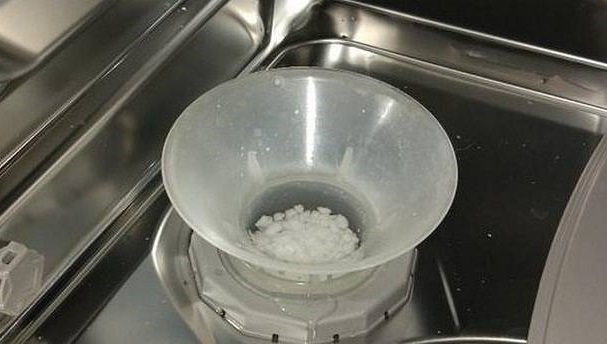
A separate item is special salt, which restores the resin in the dishwasher's ion exchanger. This component softens hard tap water, preventing deposits from remaining on dishes or damaging the dishwasher's heating element. Only special salt, not table salt, should be used, as regular salt is much less effective at regenerating the resin in the ion exchanger.
You shouldn't add salt only if your city has soft tap water, which you can find out with special tests or by visiting the official website of your city's water utility.
To add salt, you need to find the hopper located at the bottom of the washing chamber, open the lid, add about a liter of water to the reservoir, and then add about a kilogram of salt. If the salt solution spills during loading, it must be completely removed with a cloth or using the quick wash mode to prevent the salt from damaging the bottom of the washing chamber.
How to load a dishwasher correctly?
Finally, the washing result depends on proper arrangement of dishes. It may seem like simply filling the racks with dishes and running the dishwasher will leave you with a crystal-clear shine in just over an hour. In reality, improper arrangement can result in dishes not being washed at all, which is why it's so important to follow all the steps in our instructions.
- Be sure to remove any food particles, napkins, seeds, tea leaves, and coffee grounds from your dishes to prevent excess debris from clogging your dishwasher's filters.
- After loading the dishes, make sure that nothing is blocking the spray arms from rotating freely.
- There must be at least a minimal gap between each piece of cutlery so that the stream of water reaches the entire surface of the dish.
- The vessel-shaped container should stand upside down to prevent water and foam from accumulating in it.
- The bottom basket should be used to place the largest and dirtiest items, such as pots, pans, baking sheets, lids, large plates, salad bowls, and so on.
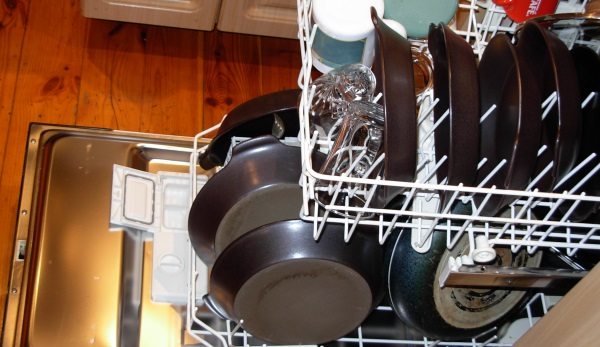
- The top basket is for smaller items, such as saucers, mugs, glasses, and so on.
- A special compartment, available in some Ariston dishwasher models, is ideal for cutlery.
If there isn't enough space inside the washing chamber for all the dishes, there's no need to split the wash into two sessions—simply remove the folding stands and adjust the height of the baskets.
- The largest items should be placed at the edges of the basket, leaving the center for smaller items.
- Do not wash wood, aluminum, copper, brass, tin, or plastic items in the dishwasher, as they may melt at high temperatures.
Experts also do not recommend washing particularly fragile porcelain and crystal dishes, as well as antique hand-painted dinnerware sets, in dishwashers. To avoid damaging delicate cutlery, ensure that it stands securely in the baskets and does not come into contact with other items.
Selecting a program
Another aspect of setting up a new "home assistant" that often raises many questions for housewives is choosing a cycle. Indeed, at first, it can be difficult to figure out which mode is best for a given situation, especially considering the wide variety of programs kindly provided by the manufacturer. To help you decide, we'll list the main modes of Ariston dishwashers:
- Intensive mode. This program is capable of cleaning even the dirtiest dishes, but due to its intensity, it's not suitable for fragile items. The cycle lasts 145 minutes, during which the machine uses 25 grams of detergent.
- Automatic mode. Designed for moderately soiled dishes, it cleans dishes in 110 minutes using 21 grams of detergent.
- Eco-friendly mode. Essential for saving energy and water. It uses 25 grams of detergent in 155 minutes and washes moderately soiled cutlery;
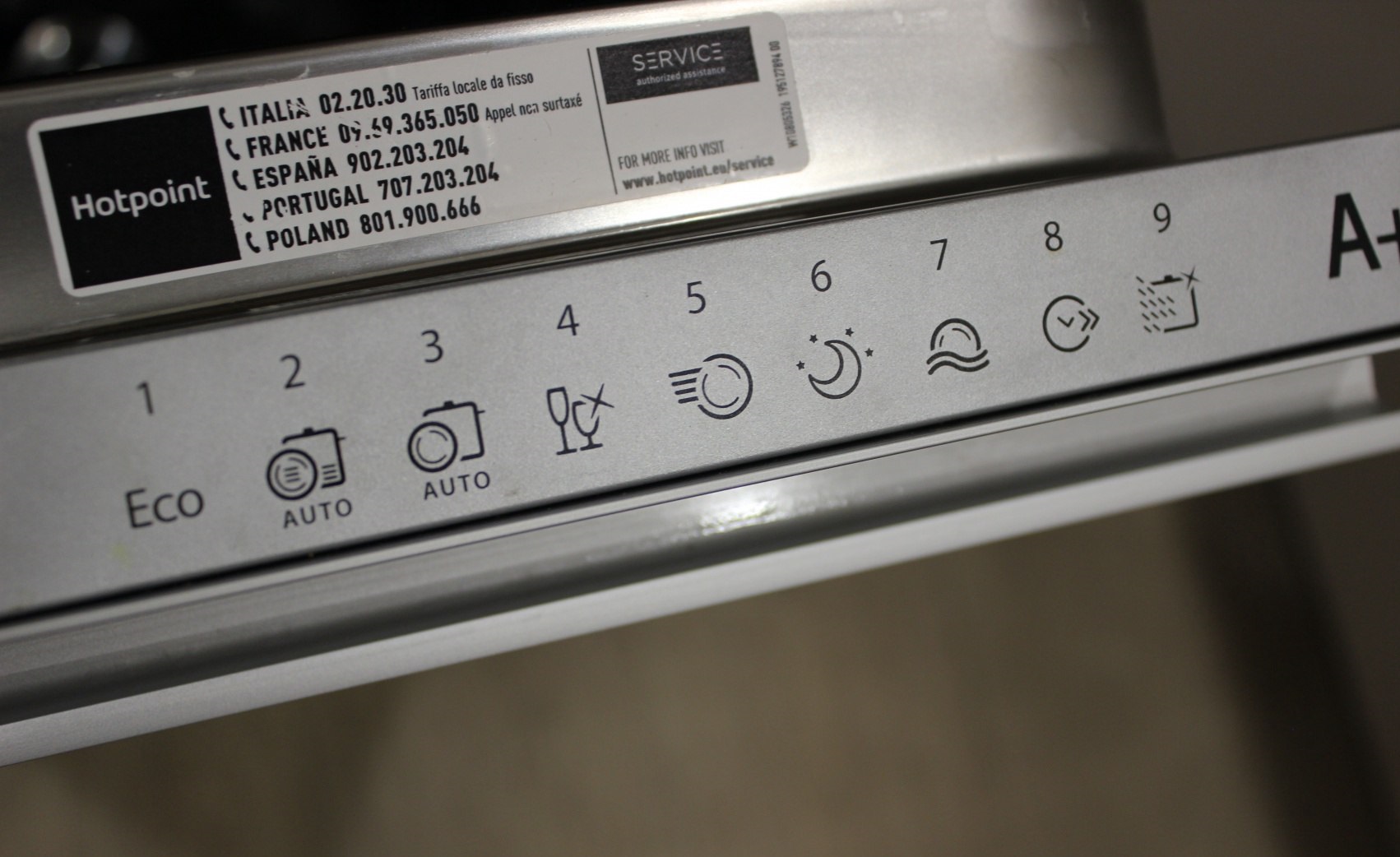
- Accelerated mode. Helps clean lightly soiled dishes immediately after meals in minimal time. Uses 21 grams of detergent and 25 minutes of washing time;
- Crystal. Designed exclusively for fragile and delicate dishes, it washes immediately after use in cold water. Uses 25 grams of detergent in 90 minutes;
- Ultra-Intensive. This mode is for the dirtiest dishes, including those with caked-on food or greasy residue. It uses 25 grams of detergent for 155 minutes.
To avoid the hassle of finding the right dosage of detergent, you can use convenient tablets or capsules.
Delayed start, half boot
Finally, let's look at the additional features the manufacturer offers. To delay the start of the wash for three, six, or nine hours, you need to:
- press the “Delayed start” button as many times as necessary until the display shows the delay time you need;
- Select the operating mode and close the dishwasher door. A short beep will indicate that the time has started, as will a countdown display.
- Once the countdown is complete, the machine will start washing.
If you need to change the start time of a delayed program, you should change the time using the “Delayed start” button, and if you need to cancel the function completely, just remove the start time using the same button.
Finally, to activate the half-load mode when there are too few dishes for a full cycle, press the mode button repeatedly until the triangle indicator lights up. This program helps save not only water and energy, but also dishwasher chemicals. Once activated, the wash will only be performed in one of the two dish racks. Do not attempt to activate the half-load mode together with the reduced time and night mode options, as they are incompatible.
Interesting:




Readers' comments
Headings
Washing machine repair




For buyers




For users


Dishwasher




Add a comment