How to turn on a Beko dishwasher and start the wash
After purchasing a brand new household appliance, it's always tempting to try it out right away, running the first cycle you encounter. However, it's best to avoid such an adventure, as there are a number of preparatory steps that must be completed before turning on your Beko dishwasher. In today's article, we'll cover in detail how to properly prepare your "home assistant" for its first use, how to use it in everyday life, and what nuances to consider during operation.
First launch of equipment
The most important thing when using a dishwasher is to take your time and carefully follow the user manual, which always comes with the appliance. If you don't have the manual at hand, don't worry, because we'll now walk you through the steps to properly start up your Beko dishwasher for the first time.
Every first run should be done without any load, so don't rush to load the machine with a pile of dirty dishes just to quickly test its functionality. First of all, you need to clean the device from factory grease, dirt and dust that may have remained during assembly at the manufacturer's plant.
But before conducting a test run for purification, you need to determine the required water hardness level. This directly depends on the quality of the tap water in your city. You can check this as follows:
open the tap and let the water run for about a minute;
we fill a glass with water;
unpack the previously purchased test strip and lower it into the glass for literally a second;
shake the strip and wait for about another minute;
we study the result on the tape and compare it with the instructions;
You can also determine the hardness level of your tap water using the official website of your city's water utility, which is required to publish monthly water quality data.
With this information, you can go to the dishwasher settings and set the appropriate water hardness level. For example, if the test strip shows a water hardness level of 3, then that's the level you should set on the dishwasher. What do you need to do?
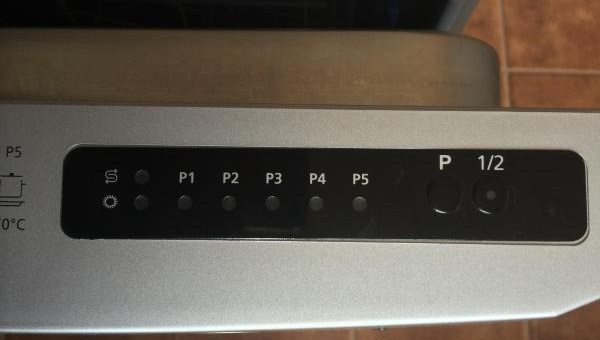
Press and hold the timer and P keys for approximately 3 seconds until the countdown ends.
The machine will go into the function selection mode, in which you can use the same P button to switch to the hardness mode, displayed as the English letter r.
Using the timer button, select the desired level of hardness.
Press the power button to save the setting.
Now we need to add salt granules to the salt reservoir to prevent scale buildup in the machine. This step can only be skipped if your water hardness level is 1 or lower. Otherwise, we'll proceed to adding salt granules to the reservoir.
We take out the lower basket for dishes from the washing chamber.
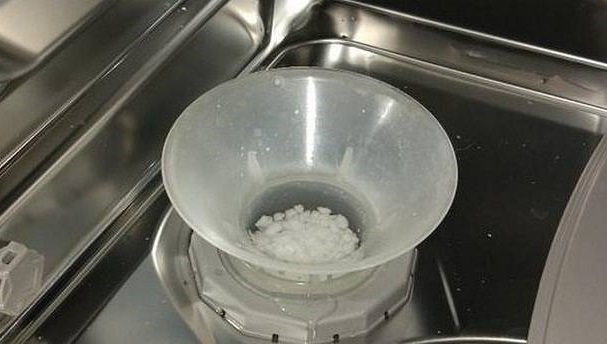
We unscrew the lid of the salt bunker.
We insert a special funnel, which comes with the Beko dishwasher, into the hole in the salt compartment to make it easier to load the salt granules.
Pour about a liter of water into the hopper.
Add about a kilogram of salt.
We take out the funnel.
Now you can stir the salt with a spoon to help the salt solution prepare faster.
Tightly screw the tank cap clockwise.
Experts recommend using only special salt designed for dishwashers, as its granules are cleaner and larger than those of regular salt, and therefore perform their job of restoring the ion exchanger better.
After adding salt, be sure to ensure that the salt solution doesn't spill onto the bottom of the wash chamber. If this happens, it's not a problem, but to avoid corrosion, it's best to wipe off any remaining salt with a cloth or start the wash immediately. The latter option is preferable, which is why it's always recommended to add salt just before starting the wash cycle.
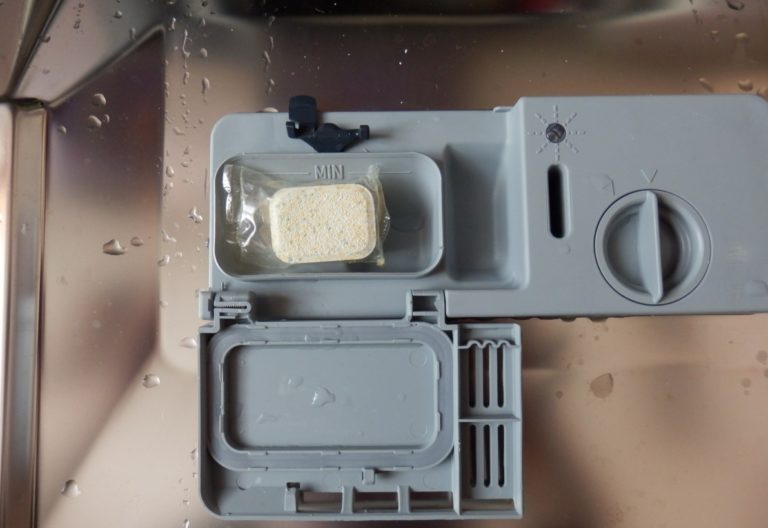
All that's left to do is add detergent and run a cycle. You can choose from powder, gel, or tablet detergents that contain multiple ingredients. Regardless of the detergent you choose, add it to the detergent dispenser, then add the rinse aid to ensure streak-free dishes.
It's best to use household chemicals individually, avoiding 3-in-1 tablets and capsules, as this will produce a better effect and be cheaper.
Expensive dishwashers have a special cleaning program, but if your machine doesn't have one, you can select a standard cleaning cycle with a temperature of at least 60 degrees Celsius. A test run will also help ensure that all connections are made correctly, nothing is leaking anywhere, and that the appliance can be used for washing dishes. Wait a little while for the equipment to cool down after the test, and then you can start a full working cycle.
Everyday use of the Beko dishwasher
Now that we've figured out how to properly turn on the appliance for the first time, we need to understand how to use it correctly under normal conditions. If the appliance is already installed and tested, all the household chemicals are loaded, and the water hardness settings are set, all that's left is to make the final preparations before a specific wash.
We open the door of the washing chamber.
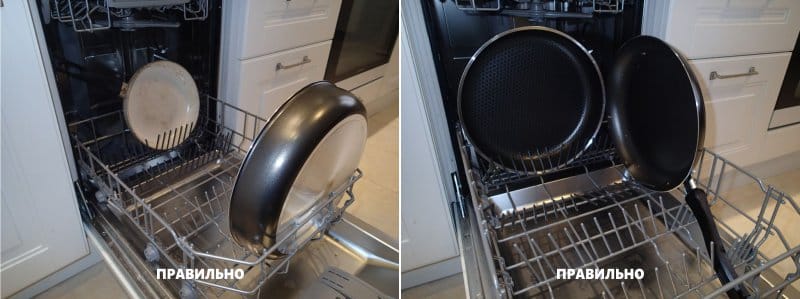
Load the dishwasher with lightly soiled dishes free of food debris, seeds, and other debris, arranging them properly in the baskets, placing all large utensils in the lower basket and all small utensils in the upper basket. Also, be sure to leave at least a small gap between the utensils to allow water to circulate freely between all the elements.
We check that the dishes do not interfere with the free movement of the spray arms.
We select the appropriate washing mode, and if necessary, we activate additional options, for example, half-load mode or delayed start.
Press the Start button to start the wash.
We close the door of the washing chamber.
After turning on the machine, it's important not to open the door to avoid interrupting the cycle and scalding yourself with hot steam when the intensive wash cycle is running. After finishing the cycle, turn off the machine and empty the dishes if the dishes are already dry.
To help your appliance dry faster, prevent mold from forming inside, and keep it smelling fresh, leave the machine door open for at least an hour after each cycle.
To ensure your dishwasher lasts as long as possible, be sure to clean it after each cycle. Simply wipe the surfaces with a dry cloth, wipe away any moisture inside the washing chamber, remove any food debris clogging the rubber door seal, and clean the waste filter by removing it and rinsing it under a strong stream of tap water.
It also wouldn't hurt to thoroughly clean the appliance with a special cleaner every three months. After purchasing this powerful household cleaner, run it without any dishes, but with the cleaner inside the wash chamber. This will remove all dirt and debris from inside the machine, reaching even the most hard-to-reach places, such as the dishwasher hoses. By following all the recommendations above, your appliance will always be in perfect condition, and your dishes will continue to delight you with their sparkling cleanliness.

 After purchasing a brand new household appliance, it's always tempting to try it out right away, running the first cycle you encounter. However, it's best to avoid such an adventure, as there are a number of preparatory steps that must be completed before turning on your Beko dishwasher. In today's article, we'll cover in detail how to properly prepare your "home assistant" for its first use, how to use it in everyday life, and what nuances to consider during operation.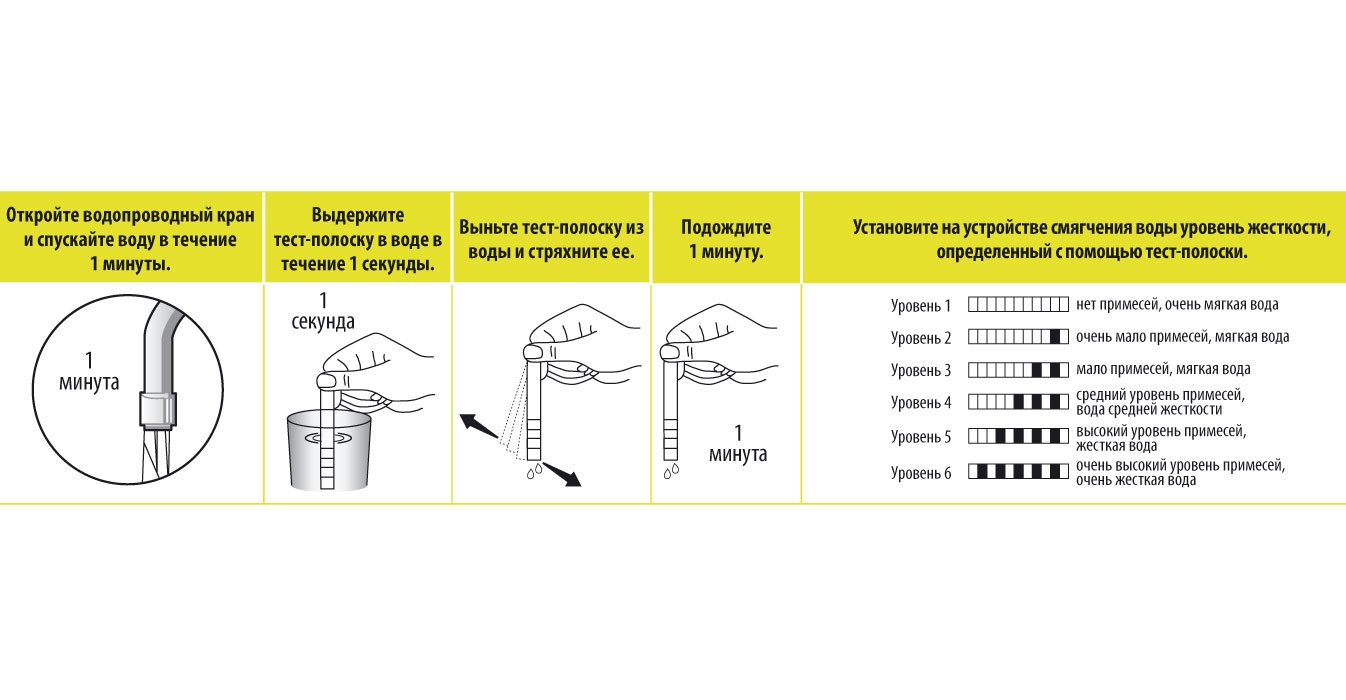




















Add a comment