
How to turn on a Bosch dishwasher and start the wash
 Operating a Bosch dishwasher is no more difficult than any other household appliance. The control panel is designed for even first-time users. However, before turning it on, it's important to understand the machine's capabilities to ensure the highest possible cleaning results.
All information about how to turn on your Bosch dishwasher, what programs it has, how to install it, and how to connect it to the appliance is provided in the user manual. Therefore, it's crucial to read the user manual. Let's delve into the details.
Why is the first start of the Bosch dishwasher special?
Having bought a new dishwasher, you don’t need to try it out right away. The manufacturer Bosch recommends that the first time you run the dishwasher, it should be empty, without any dishes in the chamber. The test cycle is necessary to:
- wash the machine from the inside, removing factory grease, dust and dirt;
- Check the dishwasher for proper installation, leaks, and proper water intake and heating. If a problem is identified, troubleshooting it during the test cycle will be easier—the user won't have to unload the dishes from the wash chamber.
The first start of the dishwasher is carried out without dishes in the working chamber, but detergent is added to the dispenser.
Detergent will help remove dirt from the internal parts of the machine. Also, before using the dishwasher for the first time, be sure to add special regenerating salt. We'll discuss the purpose of these granules below.
Understand water hardness
It's crucial to know the water hardness in the region where your dishwasher will be used. Some Bosch models come with special test strips that can be used to measure the hardness. The strip is dipped into the water for a few seconds, after which its color is evaluated.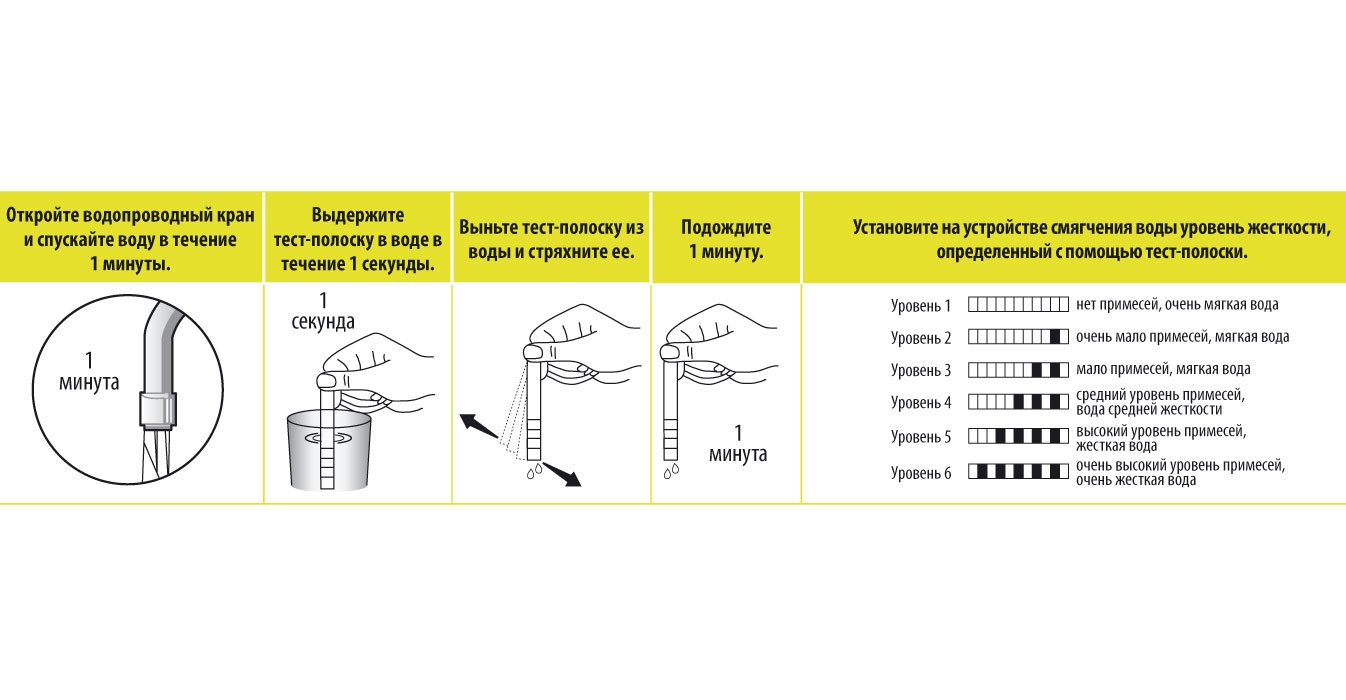
Next, the shade is compared with the chart provided in the dishwasher's instructions. The Bosch dishwasher's softener is adjusted based on the water hardness in the region. If test strips are not included, you can purchase them separately or confirm the reading by calling your local water utility.
The softener adjustment process is described in detail in the dishwasher manual. You need to set the knob correctly based on the water hardness level. This will ensure the dishwasher uses the correct amount of salt.
Activating the machine for the first time
Before using your dishwasher for the first time, be sure to add regenerating salt. You can buy this product at any supermarket, or you can purchase a starter kit with the dishwasher.
Add salt to the dishwasher as follows:
- open the dishwasher door;
- remove the lower basket to access the container located at the bottom of the wash chamber;
- unscrew the tank cap;
- fill the container with water to the top mark;
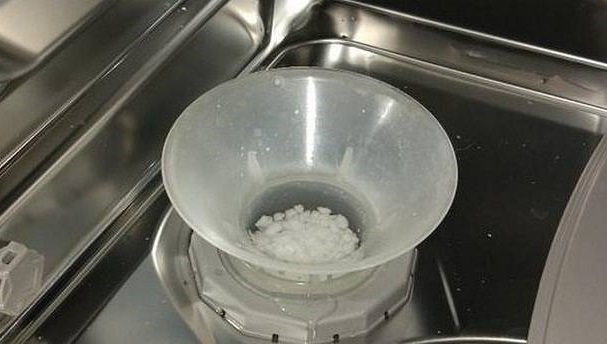
- pour regenerating salt into the container;
- screw the compartment lid tightly;
- Wipe away any salt water from the bottom of the wash chamber (it will be forced out of the tank when you add salt).
The salt container only needs to be filled once. During subsequent use, simply add salt to the reservoir. A special indicator on the control panel of Bosch machines indicates the presence of salt granules in the container.
Salt is poured into the container using a special funnel. This device is usually included with the dishwasher. If you don't have a funnel, use a regular cup. The reservoir holds 1-1.5 kg of salt granules, depending on the dishwasher model.
Next, open the water supply tap and plug the dishwasher's power cord into a power outlet. Now you're ready to use the dishwasher for the first time.
Why do you need a starter kit?
When selling a Bosch dishwasher, consultants offer customers the option of purchasing a starter kit. This includes all the products needed to operate the dishwasher. Of course, you can also choose these yourself, opting for other brands of household cleaning products.
Often, purchasing a starter kit for a dishwasher is cheaper than purchasing its components separately from other stores.
The starter kit includes three products: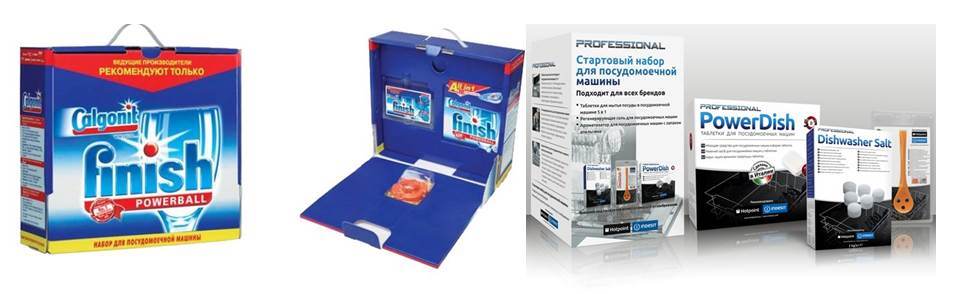
- dishwashing tablets;
- rinse aid;
- regenerating salt.
The advantage of starter kits is that they contain products from a single manufacturer. This means their components are highly compatible, ensuring high-quality cleaning results.
In addition to the basic cleaning products, you'll need a special cleaner during dishwasher operation. This solution is used every 2-3 months to flush the inside of the machine of grease, dirt, and limescale. Some users also add fragrances, but this is optional.
Purpose of salt
Hard water is the dishwasher's main enemy. It promotes scale buildup on parts and reduces the cleaning performance of dishes. Salt helps soften the water, bringing it to a state where the equipment's performance pleases the owner.
Special dishwasher detergent shouldn't be confused with regular table salt, which is found in every kitchen. Only regenerating salt can soften hard water. Therefore, don't skimp on it and try to substitute it with a food-grade alternative.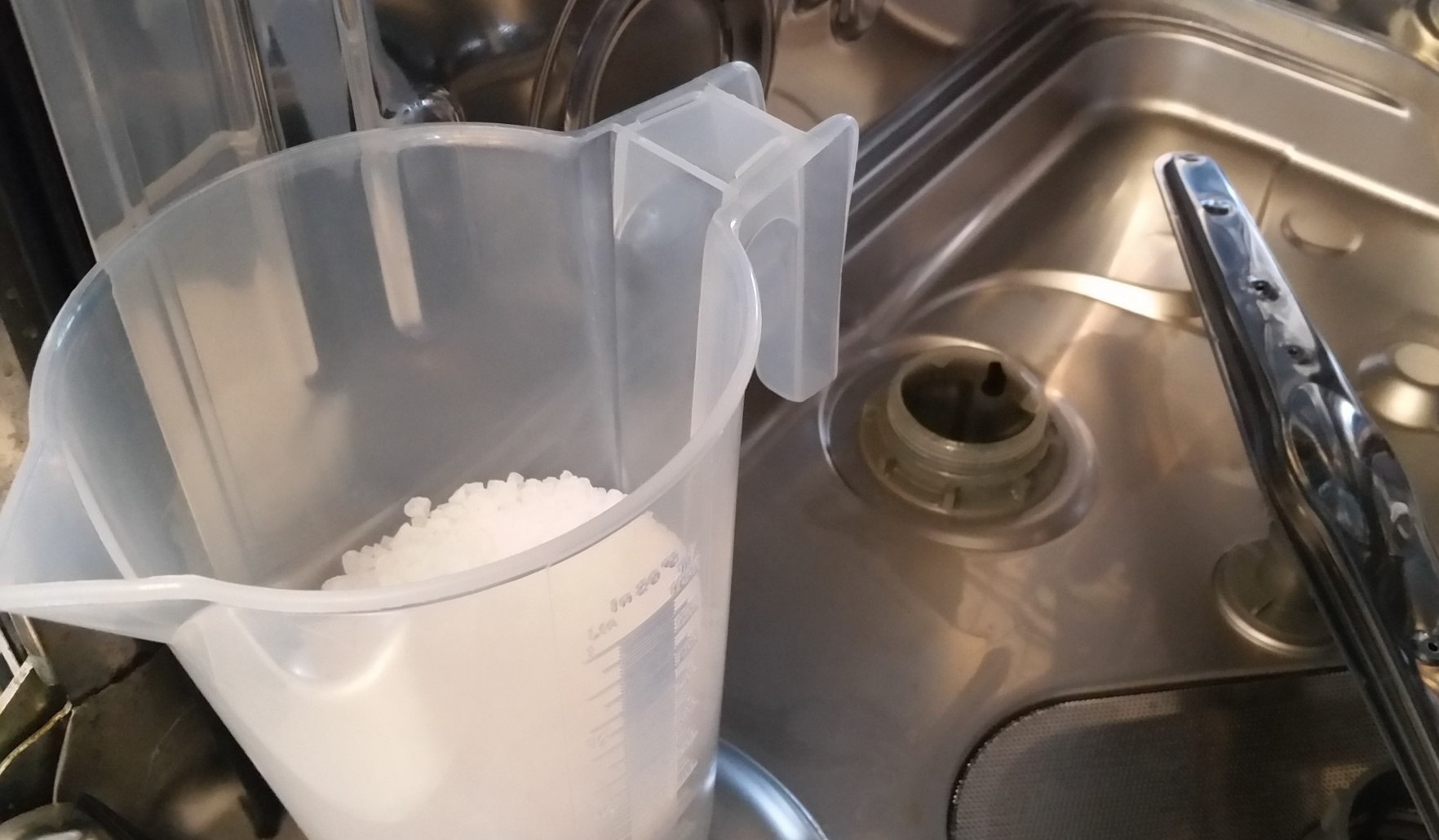
If the water in the area where you use your dishwasher is soft, you can skip the salt. In this case, there's no need to soften the water.
Special dishwashing detergents
Bosch dishwashers can be used with any commercially available dishwasher detergent. There are no restrictions on manufacturers or components. These may include:
- pills;
- powders;
- gels.
The only restriction is that the detergents must be designed specifically for dishwashers. Products intended for hand washing cannot be used.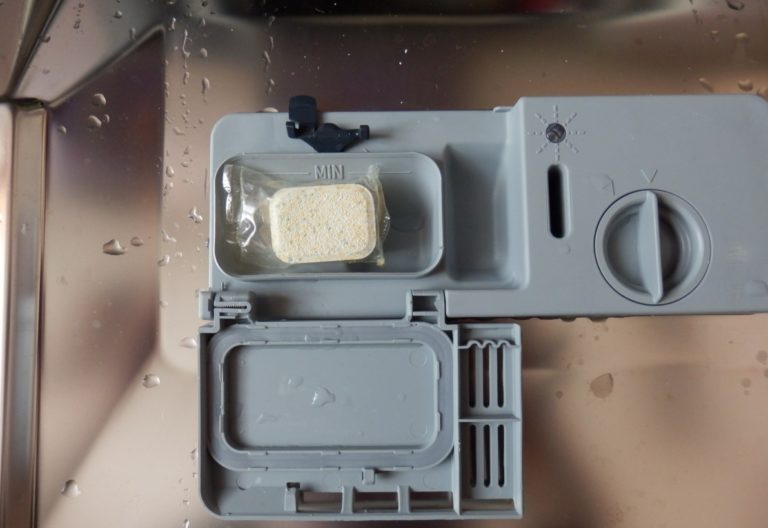
The range of household cleaning products for dishwashers is astonishingly diverse. All products, depending on their ingredients, are divided into three groups:
- with chlorine and phosphates;
- without chlorine-containing elements, but with phosphates;
- free of chlorine and phosphates.
When choosing a cleaning product, it's important to consider the desired result. A solution without chlorine won't produce the desired effect when bleaching dishes. Therefore, it's best to use chlorine-containing solutions for cleaning tea or coffee cups.
The absence of phosphates can lead to the formation of a white film on dishes and the walls of the washing chamber. This can be avoided by simply increasing the amount of detergent used.
Is it necessary to use mouthwash?
Rinse aid is added to the washing chamber during the final stage of the wash cycle. It creates an invisible, thin protective film on dishes, prevents streaks, and ensures faster drying.
If you don't use rinse aid, unsightly streaks will remain on your glass and crystal dishes. It will also dull your cutlery. This product is inexpensive. Pour the liquid into a separate compartment located next to the detergent dispenser.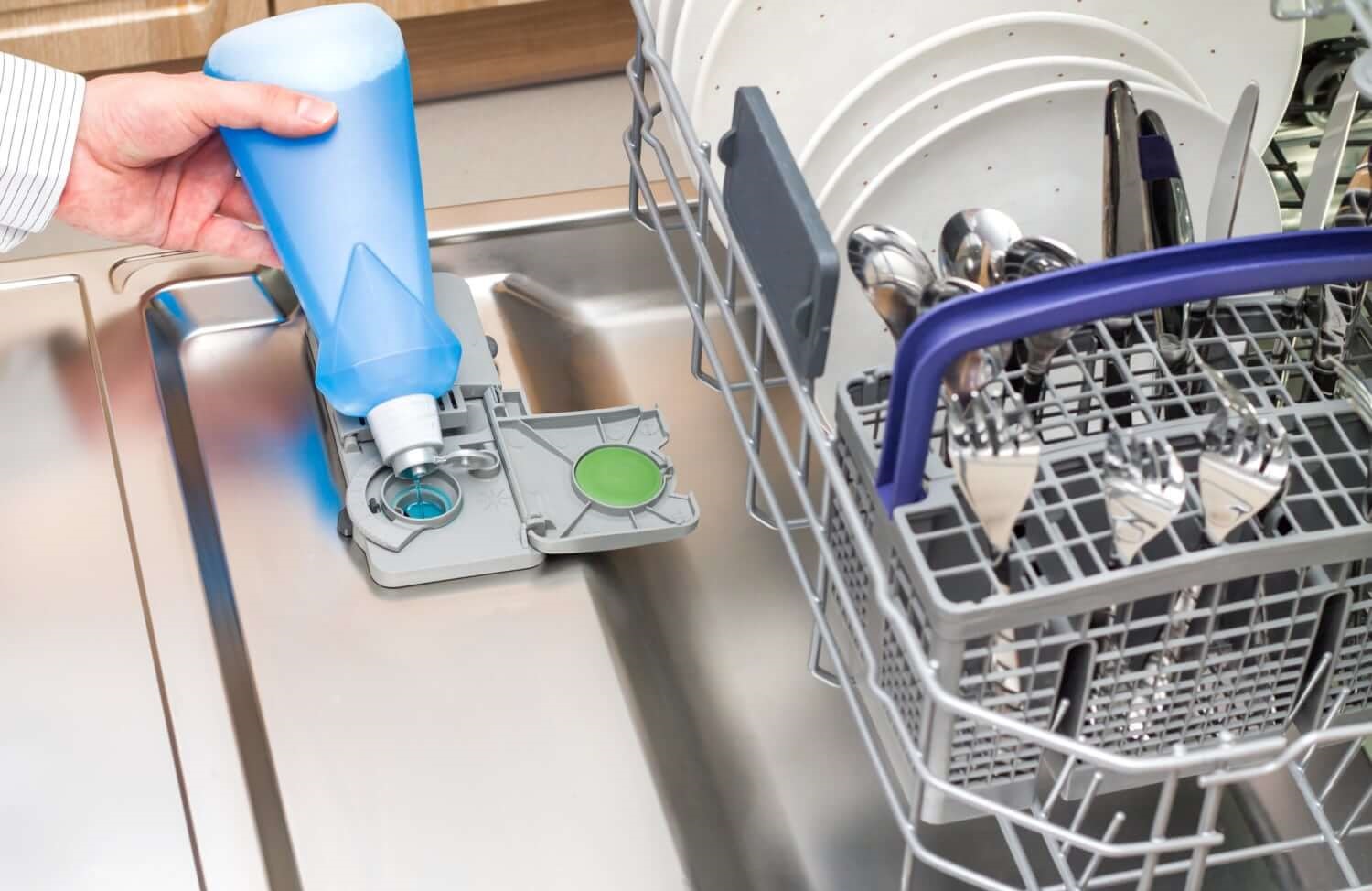
Rinse aid dosage is manually adjusted. Initially, run the wash cycle using the factory settings. If a white residue remains on the dishes and they become dull, the dosage will need to be increased. Excessive rinse aid will result in rainbow-colored streaks on pots and pans, as well as sticky cutlery.
Placing dishes in baskets
Washing results depend heavily on how well the dishes are arranged in the racks. There are specific guidelines for loading plates, cups, forks, spoons, pots, and pans into dishwasher trays. Failure to follow these guidelines will result in poor cycle performance.
The washing chamber of the machine contains sprayers from which liquid is poured. The dishes should not interfere with the rotation of the rocker arms, otherwise the water circulation in the system will be disrupted. Also, the opening valve of the detergent dispenser must not be blocked.
Before loading dishes into the machine, make sure they are suitable for this type of washing. Some items cannot withstand prolonged contact with water or high temperatures. These include:
- wooden and cast iron cookware;
- products made of non-heat-resistant plastic;
- devices with wooden or mother-of-pearl handles;
- dishes made of copper, aluminum and bronze.
Before loading the dishes into the machine, clean off any dried-on food residue.
Some Bosch dishwashers have a soak function. It's ideal for cleaning pots, pans, and baking sheets. If this option isn't available, be sure to first scrape off any burnt-on or stuck-on residue with a special brush. These can be purchased at a hardware store.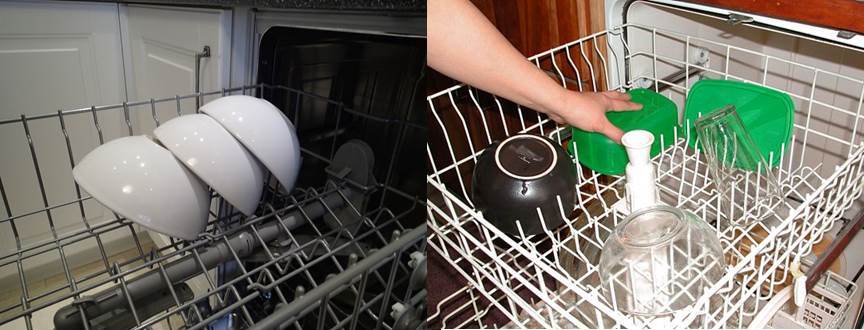
To improve cleaning efficiency, you can pre-treat your dishes with hot water. For example, lay them out in the sink and turn on the tap. This will soften the grease on the surface, making it easier for the machine to remove.
Bosch dishwashers are equipped with two baskets, an upper and a lower one, for storing dishes. There are three types of baskets:
- Vario;
- Vario Flex;
- Vario Flex Plus.
The baskets differ in the number of mobile and folding elements included in the design. The Vario Flex and Vario Flex Plus baskets feature additional protection for fragile items.
The number of baskets for dishes depends on the dishwasher model. Some dishwashers have two, others have three. The third tier is designed for cutlery and non-standard-sized items.
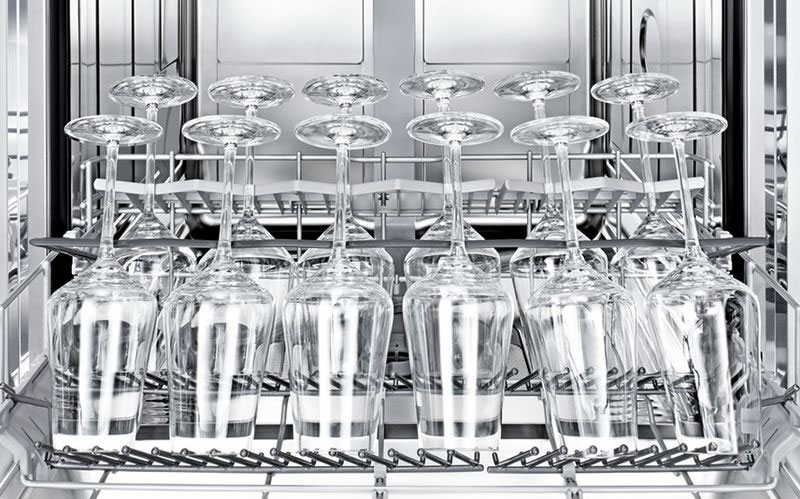
The Rackmatic system allows you to adjust the position of the dish racks. If you need to store larger items below, the top rack can be raised. Special locking devices are provided to secure stemware and glasses.
Recommendations for arranging dishes are provided in the Bosch dishwasher manual. Generally, the top rack contains:
- mugs;
- coffee cups;
- glasses;
- sauce boats;
- saucers;
- wine glasses;
- shoulder blades;
- other small cutlery.
The following items should be loaded into the bottom basket:
- serving plates;
- pots;
- saucepans;
- baking sheets;
- frying pans;
- lids and other large items.
Deep dishes (soup bowls, mugs, saucepans) should be placed upside down. This prevents water from collecting inside and allows it to drain freely from the sides. Do not nest dishes inside each other. Leave a space between the plates to allow liquid to wash them from all sides.
Monitoring the condition of the dishwasher
Your dishwasher needs to be maintained. Following a few simple recommendations can extend its lifespan. First, clean it periodically with specialized cleaning products. Affordable cleaners from brands like Finish, Somat, and others are available.
Experts recommend using dishwasher cleaner at least once every three months.
Secondly, be sure to clean the dishwasher's filter assembly. Food particles, fruit pits, and other debris accumulate in the mesh. If left untreated, the filter will become clogged, disrupting water circulation.
Third, wipe the interior of the dishwasher dry after each use. Be sure to leave the dishwasher door slightly open for ventilation. Clean the detergent dispenser periodically.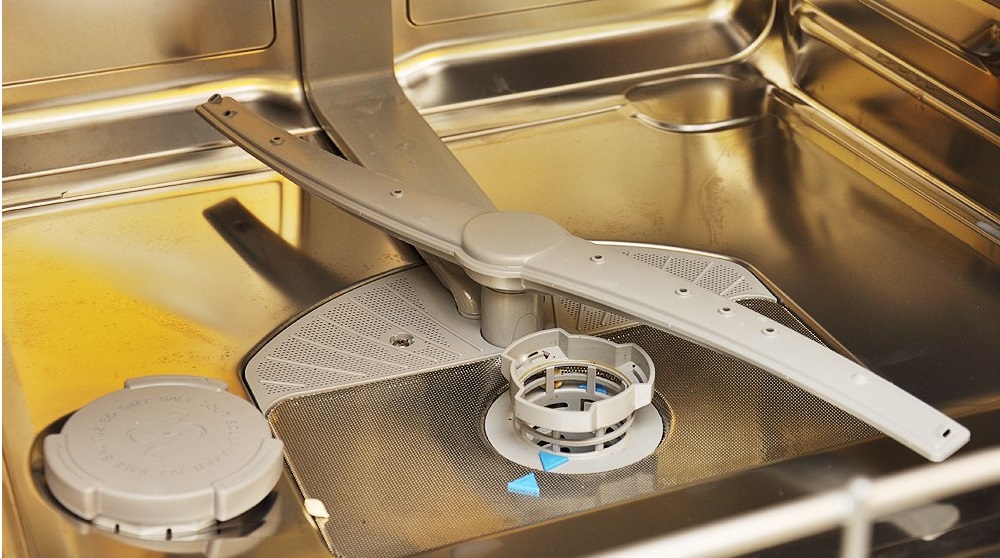
Users also need to monitor the condition of individual dishwasher parts:
- rocker arms;
- sprinklers.
If you notice scale or grease deposits on the surface of the parts, clean the machine with a special cleaner. The spray arms should be removed every 3-4 months and rinsed under warm running water to remove any food residue.
By following all the care recommendations, you can extend the life of your dishwasher and improve its efficiency. The rules are quite simple, so don't neglect them.
Interesting:





Readers' comments
Headings
Washing machine repair




For buyers




For users


Dishwasher




Add a comment