
How to turn on a Candy dishwasher and start the wash
 Before using a dishwasher or any other household appliance for the first time, it's best to read the instructions first to avoid damaging anything. However, you may not have the user manual at hand, so you have to rely on your own judgment. While dishwashers are intuitive devices, it's still a good idea to know exactly what to do before turning on your Candy dishwasher and starting it. Let's take a detailed look at the setup and operation of your "home helper."
Activating the Candy dishwasher and changing the program
The machine has been selected, purchased, transported, installed, and connected to all utilities. Now all that's left is to figure out how to properly start the car wash. To do this, follow our instructions carefully.
- Open the dishwasher door, pull out the lower basket first, load it, then push it back and repeat the procedure with the upper basket.
- Add the necessary products to the device: special dishwasher salt, detergent and rinse aid.
- Close the machine door.
You can tell that the door is tightly closed by a characteristic click.
- Plug the machine into a 220-240 volt power supply and make sure that the machine is connected to the water supply.
- Activate the device by pressing the power button.
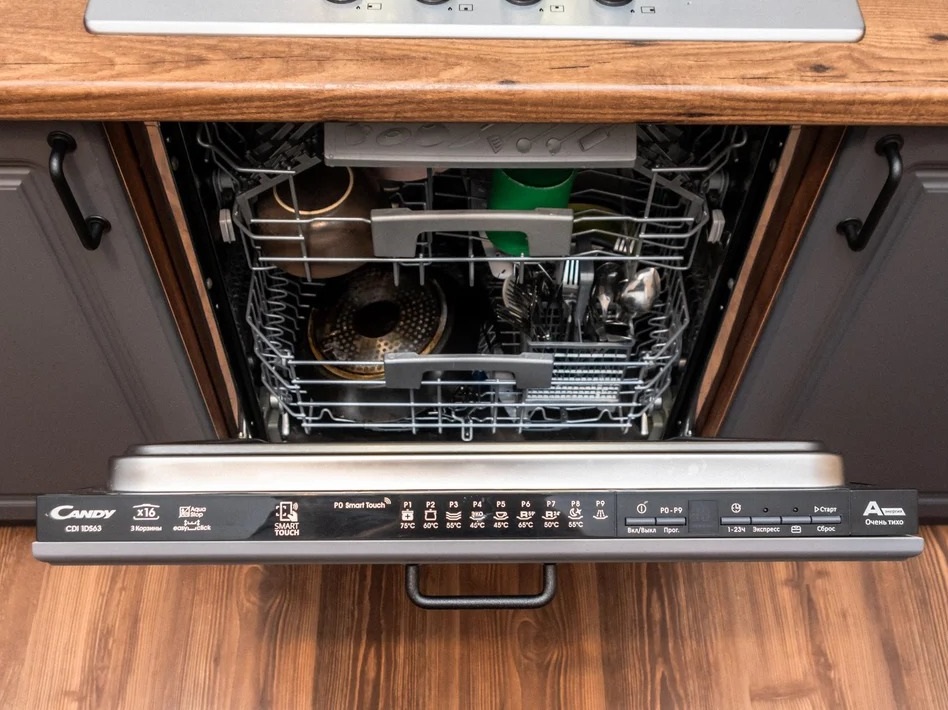
- Select a program by turning the program selection knob clockwise.
- Press the start and reset button to start the work cycle.
So, turning on the dishwasher takes just seven quick steps. When finished, remember to turn off the dishwasher using the power button and unplug it.
If you happen to realize during the wash cycle that you forgot to change the operating mode, you can change this at the initial stage of the work cycle. To do this, you should make sure that the detergent from the tray has not yet entered the washing chamber, otherwise, when you open the door, you may flood the floors, and you will have to add detergent again. If the process can no longer be stopped, then it must be interrupted.
- Press and hold the start and reset button for about three seconds to initiate the wash program reset process.
Simply turning off the dishwasher using the regular power button will not cancel the currently active program, as the dishwasher is capable of remembering the interrupted program, so when you turn the machine back on, the interrupted cycle will start again.
- Select the required washing mode by turning the mode selection knob.
- Press the start and reset button to restart the wash in the newly selected mode.
This guide will help you always wash dishes correctly, even if you chose the wrong program or simply forgot to change it before starting the machine.
Chemistry for PMM Kandy
Before any wash cycle, the dishwasher must be loaded with special household chemicals; the wash cycle should not be started without them. This primarily applies to dishwasher salt, which helps the ion exchanger soften hard tap water. Without it, stains will form on the dishes, and the ion exchanger itself may fail over time. How do I load the salt?
- Open the washing chamber door and remove the lower dish basket from it.
- Locate the salt reservoir cap at the bottom and unscrew it.
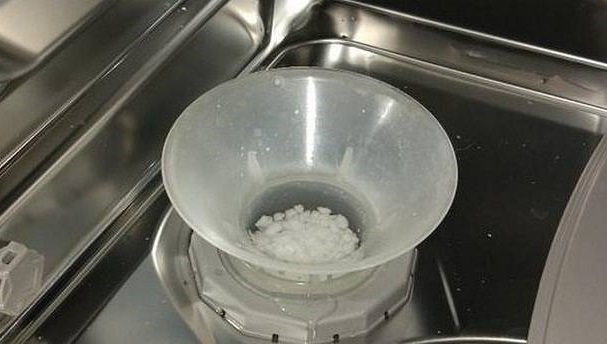
- If this is the first time you are loading the hopper, you will first need to pour about a liter of water into it.
- Now, using the funnel included with your Candy dishwasher, pour in about 2 kilograms of salt. If a little water spills out of the salt compartment during the process, don't worry, as it will all be washed out during the wash cycle.
Be sure to use special salt for dishwashers, as its crystals are cleaner and larger than those of regular table salt, meaning they last longer and are better at restoring the regenerative functions of the ion exchanger.
- Close the lid of the brine tank tightly to prevent the solution from spilling out during operation.
This amount of salt granules should last from several months to a year, depending on the hardness of your tap water and the settings you've set. To set the correct settings, you need to know the exact quality of the tap water in your city. You can purchase special test strips or check the data on your water utility's official website. Depending on the hardness, set the salt consumption by unscrewing the lid of the salt container and turning the ring with the arrow in the container to the minus sign to reduce salt consumption, or to the plus sign to increase it.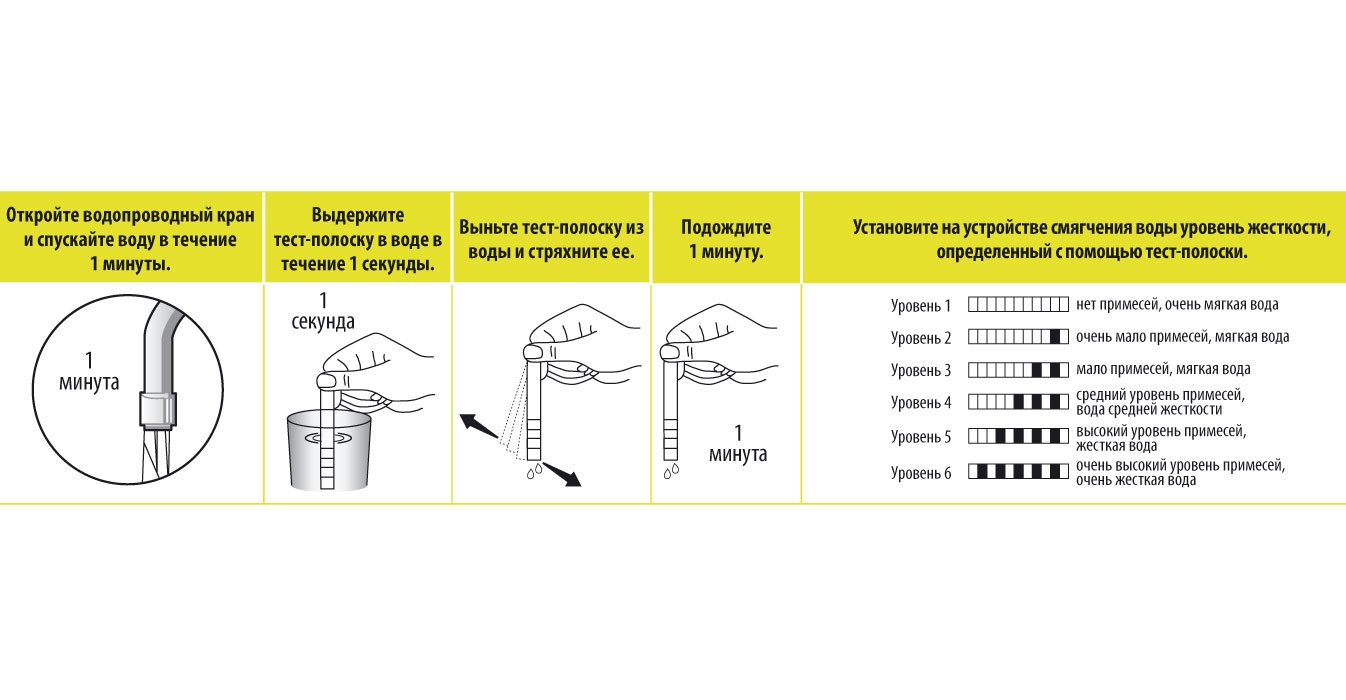
After adding salt, add detergent, which can be powder, gel, tablets, or capsules, as well as rinse aid, which is essential for perfect, streak- and stain-free dishwashing. Typically, dispense no more than one tablespoon of detergent into detergent dispensers for powder, gel, or rinse aid, and no more than one tablespoon for tablets or capsules. The detergent compartments are located next to each other on the inside of the dishwasher door. Be sure to add high-quality detergent specifically designed for dishwashers before the start of the wash cycle.
Filling baskets with dishes
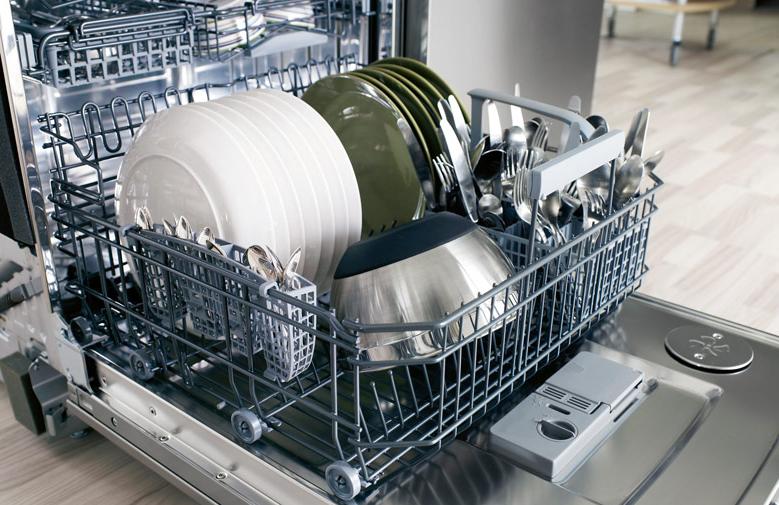
Properly filled baskets are crucial for the quality of dishwashing. Blocking the spray arms or simply placing dishes incorrectly inside the wash chamber can result in dirty dishes after a wash cycle. To prevent this, follow these simple loading guidelines.
- The bottom basket in a dishwasher is always designed for the largest items, such as pots, pans, lids, baking sheets, salad bowls, and other items that are the most difficult to clean.
- The upper basket is designed for thin and delicate dishes, such as glasses, mugs, saucers, small plates, and so on.
- Some dishwasher models have an additional compartment specifically for small cutlery.
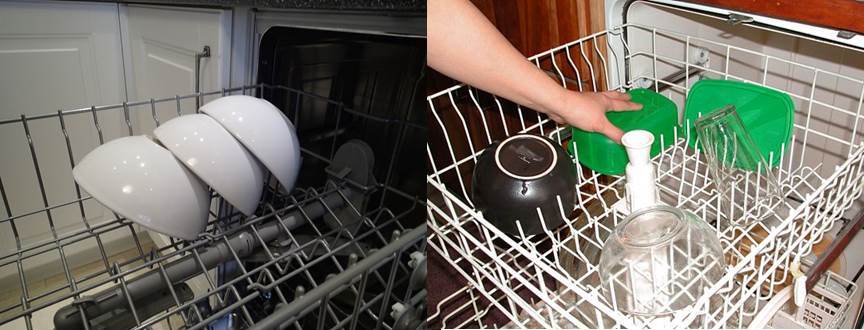
- Pots, salad bowls, glasses and other vessels should be placed upside down so that water drains off them.
- Be careful that dishes do not block the free movement of the spray arms.
- Each cutlery item must stand stably to prevent water streams from tipping over and breaking the cutlery.
- There should be at least a minimal gap between items to allow water to reach the entire surface of the dirty dishes.
- Try not to wash heavily soiled dishes together with lightly soiled ones.
- Be sure to first clean the dishes of any food particles, napkins, tea bags, or other debris that could clog the dishwasher filters.
The above recommendations will help you achieve perfect results from your machine.
Selecting a program
Manufacturers implement essential features in modern household appliances so that consumers can always select the right washing mode for their needs. The Candy dishwasher offers the following programs:
- Normal, suitable for lightly soiled dishes, such as plates and glasses. This mode uses approximately 17 liters of water, consumes 1.3 watts per hour, and lasts 120 minutes;
- Intensive, suitable for the dirtiest dishes with burnt-on grease, dried-on food residue, and other heavy soiling. It uses 21 liters of water and 1.7 kWh per hour, and the cycle lasts 173 minutes.
- Economical, designed for economical washing of normally soiled dishes. It uses only 12 liters of water and 1.02 kWh per hour in 165 minutes;
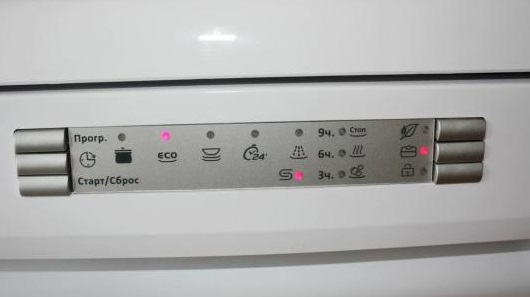
- The fast dishwashing machine is capable of washing up to six lightly soiled place settings in the shortest possible time. It uses 10 liters of water and 0.75 kW per hour, and runs for 40 minutes.
- 1 Hour is the daily dishwashing mode for dishes that should be washed immediately after use. Up to eight place settings can be washed in exactly 60 minutes, using 13 liters of water and 1.13 kWh.
- Soaking is suitable for situations where you need to pre-soak heavily soiled dishes and wash them later in the day. The duration of the mode is only 10 minutes, during which 7.5 liters of water and 0.008 kW per hour are used.
Now you know everything about turning on your Candy dishwasher, how to properly prepare it for use, how to load dishes, and which mode to select to start the wash.
Interesting:






Readers' comments
Headings
Washing machine repair




For buyers




For users


Dishwasher




Add a comment