
What to look for when buying a dishwasher?
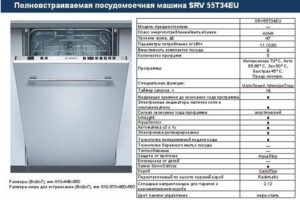 The desire to buy a dishwasher often results in fruitless attempts to find the perfect "home helper" among dozens of brands and sizes. Such appliances are expensive, and buying a dishwasher at random, relying on a consultant's help, or relying solely on the price tag is short-sighted and very risky. It's better to do your research beforehand and, when choosing, pay attention to the availability of the appropriate features and capacities in a specific model. We'll discuss these parameters in detail below.
Types of machines and their loading
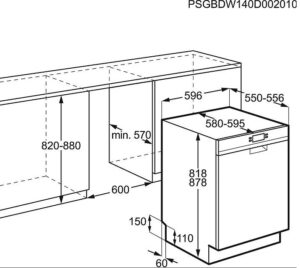
First, we evaluate the appearance of the dishwasher we're interested in, specifically its capacity and dimensions. These characteristics are interconnected and determine the maximum load capacity of the working chamber per cycle. This is expressed in the number of place settings—a standard set per person, which includes soup, salad, and side dish bowls, as well as a spoon, fork, knife, and mug. Pots, pans, baking sheets, and other additional utensils are counted separately.
The model's capacity is indicated on the price tag as the number of place settings. The dishwasher's type also indicates the permissible load capacity.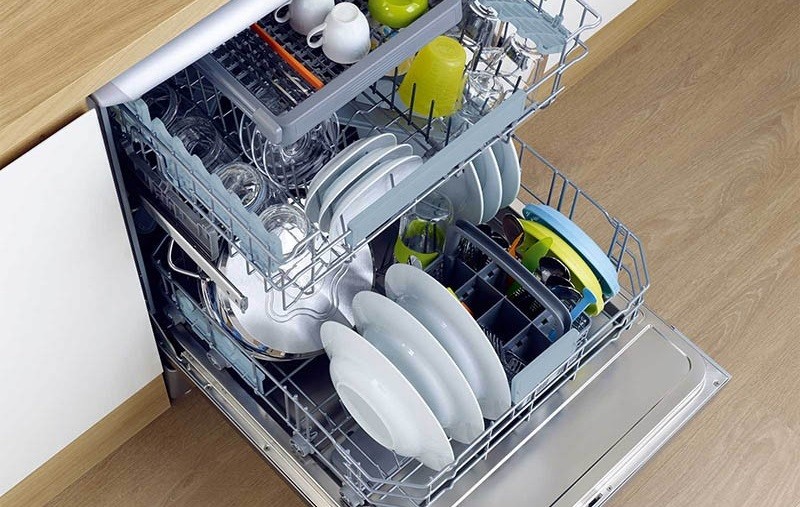
- Depending on the brand, a full-size dishwasher can hold between 10 and 18 place settings, making it suitable for families of 3 to 6 people. They are typically 60 cm wide, feature multiple settings, and offer multifunctional features. All of this affects the price, making them more expensive.
- Compact models are designed for fewer dishes and can handle up to 8 place settings. They are also inferior in terms of technology, as they offer a limited range of options and programs. However, their advantage lies in their compact size, allowing for installation on a countertop or in a cabinet. They are less expensive, but are only suitable for summer cottages, single people, or families of two.
- Narrow washing machines are the "golden mean," offering a compact 45 cm width and an excellent load capacity of 6-13 place settings. They are considered the most popular and ideal for average families of 4-5 people.
There are some non-standard sizes, so please read the markings carefully.
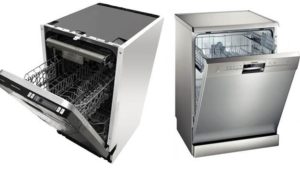
Next, consider the installation type. All dishwashers are divided into freestanding and built-in. The former can be placed anywhere and is purchased if the kitchen is already furnished and built-in installation is not possible. The latter fits under cabinets and "hides" directly within the cabinets. The machine can be built in completely or partially.In the first case, the front door will hide the entire unit from view, while in the second, the instrument panel will protrude.
Economy
It's important to evaluate a dishwasher's energy efficiency before purchasing it. It's natural that a dishwasher will consume significant amounts of water and electricity during operation. You can determine how much your utility bills will increase by carefully examining the manufacturer's labels.
First, we look at energy consumption. Typically, each unit has a special sticker indicating its energy class, from A+++ to D. Models A are considered the most cost-effective, with consumption not exceeding 0.8-1.5 kW per hour for one standard cycle, while all letters below B are considered more energy-intensive.. Here, the energy consumption is 1.06 kW per hour, as these machines are either too outdated and lack modern cost-cutting technologies, or are designed for industrial applications and are not suitable for domestic use.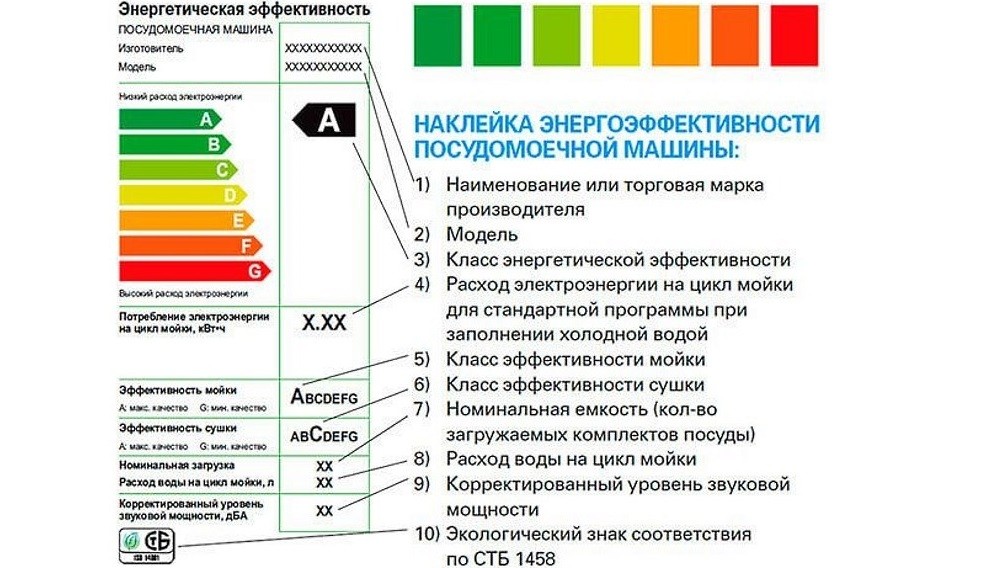
Don't forget about water consumption either. Most modern models use no more than 15-17 liters from the water supply, which is more economical than the 60 liters used by hand washing. However, it's worth keeping in mind that with intensive washing or a deep rinse, this figure will increase slightly.
Modes of modern models
The available functionality is no less indicative. The basic set includes a pre-soak, a wash, a rinse, and a hot steam drying function. Often, the list is supplemented by a couple of modes for specific types of dishes, such as glassware, plates, or pots. However, manufacturers often offer other options:
- express wash (shortened rinsing program for light dirt);
- intensive washing (long soaking and intense cleaning);
- delicate mode (for fragile materials such as porcelain and crystal);
A built-in grinder for discarded food waste, a child lock, a 24-hour delayed start, additional filtration, and self-diagnostics also make dishwasher operation easier. Many manufacturers offer a built-in backlight, sound effects, and automatic mode selection by scanning the loaded dishes. However, all modifications directly impact the price and subsequent repair costs, so it's best not to overpay for these extra features.
How noisy is the machine?
If the kitchen is located far from the bedrooms and a fully built-in model is purchased, noise levels are a non-issue. However, for owners of small apartments, studios, and freestanding units, there's a word of advice: pay attention to noise levels.
This parameter can vary from 37 to 65 dB for different dishwashers, and the lower the number on the label, the more discreetly the machine will operate.
Completely silent machines are expensive, so it's smarter and more economical to opt for units with a noise level of 45-50 dB. Don't forget about sound dampening—the kitchen cabinet will mask not only the dishwasher itself but also the vibrations it emits.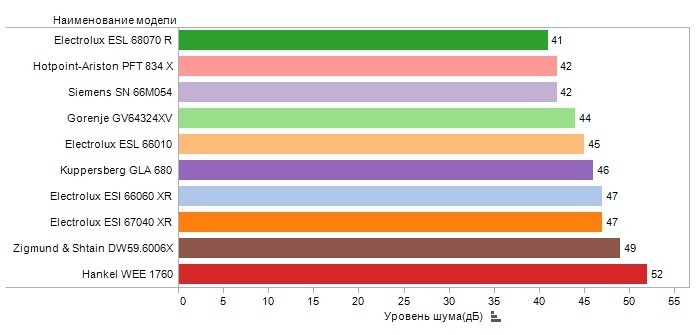
What means are used?
Regular dishwashing gels are strictly prohibited for use in dishwashers. Special detergents designed for automatic washing are available at almost any hardware store. There are both domestic and foreign brands, both expensive and inexpensive, but the defining characteristic is the eco-friendliness of the formula.
Eco-friendly products are gentler, have a natural base, and are hypoallergenic. Conventional products, on the other hand, contain harmful chemicals, irritate the respiratory tract and mucous membranes (if they come into contact with them), and often cause allergic reactions. However, aggressive substances remove stains better and faster, as it's impossible to wash dirty dishes with eco-friendly detergents the first time. The cost of boxes and bags labeled "Eco" is several times higher, so we base our choice on our financial capabilities.
Sometimes, detergent alone isn't enough. To ensure a long life for your dishwasher, it's essential to use softening salt and prevent scale buildup. You'll also need a rinse aid, which removes cleaning agents better and leaves dishes sparkling. Fragrances, which impart a pleasant fresh or herbal scent to plates and cups, are optional but recommended. Dishwasher cleaners also come in different forms.
- Gels. They're economical, easy to dispense, rinse quickly, and, most importantly, contain no abrasives, allowing you to gently wash dishes without scratching. They're ideal for daily use. Approximately 30 ml is needed per wash.
- Powders. The most popular option, distinguished by its availability and low price. However, they have many drawbacks: additional water softening is required, and granules spill outside the tray and scratch dishes. Approximately 25 g is required per cycle.
- Tablets. Their main advantages are versatility and dosage. They also come with rinse aid and softening salts. The downside is the high cost. One tablet is enough for one cycle.
Typically, the manufacturer specifies the preferred type of product to use and the required dosage in the instructions. Sometimes, specific models have some restrictions on the use of certain products.
We achieve the best quality of work
The cleaning class is another parameter that indicates how well a dishwasher removes dirt. Almost all modern models have the highest cleaning class, Level A, making it extremely difficult to choose incorrectly. However, remember that cleaning performance is influenced not only by the washing capacity but also by other factors:
- Design features of the working chamber. We look at the shape, number, and placement of sprayers and nozzles, as well as the ability to adjust the angle of the grates.
- Tap water hardness. If the water coming into your home is too saturated with impurities, expect scale buildup and stains on your dishes. Soft water is no better, as it doesn't remove stains as well. To avoid problems, ensure your water is sufficiently softened or hardened, or consider whether your dishwasher automatically adjusts the water hardness level.
- Detergent quality. It's important to use trusted manufacturers, carefully select the right ingredients, and calculate the correct dosage.
The last piece of advice is to remember the rules for loading dishes onto the rack. If you place the plates in specially provided holders and at a sufficient distance from each other, then the chances of a high-quality result are many times greater. We also choose the washing mode wisely – there is no point in stopping at the express wash for heavily soiled dishes.
Let's see how it dries
A dishwasher should not only wash but also dry. This way, you won't have to get your hands wet or waste time drying dishes. So, consider the type of drying system installed in the dishwasher:
- Turbo drying. This is a fan that evenly blows hot air over the dishes. This requires a fair amount of electricity.
- Condenser drying. This works by rinsing the dishes with boiling water or steam, then letting them dry on their own. Drying takes longer, but these dishwashers are less expensive.
- Intensive drying. A modern alternative that uses air circulation in the chamber to quickly and affordably dry dishes.
Intensive drying is only just gaining popularity, so dishwashers equipped with it are currently quite expensive. The key is to consider your needs: if you don't need to dry quickly, you can opt for an inexpensive condensation dishwasher.
Level of equipment protection
Technical capacity isn't everything. You also need to consider your safety. Therefore, we pay attention to the following:
- Leak protection. It's great if your dishwasher has full protection with the Aquastop system.
- Child lock. It would be nice to be able to lock the control panel by holding down certain keys.
- Automatic stop and water drain when the machine door is opened during the washing process.
You can purchase special door locks that will prevent children from accessing the dishwasher.
Knowing useful features, understanding dishwasher symbols, and a few tips will help you choose the perfect model without unnecessary hesitation and worry. This will free up your time for more important things.
Interesting:


Readers' comments
Headings
Washing machine repair




For buyers




For users


Dishwasher




Add a comment