
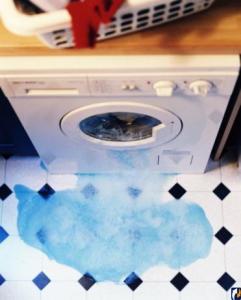
There is water left in the washing machine drum after washing.
 A broken washing machine can be a disaster for today's busy people. However, it's not always worth panicking and calling a repairman. Sometimes the problem can be resolved on your own in just 10-20 minutes. So, what should you do if there's still water in the washing machine drum after the cycle is over? We'll answer that question.
Causes of the malfunction
If after the end of the washing program, when you take out the laundry, you see that there is still water left in the drum, then do not rush to panic. It is necessary to carefully look at how much water is in the tank. The water may not have drained completely, or some may have remained. This could be due to:
- the drain hose was kinked or heavily clogged;
- the washing machine drain filter is clogged;
- If all the water remains in the drum and the machine makes a loud humming noise while running, then in 99 cases out of 100, this indicates a broken drain pump;
- When there is a little water left in the drum, the pump is working, but the water level sensor is 95% likely broken.
We drain the water and fix the problem.
To troubleshoot any malfunction, start by unplugging the washing machine and turning off the water supply. Next, check the hose behind the machine and make sure it's not kinked. Only then should you drain the water from the machine, having a bucket, a shallow container, and some rags ready for this task.
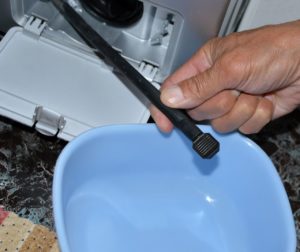 You can drain the water through the drain hose by removing it from the trap and placing a bucket underneath. This will also allow you to check for a blockage in the hose itself. If the water comes out normally, then the hose is clean and after draining the water, you can reconnect it. Otherwise, the problem with water in the drum will be solved by cleaning the hose. To do this, disconnect the other end of the hose from the machine, then use a small brush on a cable to clean it and rinse it with water.
If you've successfully drained the water through the hose, then inspect the drain filter. It's located at the bottom of the machine behind a plastic panel or door. Unscrew the filter counterclockwise and pull it out. If it's clogged, rinse it under running water and replace it. If the filter is clean, then you should definitely check the drain pump.
Important! Washing machines are equipped with a small hose for emergency draining, located next to the drain filter. Simply open the drain plug and place a container underneath to drain the water from the drum.
The pump installation method varies across washing machine models. In some washing machines, such as Samsung and LG, this can be done through the bottom, but in German models from Bosch and Siemens, the front panel must be disassembled, which complicates the repair process. The nuances of this process are detailed in the article. Replacing the drain pump.
Finally, if the reason for the remaining water in the washing machine drum is an ineffective pressure switch, then you will have to check it as well. If the pressure switch sends an incorrect signal about the water level in the tank during the draining process, then naturally water will remain in the tank. How can you check its functionality? To do this, you need to:
- remove the top cover of the washing machine;
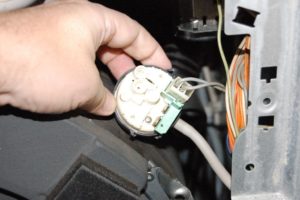
- find the level sensor, usually located at the top in the corner of the machine;
- disconnect the tube (hose) and wires;
- inspect the tube for blockages, as this is often the cause of incorrect sensor operation;
- inspect the contacts and clean them if necessary;
- Use a multimeter to check the resistance of the water level sensor;
Important! Don't blow air into the pressure switch to test it, as this could damage it. This is because there are different types of pressure switches, including analog ones.
- In case of malfunction, replace it with a new original sensor, connecting it to the tube, to the wires and screwing it into place.
Malfunction prevention
Recently, service center technicians have noted that drain pump failures in new washing machines have become more frequent, occurring as early as 2-3 years of use. This may be due to poor-quality components, or perhaps due to installation, where the drain hose is significantly extended, thereby increasing the load on the drain pump. This is why we draw your attention to the fact that you must follow the manufacturer's installation recommendations.
Problems with blockages can also be avoided in most cases if you follow these rules:
- Before washing, check the pockets of items for debris and foreign objects;
- regularly wash the drainage filter;
- clean the washing machine, for example, using citric acid or special products.
So, water remaining in the drum after a wash cycle is a sign of a malfunction that needs to be addressed immediately. If you're worried about troubleshooting the problem, and especially about repairing the machine, drain the water from the washing machine at least until the technician arrives. This will prevent an unpleasant odor from forming inside the drum. You can definitely fix this.
Interesting:




1 reader comment
Add a comment
Headings
Washing machine repair




For buyers




For users


Dishwasher




Good and clear video, thank you!