
Water in the dishwasher salt compartment
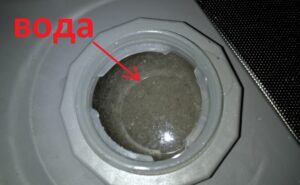 The list of minor problems that can occur with dishwashers is truly endless, but not every issue requires a service call. This includes water remaining in the dishwasher's salt compartment after a cycle. Today, we'll explore what this means and how to resolve it.
Should there be water there or not?
When housewives first discover that there is standing water in the salt tank of their dishwasher after use, many of them begin to fear that the appliance has broken down. In fact, there should always be water in the salt compartment. It is needed in this tank in order to create a saline solution together with salt, which is necessary for the normal operation of the ion exchanger, which softens hard tap water.
Therefore, the question "what to do" should arise not when there's water in the salt compartment, but when there isn't. Any official dishwasher manual will state that before using the appliance for the first time, you must first fill the salt compartment with water, then add special salt, which will flush out any excess liquid from the reservoir. The excess water will drain automatically, so owners don't need to take any additional steps.
Water in the dishwasher can be located not only in the salt compartment, but also in some other parts of the device in order to protect the rubber elements from drying out and damage.
If you don't want salt solution to spill unnecessarily onto the bottom of the washing chamber, there are a few recommendations to follow. To ensure the salt compartment functions properly, follow these simple steps.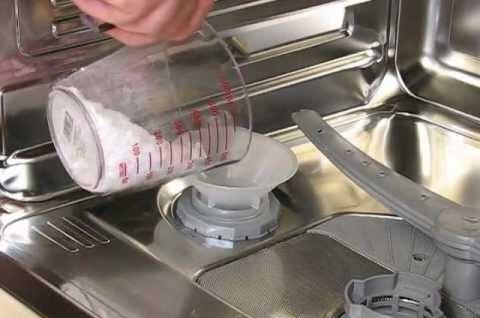
- Load the average dishwasher with no more than 1-1.5 kilograms of salt at a time. This amount of salt granules should last for several months of active use in moderately hard water conditions.
- Pay attention to the indicator on the device panel, which informs you when you need to add salt when it runs low.
- Be careful not to spill the salt solution from the tank onto the metal surface of the dishwasher. If this happens, wipe it off immediately with a cloth to prevent the solution from damaging the metal parts of the dishwasher.
These simple manipulations will help keep the ion exchanger in good order and make any water, even the hardest, soft.
The water in the dishwasher smells bad.
If there's standing water in your dishwasher, it can cause another unpleasant problem: a foul odor. This is usually caused by stagnant liquid in the appliance or water backing up from the drain hose. This often happens when the fastest cycles, which use cold water, are selected without drying the dishes. The odor comes from food residue and a layer of deposits on the walls of the compartments and hoses, which over time begin to rot.
Be sure to remove any food residue from the dishes before loading dirty dishes into the dishwasher.
If your washing machine starts to smell, don't bother trying to figure out the cause. Clean all the filters and hoses yourself, then run a long wash cycle using the hottest water and a drying step. If the smell doesn't go away after one cycle, run a second one. A long wash cycle is often recommended as a preventative measure, once every few months.
Therefore, if water is standing in the dishwasher's salt compartment, it's not a problem as long as it doesn't overflow. However, if it overflows or produces an unpleasant odor, it's important to address possible causes, such as improperly positioned hoses, pumps, sensors, and filters.
Interesting:





Readers' comments
Headings
Washing machine repair




For buyers




For users


Dishwasher




Add a comment