Washing Machine Inlet Solenoid Valve - Checking and Replacing
The inlet valve is used to draw water into the machine for washing. It has two functions:
Open,
And closed.
Most often, it is in the closed position. When current flows to its coil, an electromagnetic field is generated. This field creates the necessary actions to open it.
In other words, it tightens the plunger and the membrane opens. Water flows into the dispenser hopper, where it washes away the detergent. It then flows into the machine's tank along with the detergent. When the required amount of water has been drawn, the power to the coil is cut off, and the water supply stops.
Types of valves
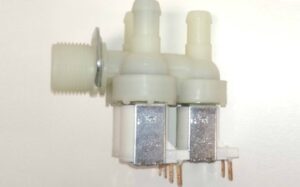
There are several types of washing machine valves. Some have one coil (section), others two, and still others three. Each section is a separate path for water flow. The number of these sections is determined by the different designs of washing machine models. Some require one coil, others two, and so on.
In models with only one valve, the water flow direction is controlled by a mechanical control lever. It directs water into the various sections of the plastic dispenser. This design is typical of older washing machines, where the single-valve system is located adjacent to and works in conjunction with the control lever.
More modern washing machines have an electronic control module and no mechanical drive. They use valves with two or three coils (sections). One coil supplies water to one section of the washing machine's plastic dispenser. The other coil supplies water to the second section. To supply the third section, a third coil is required. Or, in the case of a dual-coil valve, this is accomplished by simultaneously activating both coils.
How to check the intake valve?
Let's look at checking the valve. To ensure this washing machine component is working properly, remove it. Then connect the inlet hose to the inlet valve. Next, apply 220 volts to each coil in turn. If the valve is working, it should allow water to flow when electricity is supplied. That is, to open up.
And if there's no power, don't let the water through. That is, close the door. This experiment requires extreme caution. If water gets on live wires, it will cause a short circuit. Therefore, it's important to take maximum precautions. Also, remember that water will leak during this test. It should be directed into a prepared container.
First, check the inlet valve screen. If it's clogged, it could be blocking the water supply. This valve component should be removed and cleaned. Then, replace it. Failure to do this will result in water flowing into the machine very slowly or not at all.
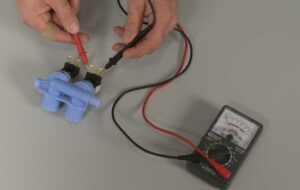
If the valve doesn't open when power is applied, its coil is most likely burned out. To confirm this, you can use a multimeter (tester). It measures resistance. Normal resistance is approximately 2-4 kOhm. You can replace the coil. If you have a spare valve, you can remove it. If not, you can order a new coil or a complete valve. They are usually quite inexpensive.
It's also important to determine if the fittings have pressed-in plastic inserts. These reduce the amount of water entering the machine. They're typically found on the fitting of the inlet valve, the one that supplies water to the rinse section of the dispenser. If the insert falls out, the water pressure increases, causing too much water to enter the dispenser. A faulty valve is easier to replace than to repair.
How to change a valve?
Most often, the valve is located at the top of the machine on its rear wall. To access it, we need to remove the top part of the case (the cover). The cover is secured with two screws located at the back. Unscrew them. Then push the cover from the front toward the back wall. Then you can remove it.
If you have a top-loading machine, the valve is usually located at the bottom of the rear panel. To access it, you'll need to remove the side panel of the washing machine.
Before removing the valve, remember to turn off the water supply. Then, disconnect the wire terminals and hoses. If the hoses are secured with disposable clamps, you can prepare several disposable clamps in advance or use reusable ones you've already stocked up on.
After this, loosen the retaining bolts. Some models have a latched inlet valve. In this case, pull back on the retaining part of the latch, turn the valve, and pull it out.
The IWse-5105 washing machine's off/on button doesn't work. The machine fills with water and then drains it without stopping. The H2O screen flashes and beeps. The buttons are locked. Please help. What is this problem? I changed the control module from another car, the OFF/OFF button worked and that's all, I checked the pressure switch, it clicks when you blow into the hose without clogging, I could only ring two contacts out of 3 with a tester, and the sensor is normal, I removed it and checked it
If it says H2O, the machine isn't seeing any water. Remove the water inlet filter and try it without it. The inlet hose and water pressure should also be checked.
The inlet valve is broken, and the washing machine is still filling with water even when it's turned off. For now, we're shutting off the main water supply. But if we can't replace the valve right now, can we still wash with the main water supply open?
Do you have two valves? If so, pinch the rubber hose from the faulty valve inside the washing machine and use one. Just swap the valve power connectors depending on the wash cycle. This will ensure water flows into only one detergent/fatten dispenser.

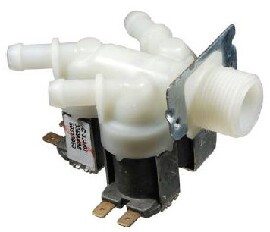 The inlet valve is used to draw water into the machine for washing. It has two functions:
 There are several types of washing machine valves. Some have one coil (section), others two, and still others three. Each section is a separate path for water flow. The number of these sections is determined by the different designs of washing machine models. Some require one coil, others two, and so on.
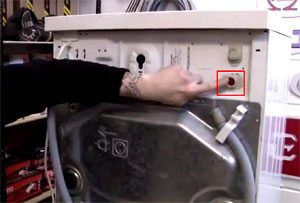 Let's look at checking the valve. To ensure this washing machine component is working properly, remove it. Then connect the inlet hose to the inlet valve. Next, apply 220 volts to each coil in turn. If the valve is working, it should allow water to flow when electricity is supplied. That is, to open up.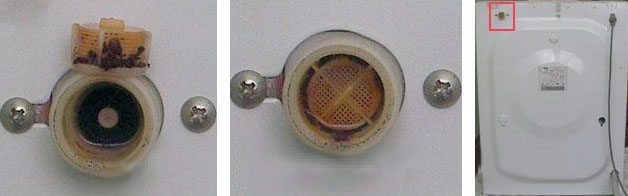
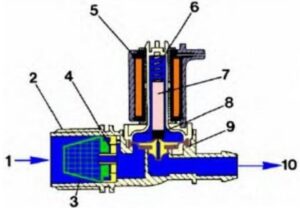
















The IWse-5105 washing machine's off/on button doesn't work. The machine fills with water and then drains it without stopping. The H2O screen flashes and beeps. The buttons are locked. Please help. What is this problem?
I changed the control module from another car, the OFF/OFF button worked and that's all, I checked the pressure switch, it clicks when you blow into the hose without clogging, I could only ring two contacts out of 3 with a tester, and the sensor is normal, I removed it and checked it
If it says H2O, the machine isn't seeing any water. Remove the water inlet filter and try it without it. The inlet hose and water pressure should also be checked.
The inlet valve is broken, and the washing machine is still filling with water even when it's turned off. For now, we're shutting off the main water supply. But if we can't replace the valve right now, can we still wash with the main water supply open?
Change the intake valve.
Do you have two valves? If so, pinch the rubber hose from the faulty valve inside the washing machine and use one. Just swap the valve power connectors depending on the wash cycle. This will ensure water flows into only one detergent/fatten dispenser.
Or you can turn off one valve so as not to pinch the hose.
Hello, can anyone tell me if I can remove the valve from an Indesit washing machine and install it on a Bosch?
Is it possible to install a different valve according to the markings?