
Choosing washing machine powder
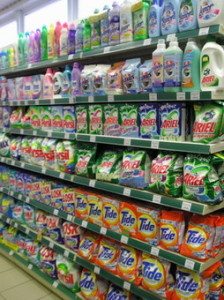 In modern society, it's not the product itself that sells, but rather its image. This image is created through advertising in the media. Some say they dislike advertising and quickly change the TV channel when they see it. Others swear they've learned to ignore commercials. Nevertheless, advertised laundry detergents sell better than those that aren't. This is a proven fact. Researchers believe that approximately 90% of purchases are influenced by advertising campaigns and the established image of a particular product. Significant budgets are poured into advertising precisely because its effectiveness has been proven.
Incidentally, one of the most popular products for advertising is laundry detergent. The laundry detergent market is fiercely competitive, with numerous manufacturers and brands available.
But which powder is actually good for washing, and which is just well-advertised?
What is important when choosing a washing powder?
 First and foremost, laundry detergent must not pose a health hazard. Almost all detergents contain chemicals. The relevant authorities must ensure that they comply with safety regulations. Low-quality laundry detergents can be harmful even when worn.
A special conformity mark on the box will tell you whether a detergent is safe. This means the manufacturer has received a safety certificate. However, counterfeit products may have this mark without permission. Counterfeit products are said to be more often found in plastic bags. This is because packaging detergent in a box requires specialized packaging equipment, which not every fraudster is willing to invest in.
Quality and safety
 Testing the washing quality of a particular detergent is not a necessary requirement for sale. And just because a detergent has been certified as safe doesn't mean it cleans clothes effectively.
A quality detergent is found by the buyer himself through trial and error.
Likewise, every washing machine user decides how expensive their laundry detergent should be. Unfortunately, advertising campaigns have become practically the only way to gain information about a new product. And the information conveyed in advertising is not always an accurate comparative description of the advertised product. More often, it is merely used to create a certain image desired by potential buyers.
A series of tests have shown that an expensive and well-advertised detergent does not always perform its functions better than a cheap one. Quite often, it's the other way around. But nevertheless, it's more popular. And that's because its producers have created the most compelling advertising video.
Composition and characteristics of powders
All detergents have their own chemical composition. And, surprisingly, they're all made from similar components. They contain surfactants (surface-active agents). These act as soap and form the basis of laundry detergent. Everything else in laundry detergent is dyes, bleaches, enzymes, fragrances, phosphates, and other substances.
The quality of a detergent is determined by the correct balance of its ingredients and their properties. More expensive detergents typically contain a certain amount of specialized enzymes. Each enzyme is designed for a specific type of stain. Therefore, laundry detergents can have varying effectiveness when used on different types of stains.
For us, as consumers, it is important that cleaning products meet the manufacturer's stated quality and our requirements.
Quite often, we pay attention to various awards, quality marks, and other images on product packaging. Unfortunately, not all of them convey accurate information about the product.
How are washing powders tested?
 To evaluate the quality of a particular detergent, simply having a washing machine isn't enough. A dedicated testing rig is required. This rig should include several machines with different power ratings and features. The items being washed should also have a certain level of soiling—the level required by the tester. There are also specific soiling standards that serve as a basis. Russian testers don't adhere to international soiling standards.
Rostest-Moscow uses laundry specifically contaminated at Swiss and German institutes for its tests. The amount of detergent used for washing is also strictly controlled. It is calculated based on the amount of laundry, the hardness of the water used, and the degree of soiling of the items.
Special optical instruments are used to verify the results. Special tests are also conducted to ensure the cleanliness of the washed garments.
How to choose a detergent?
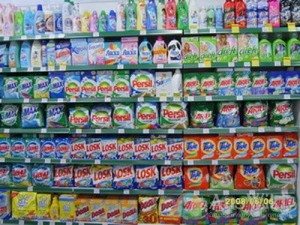 In order to choose the right washing powder, you need to consider the fabric of the items you want to wash. The type of stain is also important. The detergent's ingredients are listed on its packaging.
Machine washers use a special detergent that produces less foam than hand washing detergent. This is because excessive foam can damage the machine. Therefore, hand washing detergent should not be used in machine washing. When choosing a detergent, make sure it is specifically designed for washing machines.
You should also read the instructions for use. These are usually printed on the packaging. Read them carefully. They indicate the amount of detergent to use for one wash. Exceeding this amount is not recommended.
If you're washing a small load, use a small amount of laundry detergent. Liquid laundry detergent typically requires a wash temperature no higher than 60 degrees Celsius (140 degrees Fahrenheit). Pre-washing is also unnecessary with this type of detergent.
It's often recommended to pour baby detergent directly into the washing machine drum onto the items you plan to wash.
Which powder is more effective?
You've already read our recommendations, and now you can watch a real-life test of various laundry detergents from various brands. These tests were conducted by the "Test Purchase" program on Channel One. This video will be of interest to anyone who wants to know which detergent is the most effective. So, let's take a look:
Interesting:

5 reader comments
Add a comment
Headings
Washing machine repair




For buyers




For users


Dishwasher




I'm not particularly picky about detergent; they're all pretty good these days, but I can't give up Calgon. Our water is very hard, and washing clothes with any detergent is difficult. Calgon softens the water and also takes care of the machine.
I love "test purchases" too, of course. But time is running out; I need to update the article! )) Nowadays, all sensible housewives buy laundry gels. Because they're gentler and clean better, plus they rinse out easily and are hypoallergenic. At least, that's what I have. Maybe gels vary in quality, too, I admit. Then I'm lucky.
I completely agree about gels. I'm currently using one called Wellery, and it's the best product in terms of both cleaning performance and ingredients. I've recently started paying attention to this: it contains minimal surfactants and is completely phosphate-free. It doesn't have a strong scent and handles most stains well, even at 30 degrees Celsius.
Yes, we also use Wellery, they wash clothes like a charm! They're truly great gels, and most importantly, they're domestic! A clear example of import substitution at my house:))
I switched to gel, as my child has allergies. Compared to powder, gel rinses out better. I experimented and, like you, settled on Wellery gel (I use Intensive Color). The scent is subtle, doesn't linger on clothes for long, and cleans well. A liter container lasted me 20 washes with a full drum, which is very economical. The dispenser is a bit loose, but the gel can (and probably should) be stored with the dispenser facing down.