
Choosing a water filter for your washing machine
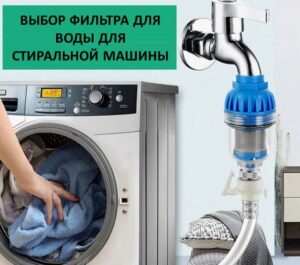 Why install a filter before a washing machine? Tap water contains impurities that are harmful to household appliances. Therefore, pre-treatment is usually a good idea.
How do you choose a water filter for your washing machine? Where should you place it? Why is pre-filtering the water entering your washing machine so important? Let's explore the nuances.
Is it necessary to purify water with a filter at all?
It's commonly believed that tap water meets all quality standards, so there's no need to filter it additionally. Especially not to install a separate filter before your washing machine. In fact, this isn't true. It's important to understand that by the time the water reaches the consumer, it has:
- walk several kilometers through rusty pipes;
- accumulate additional impurities.
The minerals found in tap water are safe for humans, but they can accelerate the failure of your washing machine.
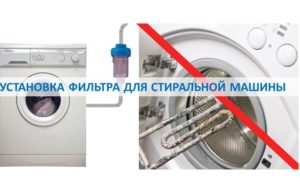
Calcium and magnesium deposit on the internal parts of the washing machine. The resulting scale damages the heating element. Over time, the heating element burns out. Limescale also accumulates on other parts of the washing machine, impairing its proper functioning.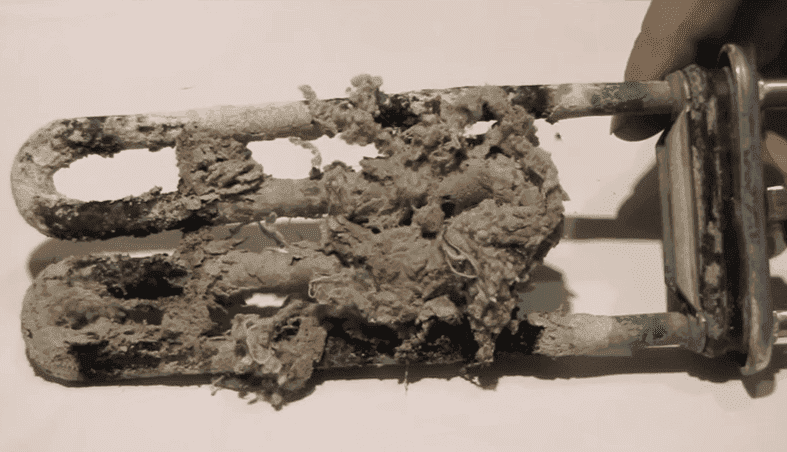
Rust collected in water can ruin white items. Other impurities remain on clothes after washing and can then come into contact with skin. This can cause allergies or irritation.
To prevent this, it's best to install a filter before your washing machine in your apartment. This will:
- significantly improve water quality;
- save on repairs to your “home helper” (for example, replacing the heating element, inlet valve or pipes);
- prevent some health problems of household members.
Despite the advantages, there are also several disadvantages to a coarse filter. Firstly, there's the additional cost of purchasing the device and installing it. Secondly, there's an increased risk of leaks due to installation errors. Thirdly, there's the need to periodically replace the cartridge and seals, which also adds to the cost.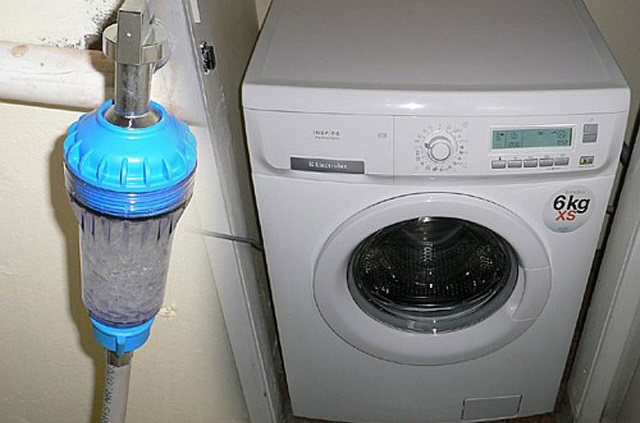
The disadvantages mainly come down to additional costs. However, these costs are insignificant compared to the benefits the filter provides. Improving your quality of life is definitely worth the investment. To avoid installation errors, simply contact a professional. This will prevent leaks.
Choosing a filter can be a challenge for many. Apartments typically receive relatively clean, but hard, water contaminated with metals and minerals. In this case, a standard water softener will suffice.
Which filter element should I buy?
Purchasing a filter element for installation in front of your washing machine is easy. There's quite a selection to choose from. Everything will depend on your budget and the requirements for the coarse filter. For example, should it soften the water or simply trap impurities in the liquid?
A universal option is the Aquabright main filter. The device provides mechanical filtration, iron removal and rust removal from water. The cost of the item is about $5.30.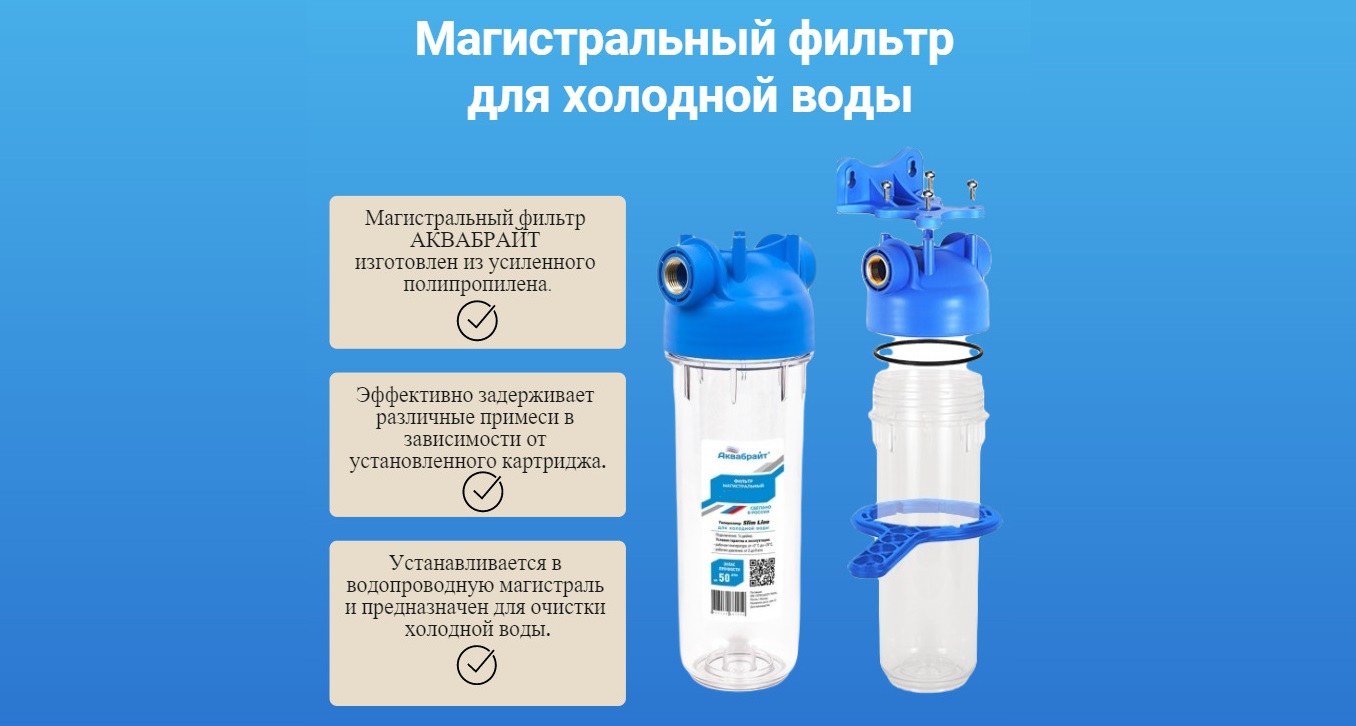
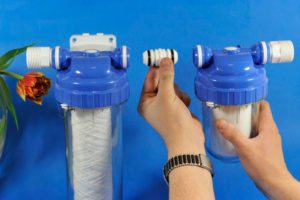
The filter is installed in the water main. It is suitable for purifying cold water only. Depending on the cartridge installed, it can perform different functions. The housing is equipped with an O-ring to prevent leaks. The gasket ensures a secure connection between the filter bowl and the device lid.
The safety margin of modern Aquabright main filters is more than 40 atmospheres.
The operating temperature of this device ranges from +2 to +35 degrees Celsius. AquaBright has a single purification stage. The tank capacity is 1.3 liters. The flow rate is 10 liters per minute, with a 1/2" connection size. The kit includes a filter housing, a mounting bracket, screws, and a cartridge replacement wrench.
You can also consider the Poseidon-1R main filter. This device provides only mechanical filtration of tap water, without softening. The unit costs approximately $9.
This household water purification device traps sand, rust, and scale. The filter connection size is 3/4. It is designed for cold water only. The filter module has a capacity of 20,000 liters.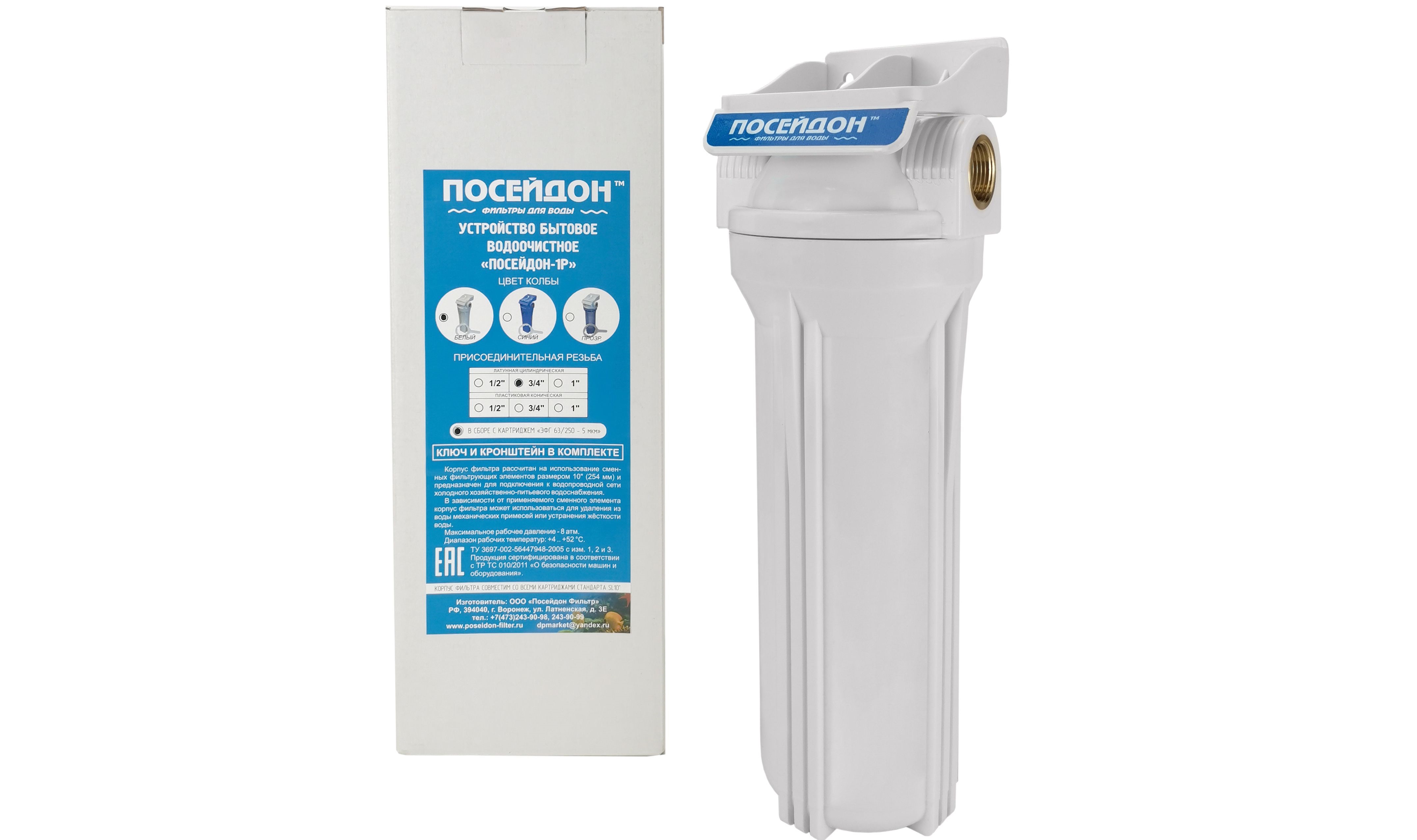
Another device for "flushing" cold water to remove rust, silt, sand, and other insoluble impurities is the Geyser-1P. This element provides mechanical filtration without softening. The filter costs approximately $18.
The device's flow rate is 15 liters per minute. The connection size is 1/2". The filter has one purification stage. The maximum inlet water temperature is 40°C, and the minimum is 4°C.
A more expensive option is the Aquaphor Gross 10. This device also pre-treats household and drinking water. The filter offers several important advantages: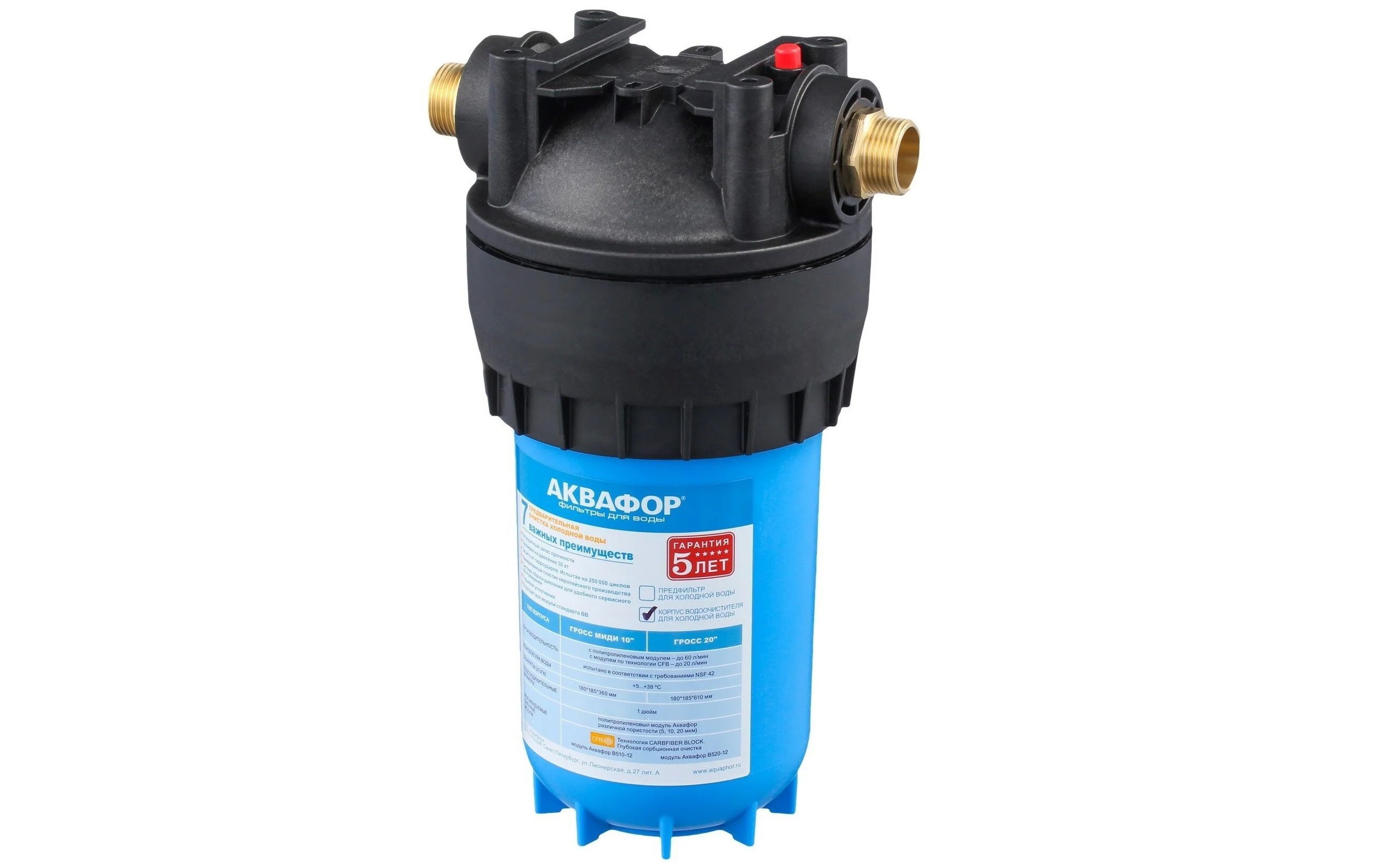
- fivefold safety margin;
- protection against water hammer;
- complete with metal fittings;
- fast and convenient connection;
- suitable for installation in hard to reach places;
- mechanical seal.
The device's operating temperature ranges from +5°C to +38°C, with a flow rate of 57 liters per minute. The Aquaphor pre-filter can be supplemented with various modules complying with the international standard 10. The cost of the element is approximately $35.
Another option is the THERMEX ION SL10 anti-scale filter. In addition to standard mechanical filtration (removing impurities), the device:
- provides ion exchange;
- Prevents the formation of limescale deposits inside household appliances.
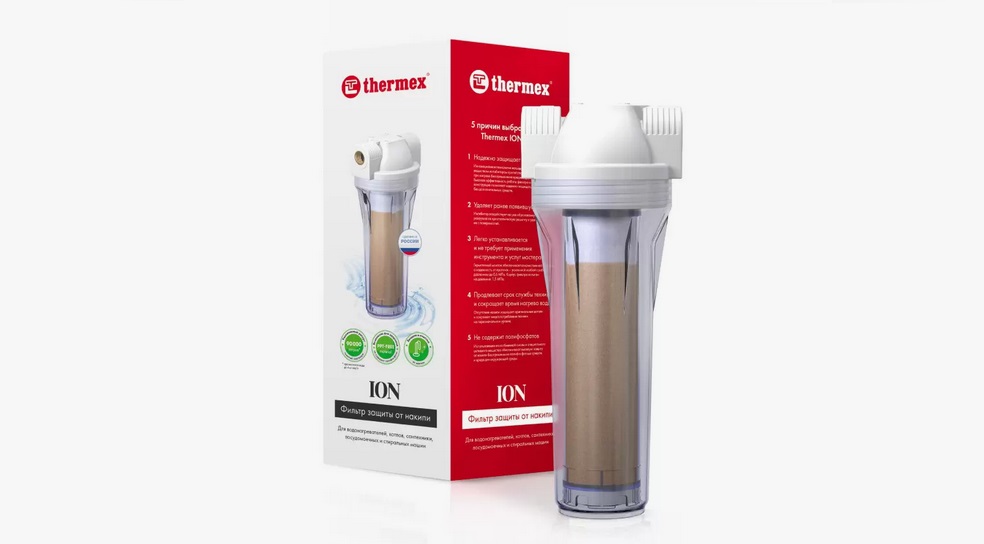
The filter module has a lifespan of 180,000 liters. A cartridge is included. The THERMEX ION SL10 uses ion-exchange resin as a softener. The main filter costs approximately $21.50. It is designed exclusively for cold water.
The device's flow rate is 33 liters per minute. The connection size is 1/2". The manufacturer's stated service life is 5 years, but this largely depends on the initial quality of the tap water. The product comes with a 1-year warranty.
Installing a filter
Installing a filter element in front of your washing machine is quite simple. You can do the job yourself. If you're worried about failure, contact a service center. A technician can connect the filter in just a few minutes.
To install a coarse filter in front of the washing machine, you will need a regular wrench.
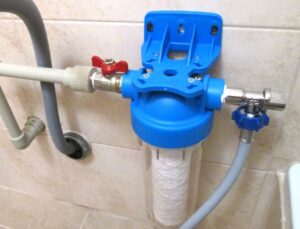
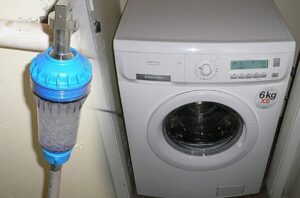
No special tools are required. The coarse filter is placed directly in front of the inlet hose. If the automatic machine is connected to utilities, the algorithm of actions will be as follows: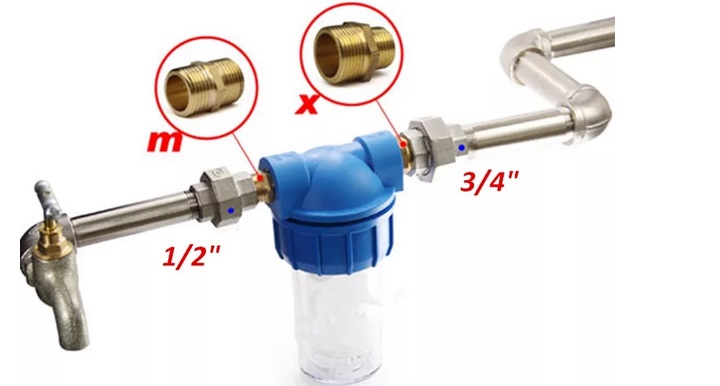
- turn off the power to the washing machine, turn off the water supply to the apartment;
- disconnect the washing machine inlet hose from the pipe to which it is connected;
- Place a filter element on the pipe branch;
- Connect the inlet hose to the coarse filter.
These filters are standard. The 3/4 thread fits the pipes and inlet hoses of washing machines. Devices with a 1/2 connection size are also available. It's important to ensure a secure and watertight connection.
Poor tap water poses a threat not only to your household but also to your washing machine itself. Therefore, it's best not to skimp on a coarse filter. Especially since the device isn't that expensive.
Interesting:
Readers' comments
Headings
Washing machine repair




For buyers




For users


Dishwasher




Add a comment