
Should I unplug my washing machine after washing?
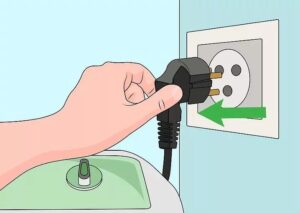 Washing machines are considered one of the most dangerous electrical appliances. There's plenty of evidence to support this—YouTube is full of videos from owners of burned-out machines. This is especially true if the appliance is constantly plugged in or operated in unsuitable conditions. The risk of short circuits and fires raises a logical question: is it necessary to unplug a washing machine after use? To answer this question, let's consider the degree of danger and possible scenarios.
Expert opinion
A washing machine can't operate without electricity—current is necessary for the machine's key components to function. However, when plugged into a power outlet, the system doesn't start immediately; you must press the power button. It seems like the machine is completely safe without a start button. Is this true?
By unplugging the circuit breaker, the user completely disconnects it from the power source. This means the circuit breaker no longer carries electricity and becomes safe. This option is considered the best for both appliances and occupants, especially if the washing machine is installed in the bathroom. Installing it in the kitchen poses less of a risk, but the risk of leakage and water contact remains high. It is recommended not to take any risks and to disconnect the machine from the power supply.
Experts do not recommend leaving your washing machine plugged in – it's unsafe for both the appliance and the occupants!
In simple terms, a washing machine that's unplugged is completely safe. If you leave the plug in, the situation is different: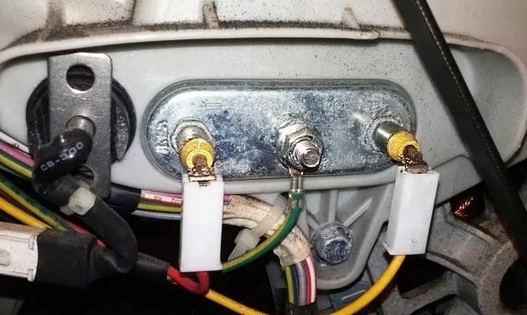
- the machine remains in operating mode, the power supply is activated, the capacitor is charged (only the actuators and indicators are switched off);
- there will be electric current in the network cable from the plug to the terminals of the machine, and also further along the wires up to the control board;
- exposed contacts will remain energized, which will cause an electric shock when touched;
- Any water getting on the contacts (accident, accident) will lead to a short circuit.
Sometimes the situation is exacerbated by damaged insulation on the power cord or a low-mounted terminal block on the washing machine. The latter is more common on older-generation machines. Modern models feature additional protection, ensuring that hazardous areas are better insulated and located out of reach of water. However, the risk remains high. Leaving the machine plugged in after washing is also dangerous due to the power outlet. An electrical outlet with poor insulation and without a protective cover often causes short circuits and fires. It's best to play it safe and always disconnect the power from the appliance.
Feedback from affected users
Evgeniy, Krasnodar
Unplugging the power cord wasn't a habit in our family. Both my wife and I assumed that unless we pressed the power button, the appliance would remain off. The result was a burned-out washing machine—a powerful power surge completely destroyed the electronics.
The service center said it was caused by a sudden power surge. To make matters worse, the washing machine is no longer under warranty, we're not entitled to a free repair, and they're charging us a hefty fee. It's cheaper and easier to buy a new machine than to repair the old one. Now we're scrambling for money, because it's hard to live without our "home helper."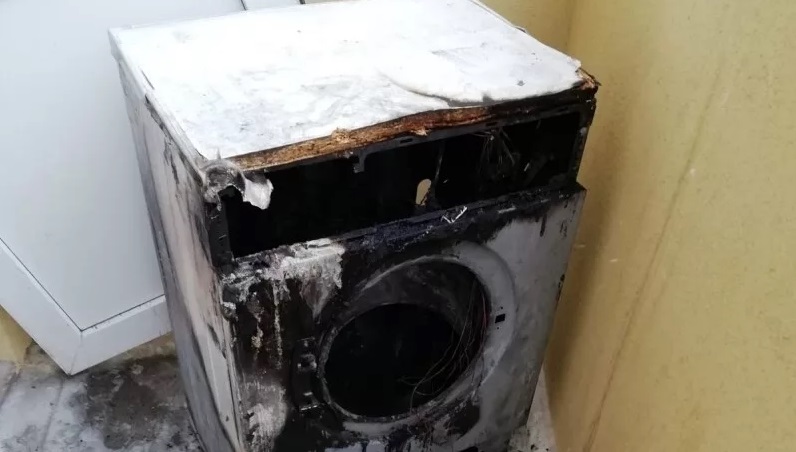
Lyudmila, s. Warsaw
Something terrible happened recently: all the appliances in the house burned out. The refrigerator, television, washing machine, and cooktop were all plugged in. Suddenly lightning struck and everything short-circuited. Luckily, there was no fire, but it's not much easier. I need to buy new appliances, and I recently retired, so my income has plummeted. Now I have to make do without "helpers": I wash my laundry by hand, keep groceries in the basement, and make do with a radio.
A washing machine plugged into a socket can burn out due to a sudden power surge or lightning strike!
"Z", Novosibirsk
My neighbors' apartment caught fire because of their washing machine. The machine wasn't working, but it was plugged in. Interestingly, they had recently completely rewired the building. But for the past two weeks, there have been power surges in all three apartments on the landing, and I think that's the cause. During that time, my bathroom light bulb blew, and my computer monitor and landline phone shorted out.
Sanya2009, Saratov
During the thunderstorm, the washing machine stopped working but remained plugged in. I only noticed the problem the next time I tried to start the machine: my Samsung still didn't light up. I opened the case and discovered soot on the circuit board and varistor, a burnt-out capacitor, and melted pins. Incidentally, several bulbs also burned out that evening, and one exploded. According to the repairman, lightning caused a power surge in the electrical system, shorting out practically everything, right down to the motor. I had to give it away to a friend who was a repairman as unsaleable property.
Interesting:

1 reader comment
Add a comment
Headings
Washing machine repair




For buyers




For users


Dishwasher




"Good advice," considering the intake hose has an electromagnetic shutoff valve.
That is, if you turn it off, it weakens over time and water leaks into the washing machine tank.