
What height should the drain be on a dishwasher?
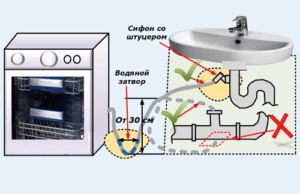 When installing a new dishwasher, it's important to carefully determine the drain connection location, or, in other words, the drain height. If this isn't done correctly, water will drain poorly, and, worse, sewage can enter the dishwasher due to the "siphon effect." It's better to plan ahead than to take any risks.
For modern dishwashers
Owners of modern and improved models needn't worry. Most of the newest units are equipped with check valves that prevent wastewater from entering the chamber from the sewer system. Therefore, there's no need to worry about the "siphon effect."
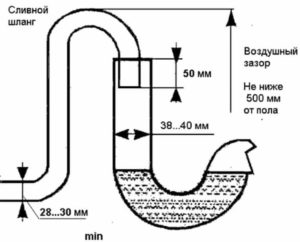
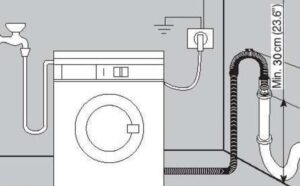
The drain may be installed at floor level or in an elevated position. The main thing is to comply with one condition: the joint must be located no higher than 60 cm from the plane on which the machine is planned to be installed. There are only a few recommendations: raise the drain hose and fix it at a height of 50 to 85 cm, but not lower than the final opening in the sewer.
Consider the type of dishwasher
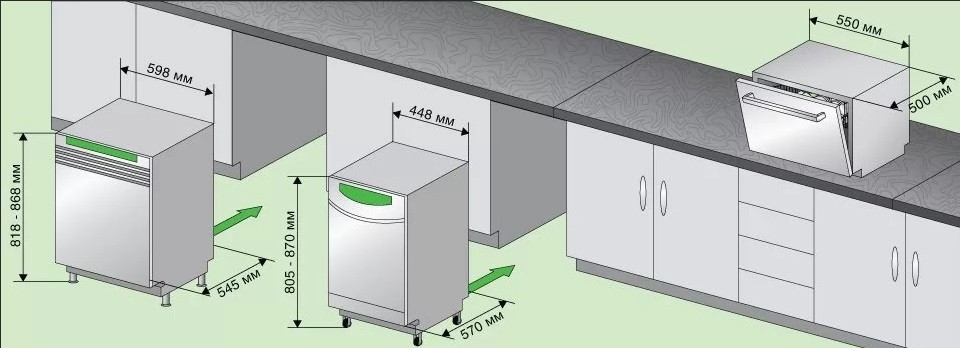
Relying solely on general recommendations is short-sighted. It's better to consult the included manufacturer's instructions, where the manufacturer always specifies the installation details for a specific dishwasher and its connection to the utilities. Installation details are most often determined by the type of dishwasher:
- Countertop. Compact machines are the easiest to use—the drain goes directly into the sink, so there's no need to worry about the height of the connection.
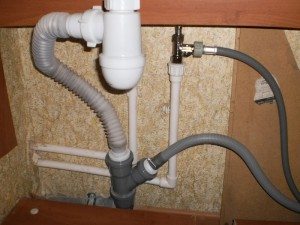
- Freestanding or built-in. Models installed next to a cabinet or directly into a vanity unit are usually connected to the sewer system via a trap. If one isn't already present, install a new one at approximately 450 mm from the floor.
For full-size and narrow dishwashers, another option is to connect directly to the pipes using a tee or adapter. The dishwasher drain should be positioned 50-60 mm above the floor. It's important to ensure a water trap and a loop approximately 40 mm above the finished flooring.
Description of the drainage system
While installing a compact countertop dishwasher is straightforward, connecting other types of machines to the drain requires some work. First, read the instructions, then connect all the hoses, secure the connections with clamps, move the unit to its designated location, and then arrange the drainage. If you've chosen the siphon option, follow these steps: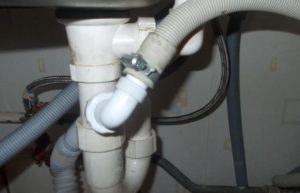
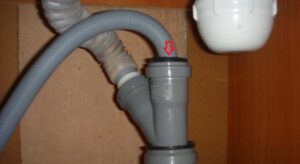
- We dismantle the old siphon and install a new one, with a special branch for the dishwasher.
- We remove the plug from the drain hose and screw a check valve onto its end.
- We wind the sealing tape onto the threads.
- We bend the hose, repeating the shape of the siphon, and place it at a height of up to 60 cm.
When the general level of the apartment sewer is below 40 cm from the surface on which the machine is installed, the outlet hose is bent in the shape of an inverted “U”.
- We connect one end of the hose to the siphon and the other to the dishwasher.
Be sure to check whether the dishwasher you buy has a check valve.If there is none, it is safer to purchase one additionally and install it as an intermediate link at a distance of about 40 cm from the floor.
There's only one nuance when installing a drain: its height. Once its height is known, subsequent installation proceeds smoothly and avoids any unpleasant surprises down the road.
Interesting:

Readers' comments
Headings
Washing machine repair




For buyers




For users


Dishwasher




Add a comment