Location of the water outlet for the washing machine
Many people choose water inlets for their washing machines instead of the traditional tee taps. They're more modern, look more aesthetically pleasing, don't interfere with placing the machine flush against the wall, and allow the inlet hose to be connected to the water supply without dangerous bends. But before you can appreciate its advantages, you should carefully select a location for its installation, install it securely, and then properly connect it to the washing machine. We'll explain in detail how to do this yourself and avoid flooding in our article.
Where to place this element?
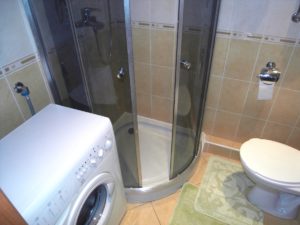
One of the key considerations when installing a water outlet is its location. The ideal solution is a major bathroom renovation with dedicated space allocated for the fitting. Then, the new outlet can be installed in accordance with existing regulations.
Adequate clearance to the outlet. The washing machine's inlet hose should easily reach the water outlet without interfering with connection and operation. If possible, the wiring should be reconfigured to position the machine as close to the pipework as possible.
Optimal height for a water outlet. Two factors need to be considered here. First, plumbers recommend a height of 77 cm from the finished floor. Second, the dimensions of the existing washing machine, especially if the outlet is planned to be installed directly behind the washing machine.
Free access to the valve. This is a safety requirement: in the event of problems with water intake, leakage or accident, the owner must quickly and easily reach the faucet and shut off the water supply to the machine.You can use the shut-off of the general water supply, but it is better to act locally.
Secure mounting. To avoid leaks, it's important to carefully consider the installation method for the water outlet, especially if you plan to mount it on the wall. In this case, a special type of fitting should be selected, and if this isn't possible, alternative options should be considered.
When choosing a modern outlet, the most important thing is convenience. Installation and use should be straightforward, and it shouldn't be in the way or inaccessible in an emergency. Aesthetics are also important, so consider a beautiful design that complements your bathroom's interior.
Choosing a water outlet
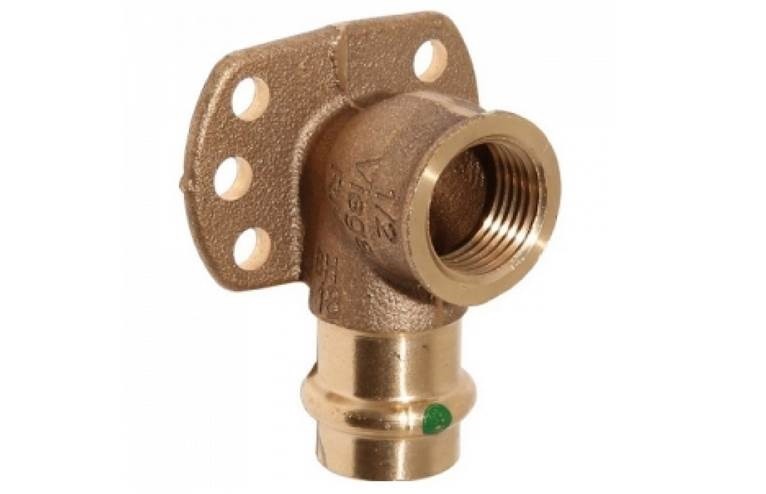
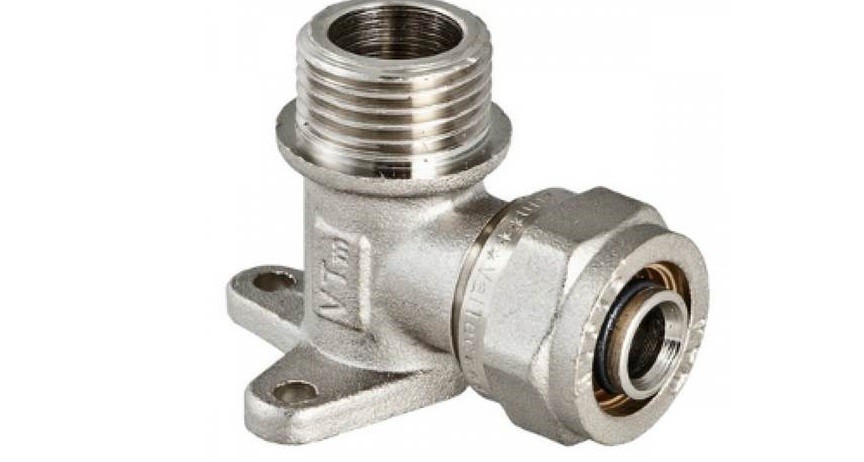
The modern market offers a wide range of fittings at any price and of any type. It is not recommended to act at random, since the parameters of a specific water outlet will greatly affect the installation and operation of the washing machine.Therefore, we first study the available options and choose from threaded, crimp, self-locking, and press-fit water fittings.
Threaded fittings are the most common, and the name speaks for itself—they require a threaded connection. In addition to the screw thread, special requirements are placed on the material used, which must be resistant to temperature fluctuations. All this gives this type the following advantages:
long service life;
high tightness;
impact resistance;
no need for additional fasteners;
easy installation and dismantling.
Crimping tools are considered relatively new and involve connections using a collet—a special sleeve with a built-in cylindrical chuck. The intermediate layer ensures a complete seal, resulting in durability and a secure fit on the pipeline. The list of advantages continues:
low cost;
easy and quick installation;
wide range;
disassemblable design with the possibility of partial replacement.
Press-fit water sockets are secured to the water pipe using soldering. Their main advantage is the lack of multiple parts, making assembly easier. However, high-quality installation requires specialized equipment.
The self-locking water socket is a relatively new development, but it stands out from the crowd. The secret lies in its special rings, one of which has teeth. As soon as the key tightens this link, the clutch engages and all the rings snap into place. The device can be disassembled by pressing the toothed element again. Its main advantages are impressive.
Multiple uses due to disassemblability.
Strong connection and high tightness.
Universal application.
Ease of installation.
Resistance to loads and temperature changes.
Durability.
Low price.
Important! In addition to the product type, pay attention to the manufacturer – Rehau, Valtrex, and Viega have proven themselves to be highly regarded.
Fittings also vary in material. They are made of brass, bronze, stainless steel, cast iron, polypropylene, and PVC. Each has its own characteristics and advantages, but it is recommended to choose a similar fitting based on the piping system. Devices also vary in the number of pipes they can connect, but for an existing washing machine hose, one elbow is sufficient.
After studying all available options, you can compare the advantages and disadvantages with the available conditions and opportunities.Consulting with a plumbing service professional is also a good idea. The planned mounting method, which will be discussed later, should also be taken into account.
How to fix a water outlet?
Before purchasing and installing the outlet, you need to decide on the method for attaching it to the wall. There are several options, depending on the strength, thickness, and material of the existing wall. This is how the new outlet is attached.
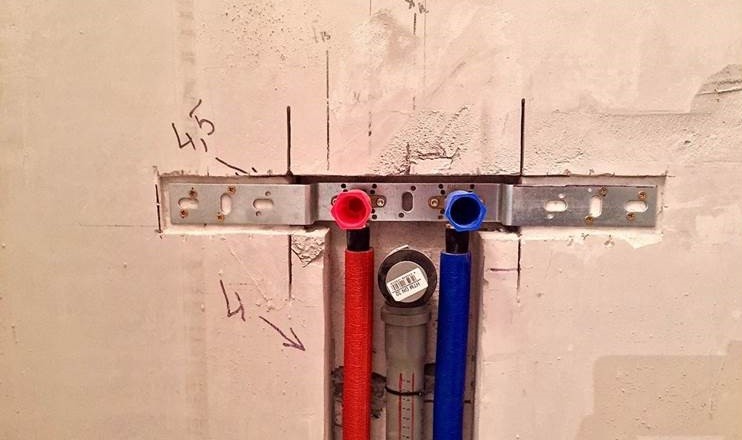
In a pocket. If the partition is made of concrete or brick, the optimal solution is to recess the wall to create a pocket of the appropriate size. A 4-5 cm hole is required, but it is not necessary to completely recess the fitting. It is often left protruding and concealed using improvised means.
In a recess with a spacer. For thin plaster walls up to 4-6 cm thick, another option is suitable. Make the largest possible hole and install a sawn-out half-centimeter-thick wooden spacer in it. The water outlet is attached to a piece of wood, which should be thoroughly treated with an anti-corrosion impregnation to prevent rapid rotting.
On the backing. If the bathroom walls are made of plasterboard, a completely different approach is required. First, the plasterboard is placed on a metal or wood frame, then a 3-4 cm spacer is attached on top, followed by the outlet itself.
The entire structure is hidden behind another sheet of drywall so that the fitting is at the same level with it.
Here it is important to soberly assess the strength and thickness of the existing partitions, since unreliable fastening will quickly lead to failure and leaks. It is important to accurately measure the dimensions of the socket to avoid unsightly voids and subsequent repairs.After that we proceed to the actual installation.
We are installing a water outlet
Installing a water outlet and connecting a washing machine to it isn't easy, but it's doable for anyone. If you're unsure of your abilities, be sure to contact a qualified service. Otherwise, gather your tools and follow these instructions.
We turn off the water.
We clear the wall and repair it, ensuring a perfectly flat surface.
We'll mark out the locations. Using a pencil and a spirit level, we'll mark the height of the fittings and their relationship to each other. Remember that water outlets should only be placed horizontally and parallel.
We drill a hole to mark the location for the fasteners. There should be at least three screws, and it is not recommended to use only the provided pair of "antennae" for fastening.
We cut grooves in the walls if we plan to install electrical outlets concealed. We also create pockets, grooves, and connections for pipes.
If necessary, we adjust the hole diameter on the surface by attaching pipes and fittings. Everything is adjusted to the parts so that the reflector completely covers the holes.
We cut off the rubber gaskets and glue them to the back of the water outlet.
We install a water outlet.
Caution! When installing press-fitted water sockets using the soldering method, monitor the soldering iron's operating time to prevent overheating.
Carefully tighten all the fasteners.
We assess whether the structure is level and, if necessary, tighten the screws on each side.
We close the voids around the “tee” using thick polyester putty.
When filling, pay attention to the screws: tighten nuts onto the threads for protection or immediately remove any grease that gets on the threads.
When making a crimp connection, you need to align and fix the device with one hand, and with the other, begin to screw it towards the wall, ensuring that the collet remains motionless.
We seal the remaining voids, leaving the inside of the pipes and grooves untouched. Filling the holes with foam is permitted.
Once secured, the easiest part remains – connecting the washing machine to the water supply. To do this, connect the machine's inlet hose to the wall outlet and return the water supply valve to its original position. Turn on the washing machine's fastest setting and open the detergent drawer. If water flows and there are no drips at the connection, everything is done correctly.

 Many people choose water inlets for their washing machines instead of the traditional tee taps. They're more modern, look more aesthetically pleasing, don't interfere with placing the machine flush against the wall, and allow the inlet hose to be connected to the water supply without dangerous bends. But before you can appreciate its advantages, you should carefully select a location for its installation, install it securely, and then properly connect it to the washing machine. We'll explain in detail how to do this yourself and avoid flooding in our article.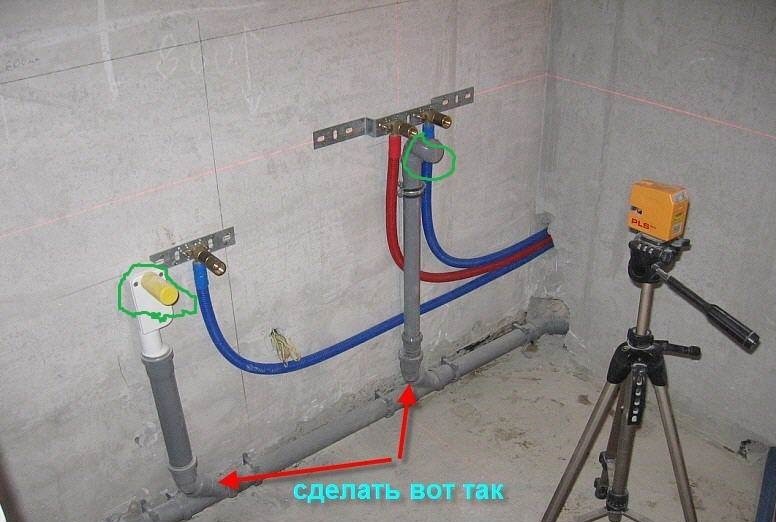














Add a comment