
How to remove the drum from an LG washing machine
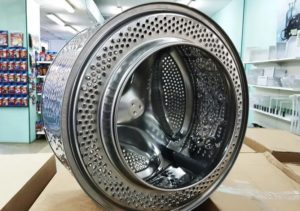 The drum is perhaps the most important component of a washing machine. If it's even slightly damaged, using a washing machine with such a component can lead to complete failure. To prevent this, remove the drum from your LG washing machine immediately after the first signs of malfunction are detected and replace the component. Such disassembly and repair is only possible after a thorough examination of the washing machine's internal structure, so follow our instructions during the process to avoid accidentally damaging your "home helper."
Let's prepare for the upcoming work
Immediately before dismantling, a number of preparatory tasks must be completed. First, bring the tools needed to replace the drum yourself. This list includes the following:
- medium hammer, preferably made of copper or bronze;
- universal lubricant WD-40 or similar;
- pliers;
- Phillips and slotted screwdrivers;
- adjustable wrench;
- horn heads;
- metal pin approximately 4 centimeters long.
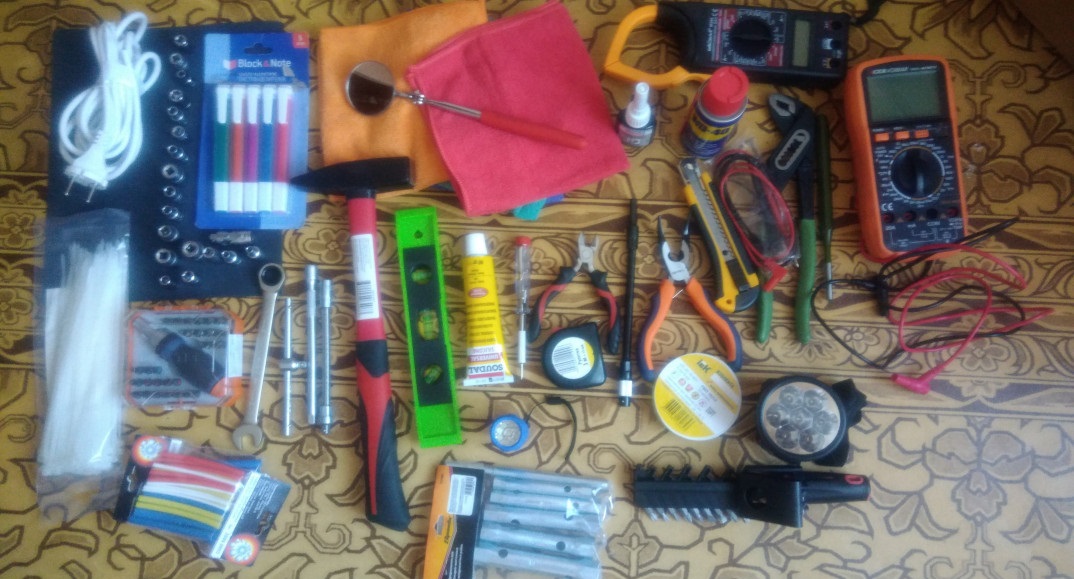
This is the minimum set required for replacing the drum. It's important to understand that while disassembling the machine, you may discover other defects that will require other tools to repair.
It's also worth first deciding where in the house the renovation will be carried out. It's much better to carry out all washing machine maintenance in a garage or other non-residential space, but not everyone has this option. If you can only renovate your living space, choose the most spacious room so that nothing interferes with your comfortable work. Don't forget to cover the floors with a layer of film or rags to prevent damage to the flooring from the heavy washing machine.
We take out the main unit of the machine from the housing
Removing the drum assembly is considered one of the most complex processes, so it should be approached with the utmost care. First, you need to disassemble the machine body to gain access to its components. In LG washing machines, the drum is located inside the tub, so to remove the metal drum, you first need to remove the plastic drum. Carefully follow all steps, strictly following our instructions for disassembling a direct-drive washing machine.
- First, turn off the power to the appliance and disconnect it from the water supply.
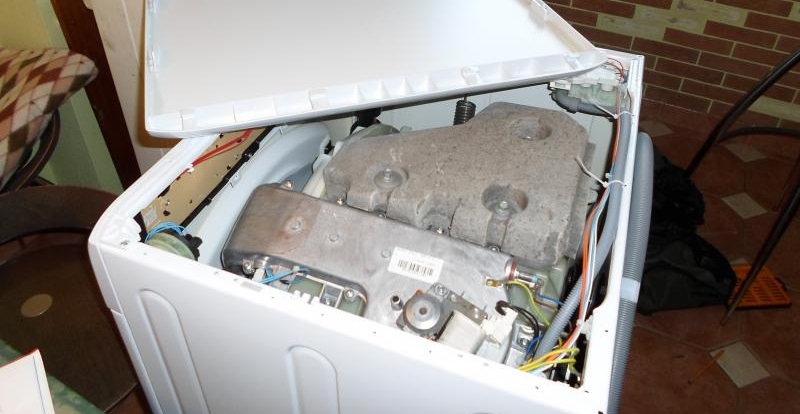
- Then you need to remove the top cover of the case, for which you need to unscrew several bolts securing it and move the cover towards the back wall of the CM.
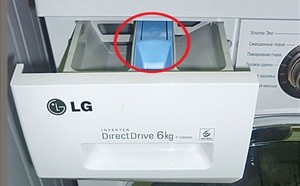
- Now you can remove the powder tray by pressing the "tongue" inside the tray.
- Remove the bolts securing the washing machine's control panel. They are located around the perimeter of the unit.
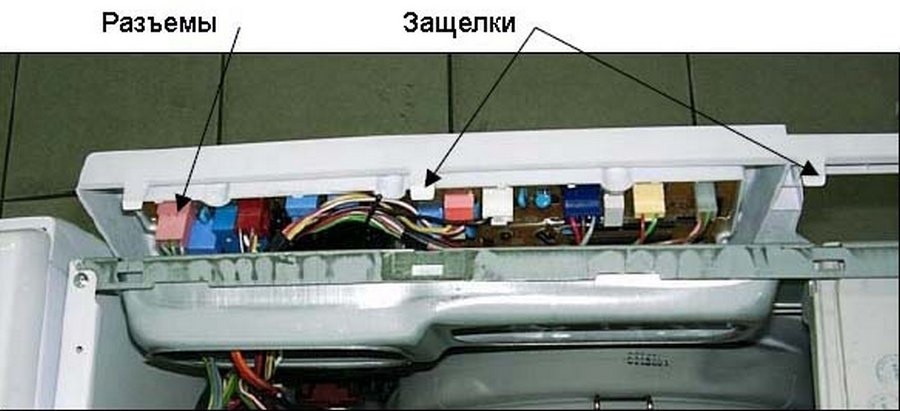
- Carefully disconnect all wires from the control panel. They can be left connected, but further work will require extra care.
It would be much easier and more reliable to take a photo of the wiring so that you can easily reconnect it using the photo, and then disconnect all the wires so that they do not interfere with your work.
- Take a thin screwdriver and carefully pry up the plastic clips holding the bottom panel in place. Remove the panel.
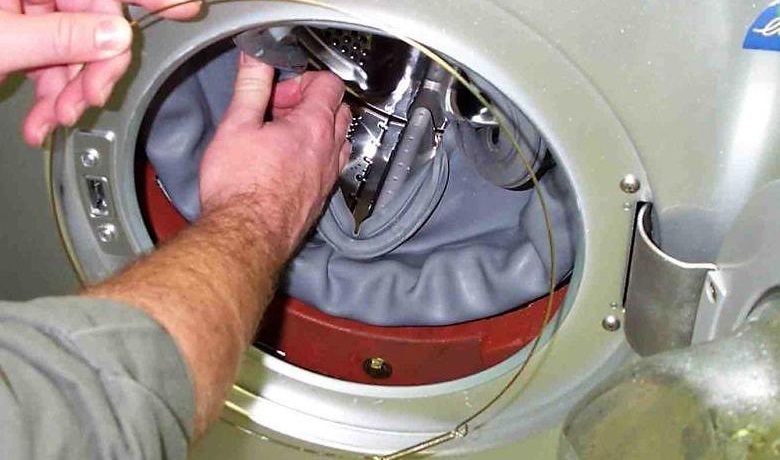
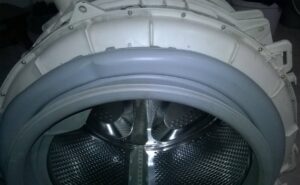
- At this point, use the same screwdriver to pry up the metal clamp that holds the hatch's rubber seal. Once the clamp loosens, pull the ring out.
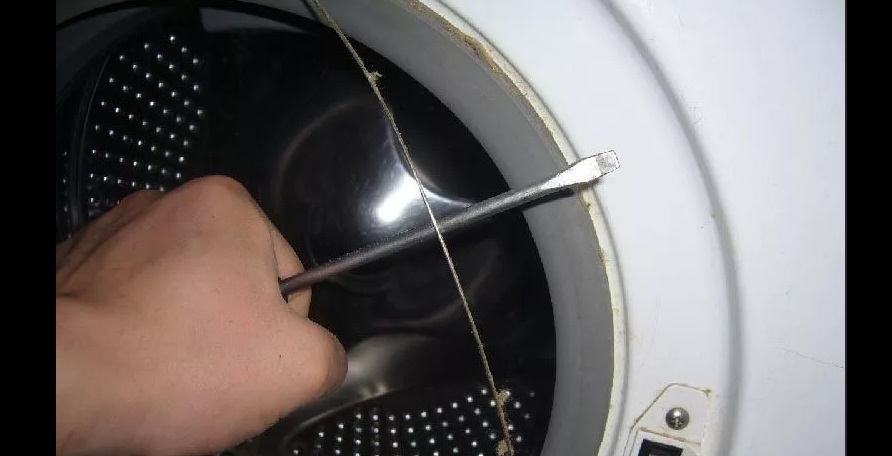
- Now you can pull the outer part of the cuff out of the groove with your own hands and tuck the seal inside the drum.
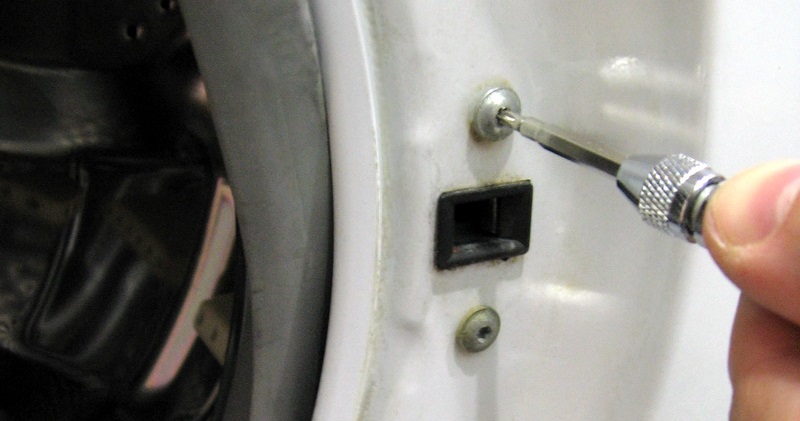
- Carefully disconnect all wires from the sunroof locking device. You also need to unscrew the bolts and then remove the locking sensor.
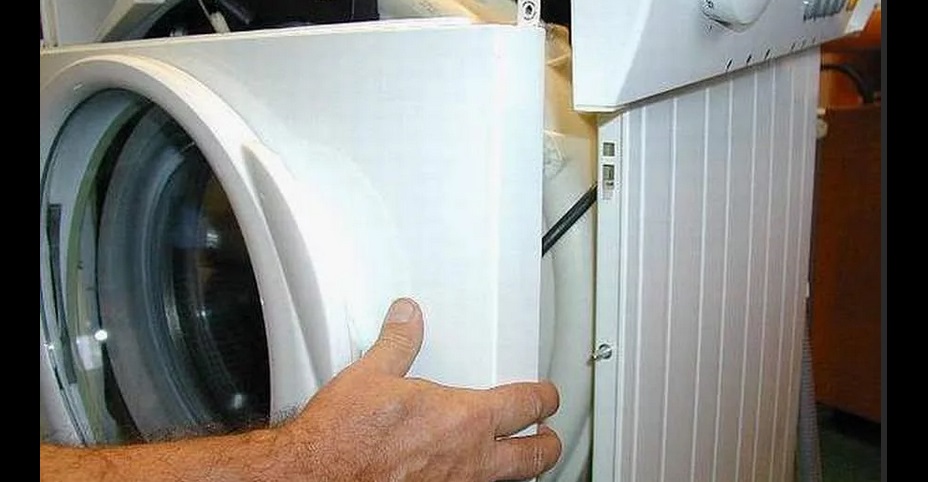
- We unscrew the bolts that hold the front panel of the washing machine, and then remove the wall of the housing itself.
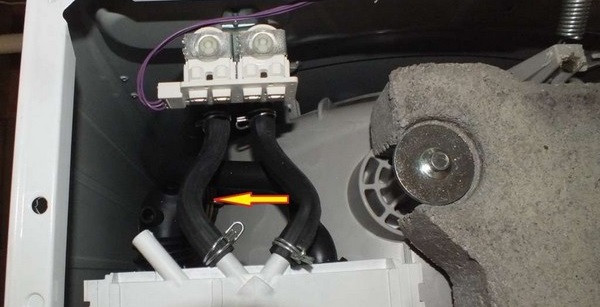
- We detach all the fasteners of the water inlet valve, drain pipe and pressure switch from the machine tank.
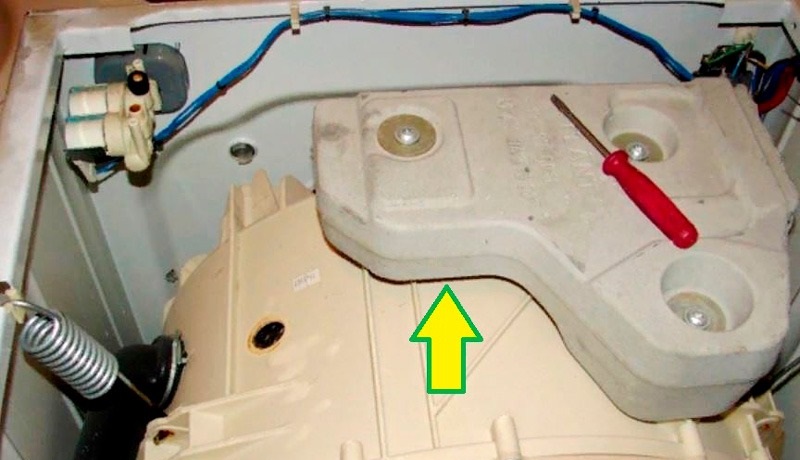
- Now let's tackle the wiring: disconnect the wires from the engine, thermostat, drain pump, and heating element, which is best removed as well. Don't forget to remove the counterweights and shock absorber mounting brackets.
- Make sure all pipes connected to the tank are disconnected. Then, you can remove the screws and pull out the inverter motor.
In total, 13 steps must be completed just to properly remove the washing machine drum. This task can be difficult for one person to handle, so it is better to pull out the tank with a helper. In this case, one person will unhook the springs while the other lifts the tank and carefully removes it from the washing machine body.
Removing the drum from the tank
To remove the drum, you'll have to disassemble the tank. This is much easier if your LG "home assistant" boasts a detachable tank. In this case, a number of complex steps are required.
- Remove the bolts that hold the two halves of the plastic tank together.
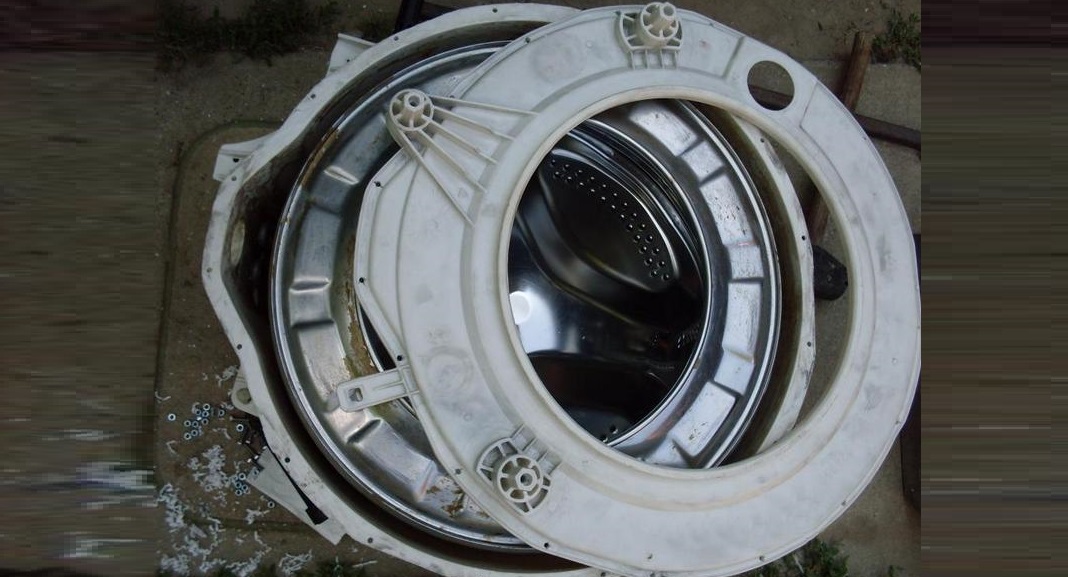
- Unscrew the central screw installed exactly in the middle of the inverter motor mounting location.
If you generously coat the screw with WD-40 or similar lubricant beforehand, it will be much easier to unscrew the part.
- After the second step, the central screw must be thoroughly lubricated and screwed back in. This procedure is necessary to ensure the drum can be easily removed later without damaging the shaft.
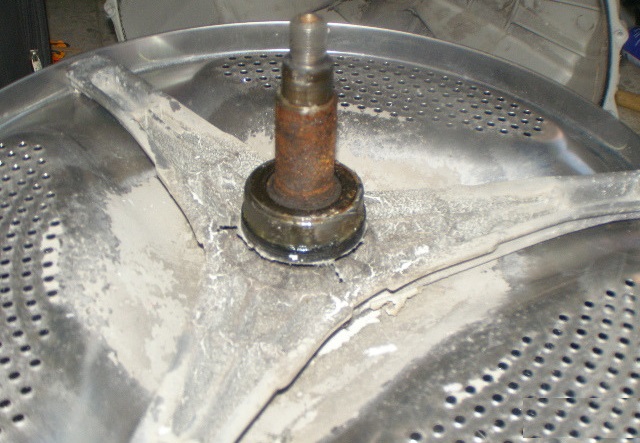
- Now we'll need a pre-prepared metal pin. Place one end of the pin against the screw. Using a hammer, slowly tap the shaft out, striking the pin gently. Don't overdo it, or you could break the parts. It's safer to tap the shaft out longer.
- Once you have removed the shaft and bushing, inspect the inside of the washing machine, paying attention to all minor defects and damage.
- At this point, all that's left to do is use an adjustable wrench to remove the screws that secure the crosspiece and shaft to the drum. After this, the drum will be free in your hands.
Purchase a similar drum from a specialist store, and then reassemble it following these instructions, but in reverse order. At the final stage, it's a good idea to seal the joint between the two halves of the drum with moisture-resistant silicone sealant to ensure maximum protection.
Therefore, removing and replacing the drum in an LG washing machine doesn't require any special knowledge or skills. All you need to do is set aside a couple of hours, read the instructions, and carefully follow all the steps.
Interesting:


Readers' comments
Headings
Washing machine repair




For buyers




For users


Dishwasher




Add a comment