How to remove the heating element from an LG washing machine
One of the most common problems in modern washing machines is a faulty heating element, or simply heating element. It's easy to spot: you run a high-temperature program to wash your clothes in hot water, but the machine doesn't heat the water at all and runs the entire cycle at low temperatures.
In this case, don't ignore the malfunction and continue washing in cold water, as a faulty part can seriously damage the washing machine. It's best to remove the heating element from your LG washing machine as soon as possible and install a new one. For diagnostics and subsequent replacement, carefully follow our instructions.
What is needed to remove the heating element?
Removing a damaged heating element yourself is easy, so any LG washing machine owner can handle this task. Importantly, the removal doesn't require any additional tools beyond the basic set everyone keeps in their home just in case. You'll need:
ratchet with 8 mm head;
2 screwdrivers: Phillips and slotted;
multimeter;
technical lubricant.
Don't buy a new heating element in advance, as you may mistakenly choose an inappropriate model with a different manufacturer's marking.
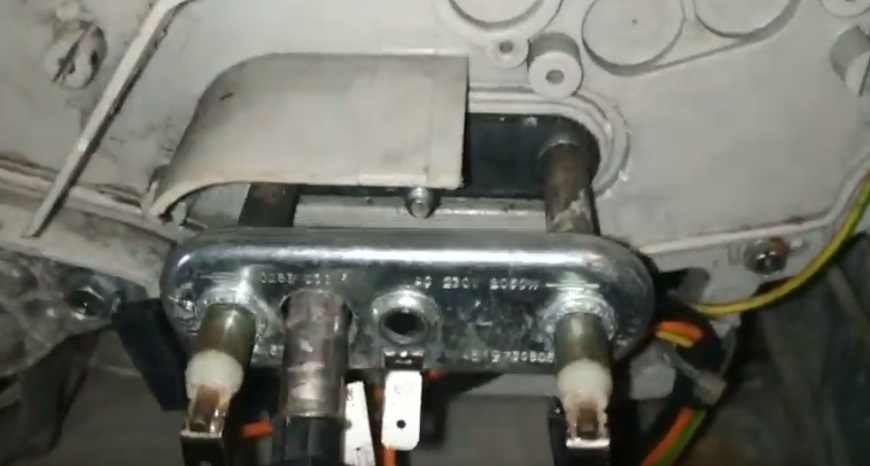
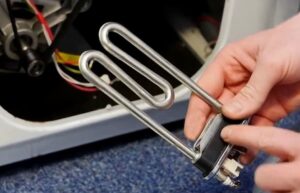
Of course, it would be more convenient to purchase the part in advance so you can install it immediately after removing the old one, but this increases the risk of error, as the water heating element must be a perfect fit for your specific LG appliance. In washing machines, the manufacturer installs different models of heating elements, both in terms of power and dimensions. Therefore, it would be much better to first remove the damaged part, inspect it, rewrite the markings, and even take it with you to the hardware store so that you have a sample on hand.
You can also order the element online, where the price is around $5. The key is to accurately determine the heating element's power, which in LG machines typically reaches 1850 W. However, don't rely solely on this figure, as each machine is unique, meaning the power may be even higher.
Where to look for the heating element?
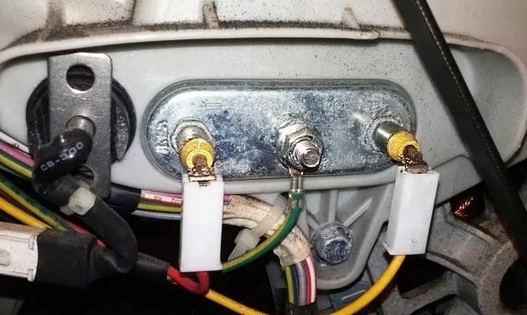
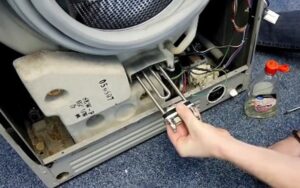
LG's home assistant conceals the heating element in a standard location for automatic washing machines—right at the bottom of the drum. Finding the heating element is easy: just unplug the machine, turn off the water supply, rotate the machine 180 degrees, and remove the back panel. Pay attention to the bottom of the drum—it's underneath that metal part, connected by numerous wires. You will never confuse it with the engine or other components, because the heating element is always located in the tank, surrounded by wiring.
But while finding, removing, and installing a new water heater is easy, diagnosing and understanding the cause of a breakdown can be much more challenging. A heater can fail due to a variety of issues, so it's crucial to accurately determine the cause of the malfunction in order to fix it and prevent damage to the new heating element. Most often, the part fails for fairly mundane reasons.
Sudden surges in electrical power supply.
Incorrect operation of the heater temperature sensor.
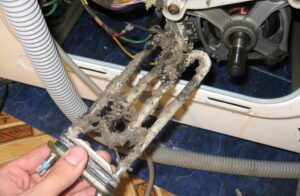
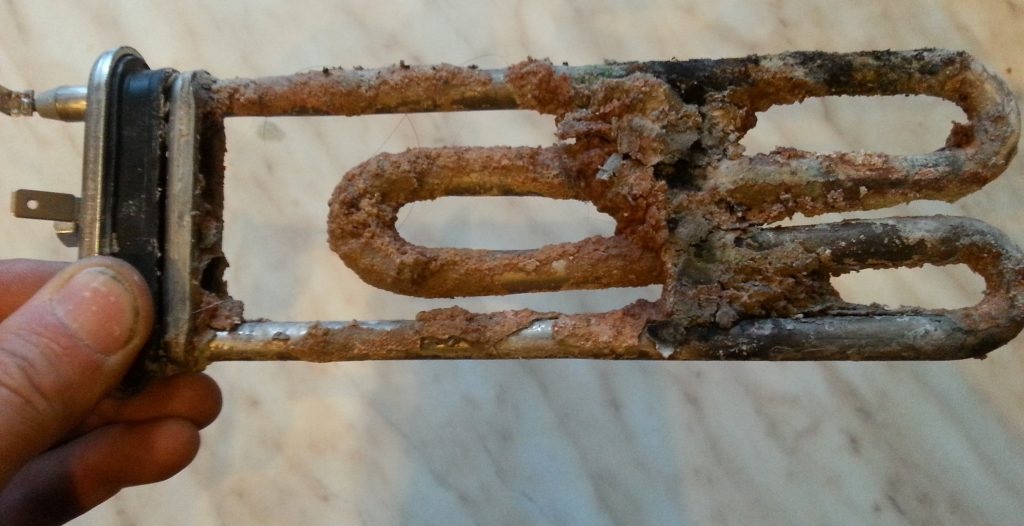
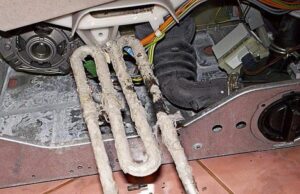
Overheating of the part due to a large layer of scale.
Limescale caused by hard or dirty water can be prevented by using water softeners such as Calgon.
Banal carelessness of the user during operation.
Moisture getting on the contacts of the part.
Factory defect.
Most often, replacing a damaged part can resolve the problem and restore the device to normal operation. However, it's much more difficult if the cause lies in the control board, which is much more expensive to replace. If the electronic control module is damaged—for example, if the contacts have come loose or the circuits are damaged—it will need to be repaired or replaced. This procedure is not recommended for DIY repairs, as it's too complex for those without professional technical training. In this case, it's best to call a service technician to your home.
Diagnostics and removal of the heater
Don't rush to disconnect the component; first, you need to verify that it's truly faulty. Follow the instructions for diagnosis.
Find a potentially faulty heater in the washing machine's drum.
Disconnect the wiring from the "chip".
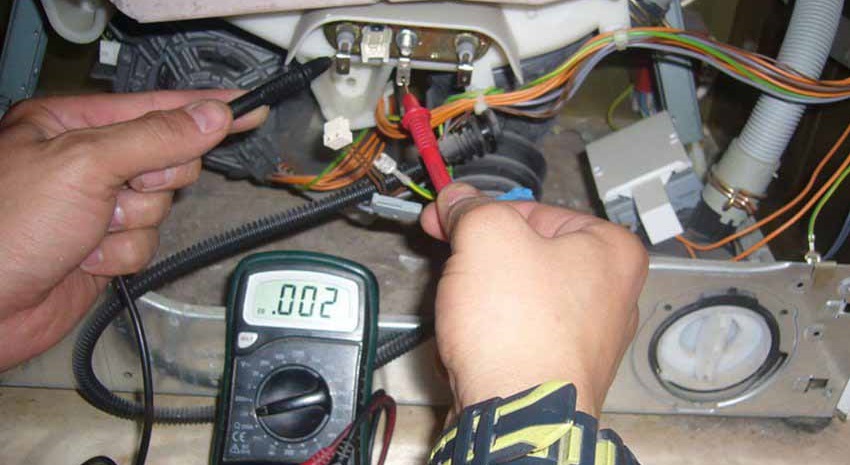
Using a multimeter in the "Resistance" mode, check the heating element. To do this, place the tester's probes on the contacts of the element being tested.
If the multimeter shows a reading in the 20-30 ohm range, the part is fine. If the reading is different, the heating element needs to be replaced. This should be done as follows:
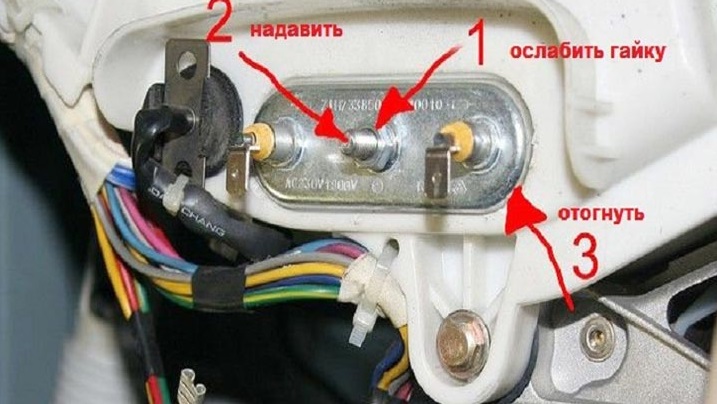
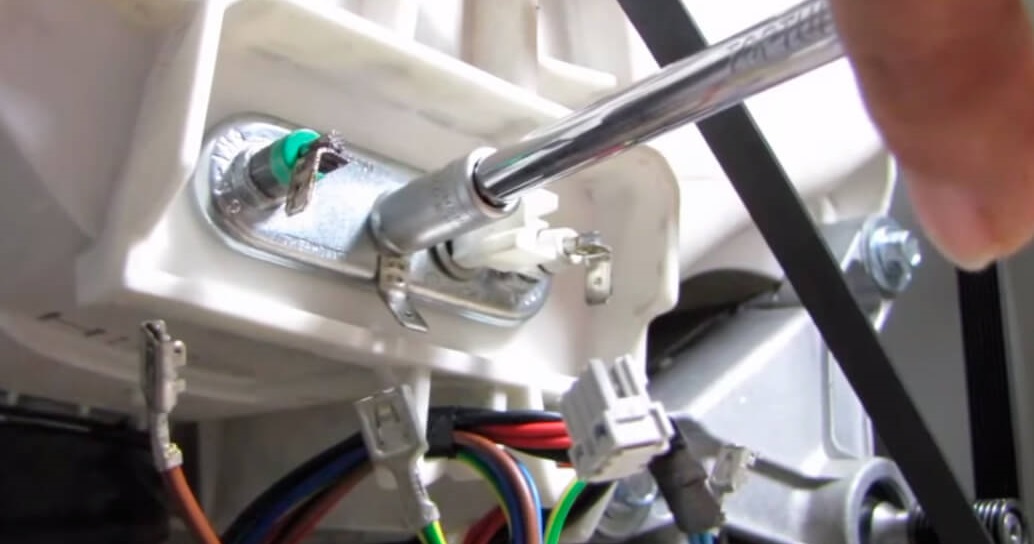
First of all, disconnect all wires and loosen the central fastening nut located between the heater contacts;
Then, using a little force, press the stud with the nut screwed on into the tank. The part will sink in about 1 centimeter;
A common problem that may arise is that the water heater gasket may have dried out and become deformed, making it difficult to remove from its mounting hole. In this case, we recommend using flat-head screwdrivers to pry the rubber seal from both sides and carefully pull it out.
Finally, all that remains is to remove the faulty heating element itself and clean the mounting hole to make it easier to install the new part later.
Follow the instructions to install the heater in reverse order, and then be sure to test the washing machine. Only a test wash will tell you if the water is heating up properly again.

 One of the most common problems in modern washing machines is a faulty heating element, or simply heating element. It's easy to spot: you run a high-temperature program to wash your clothes in hot water, but the machine doesn't heat the water at all and runs the entire cycle at low temperatures.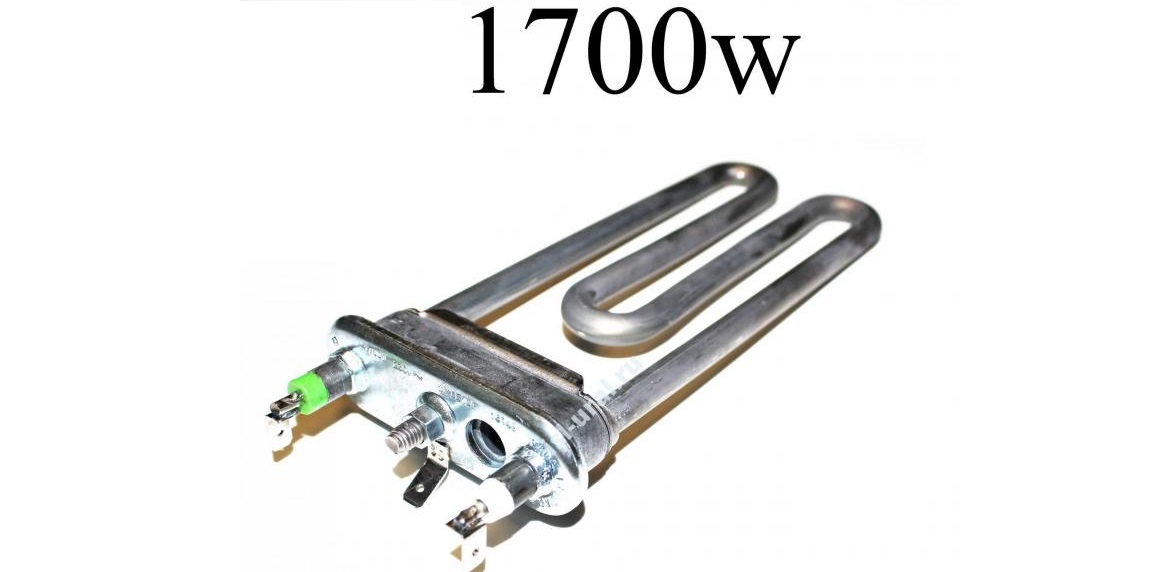















Add a comment