
Japanese washing powders
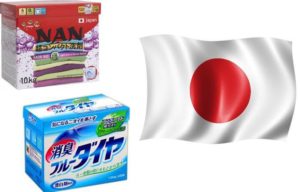 For the past five years, Japanese laundry detergents and other Japanese hygiene products have been actively promoted in the CIS market. Advertisers, as always, are generous with their praise, vying with each other to tout the amazing properties of detergents from the Land of the Rising Sun. We're not inclined to blindly trust the unfounded claims of people whose primary goal is to promote their products by any means necessary, so we decided to verify this information ourselves and share our findings with you in this publication.
Differences in powders from Japan
In preparation for this article, we studied a large number of different Japanese powders and concluded that they differ significantly from those produced in the CIS countries and even in Europe. Let's outline at least the main differences so we have a better understanding of what we're talking about.
- The basis of the composition of powders from Japan are natural soap and natural minerals.
- These powders are quite expensive, but they are highly concentrated, which significantly reduces their consumption.
- Judging by the composition, all the powders we have reviewed from Japan are environmentally friendly washing powders.
We have decided to consider these statements preliminary, at least until we conduct our own tests of Japanese laundry detergents and review consumer reviews of these products.
To begin, we'll review several Japanese detergents and conduct several test washes to ensure their effectiveness.
Overview of funds
We decided to start our review with simpler soap-based laundry detergents for hand washing, and then gradually move on to more sophisticated and effective Japanese products. But let's not get ahead of ourselves; let's take things in order.
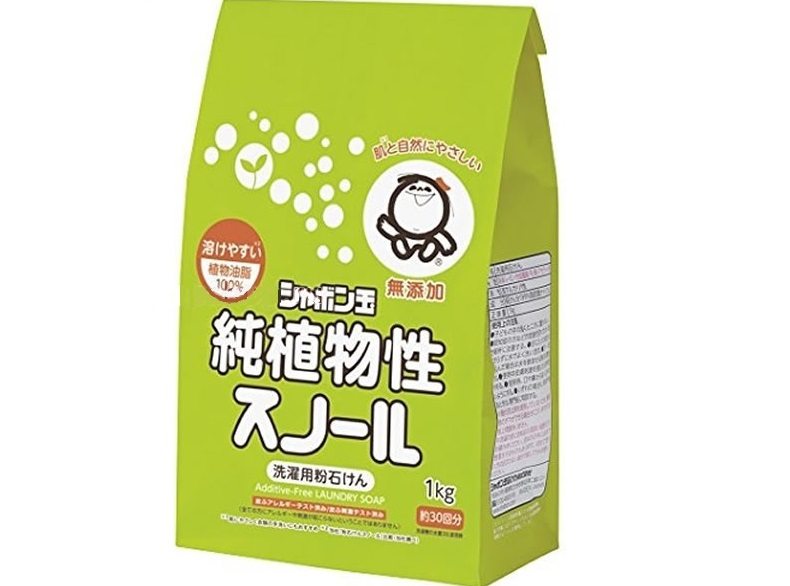
SHABONDAMA SNOUL. This powder soap, from Japan, is designed for hand washing delicate items. This product should not be used for machine washing under any circumstances. SHABONDAMA SNOUL is suitable for washing clothes of newborns and children up to three years old. A look at the ingredients reveals that 99% of the product is finely ground and specially processed soap, and 1% is a natural fragrance in the form of a plant extract. The price is $12.60 per 1 kg package.
When you pour this powdered soap into water, you understand why it was specially treated, as the particles dissolve as soon as they touch warm water. The speed of dissolution is comparable only to that of freeze-dried coffee granules. In just a few seconds, we have a soapy solution in which we soak several children's T-shirts stained with juice and borscht for 10 minutes, then wash them. Not a trace of the juice or borscht remains.
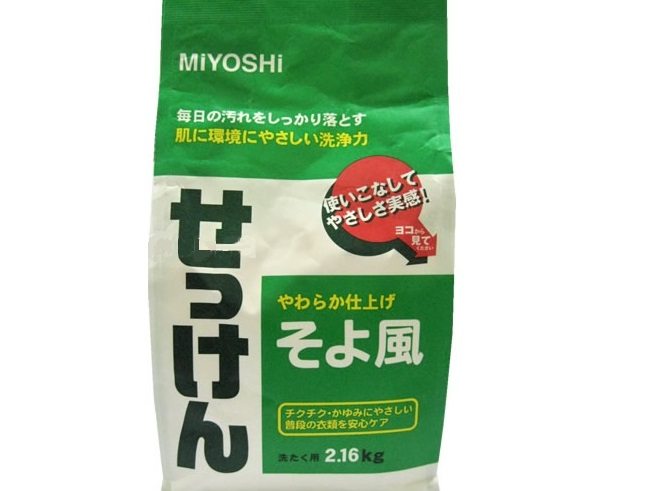
Miyoshi Soap. Another variety of powdered soap from Japan with a distinct floral scent. This product is intended for hand washing only and, according to the manufacturer, is completely safe for human health. Ingredients: 60% soap, 39.9% alkali (silicates), 0.1% metal ions.
We didn't submit this powder for chemical analysis, so we weren't able to figure out what kind of metal ions these were. Most of the powder consists of a completely safe alkali and even safer soap. It cleans just as well as the previous laundry detergent—juice and borscht stains came out of my T-shirts right away, without even having to work hard. A 2.16 kg pack costs $22.85.
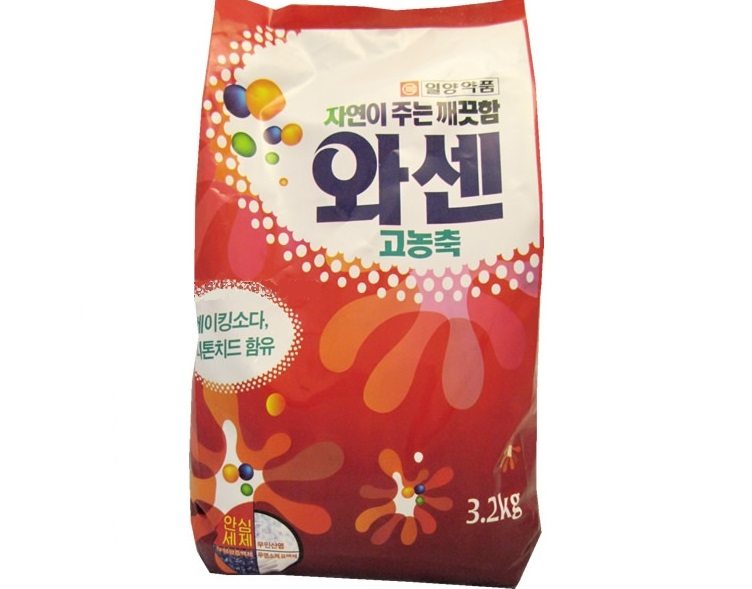
Washen. A highly effective, universal synthetic laundry detergent (concentrate). The manufacturer claims this powder is suitable for all fabric types. It can be used both in the washing machine and by hand, for both whites and colors. The powder contains: 15% anionic surfactant, 30% minerals containing magnesium and calcium, and approximately 55% sodium citrate. A 3.2 kg pack of powder costs $20.
The powder was tested as follows. Several large rags contaminated with three types of stains were placed into an automatic washing machine:
- lipstick;
- machine oil;
- fruit juice.
We set the quick wash cycle for 40 minutes at 40 degrees Celsius. The washing machine's drum holds 3.5 kg, so according to the instructions on the packaging, we should add 35 g of detergent to the detergent dispenser, so that's what we did.In the end, the lipstick and fruit juice came off perfectly, but a trace of machine oil remained, albeit barely noticeable. We repeated the procedure again, this time rubbing the machine oil stain with dishwashing liquid first. On the second try, everything came out perfectly.
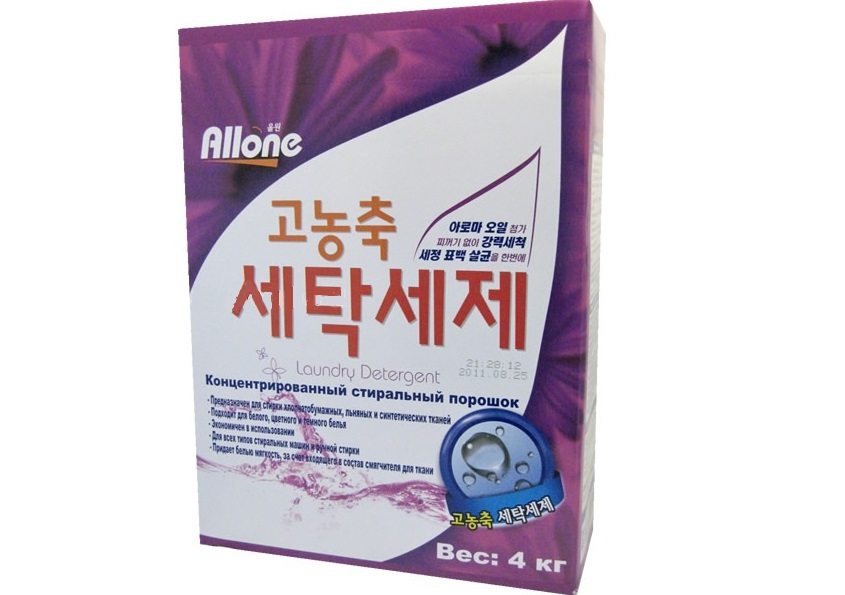
Allone. A Korean concentrated all-purpose laundry detergent with a more complex composition. It's a multi-component powder, so we can only estimate the quantities based on the manufacturer's information. Ingredients: enzymes and sodium sesquicarbonate (approximately 15%), lauryl ether and sodium percarbonate (15%), sodium bicarbonate (30%), and the remainder is sodium citrate. Overall, there are no hazardous ingredients; half of them are used in the food industry, so draw your own conclusions. The powder is machine-washable.
We conducted a similar test. We also took several cloths with three types of stains and used the same wash cycle. The results were spotless. The price for a 4 kg pack is $20.60.
Allone powder removed machine oil without any dishwashing liquid on the first try, which suggests that it is more effective than Washen powder.
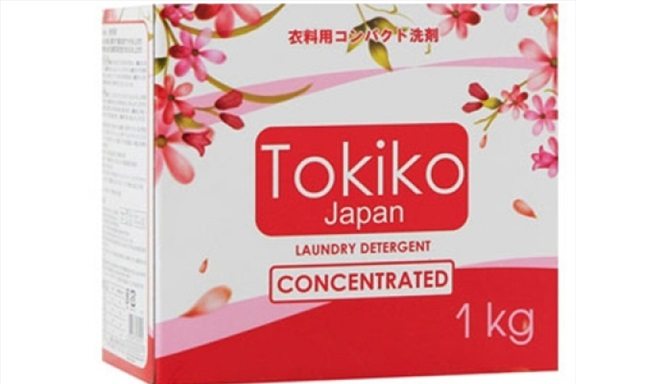
Tokiko Japan. Concentrated bactericidal universal powder from Japan. Can be used for both hand and machine washing. The required powder concentration is 20 grams per 30 liters of water. Ingredients: sodium sulfonate, polyoxyethylene alkyl ether, sodium carbonate, sodium silicate, and sodium sulfate. The ingredients are safe for health. The manufacturer did not specify the proportions of the ingredients. The average cost is $4 per 1 kg pack.
When dissolved, this washing powder creates an alkaline environment in which bacteria die and dirt is better broken down.
The detergent's effectiveness was tested as before. Several large rags were stained with lipstick, fruit juice, and machine oil. The stains were allowed to dry for 3-4 hours and then thrown into the washing machine. The detergent was applied according to the recommended dosage on the package. The rags were washed perfectly. Our technician brought children's clothes from home stained with markers and grass. We washed these items with Tokiko Japan detergent, and the results were excellent – no traces of the stains remained. We even looked under a magnifying glass and found nothing.
Daiichi Funs. A super-effective concentrated laundry detergent from Japan. Sold in 900g packs. According to the manufacturer, the powder effectively breaks down any dirt, leaving laundry perfectly clean. While the powder claims to be completely environmentally friendly, its ingredients include surfactants, alkali, aluminum salts, stabilizers, an oxygen complex, components that protect against re-soiling, and fluorescent agents.
We don’t really understand since when surfactants became an environmentally friendly component, and formulations like “fluorescent substances” raise many questions. It's completely unclear what's underneath them. It's probably some kind of chemical mixture, impossible to determine without an expert examination, and we're not going to take a foreign manufacturer's word for it. Overall, the powder's eco-friendliness is questionable. The average price for a 900g pack is $6.60.
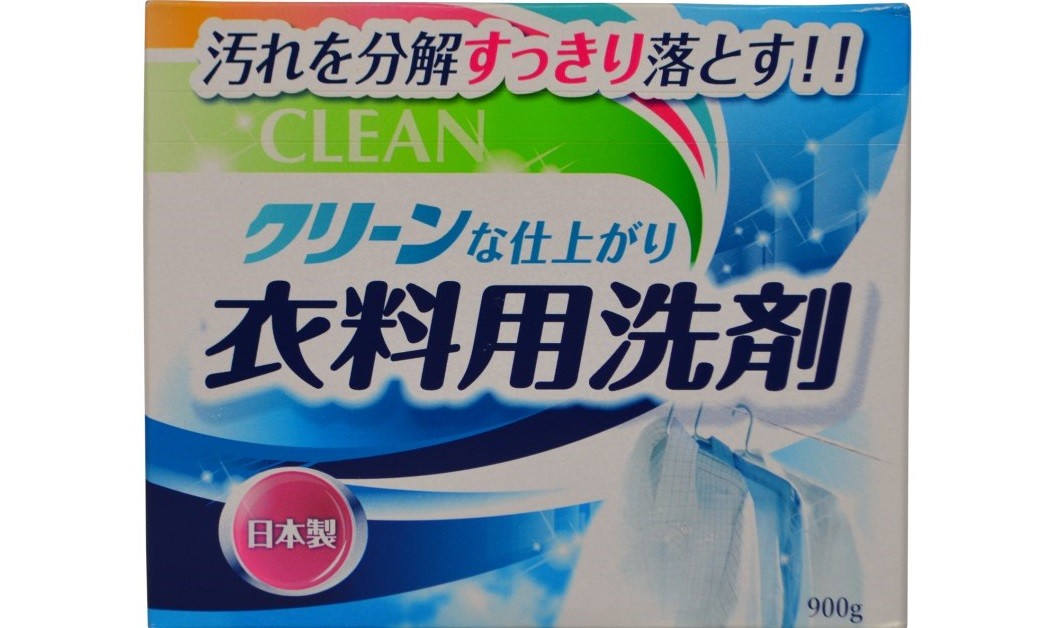
Let's test the detergent's effectiveness. Just as before, we tossed the soiled rags into the drum. The program was 40 minutes at 40 degrees Celsius. The wash was a complete failure: only the juice stain came out properly, the lipstick stain remained visible, and the machine oil stain didn't come out at all. We repeated the wash with double the amount of detergent – the result wasn't much better: the lipstick came out, but the machine oil stain remained.
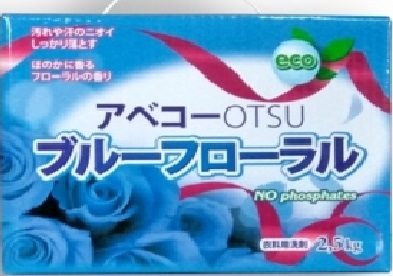
Daiichi Otsu. Concentrated laundry detergent with active oxygen from Japan. Suitable for all fabrics, even those prone to fading. It can be used for both hand and machine washing. It is sold in large 2.5 kg boxes. According to the manufacturer, the ingredients easily penetrate the fibers of fabrics, breaking down dirt and imparting a meadow-grass scent to laundry. A large 2.5 kg box costs about $10.
Now about the tests. Our simple tests showed that the powder performs only moderately well on stains, as it doesn't completely remove fruit juice and machine oil stains, but it does remove lipstick completely. The powder's eco-friendliness is also questionable, as it contains some unclear components, including surfactants, a fluorescent whitening enhancer, an activator, and others.
This washing powder does not contain phosphates, which is already very good.
Consumer reviews
Albina
I bought Japanese Miyoshi Soap laundry detergent for my newborn's clothes on a friend's recommendation. At first, I didn't even realize it was powdered soap; the particles were very fine and quite hard—very similar to regular laundry detergent. Then I poured the powder into a bowl of water, and it became clear it was soap, even though it dissolved almost instantly. The baby's poop came out easily without any soaking, so I was pleased with the detergent. If it were cheaper, I would buy it regularly, but as it is, I won’t buy it again and will wash it with baby soap.
Evgeniya
My first encounter with Japanese laundry detergents began when I first fell for an online ad and ordered a pack of Tokiko Japan laundry detergent. I was truly impressed, as it even cleaned clothes with stubborn stains that I was about to throw away. Then I decided to try Daiichi Funs, and it was also very good. Now I use both of these detergents and have no problems. Compared to what you can buy in our stores, Japanese detergents are simply gold. I recommend them to everyone!
Alexey Petrovich
Two years ago, I decided to give my wife a new washing machine for her anniversary; she'd been wanting one for a while. I bought the machine, but I also wanted something unique to go with it. I looked online and immediately stumbled upon Japanese-made laundry detergents. I decided to buy a pack of Daiichi Otsu and a pack of Daiichi Funs. She was more surprised than delighted by the gift's inclusion, but when she tried the detergents, she was overjoyed. Now she makes me order them all the time, and my wife is no easy woman to please.
In conclusion, it's worth noting that the term "Japanese" often refers not only to products made directly in Japan, but also to South Korean and even Chinese products. In our case, it doesn't really matter, as long as the powder is truly good. Choose your powder wisely!
Interesting:
Readers' comments
Headings
Washing machine repair




For buyers




For users


Dishwasher




Add a comment