
How to clear a clogged drain in a washing machine?
 If after a wash cycle you notice that water drains more slowly than usual from your automatic washing machine, it's likely that the drain is clogged. This problem is quite common, as drainage system components occasionally become clogged with lint, debris, and hairs washed from clothes, and soap scum accumulates on the parts.
You can clear a clogged drain yourself, without calling in a repairman. To clean your washing machine's drain system, you'll need a special cleaning solution, a sponge, a brush, a plastic drain cable, and a couple of hours of free time.
Let's start by cleaning the dust filter.
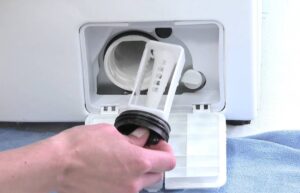
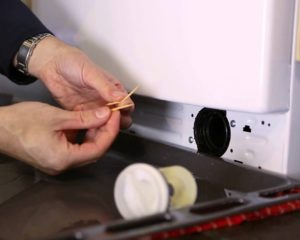
The filter element is located at the front of the washing machine, in the lower right corner, behind a special door. To access the debris filter, pry the door open with a flat-head screwdriver and carefully open it. Some models of automatic machines do not have a separate door, but are equipped with a solid false panel that hides the filtration system. In this situation, you will have to remove the panel entirely by loosening the latches that hold it in place.
What should you do once you've accessed the trash filter? The algorithm is as follows:
- unscrew the screw and remove the filter element from the machine body;
- Place an empty container under the opened hole or put some unnecessary rags underneath it;
- Carefully position the unit at an angle, ensuring free flow of any water remaining in the system;
- Use a cable to clean the system from various types of contaminants;
- Wipe the structure with a damp cloth, simultaneously removing any deposits that have accumulated on the walls.
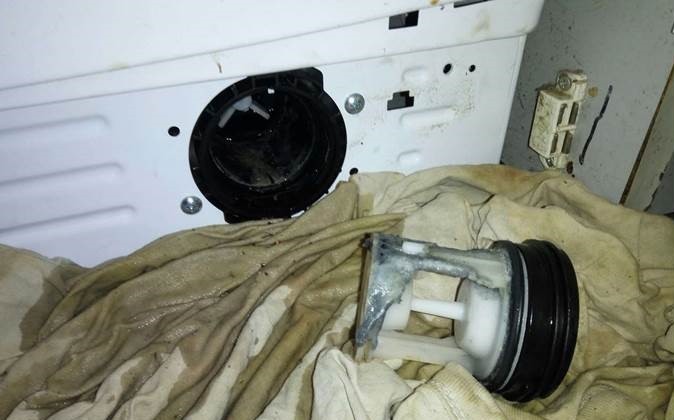
If scale is detected on the filter system components, the damaged parts will have to be replaced.
Once the filter and structure are cleaned, secure the element into the housing and reinstall the removed panel.
Cleaning the snail, pipe, and pump
In addition to the debris filter, clogging can also occur in the drain pump and the volute connected to it. The cavities in these components are quite large, so cleaning the clog yourself will be slightly more difficult than cleaning the filter. The procedure for cleaning the volute and the pipe is as follows:
- unscrew the bolts holding the snail and disconnect the part;
- loosen the existing clamps;
- detach the pipe and clean it from debris;
- Rinse the snail, removing all existing dirt;
- Install the components in place, tighten the clamps and tighten the bolts.

While removing the volute, you can also check the drain pump for blockages. Unplug the connector and remove the pump from the washing machine body. Disassemble the pump, remove lint, hairs and other debris that has accumulated in the cavity of the part and around the impeller.
The hose or drain pipe is clogged
The drainage of waste liquid can be difficult due to clogging of the drain hose or the place where it is attached to the sewer pipe. To clean the drain of the washing machine, you will have to disconnect the hose from the utility lines and clean it. The following steps must be taken:
- unplug the washing machine;
- close the water intake valve;
- gain access to the debris filter, remove the element from the housing;
- drain the remaining water in the system through the hole that appears;
- Using pliers, disconnect the end of the drain hose from the sewer pipe or drain trap.
Next, disconnect the drain hose from the automatic washing machine. The process will vary slightly depending on the washing machine model.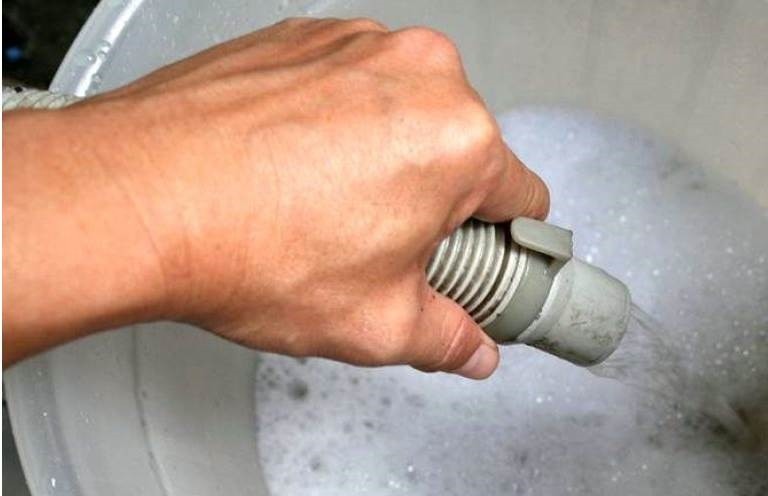
- In Beko, Ariston, Samsung, Candy, LG, and Indesit washing machines, the drain hose attachment point can only be accessed through the bottom. The washing machine is laid on its side, after which the drain hose is disconnected from the pump using pliers.
- Electrolux and Zanussi automatic machines have a drain hose running from the back of the machine. Access to the drain hose is only possible by removing the back panel. After this, release the latches securing the hose and disconnect the water intake hose from the valve. Next, remove the top cover of the machine and release the clamp securing the drain hose.
- On AEG, Siemens, and Bosch models, the drain hose can be accessed by removing the front panel of the unit. To do this, loosen the clamp holding the door seal, insert the seal into the drum, detach the lower trim panel, remove the detergent dispenser from the housing, unscrew the bolts holding the main control panel, remove the wiring from the door locking device, and remove the unit. After these preparatory steps, remove the front panel and pull the drain hose out of the housing.
The drainage tube is flushed with water. A brush, a Kevlar-based cable, and cleaning solutions are used simultaneously. To thoroughly clean the inside of the hose, it is recommended to add a small amount of citric acid to warm water and flush the tube with this solution.
Interesting:
Readers' comments
Headings
Washing machine repair




For buyers




For users


Dishwasher




Add a comment