
Loading an Electrolux dishwasher
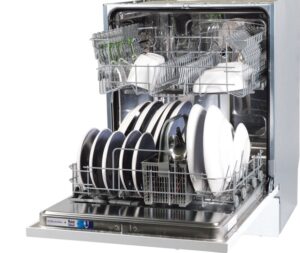 To achieve high-quality cleaning, it's essential to load your Electrolux dishwasher correctly. This involves not only carefully arranging the dishes but also adding detergent, salt, and rinse aid. Let's look at how to load plates, pots, and mugs, and where and when to add detergent.
Add the necessary funds
The first thing a dishwasher user needs to take care of is adding household chemicals to special containers. The machine will not function properly without salt and detergent. In fact, there is nothing complicated about this process.
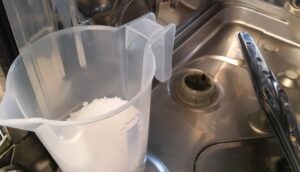
Dishwasher salt is available at any supermarket or home improvement store. The reservoir is located at the bottom of the dishwasher. To access the compartment, remove the bottom basket of the dishwasher. Next, unscrew the cap and pour the salt into the compartment up to the indicated line.
There is no need to add salt before each cycle; a filled reservoir is usually enough for 20-40 washes, depending on the dishwasher model.
Detergent must be added with each load. The dishwasher dispenser is located on the door. It has two compartments: a main compartment and a secondary compartment. The primary compartment holds washing powder, tablets, or capsules, while the secondary compartment holds rinse aid.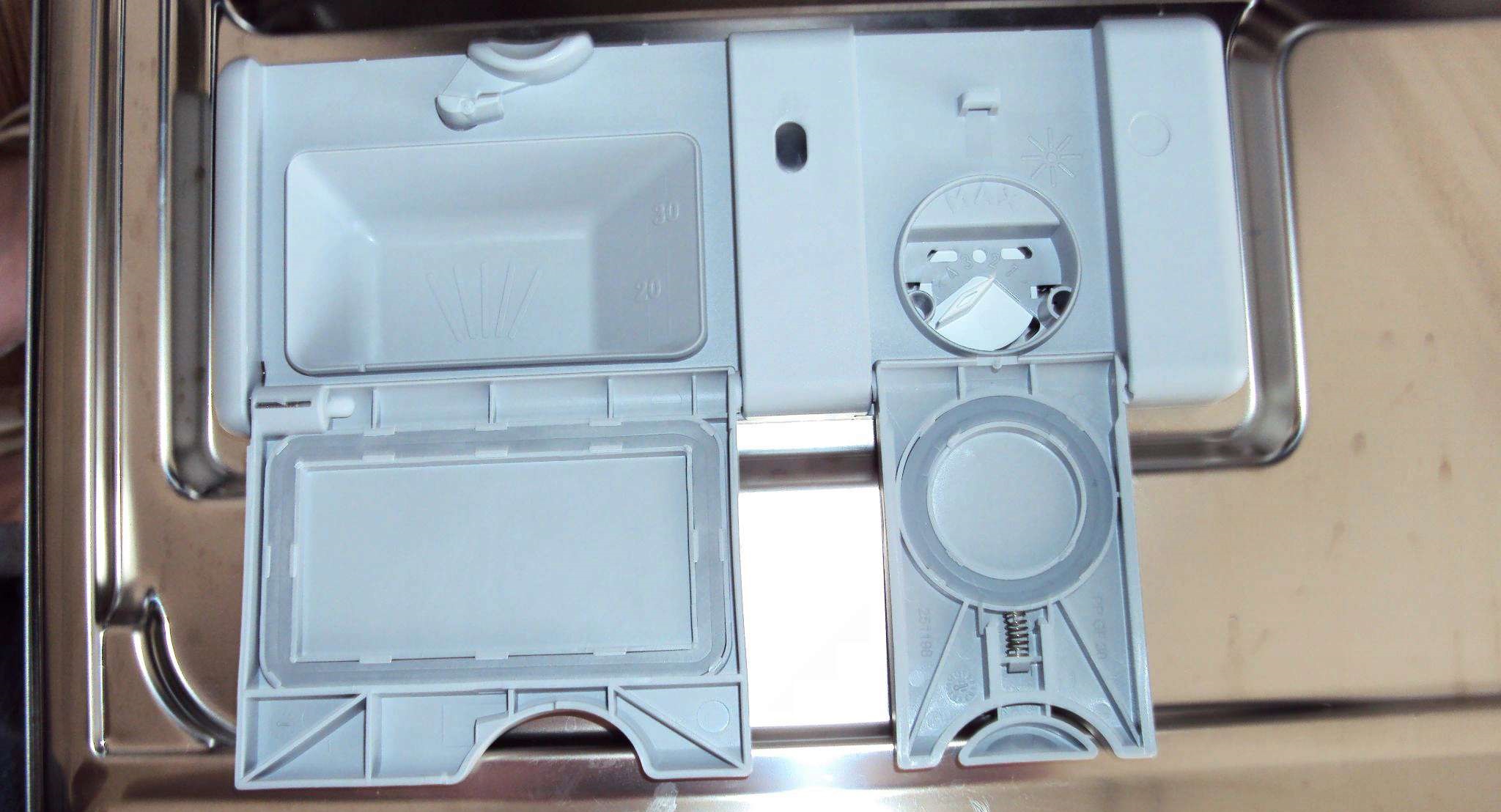
It's important to purchase high-quality detergents. Whether you choose tablets, powder, or gel is entirely up to you. The key is to choose non-aggressive, gentle formulas designed specifically for dishwashers.
Therefore, before loading the dishes, be sure to check the salt compartment. Modern Electrolux models are equipped with indicators that indicate when the reservoir is full. Next, pour the detergent into the dispenser on the door. After that, you can begin setting out your cutlery.
Preparing kitchen utensils for washing
The next step is preparing the cutlery for loading. Before placing dishes in the dishwasher, be sure to remove any food debris. This will prevent clogs in the dishwasher's drainage system and improve the cleaning results.
It is important to ensure that there are no food particles, fruit pits, etc. stuck to the dishes loaded into the machine.
You can clean dishes with a special spatula or a regular sponge. If the food has already hardened, it's best to rinse the plates. Dried-on food particles are very difficult to remove.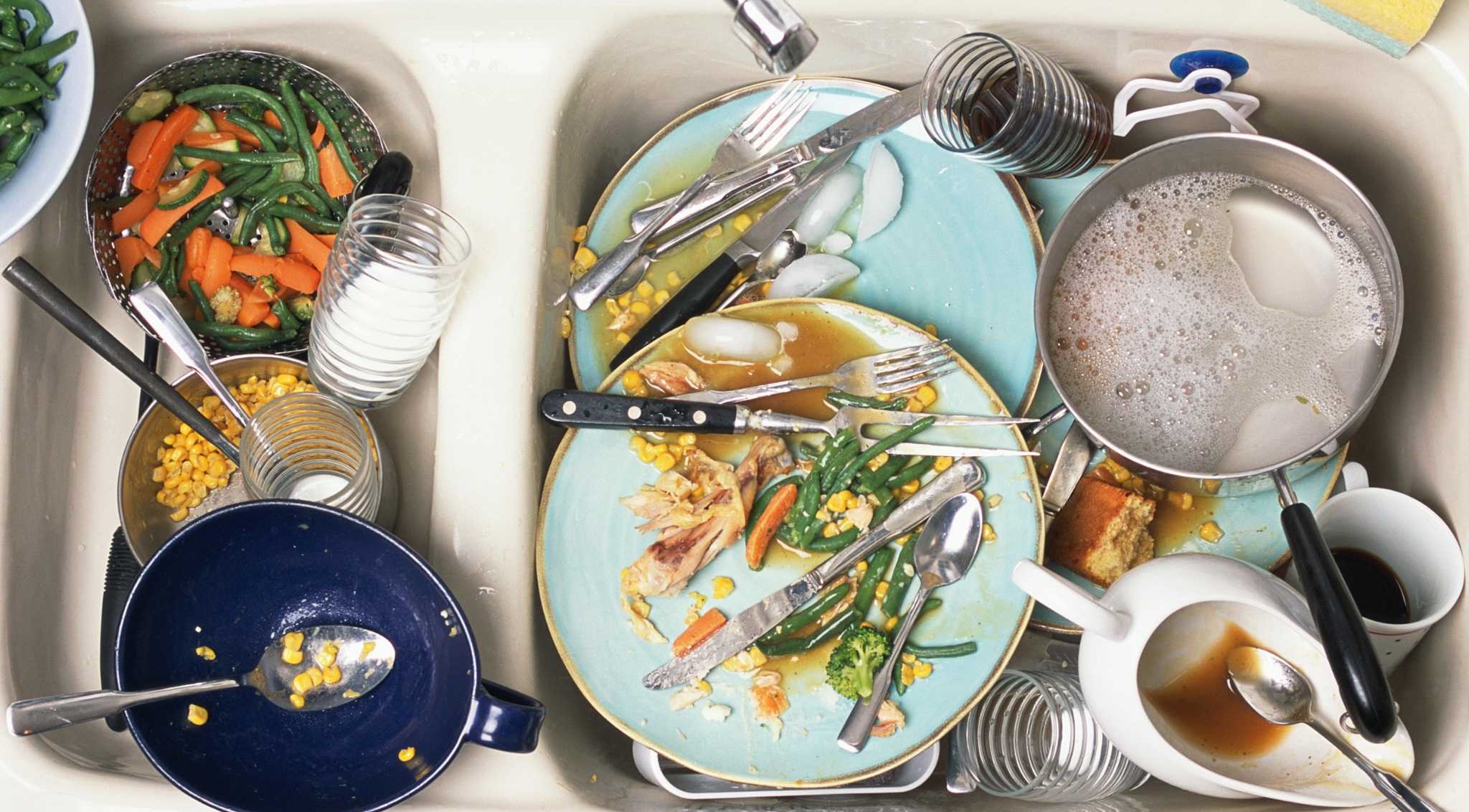
Some Electrolux dishwashers feature a pre-rinse cycle. This is especially helpful if you don't wash dishes immediately after meals, but rather save them for the evening or even a couple of days. In this case, it's recommended to run this cycle before the main wash to improve cleaning results.
Where to put plates, glasses, mugs?
A crucial aspect is the arrangement of cutlery in the dishwasher baskets. Typically, there are two main trays for dishes. There is also a separate container for spoons, forks, and knives, and some models even have a glass holder.
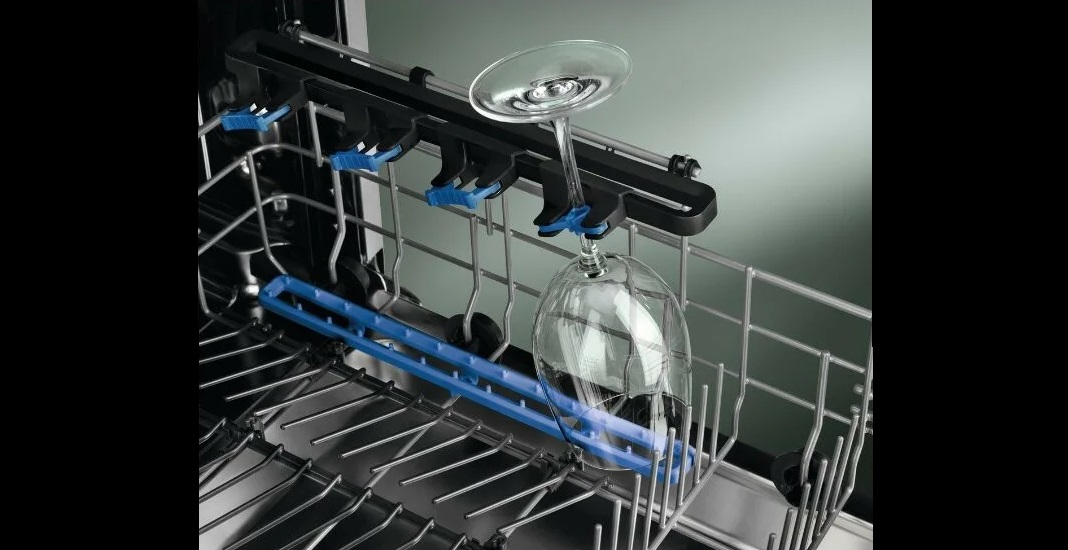
Mugs, glasses, and goblets must be placed upside down. This way, water will flow in, wash the sides, and drain freely. Horizontal placement of cups is unacceptable, as this will prevent the machine from cleaning them.
The top rack of the dishwasher is designed for mugs. If your Electrolux dishwasher has a special glass holder, they are secured there with the stems facing upward. It's important that the glasses don't touch each other, otherwise the fragile glass could break during the wash.
Plates can be placed either on top or bottom. This will depend on the size and degree of soiling of the dishes. For example, the top basket can accommodate:
- soup bowls;
- sauce boats;
- broth bowls;
- bowls;
- oilers;
- dessert plates;
- tea saucers;
- salt shakers, sugar bowls.
It's also recommended to place plastic utensils on top. The further they are from the heating element, the less likely they are to become deformed. Such utensils should not be washed on high-temperature programs.
The lower basket contains:
- large diameter plates;
- deep soup bowls;
- salad bowls;
- frying pans;
- saucepans;
- pots.
It's best to place large plates at the edges of the tray, and smaller ones closer to the middle. This will make it easier for the water to reach the mugs in the top basket. The dishes should be placed facing the center of the washing chamber so that the saucers do not touch each other.
The larger the gap between the plates, the better they will be washed.
Avoid overloading the dishwasher and filling the chamber too full. This will prevent proper cleaning of the cutlery, and the cycle will have to be repeated with a smaller load.
How to wash knives, spoons and forks?
Every Electrolux dishwasher has a separate tray for small cutlery. You can arrange knives, spoons, and forks freely in the tray, alternating them. Stacking spoons inside each other will not rinse well. Knives should be placed blade-side down.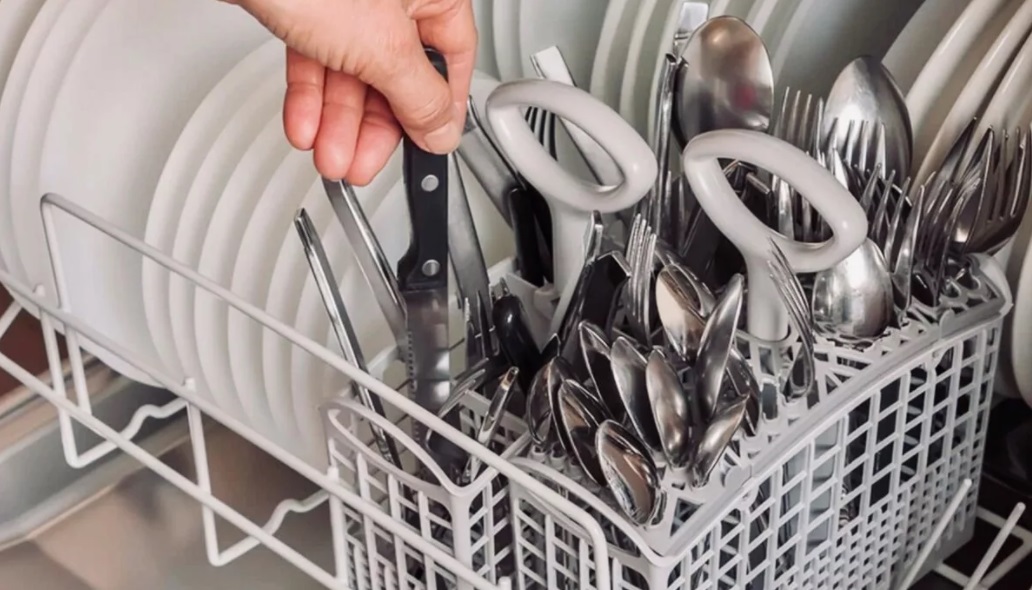
The cutlery tray is located at the top of the washing chamber. The spoons and forks are arranged horizontally in this container. This saves space and leaves more room for the main baskets.
It is not recommended to place knives with ceramic blades in the dishwasher. Prolonged high-temperature cleaning can dull them. Also, avoid placing wooden utensils, forks, and spoons with wooden handles in the dishwasher, as they will swell if exposed to water for long periods.
We arrange large-sized dishes
The lower basket of the machine is used for large dishes. Pots, saucepans, and frying pans fit here. If the wash chamber size allows, you can even load a baking sheet.
It's recommended to wash large dishes separately from fragile items such as crystal glasses, glass and porcelain plates, etc. To thoroughly clean pots and pans, use the most intensive cycle, which isn't suitable for glass or porcelain. Therefore, separate loading of these items is essential.
Frying pans and baking sheets should be placed on their sides. Pots and saucepans should be placed upside down or at an angle. This will ensure free access of water to all cutlery in the sink.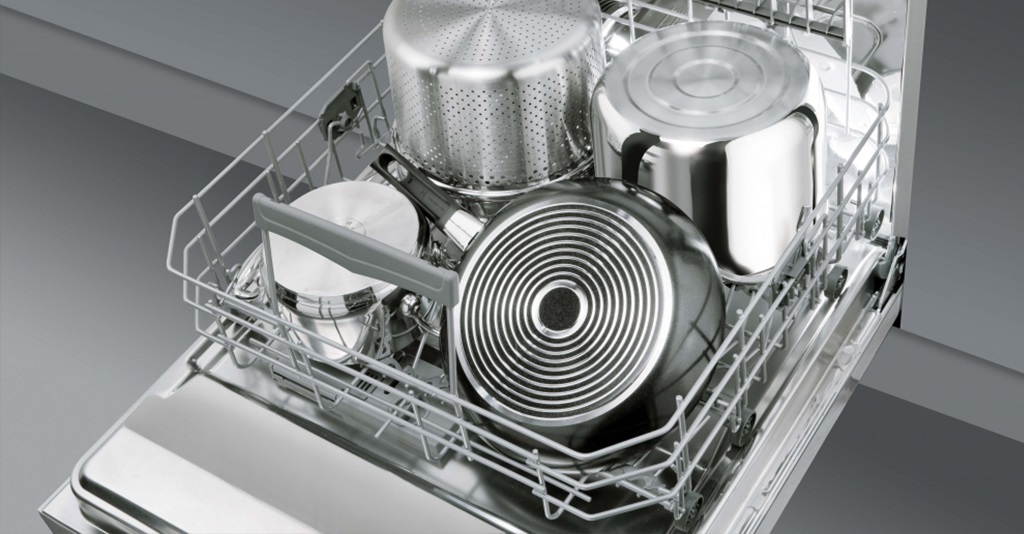
Not all large-sized dishes can be loaded into the machine. Teflon-coated pans and pots must not be washed in a dishwasher. Long-term high-temperature processing can damage Teflon and impair its properties.
If your frying pan or sauté pan has a removable handle, be sure to remove it before loading the dishes into the dishwasher. This will save space inside the bin. Place utensils with handles so that they don't touch the dishwasher walls.
If the pots cover the entire lower rack, water access to the upper rack will be limited. Therefore, in this case, it's best to leave the upper rack empty and run the "Half Load" program. This mode will reduce water and kilowatt consumption and shorten the cycle time, while still ensuring high-quality cleaning.
Trays should be placed underneath, sideways, and along the edges of the basket. Laying them horizontally prevents water from reaching the top tray. This does not apply to machines equipped with spray arms around the entire perimeter of the wash chamber.
Loading other items
What other kitchen utensils are dishwasher-safe? Ladles, colanders, slotted spoons, spatulas, egg slicers, garlic presses, graters, and other items are all dishwasher-safe. They can be placed on any rack where there's available space.
Electrolux dishwashers accept cutting boards (any type except wooden). They should be placed vertically. Plastic utensils can be placed in the upper basket, away from the heating element underneath.
Interesting:



Readers' comments
Headings
Washing machine repair




For buyers




For users


Dishwasher




Add a comment