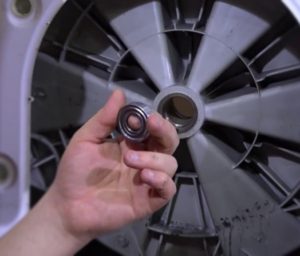
It's unwise to disassemble the washing machine and replace the bearings without first confirming damage to the bearing assembly. You need to be 100% certain of the problem first. Several symptoms can indicate problems with the drum rotation, even without disassembling the machine. The key is to know what to look for and where.
We look at indirect signs
If a bearing in your washing machine starts humming, don't immediately blame the entire unit—the source of the unusual sound may lie elsewhere. But only an experienced professional can 100% diagnose shaft problems without disassembling the housing. Moreover, associated malfunctions only become apparent in the extreme stages of ring failure. Rings that have just begun to deteriorate show virtually no signs of their condition.
But there are several signs that may indicate bearing failure:
extraneous noise during washing, rinsing and spinning – metallic clanging, grinding and knocking;
poor spinning (the drum cannot reach maximum speed, and the laundry is not spun as before);
increased imbalance (if the bearings are damaged, the drum begins to swing, causing a slight play, which can then increase);
damaged cuff, or rather, its edges.
With broken bearings, the washing machine doesn't just make noise; it hums and clanks. The drum doesn't rotate smoothly; it spins jerkily, and during the spin cycle, it bangs against the sides of the tank. The outgoing vibration increases, and the machine starts to "jump."
Troubleshooting continues with manual "testing." Unplug the machine, open the hatch, place three fingers on the top wall of the drum, and try to rock it while applying pressure. The cylinder should move with the drum on the springs, without any play or uneven vibrations. If the rotation is erratic, the bearings are beginning to deteriorate.
Next, try spinning the drum with your palm. Normally, the cylinder rotates freely, but with some strain, producing a slight hum. If the washing machine is knocking or clunking, there's a problem with the bearing assembly. Bearings can fail for several reasons. Most often, it's due to simple wear and tear, but less often, it's due to a manufacturing defect or improper use.
Let's remove the back panel of the case
It's best to confirm your suspicions by partially disassembling the machine and proving the bearings are damaged. There's no need to access the unit—removing a couple of components and inspecting the back of the drum is sufficient. This task is easy to accomplish yourself; the main thing is to follow these steps:
disconnect the washing machine from the utilities;
move the equipment away from the wall, ensuring free access to the back wall;
unscrew the bolts holding the back and remove the panel;
we remove the drive belt by holding the rubber with one hand and turning the pulley with the other;
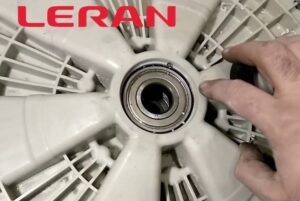
We inspect the rear wall of the drum.
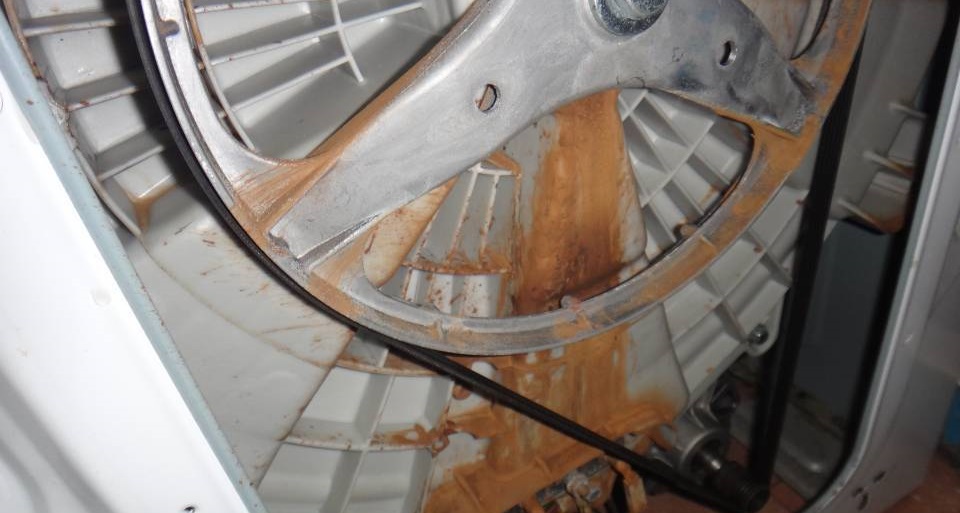
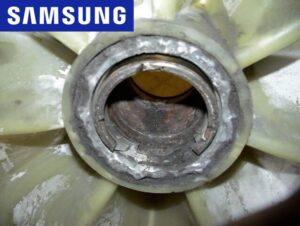
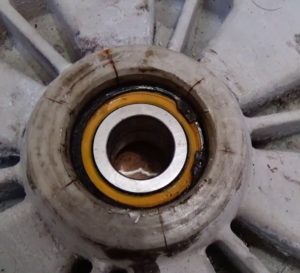
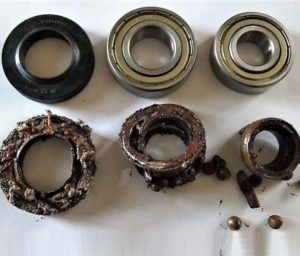
The fact is that when bearings are damaged, grease almost always leaks, which disrupts the seal and leads to corrosion. It's logical that there will be corresponding traces near the universal joint: rust and sealant streaks.In severe cases, a rusty, smelling liquid leaks out of the bottom of the machine, leaving streaks on the back of the drum.
Do not operate a washing machine with a damaged bearing assembly; the problem will worsen, leading to internal damage to the drum, crosspiece, and tank.
Rust on the universal joint is a clear sign that the bearing assembly requires urgent repair. A washing machine with a broken shaft is impossible to operate – the play will increase, and the drum will slam against the tub at high speed, damaging all surrounding parts and mechanisms.

 It's unwise to disassemble the washing machine and replace the bearings without first confirming damage to the bearing assembly. You need to be 100% certain of the problem first. Several symptoms can indicate problems with the drum rotation, even without disassembling the machine. The key is to know what to look for and where.














Add a comment