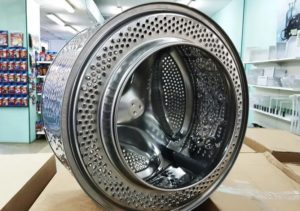
The drum is one of the key components of a home appliance. Certain malfunctions may require replacement of the drum in your LG washing machine. Removing the old part and installing the new one requires a thorough understanding of the machine's design and proper disassembly. We'll describe the procedure in detail below.
We collect tools and prepare the place
To remove the drum without any problems, you need to thoroughly prepare for the upcoming work. First, gather all the tools you'll need. To replace the drum yourself, you'll need:
a medium-sized hammer (preferably with a striking part made of copper or bronze);
universal lubricant WD-40 or similar aerosol;
pliers;
Phillips and slotted screwdrivers;
adjustable wrench;
universal silicone sealant;
set of open-end heads;
metal hairpin (about 4 cm).
The tool set provided is minimal. During the course of your work, you may encounter other defects in your automatic washing machine, and you'll need other tools to fix them.
It's crucial to plan ahead for where exactly you'll be disassembling the washing machine. It's ideal if you have access to a garage or utility room to replace the drum. If not, you can disassemble it at home; you'll just need to move the machine to a fairly spacious room. Cover the floors with plastic or drop cloths beforehand.
We remove the tank and drum
The first step is to disassemble the body of the washing machine to gain access to its internals. Drum in automatic washing machines The LG is located inside the tank, so to remove the metal container, you first need to remove the plastic one. The algorithm of actions when disassembling a machine with a direct drive will be as follows:
de-energize the device;
disconnect the washing machine from the house utilities;
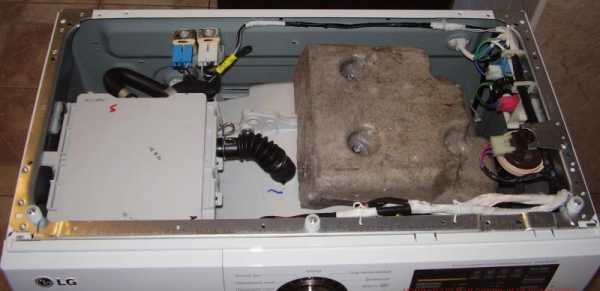
remove the top cover of the washing machine housing by unscrewing a couple of bolts holding it in place, set the panel aside;
remove the detergent drawer by pressing the central valve inside the drawer;
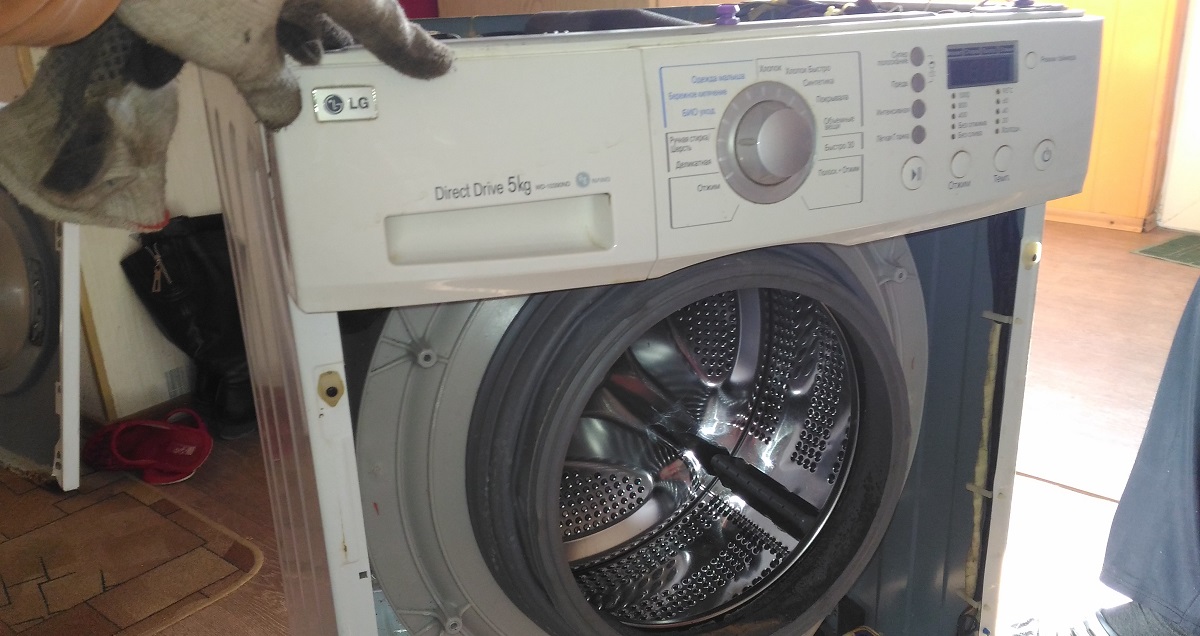
Remove the screws securing the washing machine's main control panel. The screws are located around the perimeter of the panel.
carefully disconnect the wiring from the control panel (it is permissible not to disconnect the wires, but then you will have to work carefully so as not to break the contacts);
Before removing the wires, it is recommended to take a photo to avoid confusing the connection diagram later.
Using a thin screwdriver, bend back the plastic clips holding the bottom panel in place. Remove it and set it aside;
Use a screwdriver to pry up the metal clamp holding the hatch cuff. Once the clamp has loosened, remove the ring;
Use your hands to pull the outer part of the cuff out of the groove and tuck the seal inside the drum;
Disconnect the wires from the hatch locking device. Unscrew the bolts and remove the locking sensor;
Remove the bolts securing the front panel of the machine. Once all the screws have been located and removed, remove the front panel of the case and set it aside;
Remove all fasteners from the tank. This includes the water inlet valve, drain pipe, and pressure switch fasteners. Also, be sure to disconnect the wires from the heating element (it's best to remove the heating element altogether), electric motor, thermostat, and drain pump. Be sure to remove the counterweights and shock absorber fasteners;
Make sure all pipes leading to the tank are disconnected;
Unscrew the screws securing the inverter motor and remove the motor.
Only after all these steps have been completed can you remove the drum. Removing the plastic element alone is quite difficult, so it's best to have an assistant. One person can release the springs, and the other can lift the drum and pull it out of the direct-drive washing machine housing.
We'll disassemble the tank and replace the drum.
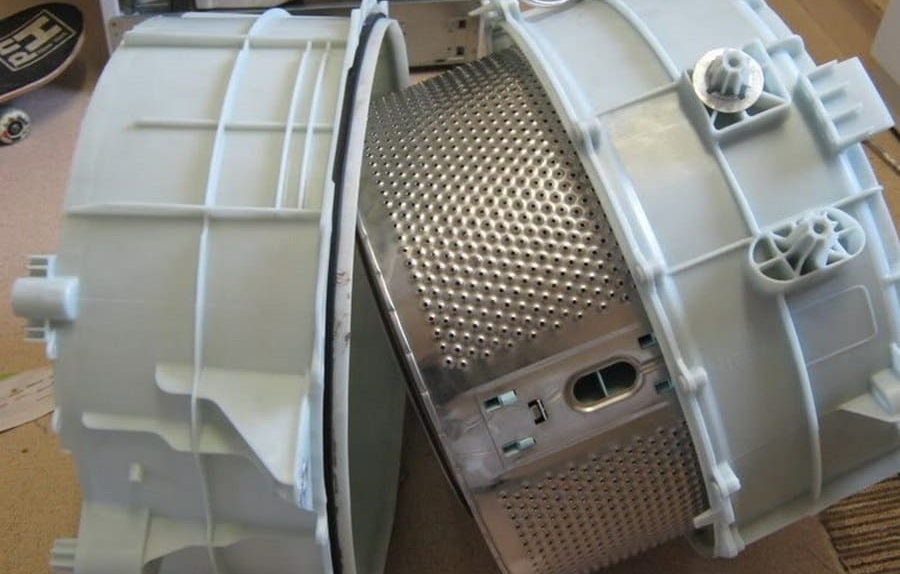
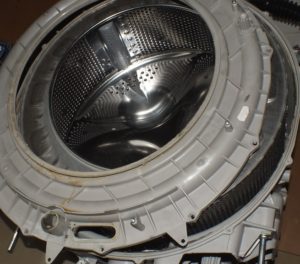
To remove the drum, you will have to disassemble the tank. If the model of your washing machine LG is equipped with a detachable tank, which significantly simplifies the process: you only need to unscrew the bolts that hold the two halves of the plastic container together.
After separating the tank into two halves, you need to remove the central screw located in the middle of the inverter motor mount.
Before removing the screw, it is recommended to treat it with WD-40 aerosol lubricant, so that the unscrewing procedure will go more smoothly.
After loosening the fastener, thoroughly lubricate the screw and screw it back in place. This step is necessary to easily knock out the drum without damaging the shaft. Next, take the metal pin you prepared earlier and press one end of the rod against the screw. Using a hammer, gently tap the pin, thus knocking out the shaft.
When tapping on a metal rod, it is necessary to be careful not to damage the parts, otherwise the cost of repairs may increase significantly.
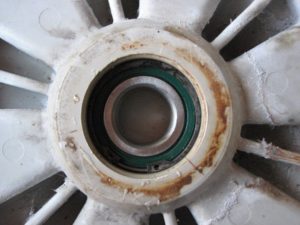
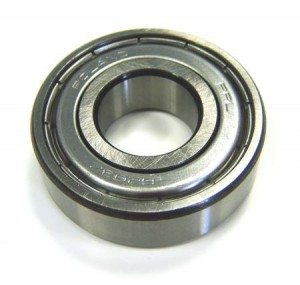
Once the bushing and shaft are removed, carefully inspect the components for defects and damage. You'll now be left with the drum, to which the spider and shaft are attached. Use an adjustable wrench to remove the screws securing the spider. The old drum is now free of any attachments. All that's left to do is install the new part. Reassembly of the drum, and subsequently the washing machine, is strictly reversed. When joining the halves of the tank, it is advisable to treat the seam with a waterproof silicone sealant to ensure greater structural reliability.
Replacing a drum yourself requires a few hours of free time, desire, and skill. The process is generally straightforward. You'll need the necessary tools, patience, and a prepared workspace.

 The drum is one of the key components of a home appliance. Certain malfunctions may require replacement of the drum in your LG washing machine. Removing the old part and installing the new one requires a thorough understanding of the machine's design and proper disassembly. We'll describe the procedure in detail below.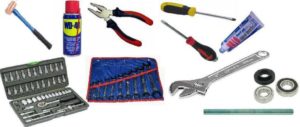















Thanks for the clarification, I'll try it tomorrow.