
How to replace the seal on an Indesit washing machine
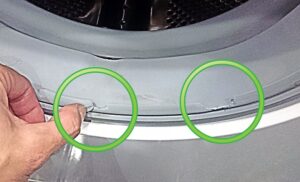
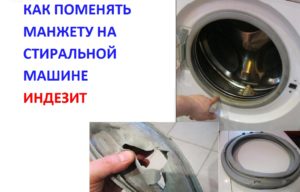 If the door seal on your washing machine has a hole, wear, or swelling, it needs to be replaced immediately. Such damage compromises the proper seal and causes water to leak out of the drum when the cycle starts. This can lead to unfinished laundry, dirty floors, and flooded neighbors.
Replacing the seal on an Indesit washing machine takes no more than an hour, and all you need is open the door and a few tools. Just turn off the power first and follow the instructions carefully. Detailed instructions for removing the damaged part, installing a new seal, and taking preventative measures are provided below.
Dismantling the damaged part
A damaged door seal isn't a death sentence for your washing machine. On the contrary, such a repair is significantly cheaper than replacing the control module or faulty electronics. Even better, almost any Indesit owner can remove the seal from the drum and install a new one themselves.
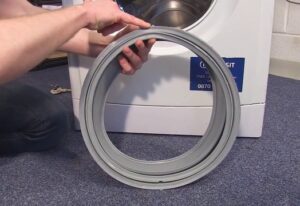
First, prepare for replacement: purchase a new seal identical to the damaged one, based on the diameter, markings, and recommendations of the store consultant. Next, ensure your own safety: disconnect the machine from the power source and wipe the housing with a dry cloth. Then, proceed with disassembly.
- Remove the retaining clamps. If the holders are plastic, hold the junction of the two latches and pull forward. For metal rims, unscrew the screw or pry up the spring with a flat-head screwdriver.
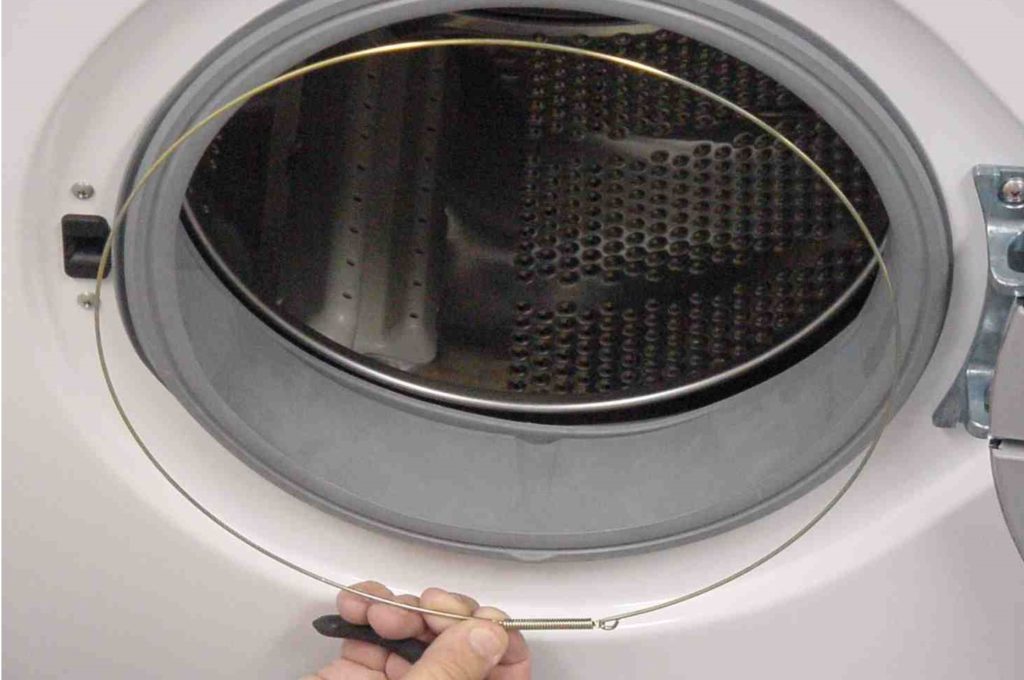
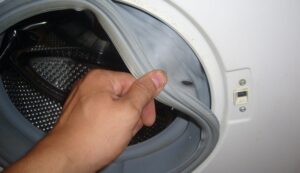
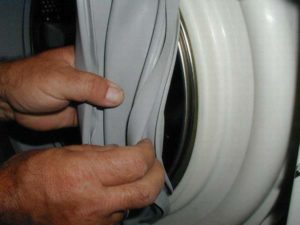
- Carefully pull out the front part of the rubber gasket.
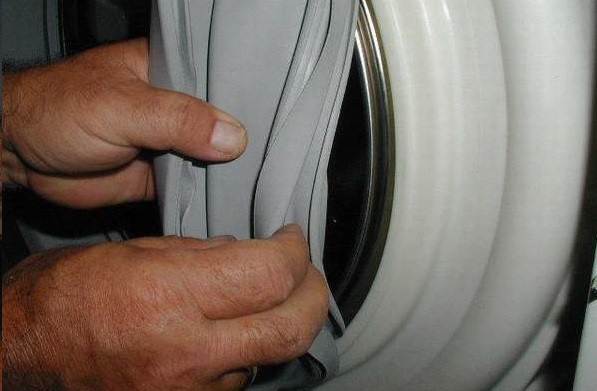
- We look for a mounting mark indicating the required position of the cuff to the washing machine drum (most often the mark will be a characteristic protrusion).
- We mark the corresponding mark on the body with a marker.
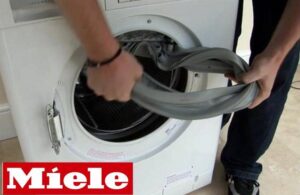
- We pull the elastic towards ourselves and remove it from the recess.
Once you have removed the old seal, do not rush to install the new part. It is important to thoroughly clean the cuff edge from dirt, scale and detergent residue. A generously soaped sponge is perfect for these purposes, as the soap will act not only as a cleaning agent but also as a lubricant.
Important! There's no need to rinse off the foam or wipe the recess dry: the slippery solution will help speed up the installation process.
Instructions for installing a new rubber band
Reinstalling the rubber sunroof seal onto the drum can be a bit of a challenge. The factory seal is quite elastic and tight, but it can be quite difficult to install, which often causes difficulties for amateur mechanics. The following instructions will help you get the rubber seal back on:
- The new cuff is applied to the seat so that the mounting marks on the gasket and the tank correspond to each other.
- The replacement starts from the top edge, the inserted section is held with one hand, while the other pulls the elastic band onto the edge.
- Next, the inner edge is put on, starting from the center and moving alternately in both directions.
- At the bottom, the cuff is pulled tightly onto the tank.
- The gasket is felt along its entire length and finally inserted into the edge for a tight fit to the washing machine body.
- The alignment of the mounting marks is checked. If any misalignment occurs, it is recommended to remove the rubber band and repeat the procedure.
For convenience, it's best to remove the front door to ensure easy access to the washing machine. However, it's important to remember that on Indesit models, the seal can be replaced without removing the door.
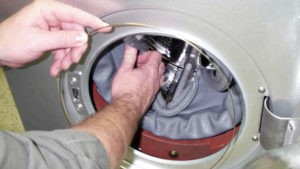
 The most difficult step is installing the inner clamp. The installation method depends on the type of holder. For example, for washing machines with metal clamps on screws, you will need to loosen the clamps and then firmly place the rim in place. With plastic latches, simply loosen the holders by pressing on the junction of the “tails”, pull the rubber band over the edge and fasten the clamp back. If your washing machine has a wire tie without tensioners, you need to position it evenly along its entire length, tighten the ends with round-nose pliers, and tuck the resulting knot into the special protrusion on the cuff. Spring tensioners are the most difficult to remove, so insert a flat-head screwdriver into the door lock hole, pry up the spring, and attach the clamp.
The installation is completed by attaching the outer clamp. This can be done in two ways. The first involves grasping the rubber at both ends of the spring and, while stretching and maintaining tension, pressing it into the existing recess until it is fully seated. The second option is to grasp one end of the spring and tighten the rim in only one direction.
Important! Only old, undamaged clamps can be reinstalled. If any defects, cracks, chips, or warping appear, it is important to replace the clamps with new ones.
If everything was done correctly and carefully, the cuff and clamp should fit snugly into place. Checking the quality of the work is easy: simply perform a leak test on the tank. This is done very simply:
- We use a ladle to fill the drum with water up to the edge of the lower seal;
- We start the fastest washing mode.
If there are no leaks (even drips under the door), the seal is installed correctly. Otherwise, drain the water, inspect the seal's tightness against the edge, tighten the clamp, and retest the machine for leaks. If leaks persist, you'll need to remove the seal and reinstall it.
Why does the cuff deteriorate?
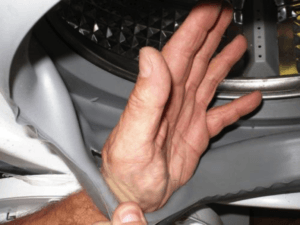 To avoid making regular replacements, it's important to "correct the mistakes" and identify the cause of the rubber seal damage. Natural wear and tear is a fact of life, but often, the seal of Indesit washing machines suffers due to carelessness, negligence, and the owner's ignorance.
The seal, like any other machine part, has its own safety margin, but its service life is significantly reduced due to specific negative factors. It is not difficult to determine the source of a crack or abrasion: just carefully examine the old gasket. Afterwards, all that remains is to select the appropriate cause of the malfunction in terms of nature and direction:
- constant friction against hard elements, metal parts of washed clothes, shoes, heavy objects;
- foreign objects (nails, keys) getting into the drum;
- fungus, mold and plaque that worsen the general condition of the rubber;
- careless loading and unloading of laundry, leading to serious mechanical damage.
Harsh detergents, continuous use of the machine, strong vibration during the spin cycle, and high water temperatures also have a destructive effect on the seal material. To prevent accelerated wear, it is recommended to regularly clean and dry the seal, carefully inspect the pockets of washed items, and not exceed the recommended dosage of detergents, concentrates, and cleaning agents.
Ideally, the seal should be carefully inspected for any flaws or defects before each wash. Even a minor crack in the seal is considered a serious leak and requires immediate replacement. If prompt replacement of the damaged seal is not possible, it is recommended to repair the part by patching the damaged area with a suitable patch.
Important! Gluing on a patch is only a temporary measure. The defective rubber band should be replaced as soon as possible.
Messing with the seal in your machine is not recommended, so if you suspect a damaged seal, it's essential to address the situation immediately. You can assess the size of the defect, remove the damaged seal, and install a new one yourself. Moreover, all the necessary tips and instructions are detailed in this article.
Interesting:
Readers' comments
Headings
Washing machine repair




For buyers




For users


Dishwasher




Add a comment