
How to change a bearing in a Kaiser washing machine?
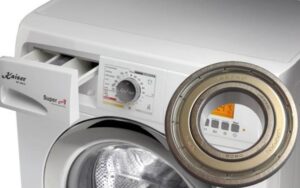 If your Kaiser washing machine is making loud knocking, rattling, and vibrating noises during operation, the problem is most likely with the bearing assembly. In this situation, it's essential to have the machine inspected as soon as possible and, if necessary, replace the bearings. Continuing to use the washing machine with damaged bearings can lead to further problems, so don't put off repairs. We'll show you how to remove worn parts and press in new bearings.
Is the bearing really damaged?
Damage to the bearing assembly in a Kaiser washing machine can be detected by obvious signs. Firstly, there's a grinding noise when the machine is running, especially during the spin cycle. Secondly, there's a loud humming sound when rotating the drum by hand. A washing machine with broken bearings will lose stability, vibrate, and jump around the room during washing.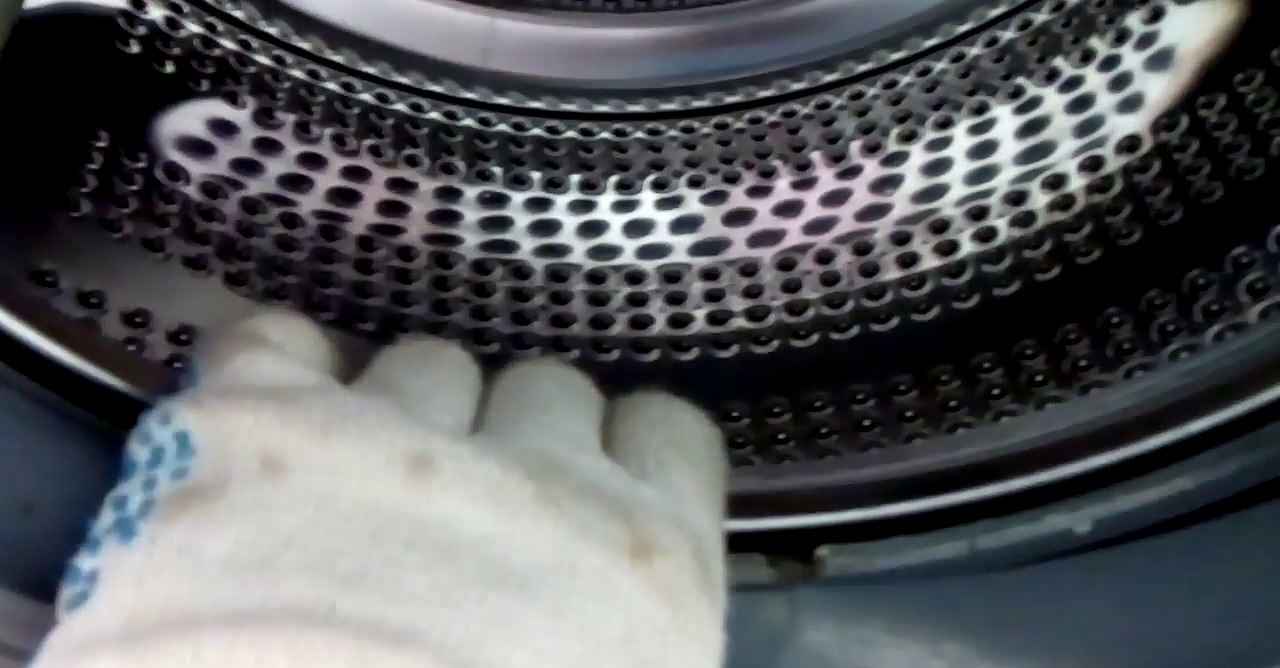
Additionally, the user may notice significant play in the drum, as well as rust stains on the rear wall of the tub. A combination of one or more of these signs will indicate the need for repairs to your "home helper." Sometimes, in addition to bearing and seal wear, Kaiser washing machines experience a broken spider. This increases the cost of repairs, as a complete replacement is required.
Disassembling the device, removing the tank
Replacing a bearing yourself isn't as difficult as it might seem. You won't need any special tools for the repair; all you need is a couple of screwdrivers, a socket wrench with different sized heads, a drift (or a regular long metal rod), and a small hammer. You'll also want to have some WD-40 aerosol lubricant and a couple of dry wipes on hand.
The drum of Kaiser washing machines is detachable, which greatly simplifies the process of replacing bearings and seals.
The entire process can be roughly divided into three stages. First, the body of the "home helper" is disassembled, and any components that could interfere with its removal are disconnected from the drum. Next, the "centrifuge" is divided in half, and the old rings are knocked out of the "nest." Finally, new bearings are pressed in place, and the washing machine is reassembled in reverse order.
It's crucial to prepare your work area. To ensure there are no obstructions, you should clear 3-4 square meters. Ideally, move the machine to an empty garage and disassemble it there. The bearing replacement procedure is as follows:
- de-energize the washing machine;
- turn off the water supply tap, disconnect the washing machine from the house communications;
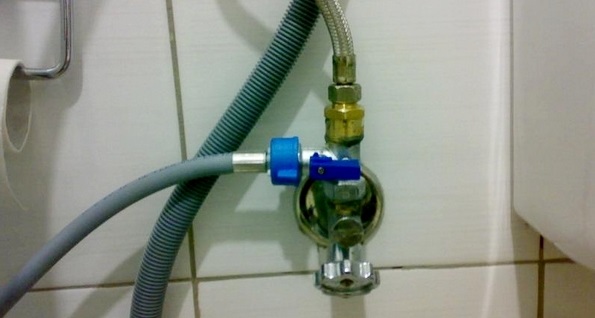
- detach the drain and fill hoses from the body;
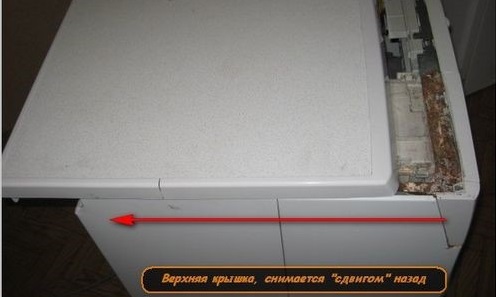
- unscrew a couple of screws holding the top cover;
- Move the panel back slightly and remove the “top”;
- remove the metal spring that secures the tank to the rear wall of the housing;
- remove the outer clamp holding the hatch cuff by using a screwdriver to pry up the “ring” spring;
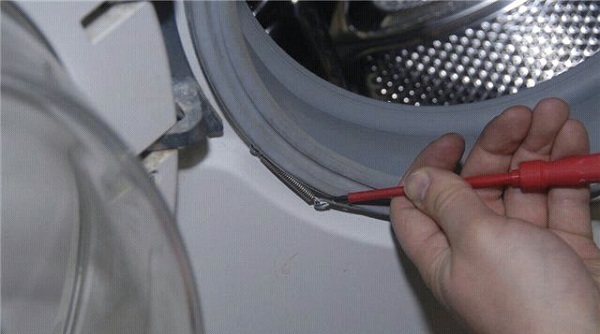
- tuck the sealing rubber inside the drum;
- remove the powder container from the machine;
- Remove the screws securing the control panel. They are located around the perimeter of the dashboard: at the top and on the side (where the detergent container is installed);
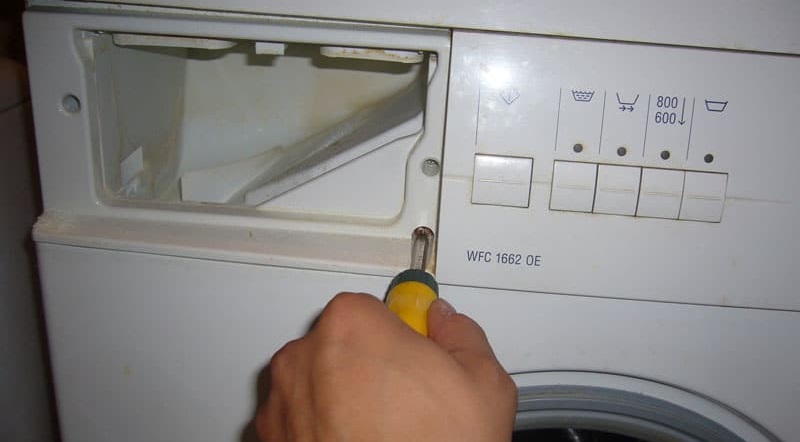
- remove the top metal bar;
- Remove the locking cable. It is attached to the dashboard;
- carefully, without damaging the wiring, hang the control panel on the side of the case so that it does not interfere with work;
- disconnect the wiring and hose from the pressure switch;
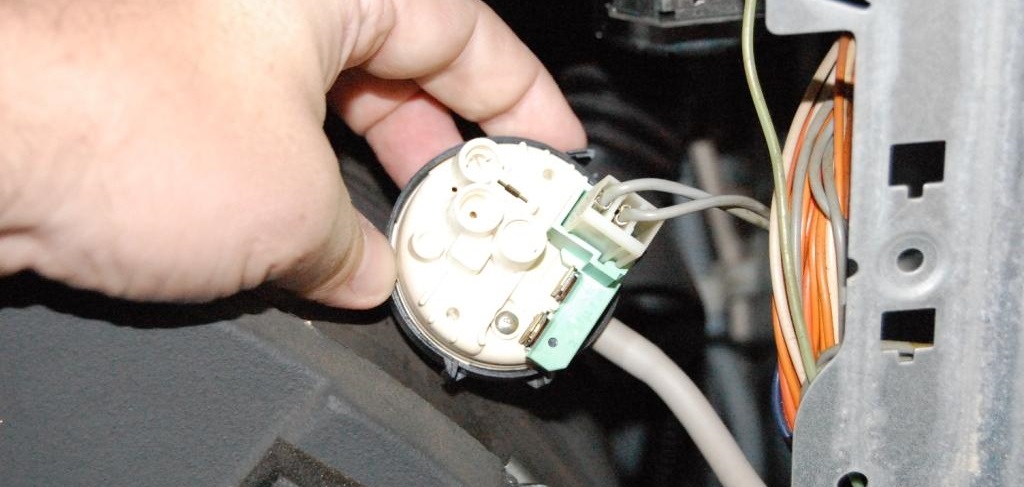
- remove the water level sensor from the housing;
- Remove the lower decorative panel of the machine by unscrewing a couple of screws. The emergency drain hose is attached to it; it also needs to be unhooked;
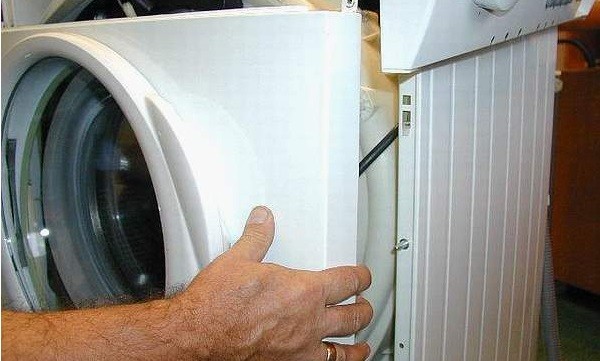
- unscrew the 4 screws holding the front panel;
- remove the front wall, while carefully disconnecting the contacts of the hatch locking device;
- Disconnect the wiring from the intake valve;
- remove the dispenser connected to the electromagnetic valve from the machine, having first removed the clamp from the tank pipe;
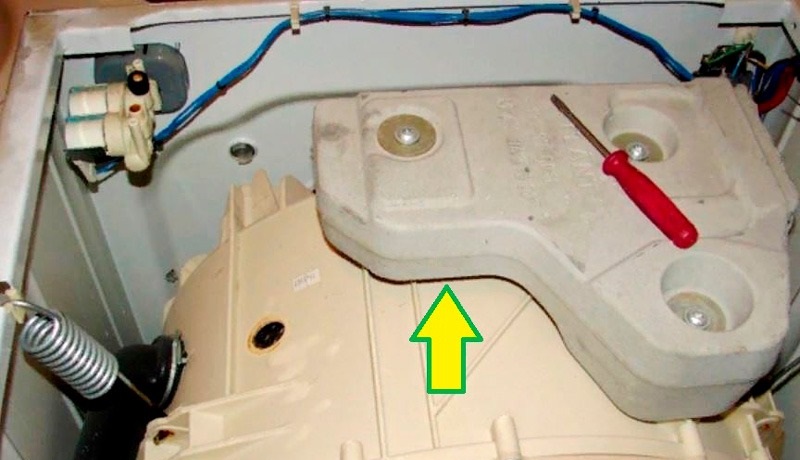
- Remove the screws holding the top and side counterweights. The bottom weight can be left alone; it won't interfere with the process.
- disconnect the Aqua Spray system hose from the tank using the clamp;
- unhook the drain pipe from the tank by loosening the clamp that secures it;
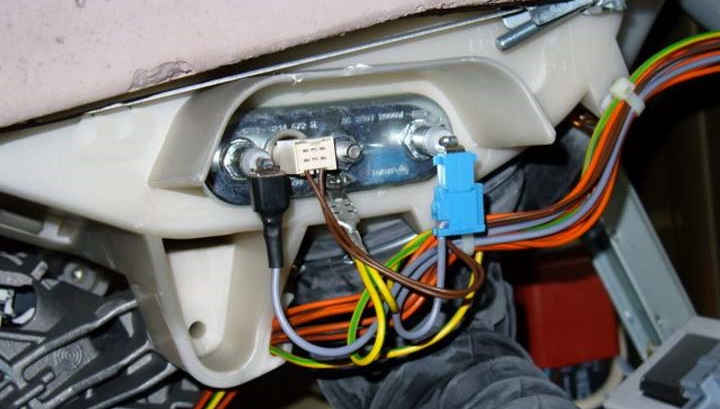
- disconnect the pump, heating element, and temperature sensor contacts from the tank;
- remove the motor wiring, unscrew the screws and remove the motor from the housing;
- remove the drive belt from the shaft (this can be done from the top, without disconnecting the rear wall).
Now, nothing gets in the way of removing the drum. You can remove the unit yourself; it's not particularly heavy. Technicians note that Kaiser washing machines are cleverly assembled, making them relatively easy to repair compared to appliances from other brands.
Removing old bearings
You can now proceed to the second stage of the work, namely, disassembling the tank. First, you'll need to remove the pulley. It's important to unscrew it very carefully, otherwise the "wheel" can easily be damaged. To remove the bolt, you need to secure the pulley in place. To do this, simply insert wooden sticks, such as hammer handles, between its "spokes." Then, using a socket wrench, you can remove the screw. The rest of the procedure is as follows:
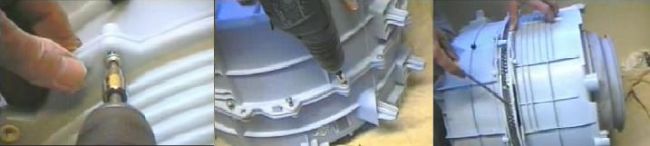
- unscrew the bolts connecting the tank parts;
- Using a screwdriver, split the tank in half, removing the top cover from the bottom;
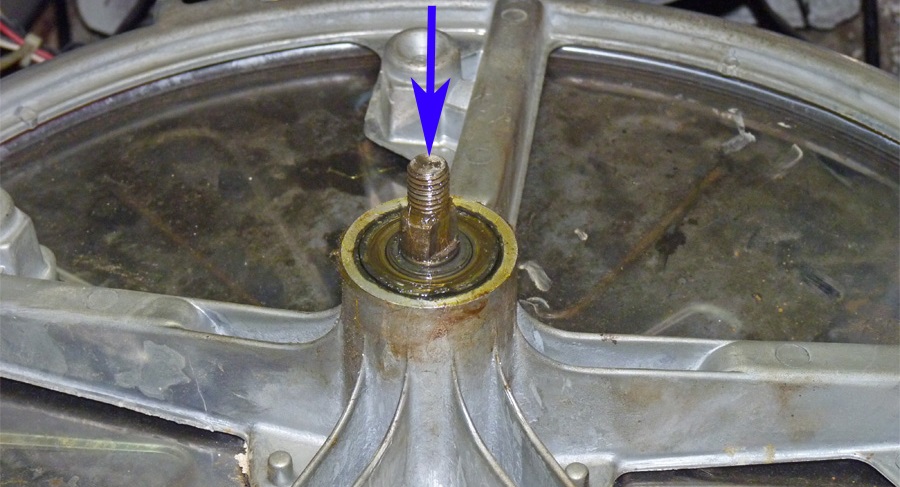
- If the shaft is very stuck, treat it with WD-40 aerosol lubricant and wait 20 minutes;
- screw an old, unnecessary nut onto the shaft and knock it out with a hammer (the nut is necessary to ensure the safety of the shaft itself);
- when the sleeve “falls” inward, pull the drum out of the tank half;
- pry up the seal with a screwdriver and remove the old seal;
- Knock out the inner bearing using a hammer and drift. Place a metal rod on the ring race and tap it in place;
- Remove the outer bearing in a similar manner.
It is much easier to remove old rings using a special bearing puller.
This completes the bearing removal. Be sure to clean the tank, shaft and seat from dirt, rust and metal shavings. Once you have completed the cleaning, you can begin installing new elements.
Pressing in new parts
It's important to select the correct bearings and seal for replacement. The size of the components will depend on the Kaiser washing machine model. Ideally, remove the old parts and inspect their markings. Be sure to purchase bearing and seal grease for washing machines. This grease protects the components and prevents water from entering the unit during the wash cycle. The procedure is as follows:
- insert the inner bearing into the "socket";
- Press the "ring" into place using a punch and hammer. Tap only on the inner ring of the part, otherwise you may damage the element;
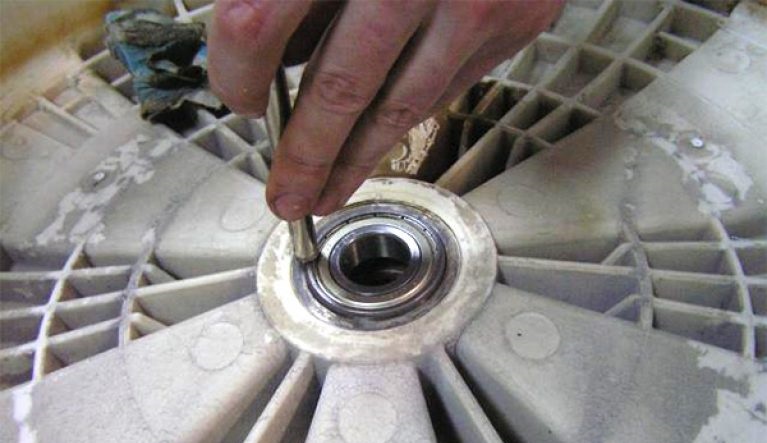
- Place the seal on top of the bearing;
Experts recommend additionally securing the seal with superglue, applying the compound to the outer edge of the seal after installation.
- Press in the outer bearing in the same manner;
- treat the unit with a special lubricant;
- lubricate the shaft, but only at the point where it contacts the seal;
- insert the drum into the tank;
- Connect the halves of the plastic tank with bolts. To be sure, you can coat the tank parts at the "seam" with waterproof silicone sealant;
- Turn the tank over and put the pulley back in place.
This completes the drum-tank assembly. All that remains is to connect the electric motor to the centrifuge, reinstall the assembly into the housing (making sure to include the shock absorbers), and reconnect all previously removed parts and sensors. After replacing the bearings, be sure to run a test wash with an empty drum. If everything is in order, the repair is complete.
Interesting:
Readers' comments
Headings
Washing machine repair




For buyers




For users


Dishwasher




Add a comment