How to change a bearing in a Miele washing machine
Today, many users try to repair their household appliances themselves to avoid overpaying. Most problems can be easily resolved at home, without the help of a technician. What if a bearing in a Miele washing machine needs replacing? How difficult is this repair? Can you install new components yourself? Let's explore the nuances.
Get out the toolbox
Replacing the bearings and seals on a washing machine is quite labor-intensive. This is due to the location of the parts—they're located on the drum shaft. Accessing the bearing assembly requires almost complete disassembly of the washing machine.
You can't disassemble an automatic washing machine with your bare hands; you'll need tools. You'll need:
Phillips and slotted screwdrivers (ideally, a universal screwdriver with different bits);
screwdriver;
flat-nose pliers and round-nose pliers;
small hammer;
set of wrenches;
a punch or chisel with a blunt tip.
It's also a good idea to have some water-resistant sealant and WD-40, a general-purpose cleaner, on hand—you'll need it if any parts or bolts become stuck in their mounting spots. A few dry rags, a shallow bowl, and rubber gloves will also come in handy.
Of course, you'll need to buy new bearings and seals. These components are usually sold complete with grease, as a ready-made repair kit. You can buy them at specialized stores or order them online.
The appropriate size of bearings and seal is selected based on the model and serial number of the Miele washing machine.
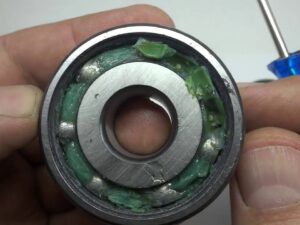
To avoid mistakes, you can remove the old bearings and show them to the store clerk. Using the markings, it's easy to find similar parts. It's better to buy high-quality components rather than skimp.
The washing machine itself also needs to be prepared for work. Before disassembling the housing, you must disconnect the automatic machine from the power supply, water supply and sewerage system. The next step is to drain any remaining water from the system through a debris filter. After that, you can begin the repair itself.
We remove everything that prevents the tank from being removed.
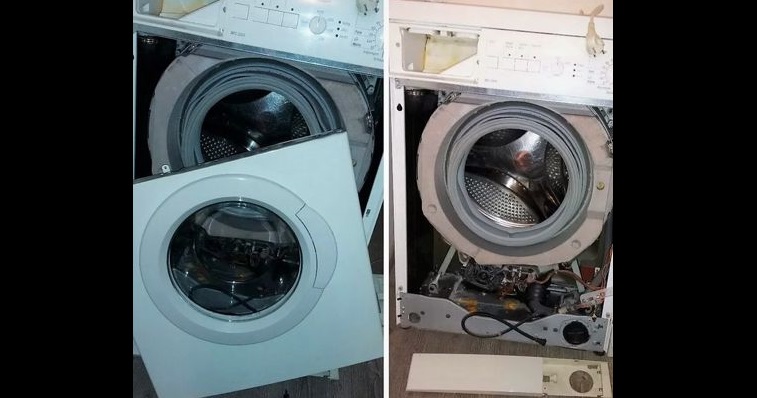
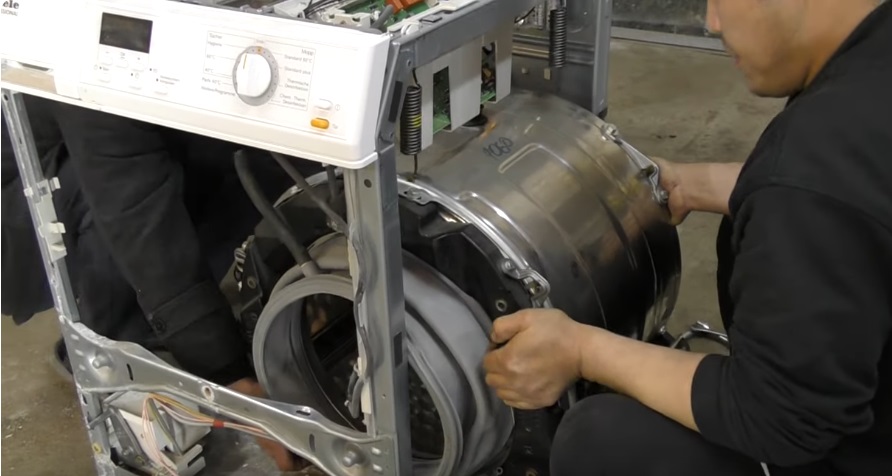
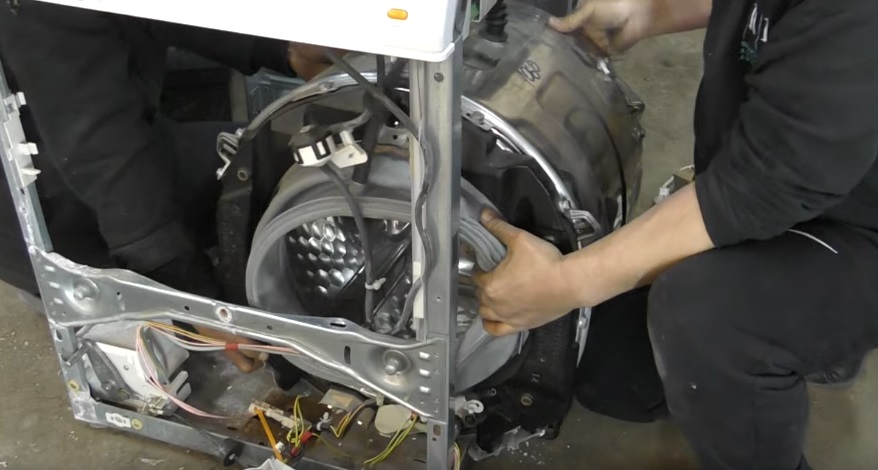
It's important to understand that this isn't an easy job. To replace the bearing, you'll have to remove the drum from the washing machine. This means one thing: you'll need to practically disassemble the entire washing machine.
If you're disassembling your washing machine for the first time, it's best to take photos of every step. This will help you avoid mistakes when reinstalling parts and connecting connectors and wires. Mixing up the contacts can fry all the electronics, so extra care is required.
So, first, you need to remove all elements that interfere with the tank's removal. Here's the procedure:
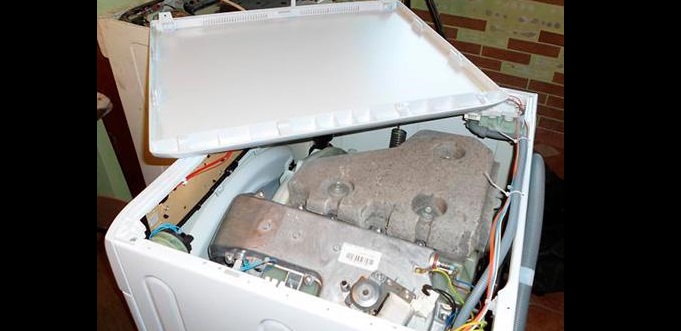
remove the top cover of the housing by unscrewing the bolts holding it;
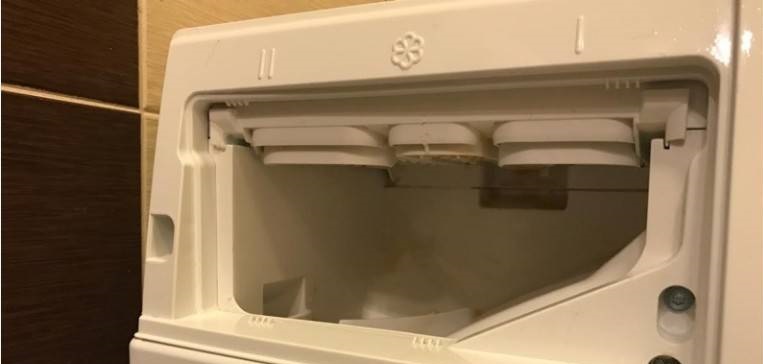
remove the detergent drawer from the washing machine;
remove the front panel of the machine;
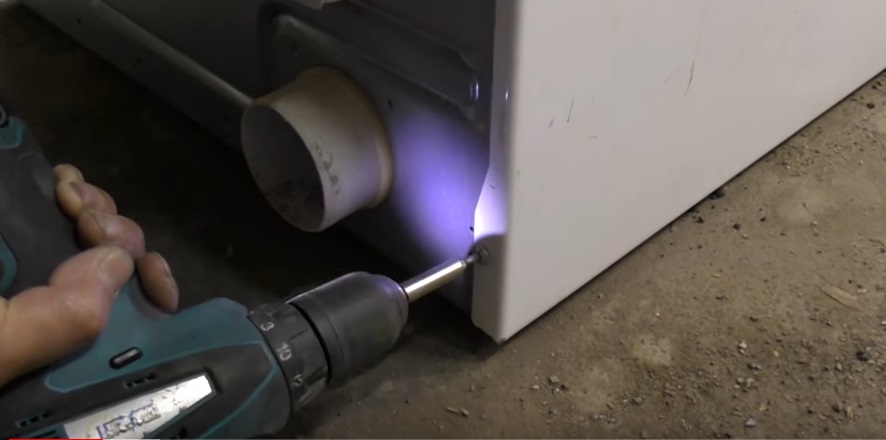
Also remove the side walls – they are held in place with Torx 20 screws;
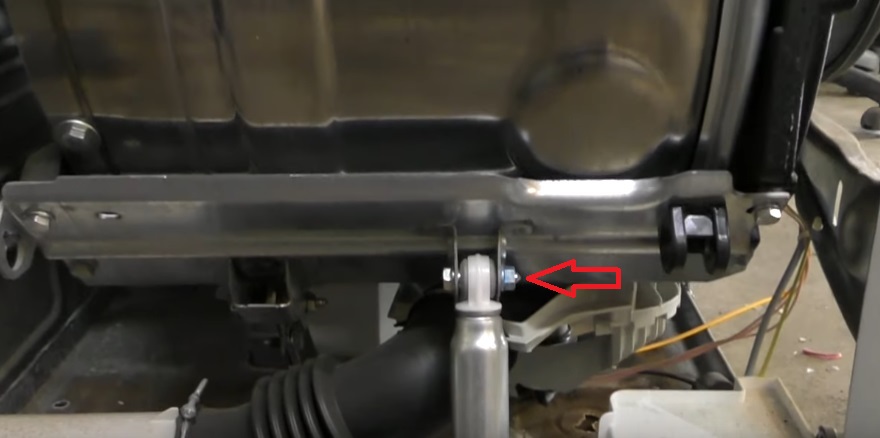
Disconnect the side shock absorbers from the tank on both sides;
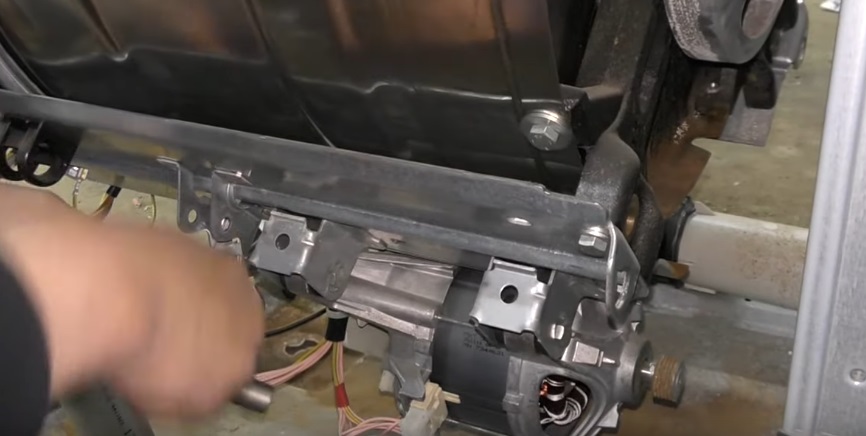
Unscrew the bolts securing the engine and remove the motor;
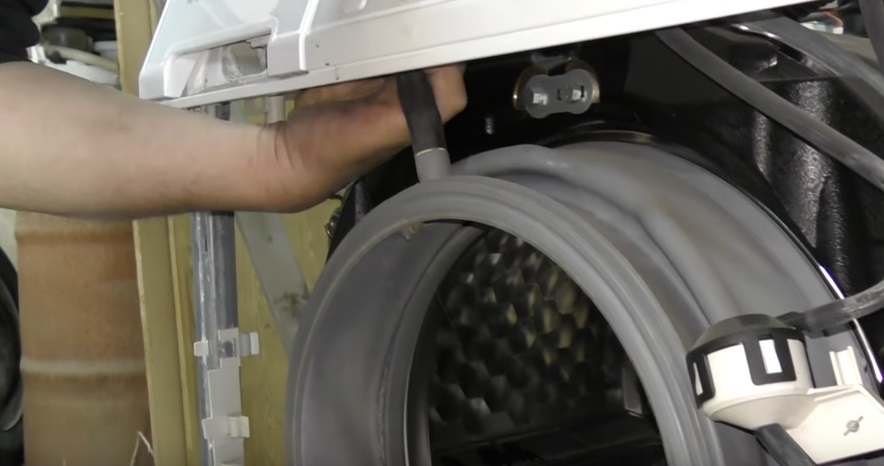
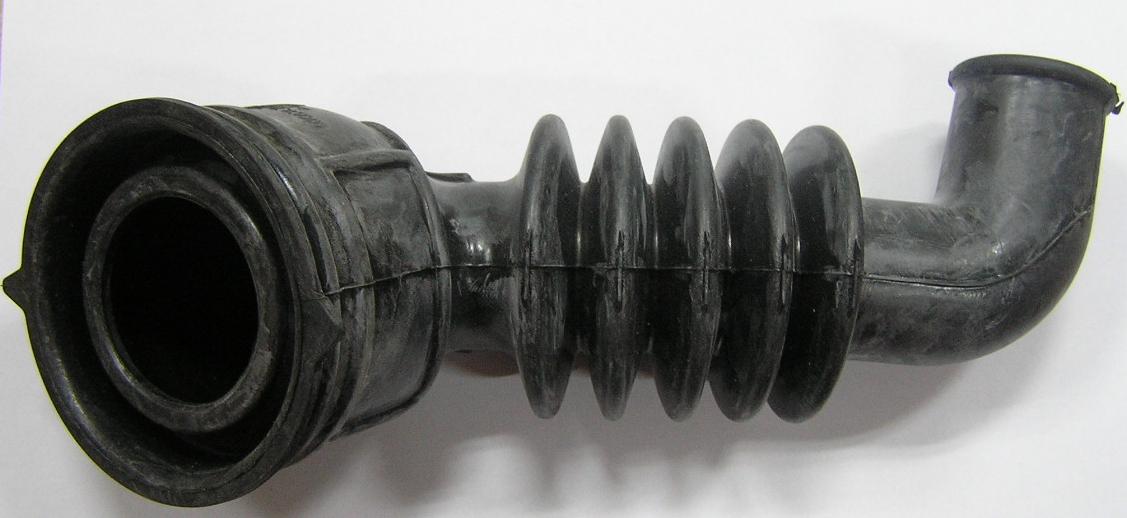
unhook the powder receiver pipe from the tank;
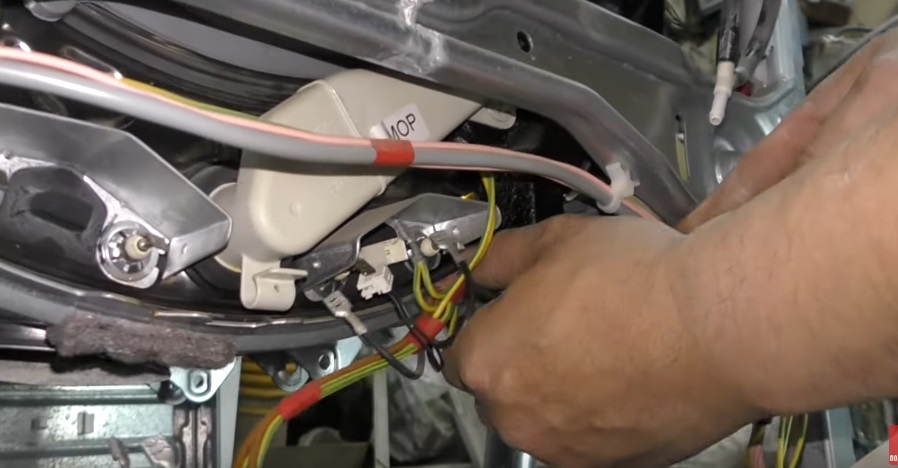
disconnect the heating element contacts, remove the heater;
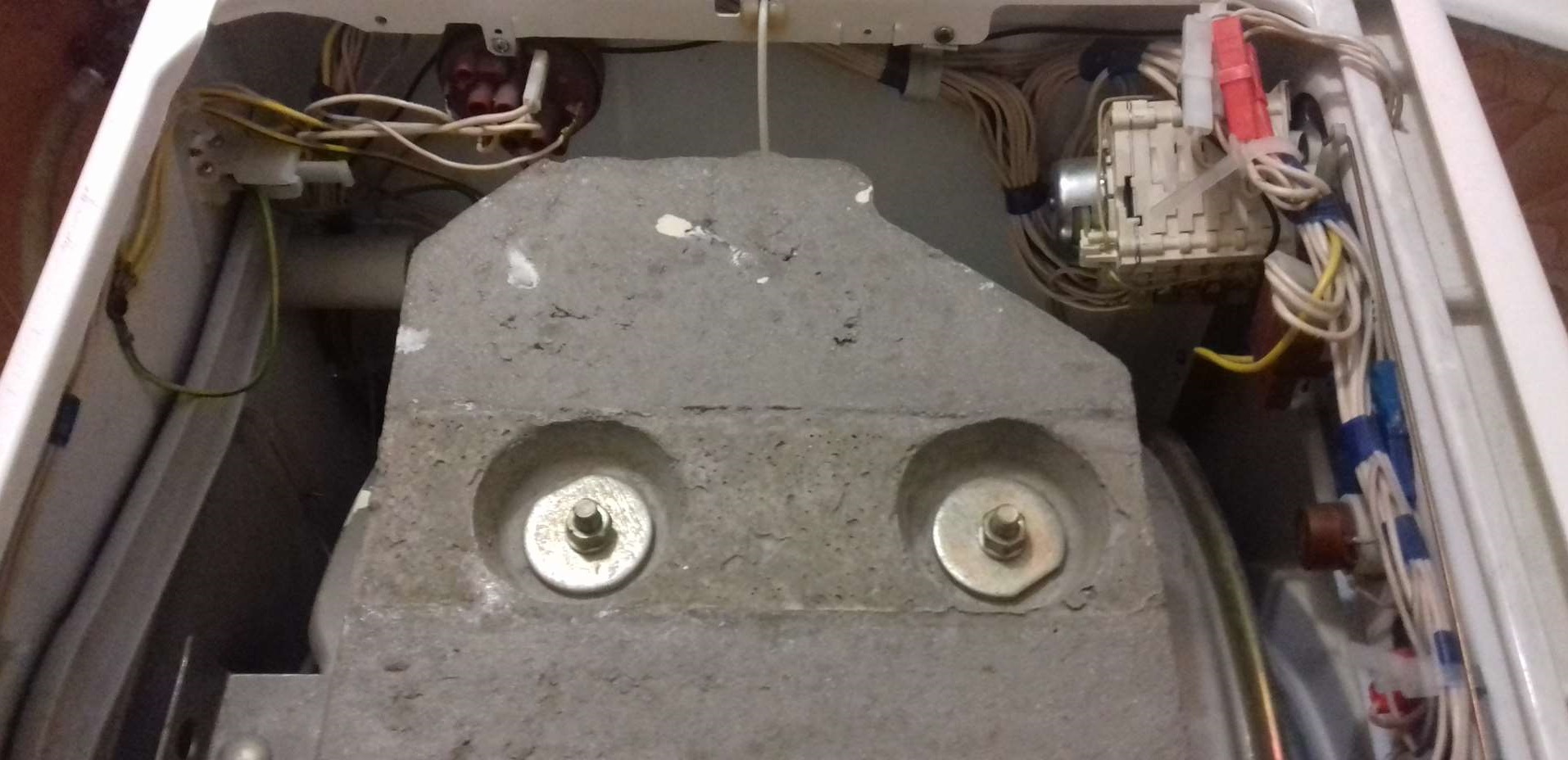
remove the counterweights from the machine;
To make it easier to remove the tank, completely detach the drain pipe and valve from it (they are secured with a pair of bolts);
disconnect the pressure switch tube;
unhook the recirculation pipe.
It's best to have two people remove the tank from the Miele housing, as it weighs approximately 40 kilograms. To remove the tank from the washing machine, unhook the four upper shock-absorbing springs. Next, place the tank on a flat, horizontal surface for disassembly.
The tank of Miele washing machines is metal.
The tank is placed on the floor or countertop with the crosspiece facing up. Further actions will be performed specifically with this part of the structure. All that remains is to remove the pulley and remove the crosspiece, knocking out the drum rod.
We change the bearings according to the instructions
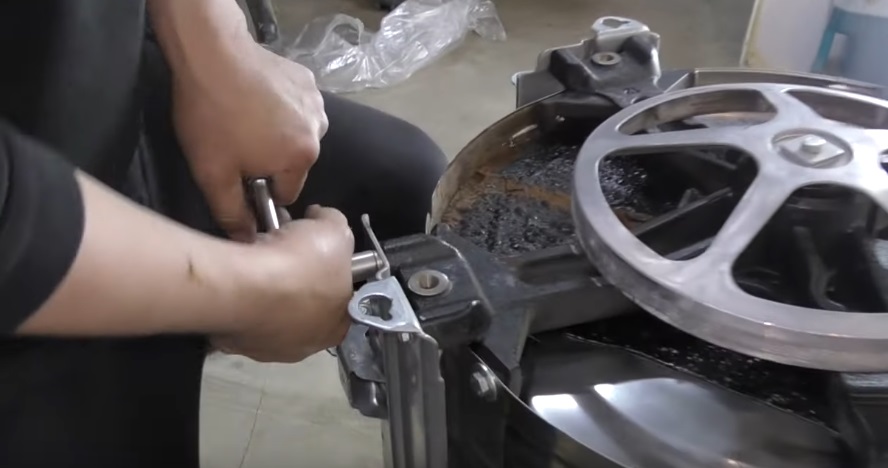
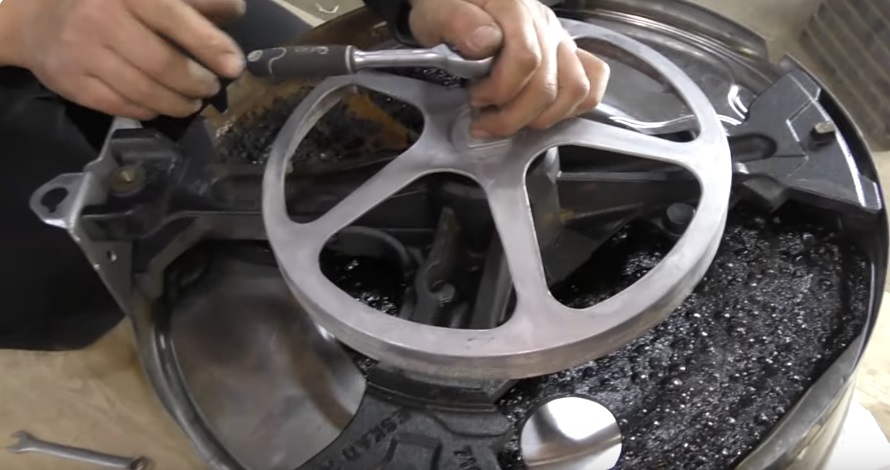
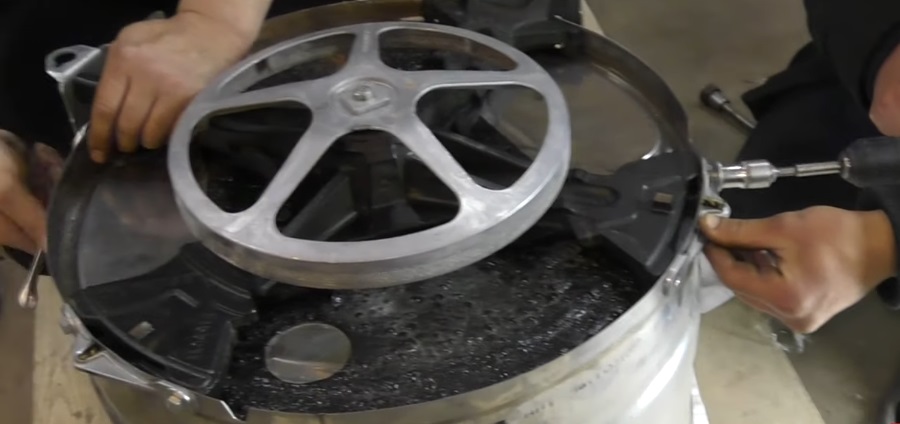
The drum is now removed from the machine, meaning a third of the work is already done. However, don't relax. The drum crosspiece is held in place by eight screws. Remove them so they don't interfere with disassembly. The next step is removing the pulley; it's held in place by a single bolt.
Once the pulley is removed, access to the outer bearing will be available.
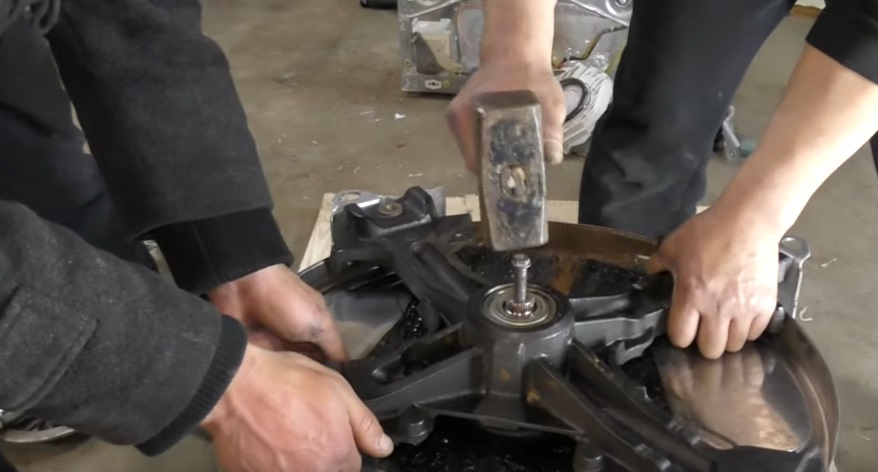
Next, you need to remove the crosspiece from the drum shaft. To do this, insert a bolt into the center of the structure. Then, hit the screw several times with a hammer and pull the crosspiece off.
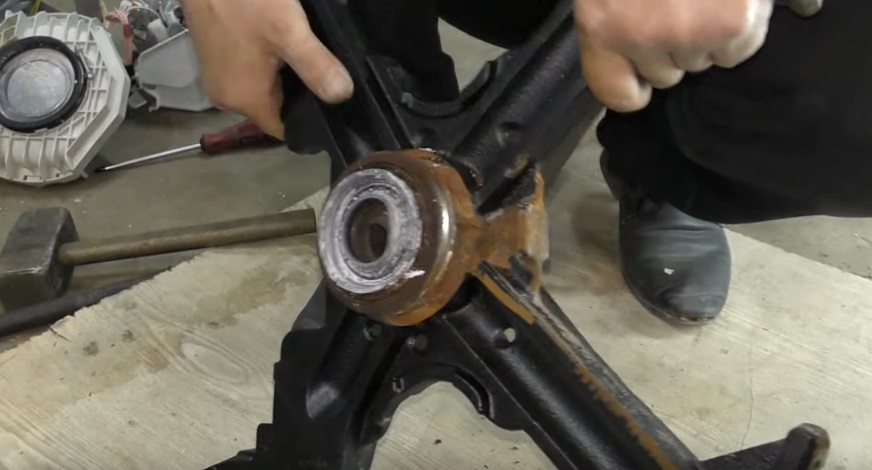
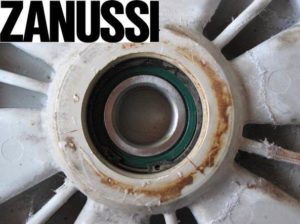
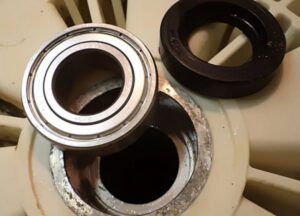
Both bearings will be located in the removed universal joint. Now you need to knock the metal rings out of their seats. For this, use a blunt-tipped chisel or drift and a hammer.
First the outer ring is knocked out, then the inner ringThe drift can only be pressed against the outer race of the bearing. The direction of the metal rod should be constantly changed. Hammer blows should be gentle and precise. The seal is pried out with a flat-head screwdriver.
The crosspiece seat and piston rod must be cleaned of rust and dirt. Only then can you press in the new bearings. The procedure is as follows:
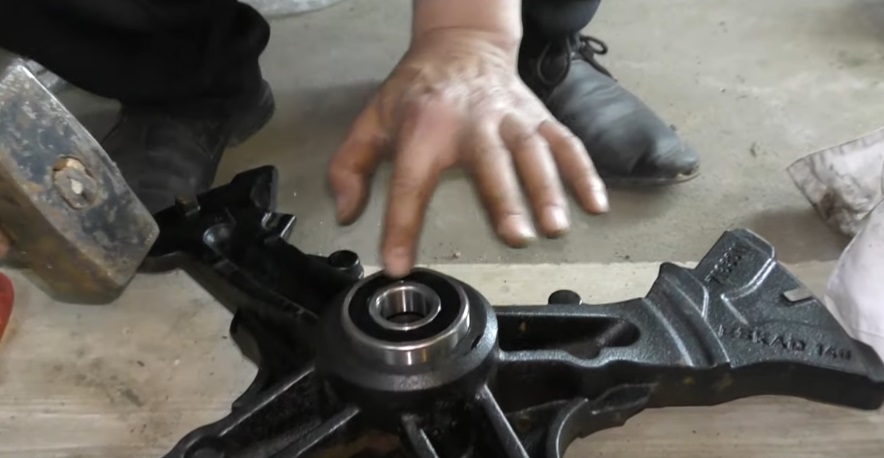
put the outer bearing in place, carefully press it in with a punch and a hammer (you can only press against the outer race of the ring);
turn the crosspiece over;
put the inner bearing back in place and tap it with a hammer;
Place the seal on top of the inner bearing;
Press the seal in with a hammer;
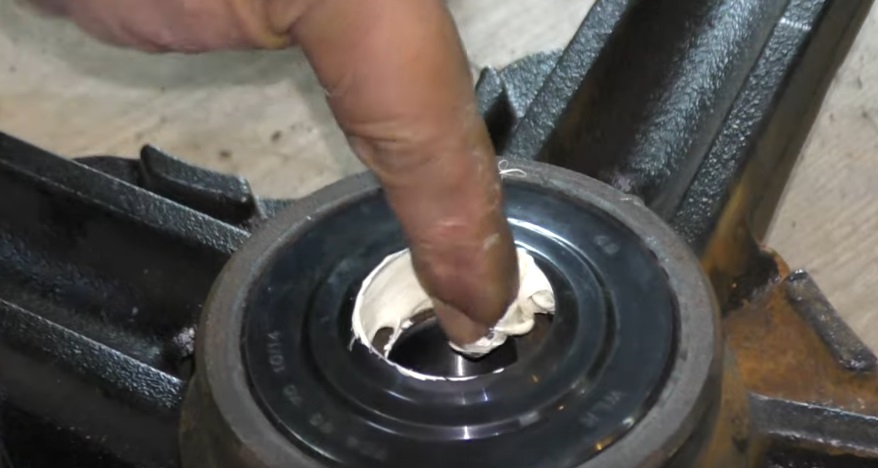
Apply a sufficient amount of grease to the inner surface of the seal - there is no need to skimp here, the layer must be dense;
Place a dust cover on top (it acts as a second seal). It's best to seal the part with silicone sealant.
Only original Hydro 2 grease can be used to treat the seal of Miele washing machines.
This lubricant will protect the bearing assembly from water, detergents, and high temperatures. Hydro 2 is highly viscous and virtually rinses out. It's the best solution for Miele washing machines.
Now you can begin reassembling the tank. Here's how:
clean the drum rod from rust and plaque;
put the crosspiece back in place;
secure the drum pulley;
Secure the crosspiece with bolts on all four sides.
After this, all that's left to do is properly reassemble the Miele washing machine. The components are put back in reverse order. First, return the tub to the housing and hang it on the springs. Next:
clean the drain valve from deposits;
connect the drain valve and pipe;
put the heating element, motor, pressure switch tube, recirculation pipe, and counterweights back in place;
secure the lower shock absorbers;
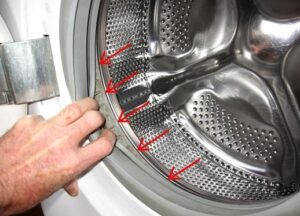
Rotate the washing machine drum by hand, make sure that it rotates smoothly and silently;
assemble the case by installing the side panels, front wall and top cover;
insert the powder receptacle;
Connect the machine to the water supply and sewerage system.
Next, be sure to run a test cycle with no laundry in the drum. The "Rinse + Spin" mode is ideal. Monitor the machine closely. It shouldn't make any noise or knocking noise. Make sure there are no leaks. If all is well, your "home helper" is repaired.
Changing bearings on a Miele machine is much easier than on some other brands. The rings are located in the crosspiece, so there's no need to disassemble the washing machine tub. This job is entirely doable, as long as you follow the instructions.

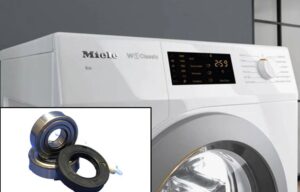 Today, many users try to repair their household appliances themselves to avoid overpaying. Most problems can be easily resolved at home, without the help of a technician. What if a bearing in a Miele washing machine needs replacing? How difficult is this repair? Can you install new components yourself? Let's explore the nuances.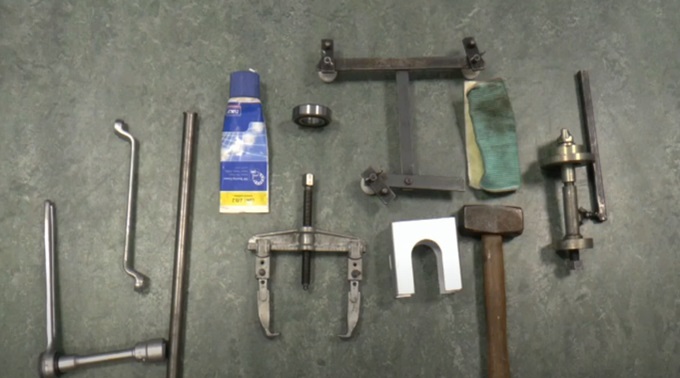














Add a comment