
How to change a bearing on an Ardo washing machine
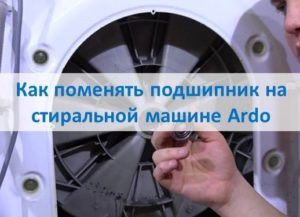 In 99% of cases, noise, creaking, and knocking during washing disappears after replacing the bearings in the washing machine. Otherwise, the problem will escalate, each cycle will become accompanied by a loud rumble, and soon the machine will fail completely, requiring costly repairs. Therefore, it's best not to let things get to the extreme and replace the bearing assembly at the first sign of failure. We'll explain how to do this quickly and efficiently, using the Ardo washing machine as an example.
We disassemble the machine
Replacing the unit is quite labor-intensive, as the bearings can only be accessed by removing the tub and drum. This requires disassembling almost the entire machine, which often discourages DIYers. However, with careful and consistent work, the task is within anyone's capabilities. The main thing is to follow these instructions:
- disconnect the machine from all communications, electricity, water supply and sewerage;
Important! Be sure to note the location of the wires connected to the camera components to avoid errors during reassembly.
- ensure free access to the rear wall of the machine;
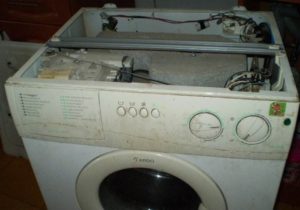
- After unscrewing the corresponding bolts, remove the back panel;
- remove the belt (on older Ardo models it is a V-belt);
- remove the sensors connected to the tank by prying up the rubber bands with a flat-head screwdriver and bending back each group of wires;
- remove the ground from the shaft by unscrewing the nut at the base;
- release the wiring on the heating element, loosen the bolt holding the heating element, push the rod inward and remove the part;
- unscrew the two screws at the top and lift the front panel up from behind;
- take a 13 mm socket and remove the metal plate used to tighten the tank;
- secure the flywheel with a screwdriver, unscrew the central nut and remove it;
- unscrew all the screws located at the central circular joint of the tank;
- Grab the top tank with both hands and, moving it in different directions, pull it out through the existing hole.
If you do this, there's no need to remove the counterweights, engine, shock absorbers, dispensing unit, or any other untouched parts of the machine. Only the drum, along with less than half the tank, needs to be removed. Place it on an old tire and begin disassembling and replacing it.
Removing old bearings
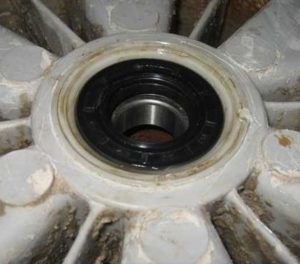
With the removed tank in front of you, assess the condition of the shaft. Most likely, a significant amount of rust and scale has accumulated in the center of the housing over many years of use, so it will need to be treated with a universal cleaner like WD-40. While the mixture is eating away at the dirt, place a brick base under the container and a soft cushion between them. We continue to act.
- We knock out the stuck shaft by placing a rubber mallet underneath and tapping it with a hammer until the drum falls inside.
- We knock out the outer bearing and seal remaining on the tank.
- If the outer bearing is very stuck, sharpen the chisel and, varying the angle, knock it out with a hammer.
- When the inner ring is also inaccessible, carefully make cuts on both sides with a grinder and unscrew it with a gas wrench.
- Next we remove the second seal.

Now we need to prepare the area for the subsequent bearing assembly installation. Thoroughly clean the drum and tank with cleaner and a rag. Then wipe them dry and remove the replacement parts.
Installation of new parts
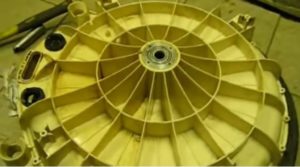 All that's left is to replace the bearings yourself. First, take the smaller diameter ring, place the tank with the drum opening facing up, and insert it into the seat. Insert a chisel into the blunt end of the ring and tap it with a hammer around the entire circumference until it's fully seated. Then, install the appropriate seal, lubricate it with a special compound, and turn it over.
Next up is the outer bearing, which is installed in a similar manner: place it in the hole and compact it with blows. Then generously coat the shaft with grease and screw the drum into the tank. It's a good idea to coat the bearing assembly with sealant.
Now it's time to properly reassemble the tank. Replace the tank and connect the two halves with the screws removed earlier. At this stage, we recommend checking the quality of the work by rotating the tank left and right. If there are no extraneous noises, the installation is perfect.
Next, we secure the pulley, tighten the counterweights, attach the heating element and connect the two removed sensors. Be extremely careful with the capillary tube - the gas tube is easily damaged by the slightest pressure. Finally, reattach the drive belt and tighten both covers. Don't forget to run a test wash on the shortest cycle.
Interesting:


Readers' comments
Headings
Washing machine repair




For buyers




For users


Dishwasher




Add a comment