Users will immediately notice that a bearing in their washing machine has worn out or completely failed. The washing machine will begin to make a knocking sound, hum, vibrate, and malfunction. To prevent permanent failure, replace the drum bearing as soon as possible. Timely repairs will preserve the remaining components and system components.
Before you begin the replacement, you should understand the nature of the work involved. You can replace the bearings yourself, without the help of a professional. This article explains how in detail.
Detecting bearing failures
First of all, it's worth noting that, compared to other brands, Beko washing machines offer a relatively simple bearing replacement process, which is a positive. First, let's look at the signs that a replacement is absolutely necessary.
A humming sound that occurs when the drum is rotated by hand.
The presence of significant play in the drum.
In the "Spin" mode the washing machine makes a lot of noise and knocking.
In some cases, not only bearing wear but also spider failure may occur. This will increase the cost of repairs, as the part cannot be purchased separately and is supplied only as part of the drum kit.
Let's start disassembling the machine.
To disassemble a washing machine, you'll need a screwdriver, Phillips-head screwdriver, and flat-head screwdriver. Using these tools, you can remove all parts of the machine and access the washing machine's drum. The procedure is as follows:
disconnect the device from the power supply;
remove the top cover of the case, and to do this you need to unscrew the 2 screws located at the back;
remove the powder receptacle from the unit;
Unscrew the screws holding the control panel and move it to the side;
detach the lower decorative panel from the body;
unscrew the 3 screws located behind the decorative panel;
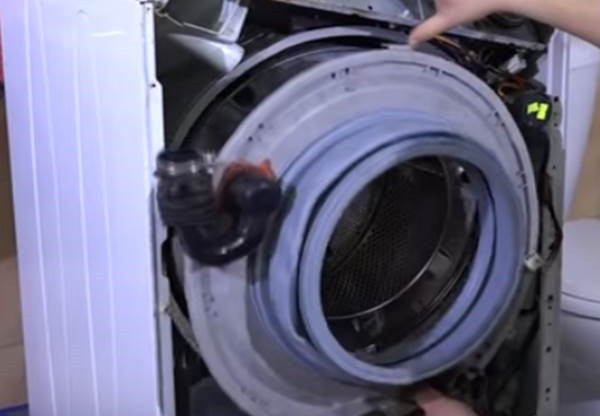
loosen the wire clamp holding the cuff, set it aside and insert the elastic into the drum;
detach the front wall of the case.
When removing the front panel, you'll notice that the door locking mechanism is not disconnected from the main body of the machine. Carefully, without damaging the contacts, reset the locking pin or simply unhook the door locking mechanism.
unfasten the filler neck;
disconnect the wire leading to the dispenser and detach the tray from the body;
remove the top metal false panel that opens after disconnecting the control panel;
Lower the counterweight slightly by loosening its mounting bolts;
disconnect the thermistor by resetting its terminals;
remove the power and ground wires from the tubular heater contacts;
remove the heating element from the housing;
loosen the clamps holding the plastic tank cover;
remove the lid and set it aside.
The main stage of disassembling the washing machine is now complete. As you understand, you can do the work yourself; there is no need to take the washing machine to a repair shop. To replace the bearings, you will need to remove the drum from the housing and gain access to the worn parts.
We take out the drum and remove the old bearings
Further repairs will be performed after removing the washing machine drum. The pulley will need to be loosened and the drive belt removed. Proceed carefully.
We detach the back wall of the Beko washing machine housing; it is secured with five screws located around the perimeter.
We remove the drive belt.
We unscrew the nut holding the pulley.
Carefully remove the drum from the housing.
At this stage, the drum spider should be inspected for wear. If no wear is found on the shaft, the repair can proceed as planned. If the spider is in poor condition, you will have to purchase or repair the part before continuing.
Now we can move on to the crucial step of knocking the bearings out of the tank. For this, you'll need a regular hammer and a special drift. The procedure is quite simple.
We remove the oil seal (rubber sealing ring).
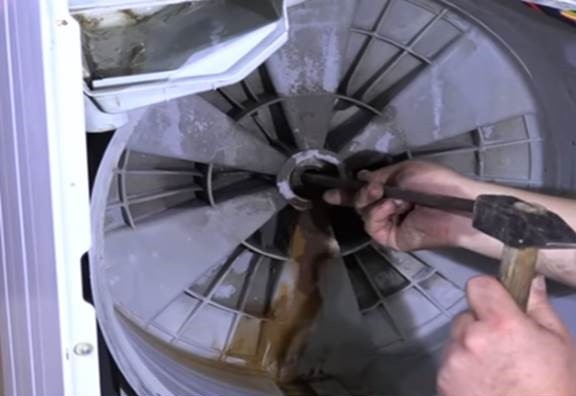
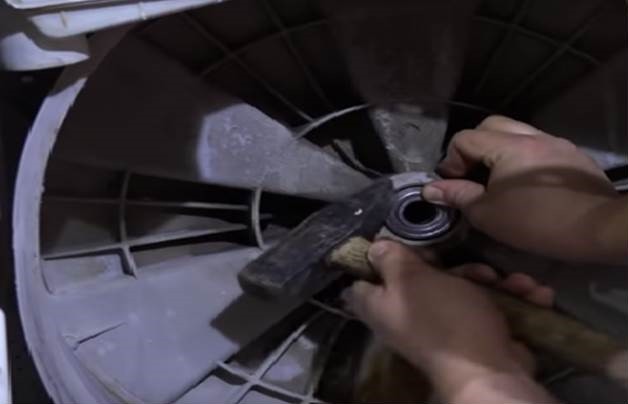
We place the end of the drift into the center of the rear bearing and tap it on the metal rod with a hammer.
Be sure to change the direction of the punch, do not hit the same spot.
Go around the machine to the back and start knocking out the second bearing.
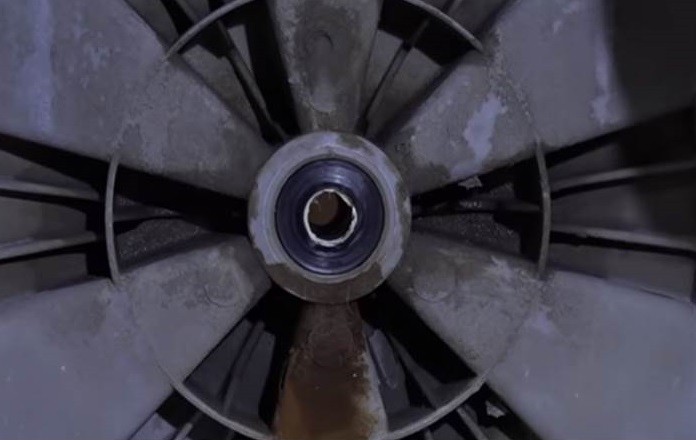
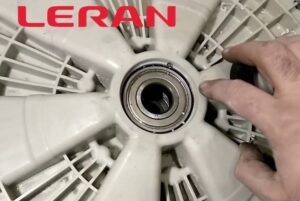
Once the parts that need replacing are knocked out, the tank will look like this:
Now you should clean the seat of any liquid, rust, dirt, or deposits. Be sure to clean the drum shaft. After disassembling the Beko drum, you can press in new bearings.
We install new bearings
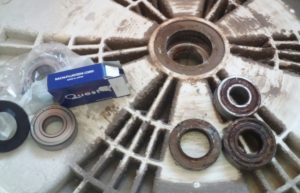
To purchase the right components for your washing machine, you need to know the full model name of your washing machine. When purchasing bearings, provide this information to the manager. Another option is to visit a specialized store with the parts already removed and ask the specialists to select identical parts.
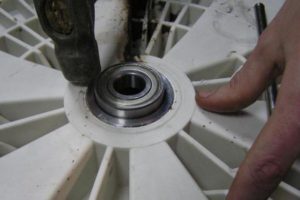
The smaller diameter bearing is installed on the outside of the tank (this can be done through the removed rear wall of the housing). It is driven in using a hammer and drift. You should press only against the outer ring of the part and, tapping with a hammer, carefully press the element into the tank.
Do not hit the inner race of the bearing under any circumstances, as this may cause it to break.
Once one part is tightened, you can proceed to installing the second element. First, insert the bearing into the hole and secure it in place with a single hammer blow.
Then, using a drift, tap the element into place. After installing the bearings, you need to seat the oil seal. The rubber ring is treated with a special lubricant; this is necessary to improve performance characteristics and extend the service life of the seal.
Once the seal is securely in place, apply lubricant to the drum bushing. This will ensure watertightness and heat resistance of the connection, extending the life of the bearings and O-ring.
The replacement is complete, now it's time to install all the system components into the housing. First, install the drum, attach the pulley, and attach the drive belt. Next, screw the rear panel into place. Reassembly is done in reverse order. As you can see, replacing the bearings yourself is possible. To do this, you need to have all the necessary tools ready and follow the instructions carefully.

 Users will immediately notice that a bearing in their washing machine has worn out or completely failed. The washing machine will begin to make a knocking sound, hum, vibrate, and malfunction. To prevent permanent failure, replace the drum bearing as soon as possible. Timely repairs will preserve the remaining components and system components.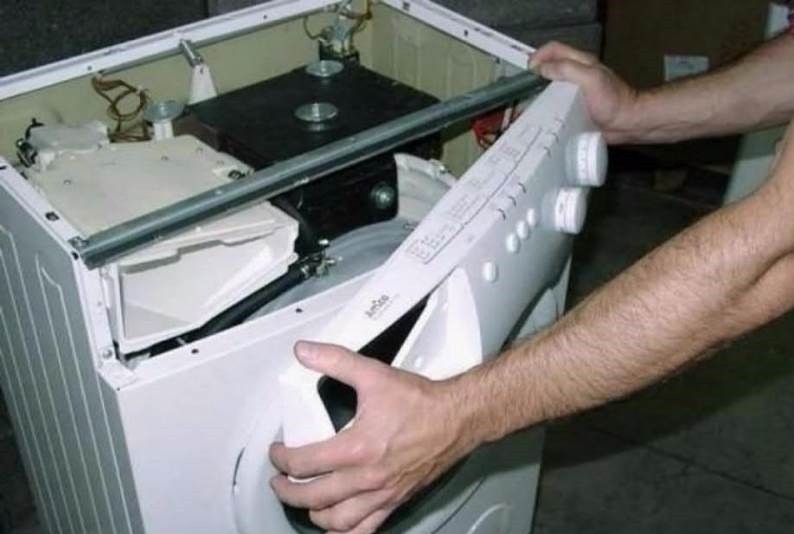















Add a comment