How to replace a bearing on a Bosch Maxx 5 washing machine
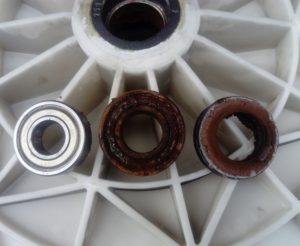
Bosch washing machines are renowned for the reliability and wear-resistant nature of their bearing assemblies, providing years of faithful service. However, regular drum overload, rough handling, or prolonged use can cause even the most robust machines to malfunction, resulting in bearing failure, resulting in creaking, knocking, and rattling sounds. Running a washing machine with a damaged mechanism is not recommended; components must be replaced promptly. We offer a step-by-step guide on how to replace bearings in a Bosch washing machine. We'll show you how to replace bearings in a Maxx 5 washing machine using the example of the Maxx 5 model.
Identifying broken bearings
It's easy to tell that your BoschMaxx 5 needs bearing replacement. The washing machine will signal problems with the drum assembly every wash. The first and most obvious symptom is increased vibration of the drum, which develops into a loud hum and "jumping" during the spin cycle. Simultaneously, you can hear a rattling and clanking sound, reminiscent of metal balls rolling around. In advanced situations, rusty liquid will start leaking from under the machine. It can also be found on the pulley if you remove the rear wall and inspect it.
The condition of the bearing unit can also be checked using a “manual test”.
We take hold of the edge of the drum.
We jerk the container forward and backward, and then left and right.
We evaluate the movement of the tank: if there is noticeable play, the drum is loose, which means the bearings need to be replaced.
You can't operate a washing machine with damaged bearings. With each wash, the drum will wobble more and more, slamming into the drum, damaging it and itself. This will lead to imbalance, causing the machine to jump and gradually damaging internal components and mechanisms. The pulley will also be damaged, causing grooves to form on the outside and ultimately damaging the drum cylinder. In this case, Bosch repairs will increase the cost several times over.
What is needed to fix the problem?
You can replace bearings yourself at home. The key is to prepare for the procedure, purchase new components, and remember safety precautions. It's also important to realistically assess your abilities and capabilities: you'll need to almost completely disassemble the washing machine and separate the tank. If you lack the experience and time, contact a service center.
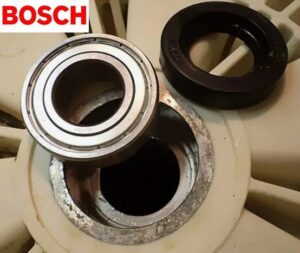
BoschMaxx 5 washing machines are equipped with bearings 6204, 6205 and seal 30x52x10/12.
Having decided to do the repairs yourself, we gather the tools:
hammer;
pliers;
screwdrivers (flat and Phillips);
punch;
thread lock (detachable - blue);
ratchet;
set of Torx hex screwdrivers.
WD-40 or similar cleaner, high-temperature sealant, and lubricant are also useful for replacement. New components, such as the bearing and seal, are also purchased. Typically, the BoschMaxx 5 requires 6204 and 6205 races and a 30x52x10/12 seal. However, it's best to first remove the old unit and check the ring markings.
We get to the tank
Having collected the tools, we prepare the work area. Turn off We move the washing machine away from the communications and move it away from the wall, ensuring free access to both the front and back walls of the case. Afterwards, we disassemble the equipment sequentially, getting to the drum.
Take photos of the machine disassembly process to avoid mistakes during reassembly.
We remove the top cover by unscrewing the two retaining bolts at the back and lightly tapping on the panel.
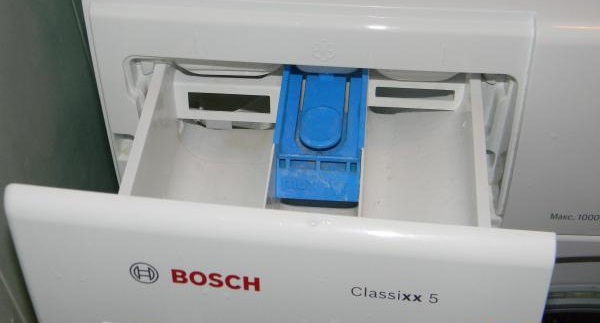
We take out the powder receptacle by pressing the “tongue” with our finger.
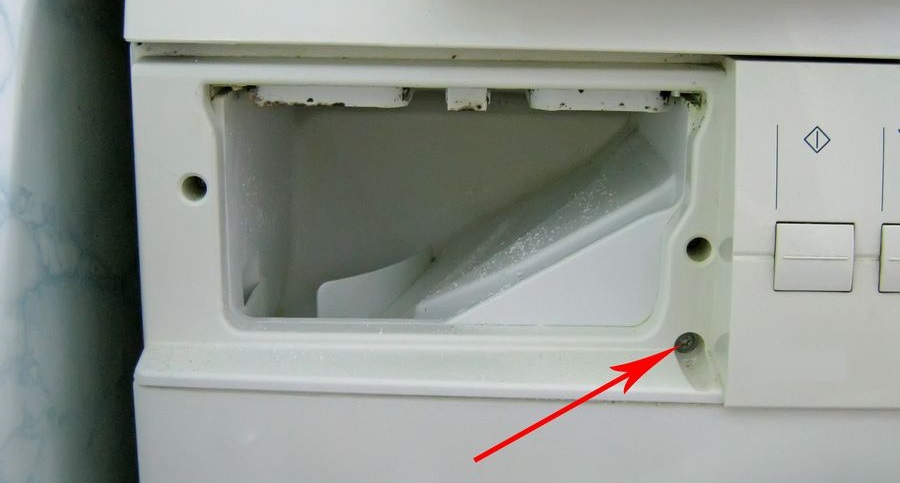
Release the instrument panel by unscrewing the three screws under the powder receptacle and one on the right side. Pry the plastic clips open with a screwdriver and remove the circuit board. There's no need to disconnect the wiring—just carefully hang the module onto the housing.
We disconnect the wire leading to the inlet valve.
After loosening the central bolt, we unhook and remove the upper counterweights.
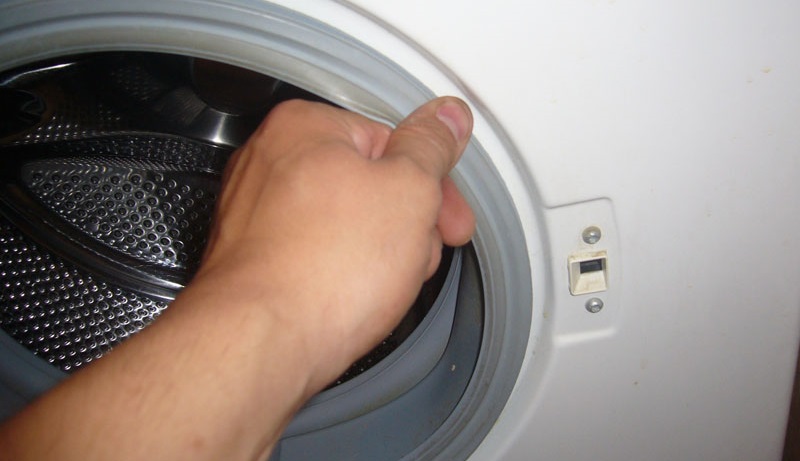
We open the hatch door, loosen the outer clamp and remove the cuff.
We turn off the UBL by disconnecting the corresponding wires.
We move the technical hatch door aside.
We unscrew the fastening screws holding the bottom bar and remove the panel.
We unscrew all the screws around the perimeter of the front panel, and then disconnect the end from the body.
Using pliers, unfasten the clamp from the pipe connecting the tray and the tank, and also release the other hoses and wires connected to the drum.
We take out the inlet valve and pressure switch.
We dismantle a couple of metal top strips.
We remove the front counterweight.
We release the wiring from the heating element and the pump.
We unhook the shock absorbers.
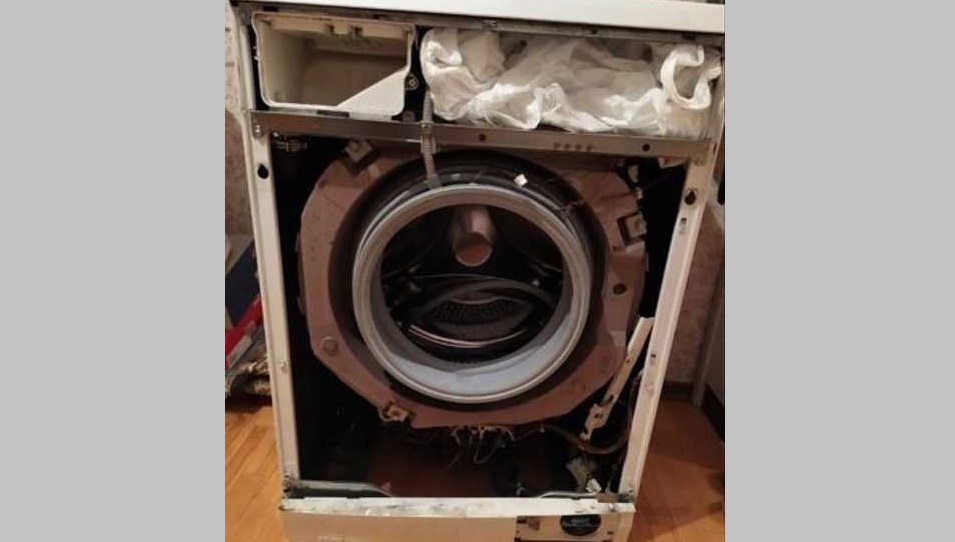
You can remove the drum now, but it's best not to rush. The drum will be very heavy without removing the electric motor. To avoid straining yourself, remove the back panel of the housing, remove the drive belt, turn the machine on its left side, and use a ratchet to loosen the motor. All that's left to do is pull out the motor and set it aside.
Then we lift the tank and remove it from the machine. The next step is to split it in half. The tanks on the BoschMaxx 5 are equipped with disposable plastic clips.There are several ways to get past them: knock the latches down with a flathead screwdriver and hammer, or pry them off by unscrewing all the screws on the surface of the tank.
Removing old bearings
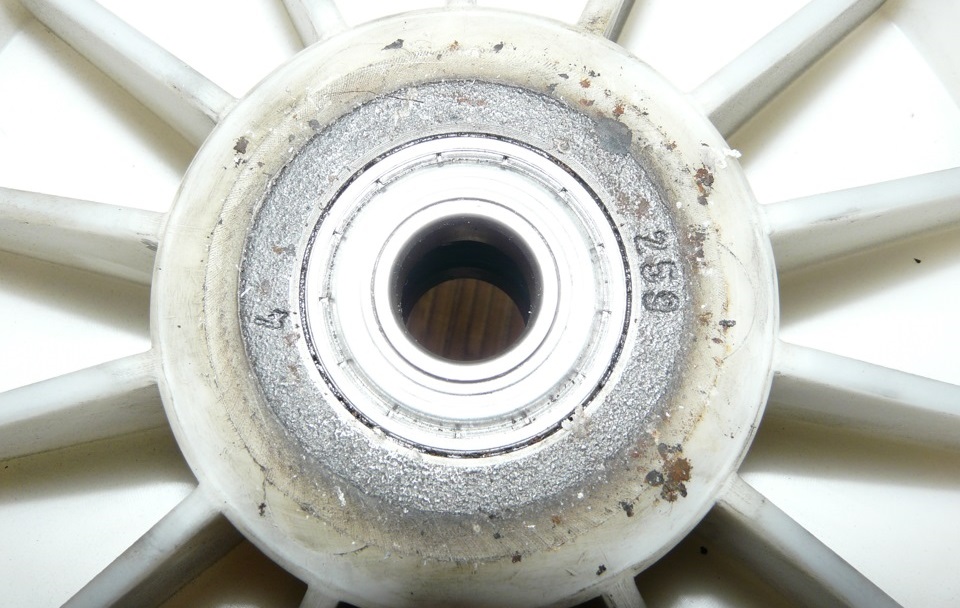
The repair doesn't end with dividing the tank into two halves. You need to set aside the part with the hole and take the part with the crosspiece and shaft. This is where the bearings are located, which need to be removed and replaced.
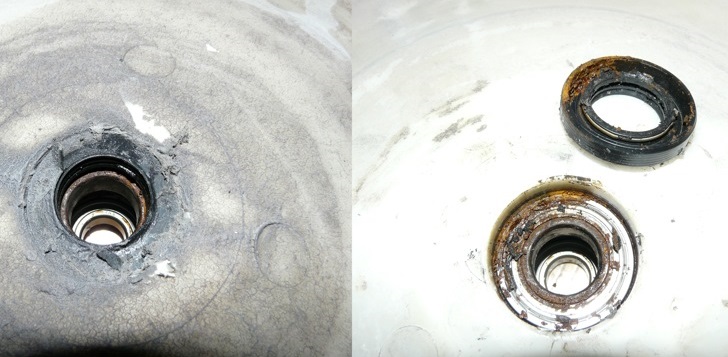
But first, clean the tank of accumulated dirt. If water softeners weren't added during washing, the tank will be coated with a thick layer of scale and debris. The shaft, which is stuck to the plastic due to rust, is particularly vulnerable. To combat corrosion and mineral deposits, generously spray the joints with WD-40 and let it sit for 10-20 minutes.
Before knocking out the bearings, it is recommended to treat the drum shaft with WD-40 and wait 10-20 minutes.
Now we begin dismantling:
we place half of the tank with the crosspiece on top and fix it on bricks or previously removed counterweights;
we take out the seal with a screwdriver;
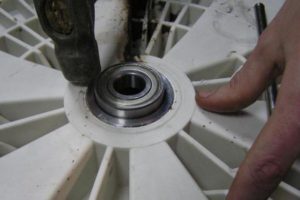
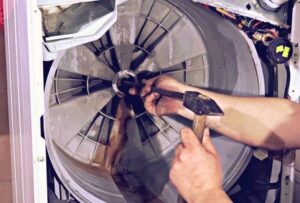
take a drift (you can also use a car puller), fix the wide tip on the bearing and, moving the tool in a circle, punch it with a hammer;
We tap the inner race in a similar manner.
Knocking out old bearings is the hardest and most dangerous part of the job. The risk is misjudging the blow and damaging the tank or shaft. But if you're careful and use the drift correctly, there won't be any problems.
We install new parts
All that's left is to install the new bearings. Clean the bearing seat of any dirt or scale, place the outer race into the bushing, and tap it evenly. To avoid damaging the new "ring," it's recommended to first place the old part between it and the hammer, then use a drift. As soon as you hear a characteristic metallic click, it will become clear that the part has stopped and is “stopped”.
We insert the second bearing in the same manner, then cover it with a seal and generously coat it with special grease. Then we connect the two halves of the drum and begin assembling the washing machine. Reassemble the machine according to the instructions described above, in reverse order.

 Bosch washing machines are renowned for the reliability and wear-resistant nature of their bearing assemblies, providing years of faithful service. However, regular drum overload, rough handling, or prolonged use can cause even the most robust machines to malfunction, resulting in bearing failure, resulting in creaking, knocking, and rattling sounds. Running a washing machine with a damaged mechanism is not recommended; components must be replaced promptly. We offer a step-by-step guide on how to replace bearings in a Bosch washing machine. We'll show you how to replace bearings in a Maxx 5 washing machine using the example of the Maxx 5 model.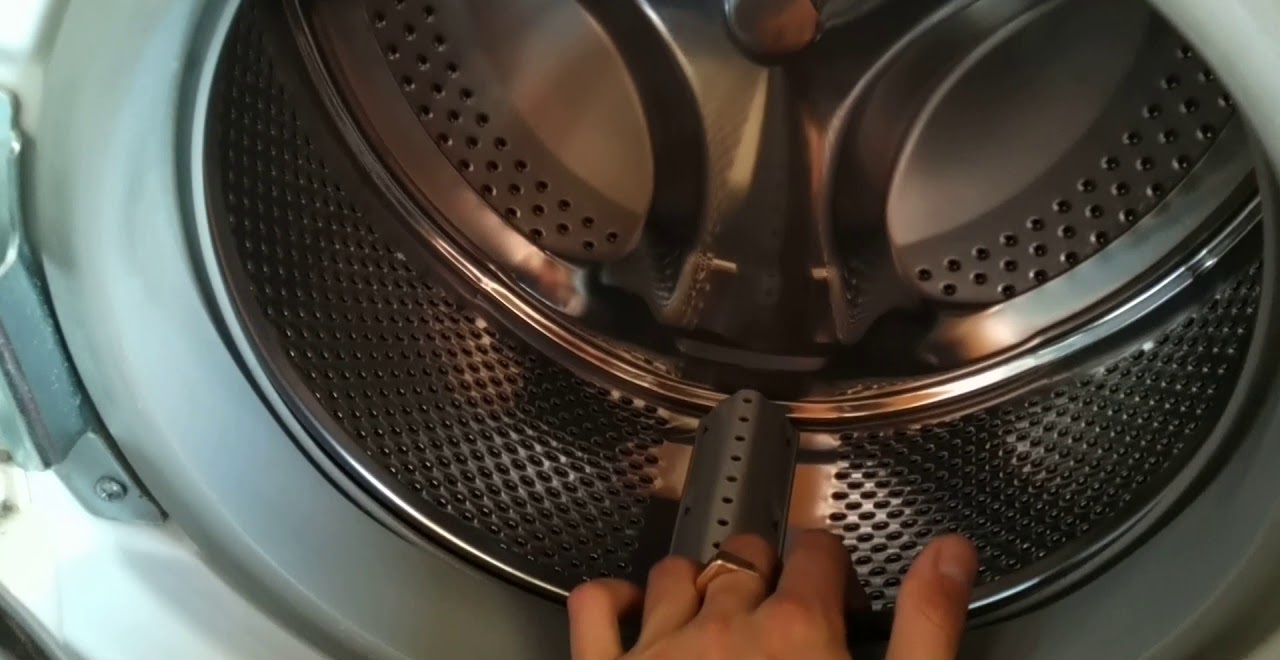















Add a comment