How to replace the belt on an Ariston washing machine
Every owner of an Ariston washing machine with a commutator motor can encounter the problem of a slipping drive belt. The belt often stretches and requires replacement. You can do the job yourself; you just need to understand how to remove the component and install a new one. Let's look at how to properly replace the belt on an Ariston washing machine to prevent it from slipping during the first wash.
Is it really the belt?
It's impossible to tell at first glance that the drive belt has slipped—it's hidden behind the back of the machine, so you'll have to use a screwdriver to confirm your suspicions. However, sometimes certain symptoms can indicate that the machine's malfunction is due to a drive problem.
Firstly, modern washing machines can automatically indicate the cause to the user. Direct confirmation will be provided by a signal generated by the self-diagnostic system. Washing machines with a display will display a specific error. error code On the screen. The user will only need to consult the equipment manual and decipher the symbol. Machines without a display will indicate a malfunction by flashing a light on the control panel.
Sometimes, the internal self-diagnostic system simply doesn't notice a broken belt. In these cases, the owner can figure out the problem themselves by analyzing the general symptoms. Drive problems can be suspected in the following cases:
The machine started the set program, filled the tank with water, the motor was running, but the drum did not start spinning:
The washing machine's motor hums, then suddenly quiets down and stops. The motor's state changes at regular intervals;
the washing cycle begins, the motor runs continuously, but the washing machine “freezes” and does not respond to commands given by the user;
The drum of the automatic machine rotates easily by hand, but the engine does not make any sounds.
You cannot operate a washing machine with a broken drive belt, as this will cause the electric motor to overheat and fail.
If you notice any of the above symptoms, you should immediately stop the cycle and check to see if the belt is still in place. You'll need a screwdriver for this. Let's look at the basic steps to follow when performing diagnostics.
Repair instructions
If a component has indeed come loose, you don't necessarily need to call a washing machine repair technician; you can change the belt yourself. Be prepared, though, as the upcoming job isn't as easy as it might seem. Belt tensioning requires patience, strength, and skill, but even a novice can handle the task if they follow all the recommendations.
If the rubber band has fallen for the first time, it is permissible to simply return it to its original place. When the drive belt breaks regularly, the part will have to be replaced. To remove the belt from the housing and assess its condition, you must:
make sure the washing machine is de-energized;
disconnect the machine from the house communications, remove the inlet hose and drain sleeve;
Place the machine in a place where it will be convenient to work with it, turn the unit with the back panel towards you;
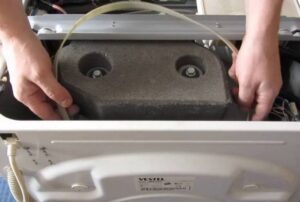
Unscrew the screws securing the rear panel. If the top cover will interfere with panel removal, remove it first, also unscrewing the screws;
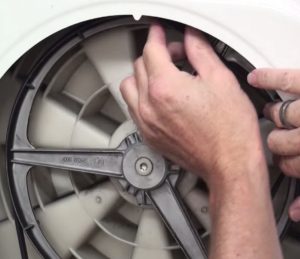
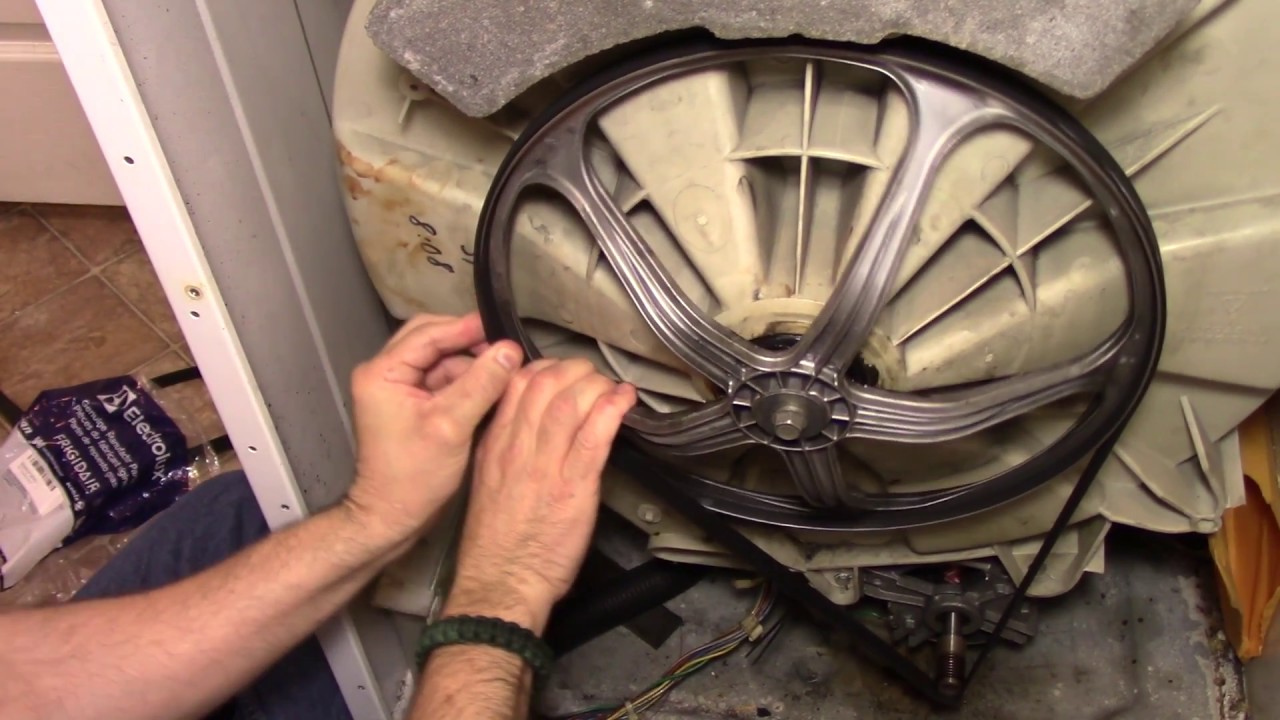
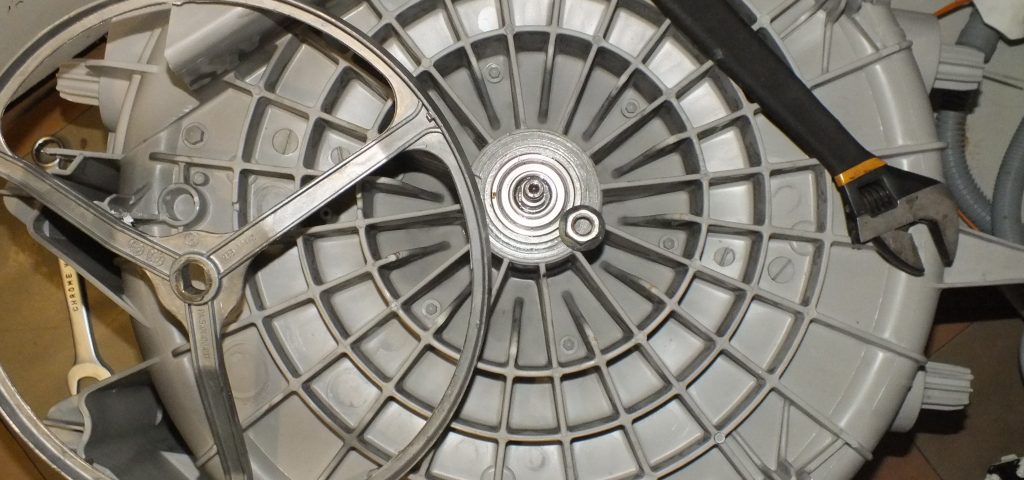
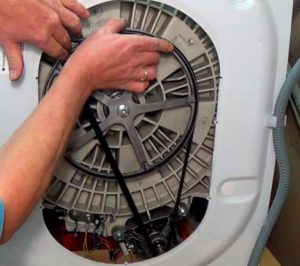
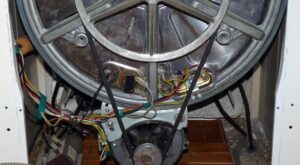
Find the drive belt. Its location is the same on all Ariston washing machines with a brushed motor. The belt is located directly behind the rear wall, between the drum pulley and the motor. If the belt is not visible, it has fallen and is lying under the machine.
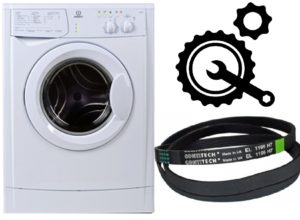
Remove the belt and determine its condition. First, locate the markings on the component. The first four digits of the code indicate the initial diameter of the rubber band in mm. Then, measure the circumference and compare the result with the factory value. If the difference is more than 20 mm, the rubber band is no longer suitable for use.
If the drive belt length stretches by more than 2 cm from the factory parameters, the part will have to be replaced with a new one of a more suitable diameter.
Once you've found a suitable drive belt, you can begin installing it. To install the belt, follow these steps:
tighten the belt on the electric motor pulley;
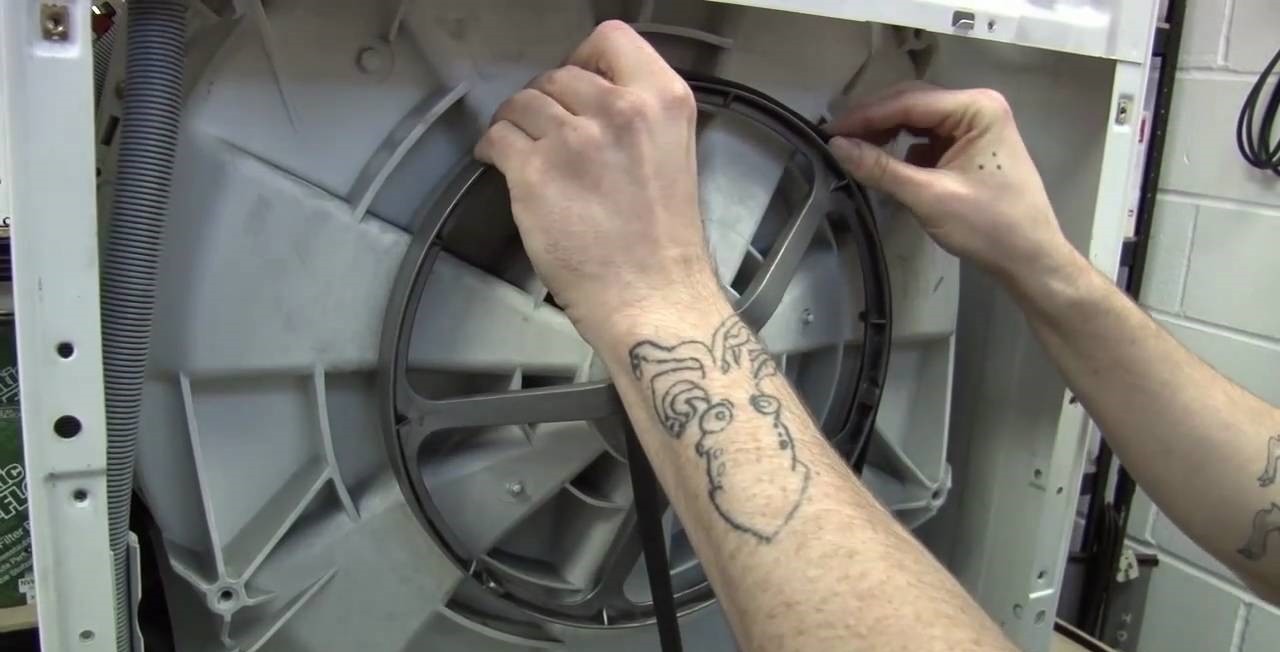
Place the rubber band on the drum pulley, carefully turning the “wheel” from right to left.
This task will be much easier if you invite a helper. With two people, installing the drive belt will be quicker than working alone. Be prepared for potential difficulties, too—some Ariston machines have extremely tight elastic, and getting it tighter can be a bit of a struggle.
To ensure the element is securely seated, rotate the drum wheel a couple of times. If the drum pulley rotates smoothly, the drive belt is properly tensioned. After visually inspecting the repair, you can begin reassembling the washing machine housing.
First, replace the rear panel of the housing and secure it with screws. Then, reinstall the machine, connect it to the water supply and sewer system, and plug it in. Be sure to run a test wash to check the machine's operation.
Replacement didn't help
If the rubber regularly falls off the pulley, even after replacement, this may indicate some problems with the washing machine. If the belt falls off more than twice in six months, you should be alert and have your washing machine diagnosed. The element may fly off multiple times due to:
Wear. The drive belt is subject to natural stretching. If, upon inspection of its surface, traces of wear, cracks, or a significant increase in the length of the rubber band are detected, the belt has completely exhausted its service life and is time to replace it;
Drum play. Replacing the rubber seal won't solve the problem, but the solution is even simpler—just tighten the pulley mounting screw. In some cases, replacing the wheel may be necessary;
Insufficient motor mounting. The motor of the Ariston washing machine is securely mounted, but vibrations during operation can cause the motor to become loose. The bolts securing it can become loose, causing the belt drive to malfunction. To resolve this, tighten the motor fasteners.
Deformation of the shaft or pulley. This can occur after a failed repair. Unfortunately, some "experts" manage to damage other parts while replacing some. If the pulley is truly bent, you can try to gently straighten it, but it's better to install a new wheel.
Damage to the spider. Although rare, users do encounter this problem. The defect may be a manufacturing defect or caused by strong vibrations during operation. The spider will need to be replaced; otherwise, the drum may become unbalanced, which, in turn, will lead to more expensive repairs.
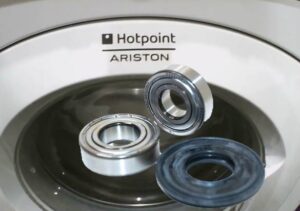
Bearing failure. Broken bearings can cause a "skew" in the system, which sometimes causes the belt to slip off the pulley. There is a solution: replace the bearings and seal.
The belt may periodically come off due to improper installation - if the elastic is not secured in the grooves.
It is possible that regular sagging is observed as a result of installing a rubber band that is different from the factory one. It is important to select a replacement drive belt that is suitable for a specific washing machine model. Ariston. Purchasing a similar part will prevent the elastic from falling off again.
As you can see, even a novice can change the belt themselves; the key is patience and following the instructions. It's important to follow safety precautions and purchase a replacement belt that's compatible with your specific washing machine model. If the belt frequently falls off, a more thorough diagnosis of the washing machine should be performed to identify other problems with the drive system.

 Every owner of an Ariston washing machine with a commutator motor can encounter the problem of a slipping drive belt. The belt often stretches and requires replacement. You can do the job yourself; you just need to understand how to remove the component and install a new one. Let's look at how to properly replace the belt on an Ariston washing machine to prevent it from slipping during the first wash.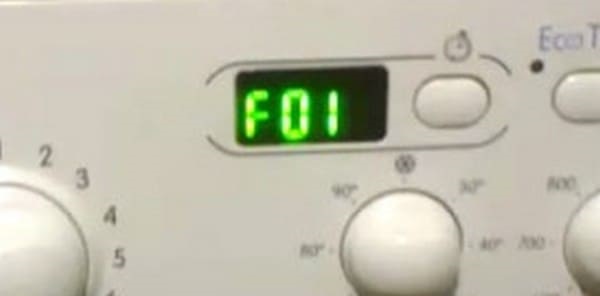














Add a comment