How to change the belt in a Bosch washing machine?
According to service center statistics, German-made Bosch washing machines are known for their durability and wear resistance. Compared to Indesit, Ariston, and Beko, these machines break down less frequently, and some malfunctions, such as premature bearing wear or motor failure, are completely uncommon. However, there are several typical Bosch problems, such as slipped or damaged drive belts. Replacing the drive belt on a Bosch washing machine is possible without calling a technician. We'll explain how to replace the belt and prevent a recurrence.
Or maybe it’s not a belt at all?
It's hard to immediately guess that your washing machine's drive belt has slipped. The belt is hidden behind the rear panel, so you'll first have to partially disassemble the machine. However, it is better not to rush, but to try to clarify the nature of the breakdown by reading the “symptoms”. The problem may not be a loose pulley.
The first step is to check the Bosch self-diagnostic system. Modern household appliances can automatically detect any problems and alert the owner. If the machine has a digital display, it will show a specific combination. All that's left to do is find the error code in the manufacturer's manual. If the model doesn't have a display, pay attention to the dashboard lights—the board will indicate the malfunction through these indicators.
Thanks to the self-diagnostic system, the Bosch washing machine automatically detects the problem and displays the error code on the display.
Although rare, it does happen that the self-diagnostic system misses a problem. In these cases, you can suspect a belt issue based on certain symptoms. These include the following situations:
the washing machine started the cycle, filled the tank with water, the motor is noisy, but the drum does not rotate;
the engine hums, but after some time it suddenly dies down and stops (everything happens at regular intervals);
the wash has started, the engine is “growling”, but the machine “freezes” and does not respond to user commands;
After starting the machine, the motor is silent, although when turned off, the drum can be rotated freely by hand.
It is prohibited to start the machine without a drive belt - the motor will run idle, overheat and break down.
If you notice any of the above symptoms while using your washing machine, you should force it to shut down. You can't wash with a loose belt—the motor will overheat and break if it's running idle. Before continuing, check that the rubber band is still in place and, if necessary, replace it. We'll explain how to do this below.
How are we going to change the part?
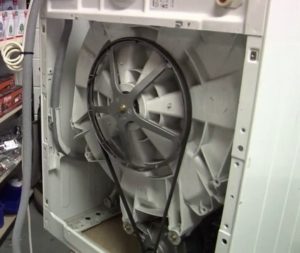
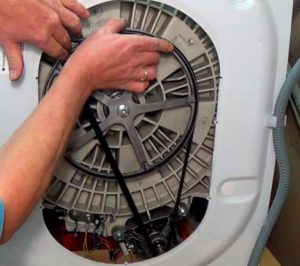
Checking the belt's integrity is easy: just unscrew the back panel of the housing with a screwdriver. The drive is located directly behind the door, and the rubber band should be stretched over the large and small pulley wheels. If the "ring" is missing, repair is required.
Fixing a slipped belt doesn't require calling a service technician. You can replace it yourself, but it's not as easy as it seems. Retightening the belt will require time, patience, and skill, but if you follow the instructions, it's a breeze.
The first time a belt fails, replacing it is rarely necessary; simply replacing the rubber band is sufficient. If the situation occurs two or more times, it's best to first assess the condition of the rubber band. The procedure is as follows:
disconnect the washing machine from the power supply, water supply and sewerage system;
we turn the machine around so that it is freely located near the rear panel;
Using a screwdriver, remove the back wall, removing all the retaining bolts (on certain Bosch models, you will also need to remove the top cover);
We find the belt, which should be located on the pulley directly behind the panel (if the rubber band is not stretched on the pulley, then it has come off and fallen to the bottom).
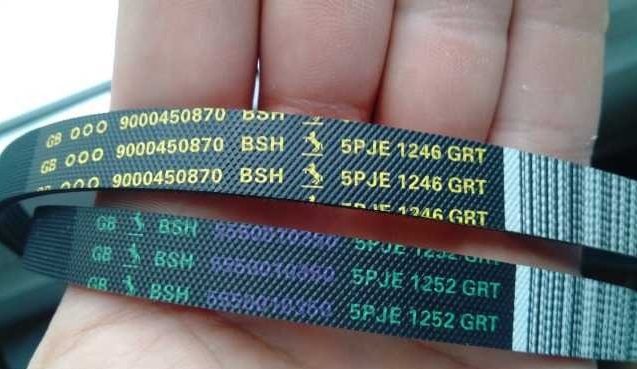
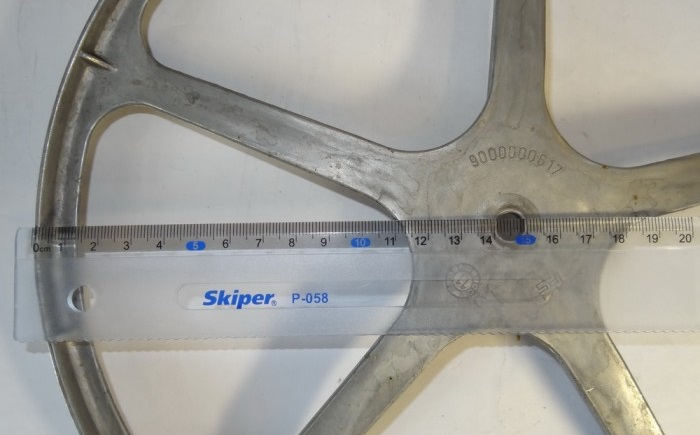
The belt that has come off should be lifted and inspected. Specifically, you should look for the factory markings and combination. The first four digits are the initial ring diameter, given in millimeters. Note this value, then measure the circumference of the existing rubber band and compare the readings. If the discrepancy is 20 mm or more, it is not recommended to continue using the part.
If the drive belt has stretched in diameter by 2 cm or more during operation, then the rubber band cannot be used - it must be replaced.
Once you've found a replacement, you can reinstall the belt. To do this, you'll need:
pull the rubber band onto the motor pulley (smaller wheel);
put the belt on the drum pulley, turning it from right to left (larger wheel).
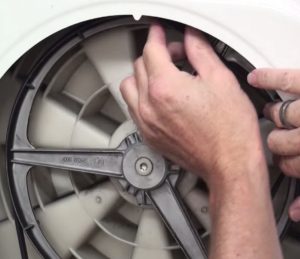
The instructions are simple, but changing the belt isn't so easy. It's best not to try this alone; instead, have a helper: one holds the rubber band on the motor pulley, while the other tries to tighten it onto the drum wheel. On some Bosch automatic machines, the task is complicated by the non-stretchable rubber band.
Next, make sure the belt is seated correctly. To do this, rotate the drum pulley 2-4 times and evaluate the rotation quality. If you feel tension, the job has been completed properly.
Assembly follows the instructions described earlier, but in reverse order. First, install the rear panel onto the body and secure it with screws. Next, move the washing machine back to its original location and reconnect it to the water supply and sewer lines. Finally, plug in the machine and run a "dry" cycle. If the drum spins as before, the electric motor makes noise, and the self-diagnostic system remains silent, the belt drive has been restored.
Rapid recurrence of the failure
A belt that keeps slipping off isn't just a sign of damage. If the rubber band slips out of place more than twice in six months, a comprehensive Bosch diagnostic should be performed. Most likely, the ring is slipping due to a malfunction in the washing machine.
Drum play. Uneven drum rotation causes the belt to constantly slip. This can be resolved by tightening the pulley mounting bolt. Sometimes, the damaged wheel needs to be replaced.
Insufficiently secured motor. Over time, the Bosch motor can become loose. Under heavy loads and excessive vibration, the retaining bolts can loosen, creating an imbalance in the motor's operation. To correct this, tighten the fasteners more tightly.
A deformed shaft or pulley. This type of failure is the result of unprofessional repair. Straightening an axle or wheel yourself is virtually impossible; replacing the entire component is much easier, faster, and more reliable.
A damaged universal joint. This is extremely rare. The most common cause is a manufacturing defect, but sometimes the malfunction is caused by excessive vibration from the washing machine. In any case, the universal joint must be replaced, otherwise the problem will only worsen. If you don't address the problem, it's easy to end up with a drum imbalance, which will increase the cost of repairs by 2-3 times.
Bearing assembly loosening. Bearing problems are rare on new Bosch machines; failure usually occurs after 5-8 years of use. Broken bearings disrupt the belt drive, causing the rubber to periodically come off. Parts need to be replaced, including omentum.
The drive belt should not come off the pulley more than twice every six months.
Most often, the drive fails due to natural wear and tear. If cracks appear or the diameter deviates from the original by 2-3 cm, the rubber has worn out and needs to be replaced. Another cause is improper installation, where the ring does not fit into the grooves.
Incorrect selection of replacement parts also leads to repeated belt failure. Therefore, it is recommended to use only genuine parts during repairs, using the serial number of the specific model. Otherwise, the part will not fit the pulley and will fail again at the slightest play.
Even a beginner can cope with a fallen belt – just follow the recommendations and be prepared for possible difficulties. When carrying out repairs, it is essential to observe safety precautions and purchase original spare parts. If replacing the rubber seal doesn't solve the problem and the drive malfunctions again, it's best to be wary, conduct a comprehensive diagnosis of the machine, and rule out other system malfunctions.

 According to service center statistics, German-made Bosch washing machines are known for their durability and wear resistance. Compared to Indesit, Ariston, and Beko, these machines break down less frequently, and some malfunctions, such as premature bearing wear or motor failure, are completely uncommon. However, there are several typical Bosch problems, such as slipped or damaged drive belts. Replacing the drive belt on a Bosch washing machine is possible without calling a technician. We'll explain how to replace the belt and prevent a recurrence.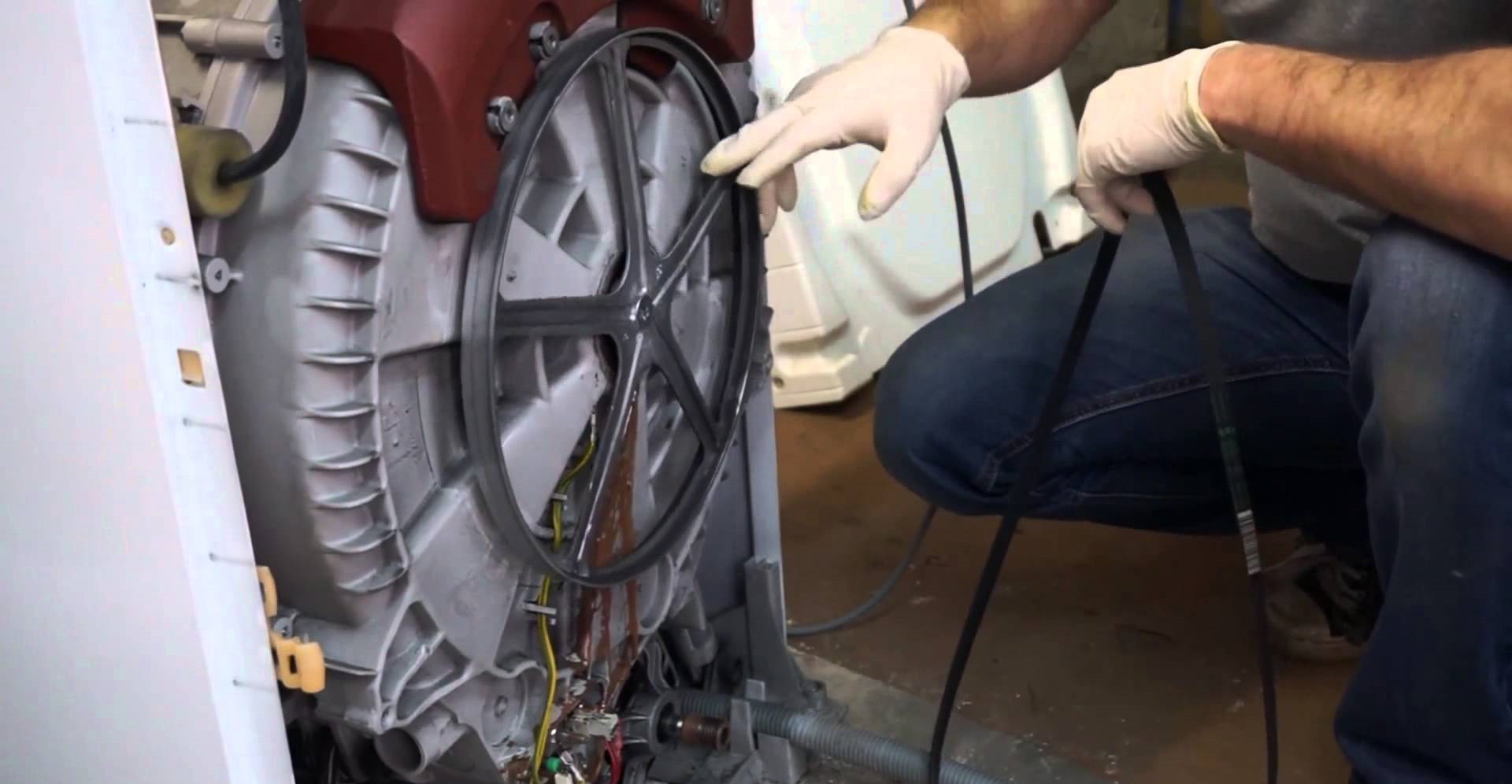















Add a comment