
How to change the seal on a washing machine?
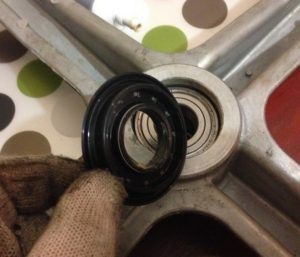 When you hear a crunching and humming sound when the drum rotates, it's likely time to reinstall the bearings and replace the seal in your washing machine. This type of malfunction is considered quite complex, but if you understand the problem, you can fix it yourself at home. Let's look at how to access the unit and what points to pay special attention to.
Part replacement procedure
If your washing machine makes a jet-like noise during the wash or spin cycle, or if you hear a loud grinding sound, the problem is likely worn bearings. Similarly, if you spin the drum by hand, you may hear an unusual rattling sound. To repair the unit, you will have to almost completely disassemble the washing machine.
Beginners who don't know where to start with the machine should strictly follow the instructions and photograph each step. Be sure to draw a diagram of the wiring, contacts, and other connections.
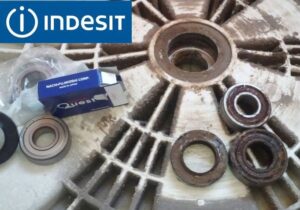
When reinstalling bearings, it is necessary to replace the seal in the washing machine.
So, to change the sealing ring and bearings, you need to:
- remove the “top” of the machine by unscrewing the bolts holding the cover;
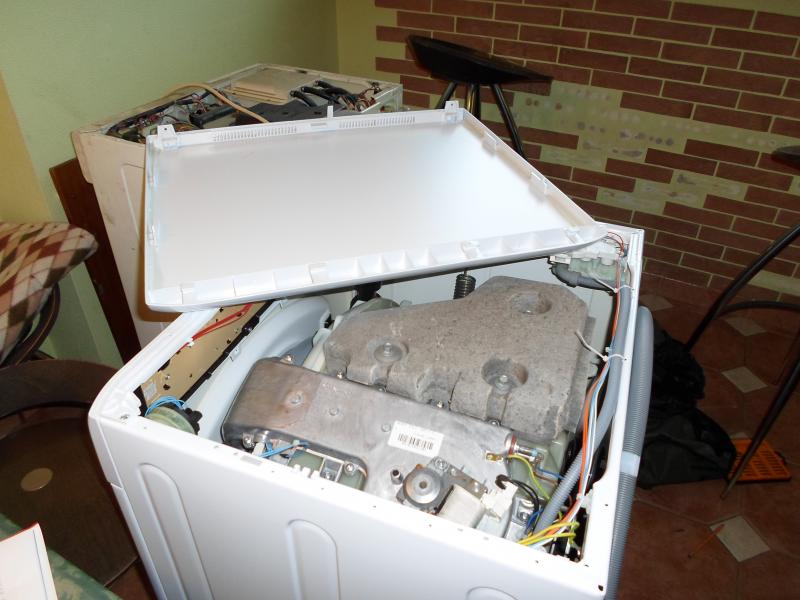
- remove the back and front panels of the washing machine, also removing the screws that secure the walls;
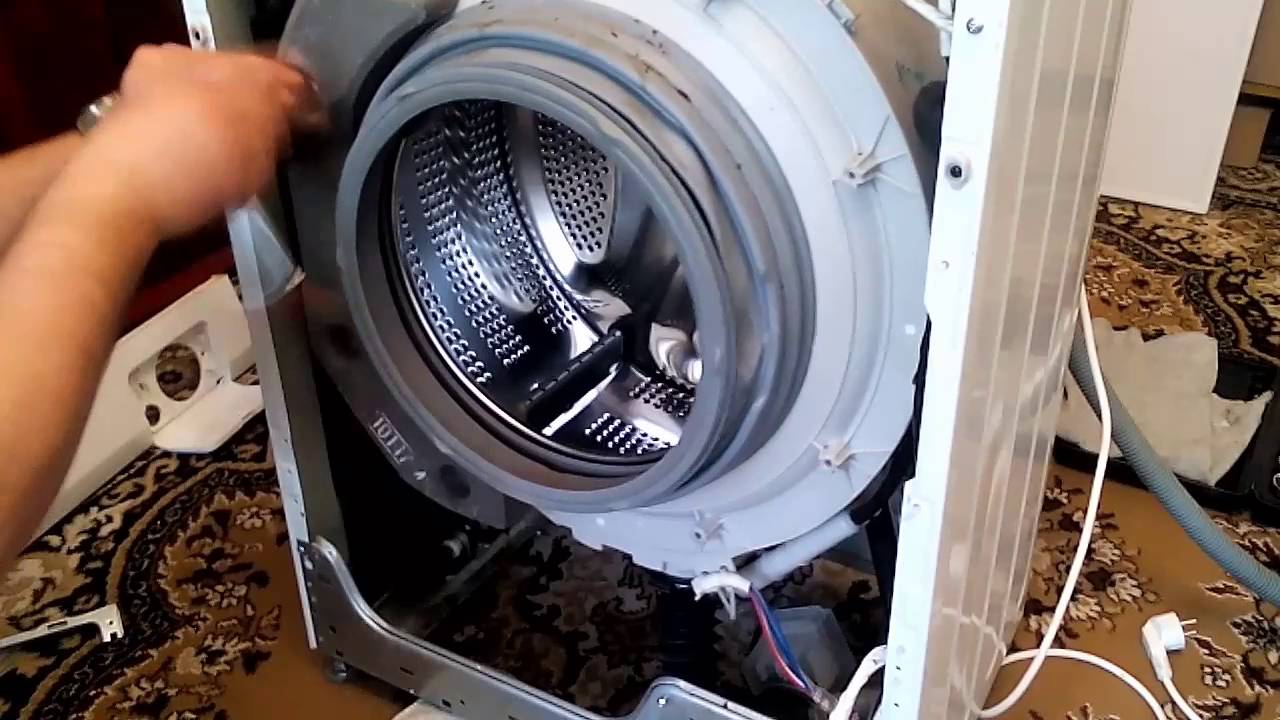
- remove the counterweight blocks from the housing, disconnect the shock absorber springs;
- Remove any components from the machine that might interfere with the tank removal. You should remove the dispenser, heating element, and motor, disconnect the drain hose from the tank, and remove the wiring (after photographing the wiring diagram). For example, on Indesit machines with a commutator motor, you will need to remove the belt and disconnect the pulley;
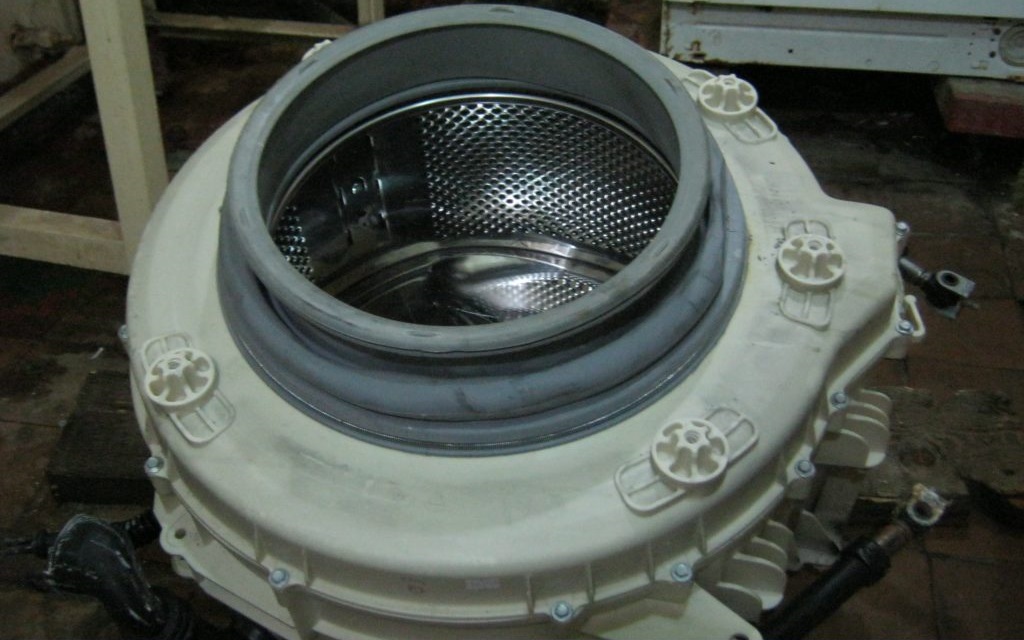
- Remove the tank. Some washing machine models, such as LG, Electrolux, and Samsung, have a detachable tank, making it easy to split. Machines from Ariston, Beko, Zanussi, and Whirlpool have a monolithic tank, so to access the bearing assembly, you'll have to saw it in half.
After this, you'll have access to the bearings. Before replacing components, be sure to inspect the shaft and spider. If the washing machine has been operating in emergency mode for a long time, they may have defects such as chips or cracks. In this case, even with a new seal, water will still leak inside the unit, and repairs will need to be repeated in a few months.
If damage is found during inspection of the crosspiece and shaft, the elements will also have to be replaced.
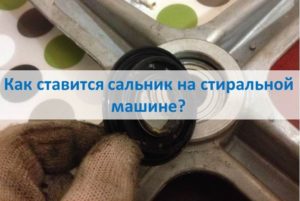
Once everything is in order, you can begin removing the bearings. The metal rings are carefully tapped out of their seats using a hammer and a blunt chisel. The seal is pulled out of its "socket" using a slotted screwdriver.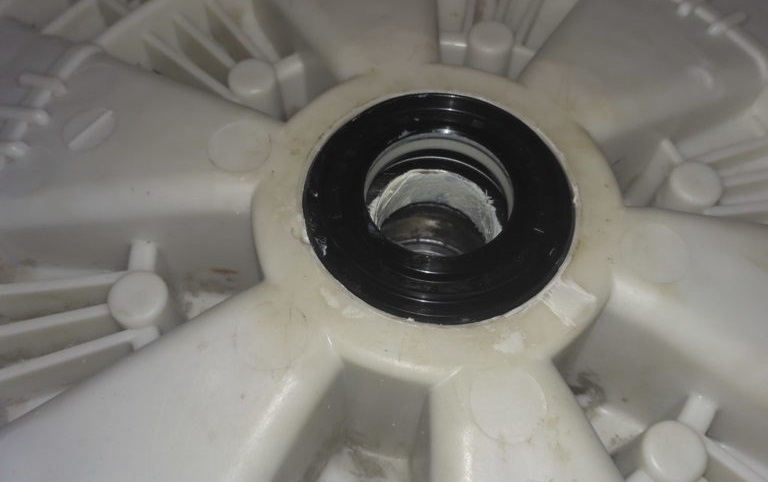
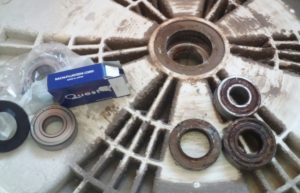
Replacement parts must be exactly right for your specific washing machine model. Therefore, be sure to check the dimensions of the components before purchasing. Before installing new bearings and seals, thoroughly clean the seat from dirt, wear, and rust, and treat the parts and mounting areas with a special lubricant.
Next, the steps are repeated in reverse order. Greased bearings are pressed into the "nest," and the seal is replaced. After the tank halves are securely fastened, the tank is inserted into the machine. Then, the previously removed components—wiring and hoses—are connected to the tank. The heating element and motor are attached inside the machine, the pulley is screwed in, the belt is tensioned, and the counterweights are secured. After the washing machine body is assembled, a test wash should be run and the machine's operation checked.
Features of adding lubricant
When replacing seals and bearings yourself, it's important to remember to lubricate them. Pre-installation treatment of parts is an essential step in the repair process. Professional lubricants approved by automatic washing machine manufacturers should be used.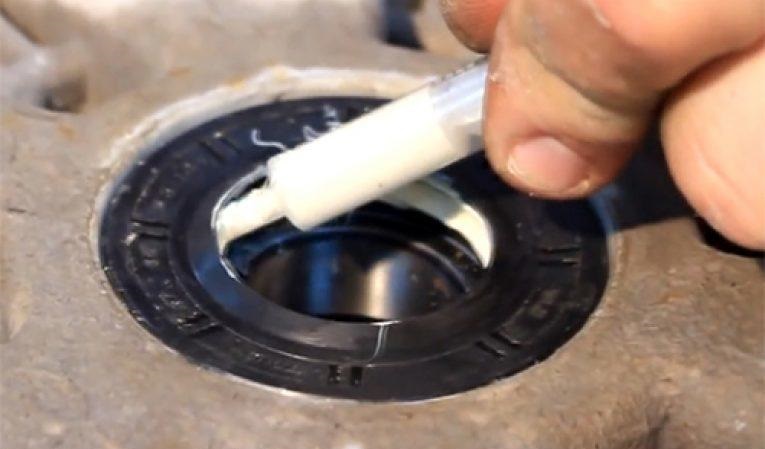
Bearings are generously lubricated before pressing, and the seal is treated only on the outside. Since professional lubricants are quite expensive, DIYers often resort to using automotive lubricants when repairing washing machines. Saving money this way, they overlook the fact that these "non-specialized" lubricants don't have all the necessary properties and are quickly washed out by detergent and water. Therefore, after a year or two, the bearings will fail again and need to be replaced.
What lubricant should I use?
Before repairing, it's important to research the recommended lubricants for washing machine seals and bearings. The lubricant used for servicing washing machines should be:
- Moisture-resistant. Since the shaft and sealing rubber come into contact with liquid, a water-repellent substance is necessary. The less easily the substance is washed out by water, the longer the bearings will last;
- Heat-resistant. The substance must not lose its properties even under extreme conditions, with constant temperature fluctuations;
- Safe for rubber. It should not contain any aggressive components that could damage the seal;
- Viscous. The thick product will not leak during operation of the equipment.
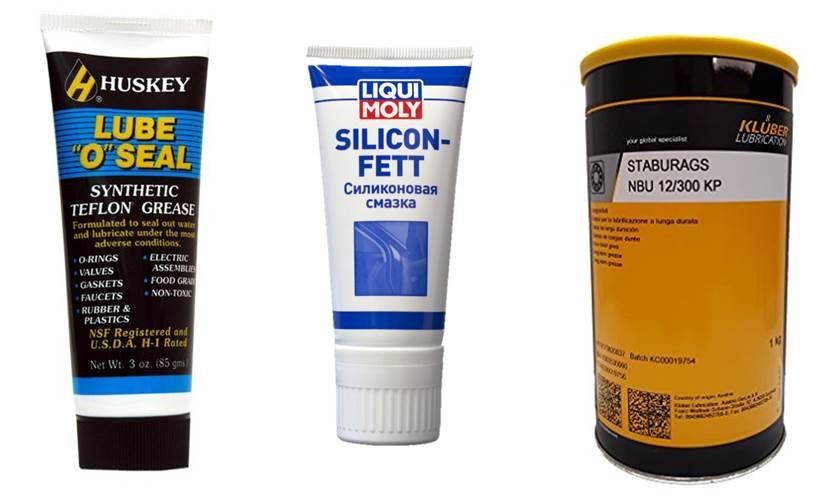
For example, Anderoll lubricant, produced directly by the machine manufacturer, is recommended for Indesit machines. For Bosch, Siemens, LG, and other washing machines, STABURAGS NBU 12 is a professional bearing treatment for washing machines that protects parts from wear.
For seals and bearings, mechanics also recommend using LIQUI MOLY "Silicon-Fett" silicone grease, which can withstand temperatures ranging from -40°C to +200°C. The formula is thick and easy to apply. Another option is Huskey Lube-O-Seal PTFE Grease, which won't wash off even with a jet of water. This grease provides long-lasting bearing protection and is heat-resistant, maintaining its properties at temperatures ranging from -18°C to +117°C.
What's going on with the oil seal?
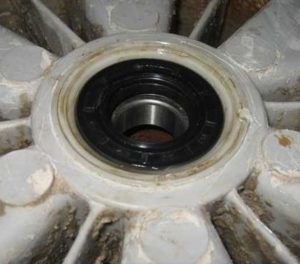
The seal is a rubber gasket that protects the bearings from the damaging effects of moisture. During operation, the shaft constantly rubs against the inner surface of the seal. This contact causes wear and tear on the seal. To prevent this, it's important to lubricate the part.
But even professional lubricant will wash out over years of contact with soapy water. The rubber will begin to dry out, crack, and moisture will seep into the bearings. Then the components will have to be replaced.
Interesting:
Readers' comments
Headings
Washing machine repair




For buyers




For users


Dishwasher




Add a comment