
How to change brushes on a Siemens washing machine?
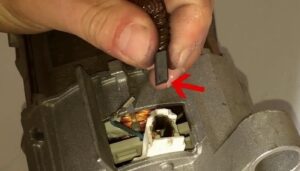 Brushed motors are more common than inverter motors, but they require interim maintenance. The brushes they incorporate, which smooth out the frictional force emanating from the motor, wear out over time and require replacement. If left unchecked, the motor begins to spark, overheat, and fail, threatening the entire machine. Replacing the brushes on a Siemens washing machine's motor doesn't require any special skills or tools—it can be done yourself. Let's take a closer look at the entire procedure, from diagnostics to a test run.
Let's study the symptoms of a breakdown
Electric brushes are cases with carbon tips. When the "carbons" wear down to critical levels, the motor begins to spark, and the washing machine begins to signal a malfunction. As a rule, you can suspect problems with the engine by the following signs:
- the drum does not spin at full speed or remains stationary;
- engine operation is accompanied by uncharacteristic noise;
- Siemens self-diagnostic system displays a corresponding error;
- The engine sparks and there is a burning smell.
Ideally, the self-diagnostic system should alert you to engine problems by displaying a corresponding code on the machine's display. Other symptoms can be difficult to detect when the brushes are worn. It's best to monitor their condition by periodically checking the length of the carbon tips. To check the brushes and assess their condition, you must first remove the motor.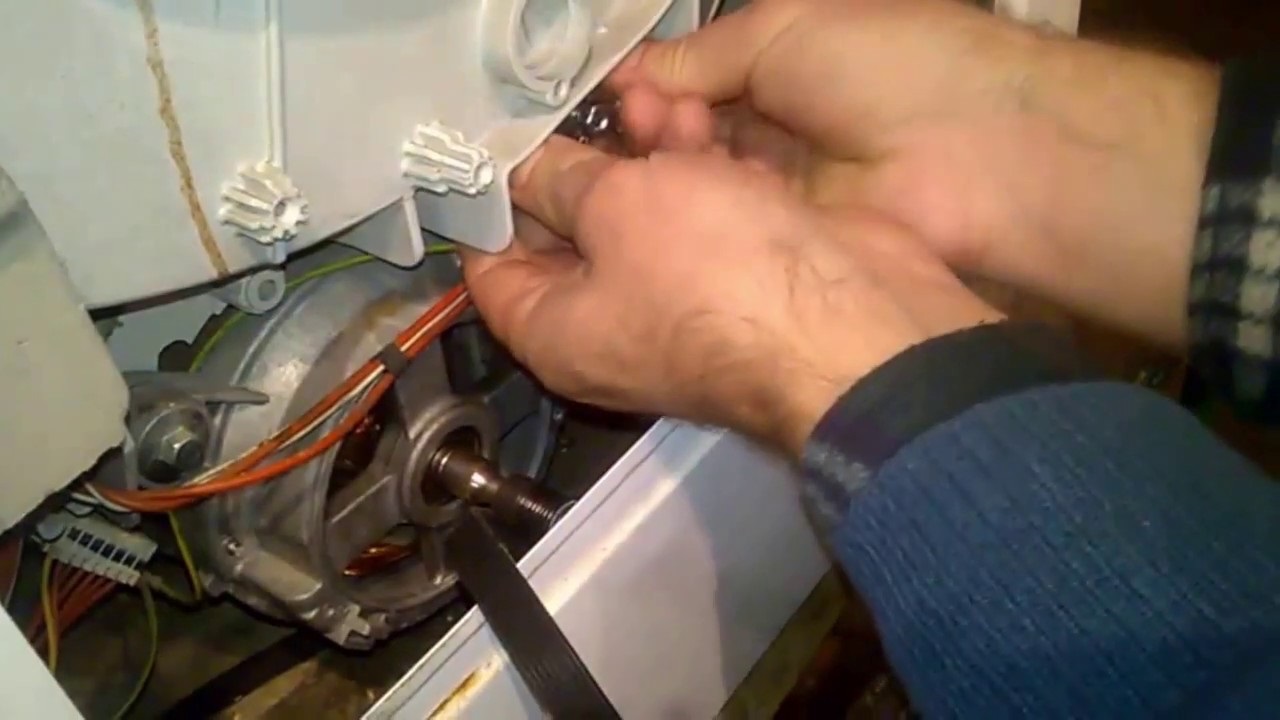
- Disconnect Siemens from communications.
- Turn the back wall forward.
- Disconnect the back panel from the case.
- Pull the drive belt off the pulley.
- Find the engine located under the tank.
- Disconnect the connected wires from the connector.
- Using a suitable socket wrench, loosen the engine retaining bolt.
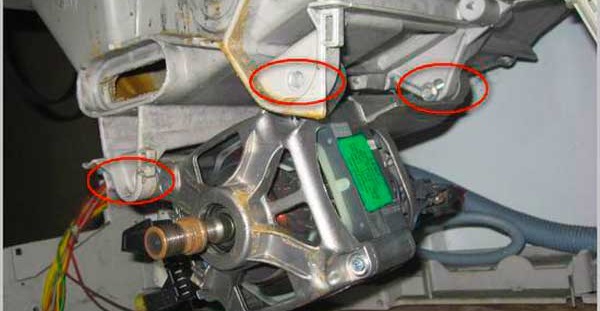
- Rock the device and remove it from the case.
On some Siemens models, brush diagnostics and replacement can be performed without removing the motor—this feature will be described in the instructions!
Pay special attention to the wiring. Before disconnecting it, it is recommended to mark the wires or take a photo to avoid errors during reassembly. Remember that incorrect connection of contacts can cause a short circuit!
We will collect everything you need for repairs.
The procedure for diagnosing and replacing brushes is considered a moderately complex procedure. In addition to the simple repair diagram, the user will appreciate the "basic" set of tools. Simply prepare the following:
- flat-head screwdriver;
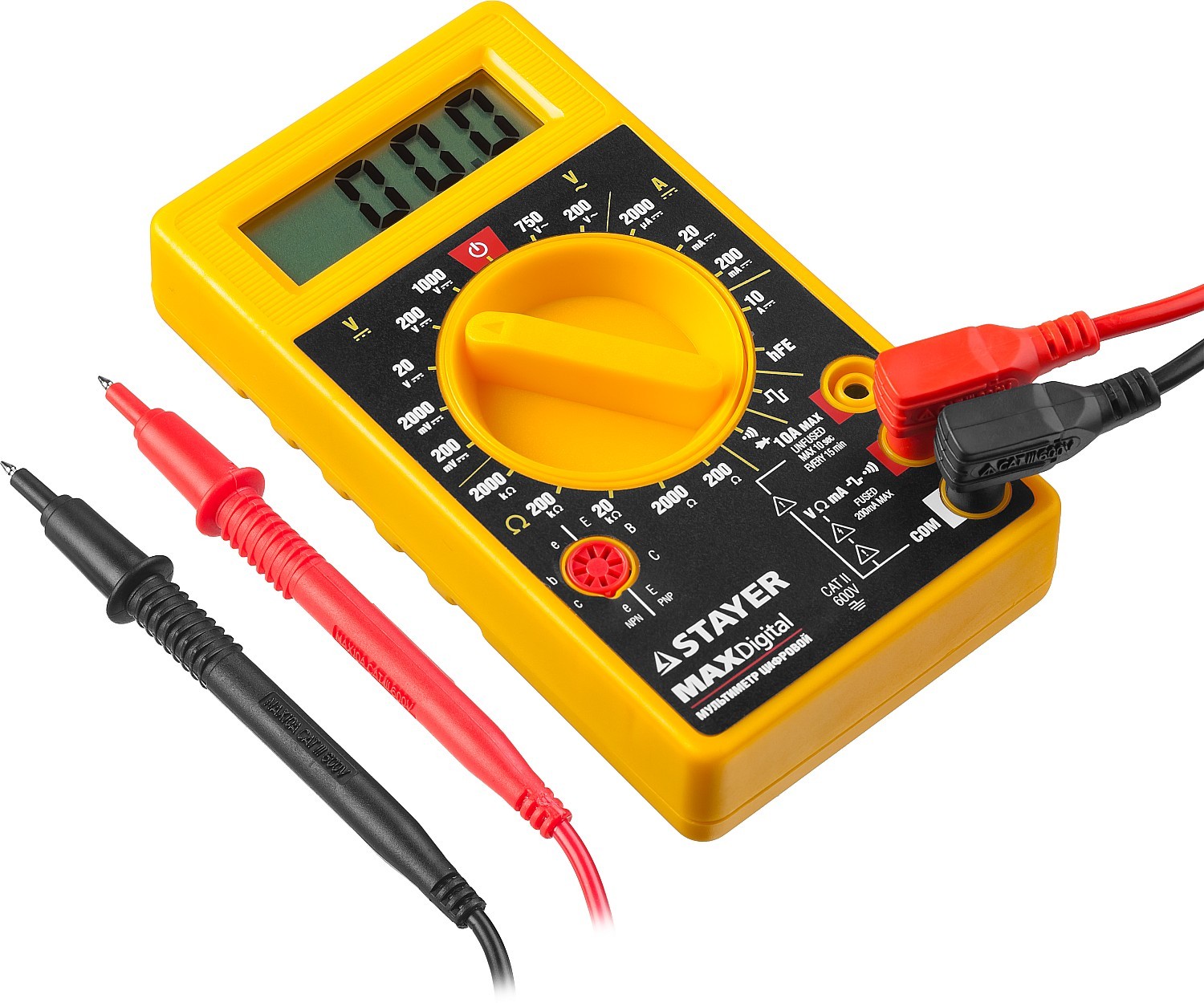
- multimeter;
- marker or camera (for marking wires).
Replacement components are selected strictly according to the serial number of the Siemens washing machine and only from original parts!
Be sure to find replacement brushes. They can be ordered online, purchased at a service center, or purchased at a specialty store. The key is to choose the right replacement: carbon tips vary in size and contact type. To avoid mistakes, you need to check the serial number of your existing Siemens or show the consultant old cases as a sample.
Instructions for replacing carbon elements
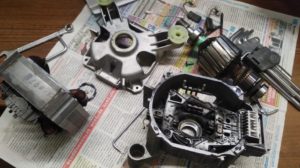
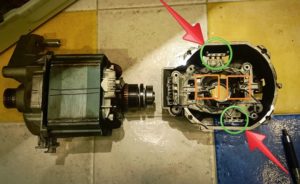
Having prepared the tools and components for replacement, we move on to diagnostics. Fortunately, there's no need to disassemble the engine—the necessary components are located on the engine housing. More specifically, the electric brushes are mounted on both sides of the motor housing.
It's hard to confuse the electric brushes. They're cases with wires and a spring that presses the element against the motor housing. The carbon tip is "hidden" inside, so you first need to remove each brush and inspect it. Here's how:
- Using a screwdriver, pry up the terminal of the connected wiring;
- we disconnect the wire from the brush;
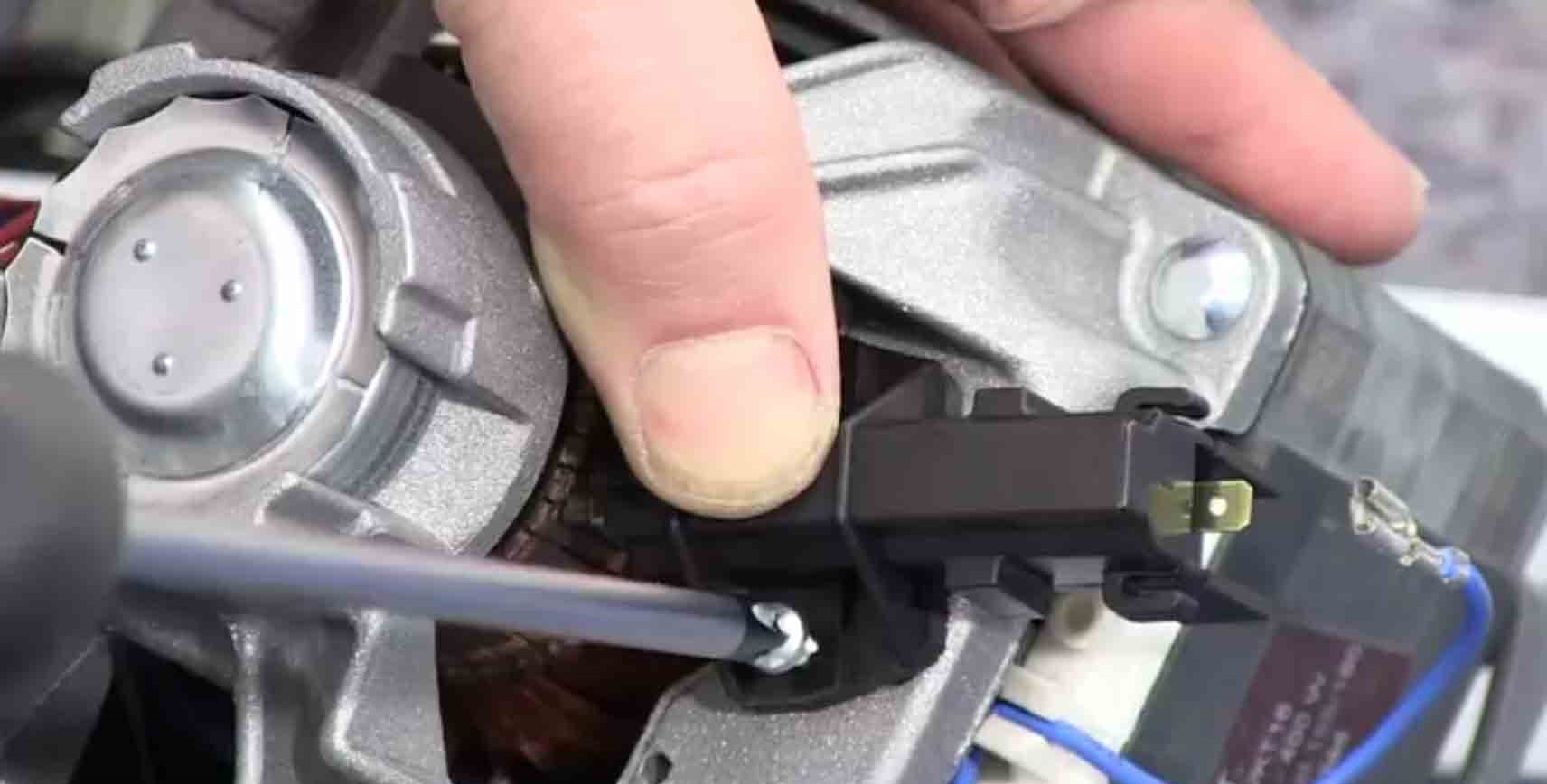
- carefully move the brush contact in the direction opposite from the wiring;
- slowly lift the contact until the spring is activated;
- remember how the brush was positioned in the “nest” (it’s better to take a photo or draw it);
- we take each brush out of the case one by one;
- We evaluate the condition of the element: we look at the external condition and measure the length of the “coals”.
If one of the brushes is worn out, both need to be replaced. Unpack the new ones and place them in their sockets, matching the old ones. It's important not to mix them up, otherwise the "carbon" won't fit. Next, fully compress the spring and insert it into the crossbar. This can be difficult to do on the first try, as the wire is long. Then, secure the position of the rods by placing the contacts in the clamp and sliding them toward the power wire. Next, connect the wire to the terminal.
Electric brushes should only be replaced in pairs – otherwise, the new rod won’t last long!
Replacing the second brush follows a similar procedure. It's important to note that the rods are replaced in pairs, even if one is completely intact. This trick will help extend the motor's lifespan. Otherwise, an imbalance will occur: one "carbon" will grind in, while the other will spin idle. Finally, don't forget to check the tightness of the contacts.
Test run
After replacing the brushes, a test wash is mandatory to assess the quality of the repair. However, it's important to understand that the machine will be noisier for the first few cycles. This is because the new carbon tips need to settle in and adjust to the motor. 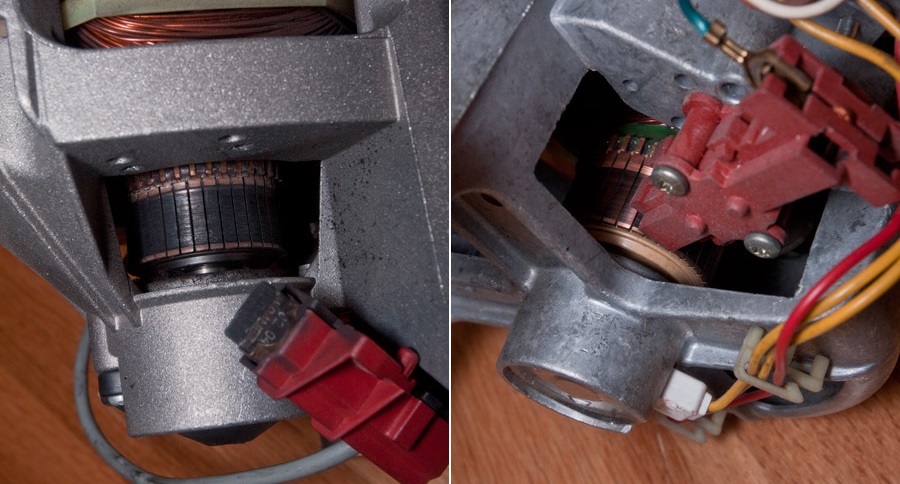
Immediately after repair, the motor is returned to its original position, and the Siemens washing machine is connected to the power grid. Then, the "Spin" program is run at the highest possible speed. The faster the motor speed, the faster the brushes will wear in.
For some time after replacing the carbon brushes, your Siemens washing machine will be noisier – this is normal!
It is important to remember that failure to replace the electric brushes in a timely manner can lead to serious consequences, including the death of the motor and control board. It is better not to take risks, but to regularly check the condition of the rods. Once a year, simply dismantle the motor, remove the brushes, and measure the length of the brushes as described above. Replacing the brushes is a simple procedure that any Siemens owner can perform with due diligence and proper care. The main thing is to remember safety precautions and strictly follow the instructions.
Interesting:

Readers' comments
Headings
Washing machine repair




For buyers




For users


Dishwasher




Add a comment