There are a multitude of different washing machine models on the modern home appliance market. Depending on which model we're replacing the pump on, we'll decide how to access it.
We install a new pump through the bottom of the washing machine.
This method of replacing the drain pump will be relevant for most machines from the following manufacturers: Indesit, Samsung, Beko, Ardo, Whirpool, Candy, LG, Ariston. These models have no bottom or a removable bottom, making it easier to replace the pump from the bottom.
The most commonly used replacement drain pumps are Askoll drain pumps. They are secured with three screws.
First, disconnect the washing machine from the power supply and turn off the tap.
Then carefully lay the washing machine on its side, placing something underneath it to prevent scratching the body. Make sure to lay the machine with the corner with the pump facing up.
Then we remove the lower front panel of the machine.
After this, you need to unscrew the screws securing the drain pump to the body.
Prepare an empty container. We'll need it when we disconnect the hoses. Water will leak from them as we remove them.
We remove the hoses, first loosening and removing the clamps. Then we disconnect the connector and wires.
Next, we take a new working pump and install it in place of the old one.
Now all we have to do is assemble the machine, return it to its upright position and perform a test wash.
You can see this method of replacing the pump in the following video instruction:
Replacing the pump by removing the front wall
To replace the drain pump on some machines, we will need to remove the front part of the housing. Typically, this replacement method is suitable for household appliances from the following manufacturers: AEG, Bosch, Siemens.
Most models from Germany are designed so that the best way to access the drain pump is to remove the front panel of the housing. The most popular pump model is Askoll. Incidentally, they are also usually quite affordable.
How to remove the front part of the washing machine body (AEG, Bosch, Siemens)?
First, we'll remove the housing cover. To do this, you'll need to unscrew the screws. These are usually located on the back of the washing machine. Then, push the cover away from you, standing at the front of the machine—that is, the side with the door. This push will release the door from its retaining grooves, making it easy to remove.
Next, we'll need to remove the front panel. To do this, remove the dispenser completely. Then, unscrew the front panel. There's no need to disconnect this part from the wires. Simply carefully place it on top of the washing machine.
Next, open the panel behind which is the drain pump at the bottom of the machine. Then unscrew the filter. When you unscrew it, some water will spill out. Therefore, you'll need to place a rag underneath, or better yet, a container to catch the water.
Now we need to unscrew the screws that secure the front panel from below. There are usually two of them.
Next, we'll need to remove the clamp that secures the door seal. To do this, open the machine door, locate the clamp, carefully loosen it, and remove it.
Unscrew the remaining screws and carefully remove the front panel of the case. Do this slowly. Once there's enough clearance, reach in and disconnect the wires from the hatch lock. After that, there's nothing holding the panel in place, and it can be removed.
Now we've reached the pump. Now we need to remove it. To do this, unscrew the retaining bolts and release the latches (if any), then loosen and remove the retaining clamps.
We also recommend taking a photo of the pump's position and how it's secured. This will help you during assembly.
After you separate the pump, you will need to replace it with a new one and reassemble the machine in reverse order.
Replacing the drain pump by removing the rear wall
This pump replacement option is suitable for the following models: Zanussi and Electrolux. The design of Zanussi and Electrolux models does not allow for replacement of this part using the two previous options, as they lack a removable bottom panel and a detachable front housing. Therefore, all work must be performed through the rear of the washing machine.
Before disassembling the machine, drain all the water. To do this, place the drain hose on the floor. You can place a shallow container under the water or use a rag to soak up any puddles. Next, unscrew the screws securing the top of the machine. Next, remove the lid. To do this, you'll need to push it back. After that, unscrew the screws securing the back and sides of the machine, as well as the screws securing the inlet valve cover. Once all the fasteners are removed, you can remove the back of the machine.
We remove the wires that are connected to the pump.
Then we remove the entire snail (including the pump and hoses). To do this, we need to release the latches.
We unscrew the screws and open the latches that secure the pump.
We'll take a photo of the pump's location. This will help us during assembly.
We remove the old pump, clean its place from possible debris and install a new one.
Then we assemble the machine in reverse order and carry out a test wash.
The pump impeller isn't turning. It feels like the shaft is bent or the bearing is seized. How do I remove the impeller from the shaft? Model: Askol (made in Italy) Type 200590 N Cod.132106301 Assy.13207 1673

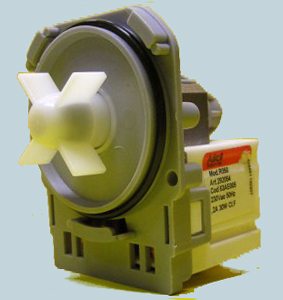 There are a multitude of different washing machine models on the modern home appliance market. Depending on which model we're replacing the pump on, we'll decide how to access it.
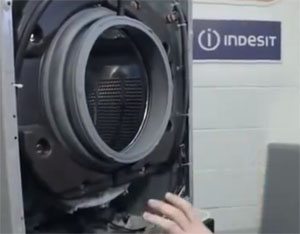 To replace the drain pump on some machines, we will need to remove the front part of the housing. Typically, this replacement method is suitable for household appliances from the following manufacturers: AEG, Bosch, Siemens.
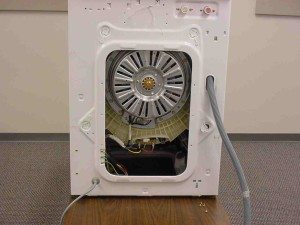 This pump replacement option is suitable for the following models: Zanussi and Electrolux. The design of Zanussi and Electrolux models does not allow for replacement of this part using the two previous options, as they lack a removable bottom panel and a detachable front housing. Therefore, all work must be performed through the rear of the washing machine.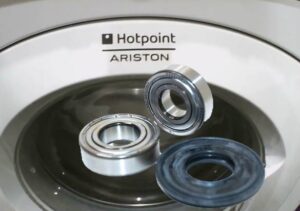
















The pump impeller isn't turning. It feels like the shaft is bent or the bearing is seized. How do I remove the impeller from the shaft? Model: Askol (made in Italy) Type 200590 N
Cod.132106301 Assy.13207 1673
Machine in any mode
But it comes to pumping
That's where it all stops
The drain holes in the pump or drain hoses are clogged.
Thanks so much for the advice! Great site! I fixed the car myself!
The machine isn't draining. What should I do? The filter is clean, the drain hose is clear. What else?
Thank you! I did it all myself thanks to you!
The machine isn't draining. What should I do? The filter is clean, the drain hose is clear. What else?