
How to change the tachogenerator in a washing machine
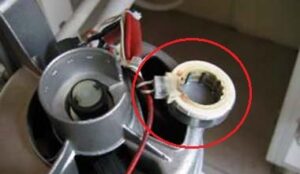 The tachogenerator is a small and inconspicuous component, but it's crucial. It monitors the washing machine's motor's RPM and transmits this information to the control module. If something is wrong with this component, the machine will stop washing and display an error code. How do you replace the tachogenerator in a washing machine yourself?
Where to look for a faulty part?
If your washing machine has a brushed motor, the tachogenerator will be located on the rotating motor shaft. To access the motor, remove the fasteners from the rear cover of the washing machine, pry it off with a screwdriver, and then remove the drive belt. Naturally, before starting work, you need to disconnect the unit from all communications.
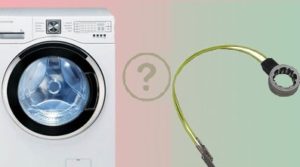
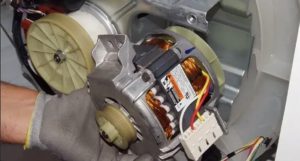
The tachogenerator looks like a metal ring with two wires attached to the engine shaft. Sometimes, to remove the tachogenerator, you have to remove the engine itself. What should you do?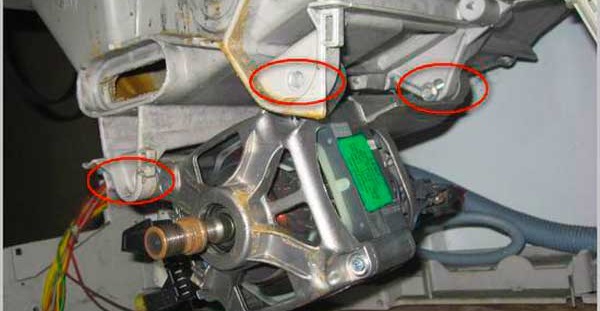
- We remove all engine wiring.
- We unscrew the screws holding the motor.
- We slide the motor housing back until it pops off the guides. After that, it will be right in our hands.
Keep in mind that the engine is quite heavy and can easily be dropped when removed.
Important! Before dismantling the unit, check the spin control button. If it's stuck inward, the problem may lie there, not with the tachogenerator.
Test and replace the part?
Once the part is removed, carefully inspect it and its wiring. If any fasteners are loose, tighten them immediately. All fasteners and contacts should be intact. What if no obvious damage is found? Then test the tachogenerator. There are two ways to do this.
First method:
- take a multimeter and set it to measure Ohms;
- apply the probes to the tachogenerator contacts;
- Normally, the sensor resistance should be 60 Ohms.
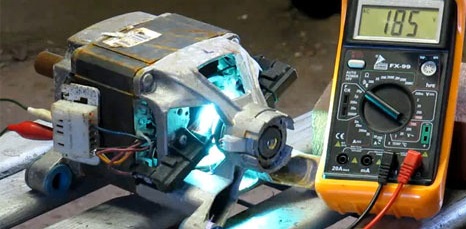
Second method:
- set the multimeter to measure volts;
- connect the probes to the contacts;
- Use your other hand to rev up the engine;
- If the number 0.2 appears on the display, then the sensor is OK.
Replacing a damaged part is easy. To do this, completely remove the wiring and the element cover, which is secured with a standard latch. Unscrew the fasteners, remove the old tachogenerator, and install the new one in its place.
Error codes indicating the tachogenerator
Technicians sometimes diagnose a faulty tachogenerator even before inspecting the machine. There's no magic or professional trickery involved; they simply correctly interpret the error code displayed on the display. Error codes for the same problem can vary across different washing machines. Let's explore how different washing machine models signal problems with the tachogenerator.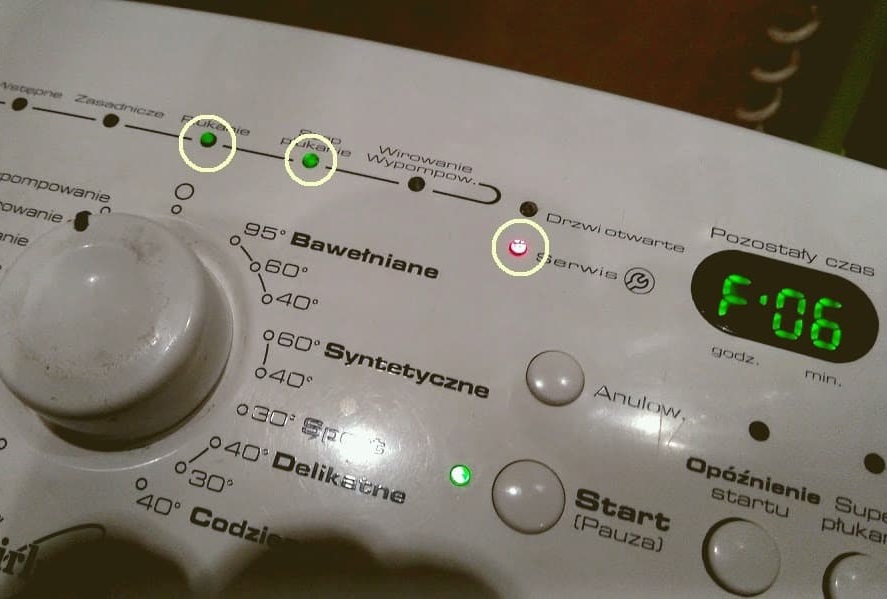
- Whirlpool – code F06;
- Indesit – code F02;
- Kandy – codes E7 E8 or E9;
- Samsung – code 3E;
- LG – SE code;
- Bosch – code F42;
- Atlas - code F9;
- Combustion – code F4;
- Beko – code H6;
- Mile – code F53.
Don't rely solely on the error code. In some models, the same combination can have two or even three meanings. However, if you suspect the tachometer, you'll at least know which component to test first. Being able to diagnose the problem yourself saves the user time and effort, not to mention the potential for repairs.
Interesting:


Readers' comments
Headings
Washing machine repair




For buyers




For users


Dishwasher




Add a comment