
How to replace the heating element in an Electrolux washing machine
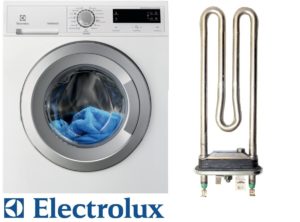 If your Electrolux automatic washing machine isn't heating the water during the wash cycle, you need to determine the cause as soon as possible. Most likely, this is due to a faulty heating element. You don't need to call a technician to fix the problem; you can examine the part and replace it yourself if necessary. Replacing the heating element in your washing machine doesn't require any specialized knowledge; simply follow the instructions below.
We get to the desired part
Typically, the heating element in an Electrolux washing machine is located at the rear of the machine. It's very easy to access and takes no more than five minutes. The procedure is as follows:
- disconnect the machine from the power supply;
- disconnect the machine from utility lines;
- Pull out the unit to provide free access to the rear wall;
- remove the back case;
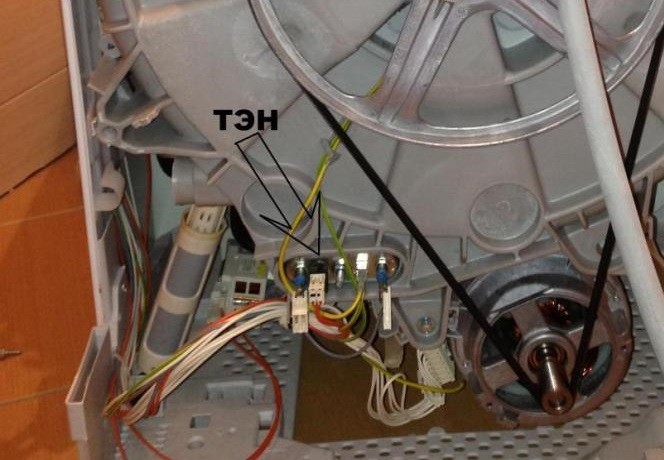
- remove the drive belt (if it is in the way).
After completing a series of simple steps, you'll see the heating element. This step-by-step guide is suitable for front-loading machines. But what if your washing machine is top-loading? The steps are the same, except you'll need to remove the right side panel, not the back.
Checking the part
A multimeter test will tell you if the heating element needs replacing. To do this, disconnect the power supply wires from the element and remove the temperature sensor. Then, set the multimeter to resistance mode. Set the device to 200 ohms and connect the selector leads to the heating element terminals.
If the heating element is working properly, the multimeter will display a resistance of 26-28 Ohms. If the reading deviates from the specified range, either upwards or downwards, the heater is faulty. If the device displays zero resistance, this also indicates a faulty heating element.
Important! When testing the heating element, observe safety precautions and be sure to disconnect the power to the machine before beginning any testing.
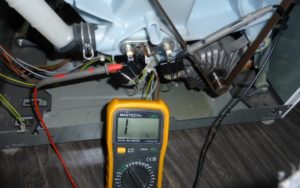 If the device confirms the heater is operating smoothly, this does not mean the system is functioning properly. The tubes contain a dielectric, which is likely connected to the machine's housing. The heating element should be tested for a breakdown to the housing. To do this, set the multimeter to buzzer mode. A light on the device will illuminate and emit a characteristic sound to confirm the correct operating mode is selected on the selector. To test the element, place one end of the multimeter on the heating element terminal and the other end on the housing. If the tester does not emit any sound, the system is fully functional. If a characteristic beep is heard, the heater should be replaced.
Heater replacement work
Once you've determined why your washing machine isn't heating, you can move on to troubleshooting. Replacing the heating element yourself is easy; just follow these instructions carefully.
- Unplug the machine from the power outlet.
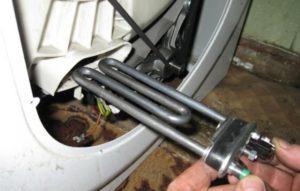
- Get rid of any remaining water; this can be done using a drainage filter.
- Gain free access to the heating element.
- Take a picture of the connection diagram of the contacts to the element; this will allow you to avoid mistakes with the polarity of the wires during subsequent connections.
- Disconnect the wiring from the heater.
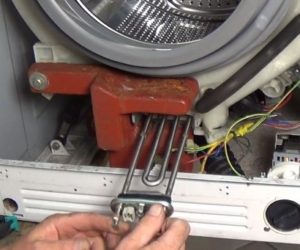
- Find the bolt that secures the part and unscrew it from the groove.
- Press the mount slightly inward and pull the heater towards you.
If you are unable to remove the element, try to pry the rubber seal with a screwdriver. To make the removal process easier, you can treat the seal with a special liquid, WD-40.
Caution! If you're not absolutely sure the problem lies with the heating element, remove the part very carefully. It might be fully functional and doesn't need replacing.
Once the heating element is disconnected, you need to do the following:
- clean the hole where the part was located from accumulated debris, remove plaque and scale residue;
- install a new heater in this place, be sure to connect the temperature sensor to it;
- tighten the mounting bolt;
- Connect the power contacts according to the photo taken at the beginning of the process.
After finishing your work, check to see if the problem has been resolved. To do this, run the wash cycles one after another, making sure to use different temperature settings. If the machine is functioning properly, you can replace the lid and continue using it.
Interesting:

Readers' comments
Headings
Washing machine repair




For buyers




For users


Dishwasher




Add a comment