
How to replace the heating element in a top-loading washing machine?
 In fact, replacing a heating element is not difficult. It's even easier on top-loading washing machines than on front-loading ones. Why is that? Primarily due to the more sophisticated design of top-loading washing machines. Let's figure out where the heating element is located in these machines, how to check it, and how to replace a broken part with a working one.
How to inspect a heating element?
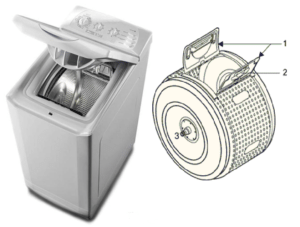
It's very easy to check the condition of your vertical washing machine's heating element. You don't even need to disassemble the machine. We'll show you how to quickly inspect the heating element using a Whirlpool machine as an example. First, lift the top cover and open the drum doors. There is an inspection window at the bottom – through it you can look “inside” the machine and see the heating element. The bunker needs to be closed and rotated so that our “hatch” is on top, making it easier to work with.
To open the inspection window, use a flat-blade screwdriver. There's a plug on the side that needs to be pushed to the right. This will engage the latches, release the grooves, and release the plastic flap. Don't hold it; let it fall into the drum. The window is now open—all you need to do is rotate the drum again, open its flap, and remove the plug that fell inside. Now you can inspect the heating element through the openings. Use a flashlight if necessary.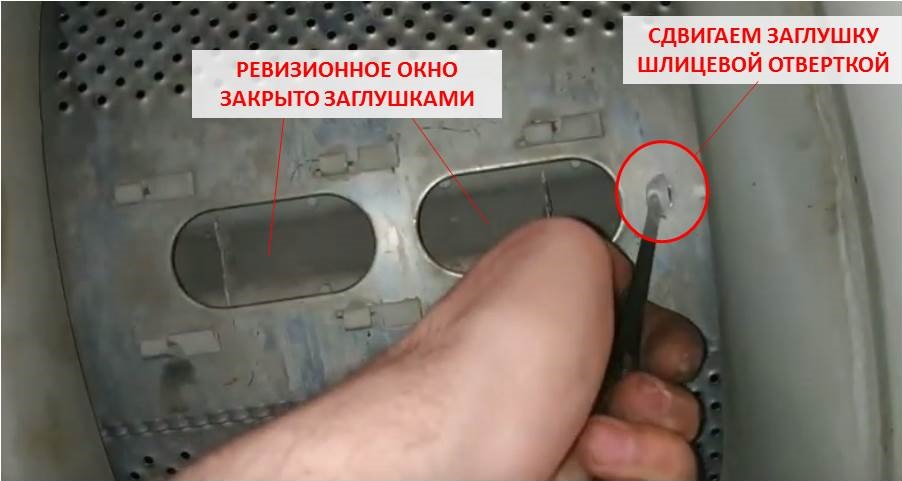
The inspection window will show you whether the tubular heater is coated with scale or has any traces of carbon deposits. If the heating element is in poor condition, it's best to remove it and inspect it. Figuring out which side of the vertical heater to remove to access the heater contacts is easy—also look through the inspection window. You'll see which side the wiring and mounting screw are located on.
How to replace a part?
Before replacing the heating element, be sure to unplug the washing machine and turn off the water supply. Next, you can move the washing machine to the center of the room for easy access. Next, remove the side panel of the housing by unscrewing a few screws located around its perimeter. The next step is as follows:
- find the location of the heating element - the “nest” is at the very bottom;
- Reset the wiring. Before doing this, it's best to take a photo of how the connectors are connected to avoid confusion during reassembly;
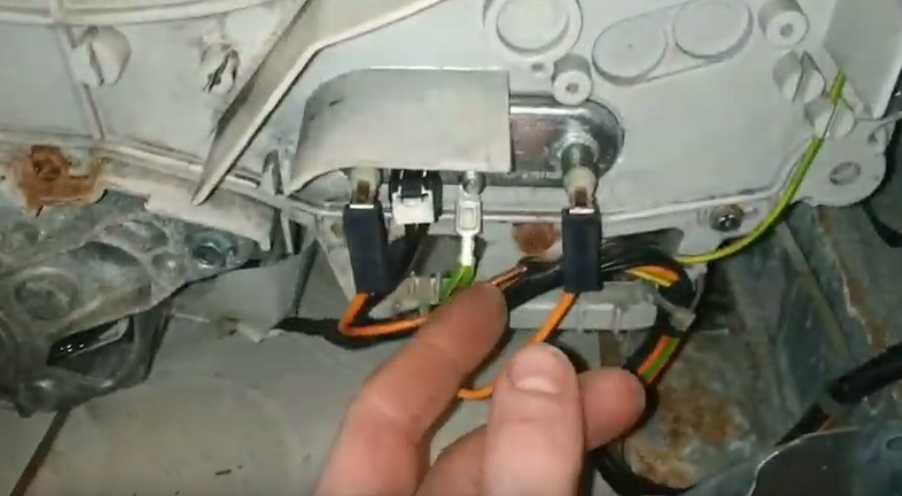
- disconnect the temperature sensor connector from the heater;
- unscrew the central nut securing the heating element;
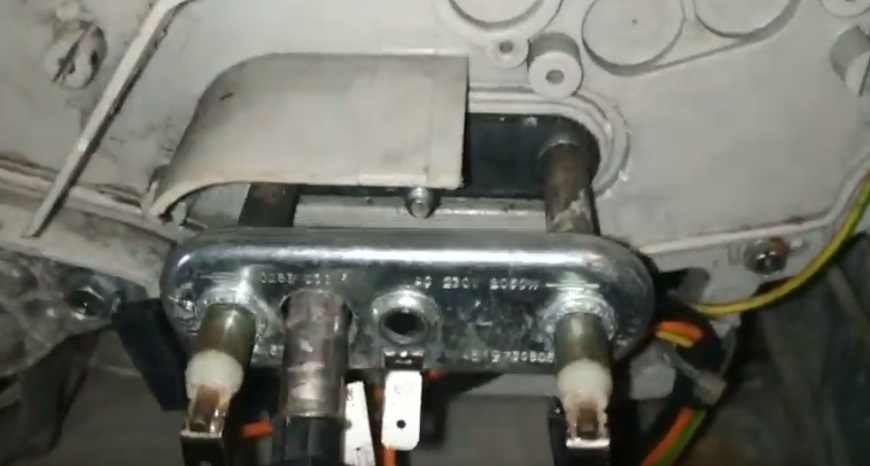
- remove the heating element from the "nest".
If the heating element does not budge, try to move it from its place with a screwdriver, prying the heater along the edges.
The heating element should pull out along with the sealing cuff. If the seal has dried out and won't fit, treat it with dishwashing liquid. This will help soften the gasket. After removing the heating element, it's best to immediately clean the seat of any dirt, debris, or scale deposits. This can be done through the inspection window. Once this cleaning is complete, it's time to install the new, working heating element.
If the heater had a thermostat, remove it from the old part and insert it into the hole in the new heating element. Then, insert the element into the socket and tighten the central nut with a wrench. Reconnect all the contacts, the ground wire, and the temperature sensor connector. This completes the replacement of the vertical washer's heater. All that's left to do is reassemble the housing and run a high-temperature test wash. This will ensure that heating is working.
Testing the old part
To test a heating element, you need to know its operating power. Then, by substituting the values into the formula R=U²/P, where "U" is the line voltage (220V), you can calculate the resistance that a properly functioning element should produce. Next, compare the resulting value with the value displayed on the multimeter.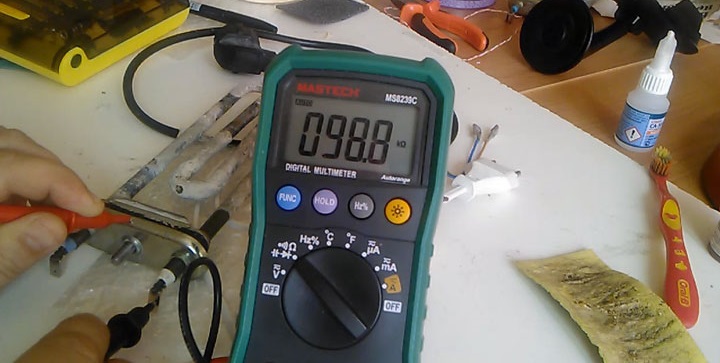
For example, a washing machine has a heating element with a power rating of 1800 W. Substituting these values into the formula yields a resistance of 26.89 ohms. A slight tolerance of plus or minus 3 ohms is acceptable.
Information about the heating element power is indicated on the heating element body.
Next, arm yourself with a multimeter and set it to resistance measurement mode. Place one tester probe on the right terminal of the heater, and the other on the left. Then, check the readings on the device's screen. If the multimeter displays a value between 23 and 30 ohms, the heating element is working properly. A reading of zero, one, or approaching infinity indicates that the heater is faulty. In this case, replacement is inevitable.
Interesting:

Readers' comments
Headings
Washing machine repair




For buyers




For users


Dishwasher




Add a comment