How to change the heating element on a Whirlpool washing machine?
If the door glass of your Whirlpool washing machine remains cold 20 minutes after starting the high-temperature cycle, there's a problem with the water heating system. There are several possible causes for this lack of heat, but the most common culprit is the tubular electric heater, or heating element. The element can fail partially or completely. Running the machine with a faulty heater is dangerous. Immediate diagnostics are necessary, followed by repair or replacement of the heating element.
What will be needed for repairs?
Anyone can test and replace the heating element – the procedure is simple and quick. You won’t have to buy any special tools or equipment, as a standard household “suitcase” will suffice. More precisely, wrenches, an 8 mm socket, screwdrivers, a multimeter and technical oil.
The most difficult part is finding a heater that's the right size and power. The type of heating element installed depends on the Whirlpool model, and buying a "foreign" unit will quickly lead to failure. To simplify your search, prepare for your trip to the store:
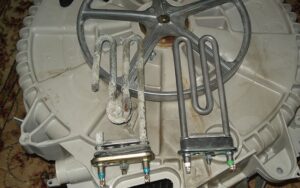
remember the markings on the heating element (the combination is engraved on the metal);
show the consultant the dismantled heater as an example;
dictate the serial number of the Whirlpool model.
The price of a new heating element for a Whirlpool is $8-12.
It's important to determine the correct heater wattage. Whirlpool washing machines typically come with a 1850-watt heater. However, some models require a higher wattage—check the serial number of the washing machine to determine this.
Finding and purchasing a new heating element isn't a problem. You can visit a service center or a specialized store in person, or order the part directly from the manufacturer online. The cost will depend on the supplier, power, and brand of the heater. Typically, the price ranges from $8 to $12.
Heating element in front or in the back?
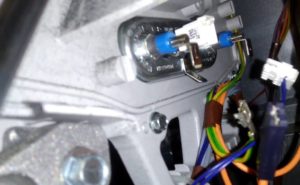
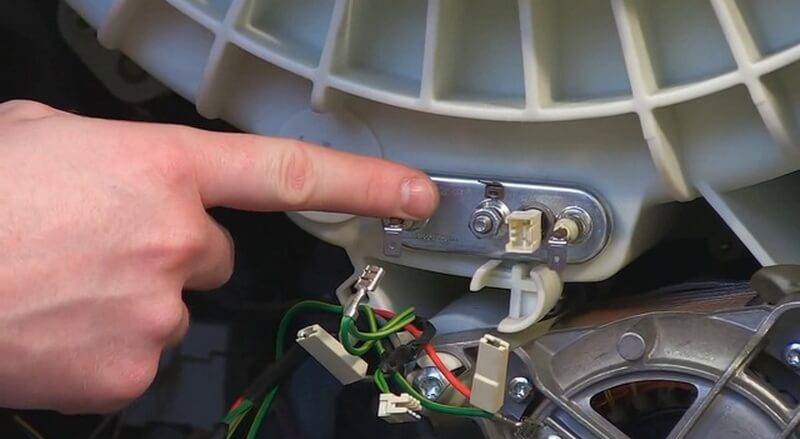
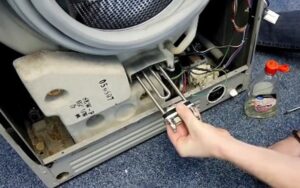
Whirlpool washing machines are easy to repair: most key components are fairly easy to access. The heating element is no exception. It's located under the drum, and to access it, you need to disconnect the power, turn the machine over, unscrew the rear panel, remove the drive belt, and then look at the bottom of the machine. Under the bottom of the drum, there's a rounded section with wires—this is the tubular heater.
It's impossible to confuse a heating element with another device, such as a motor or pump. The former is always located directly under the drum and has numerous wires running through it. While the location of the heating element is predictable, determining the cause of its failure is more difficult. A variety of faults can cause the malfunction, and a precise diagnosis requires a multimeter. Experience shows that the most common culprits are:
power surges in the electrical network;
heating element thermistor failure;
scale on the heater, causing the element to overheat;
long-term use of the machine (the heating element simply served its purpose);
user error;
manufacturing defect;
moisture getting on the contacts;
faulty control board.
Most often, heating element failure is caused by unstable voltage supply in the electrical network!
Almost all of the above problems can be solved by replacing the heating element. The only exception would be a faulty control board—the module may not read the transmitted data or send the heating command. The heating element's triac may have burned out, the wires may have come loose, or the circuits may be damaged. Self-inspection and repair are contraindicated in this case—consult a technical center for advice.
Description of repairs
Using a Whirlpool washing machine with a broken heating element is prohibited. Firstly, the self-diagnostic system will display an error message on the display at the start of each high-temperature cycle. Secondly, the detergent will dissolve less effectively in cold water, leaving a thick, soapy residue on the internal components. Thirdly, clothes will not be washed properly at low temperatures.
It's better not to put off repairs, but to get down to business straight away. Replacing a heater yourself is not difficult; the main thing is to act consistently and remember safety precautions. First, disconnect the washing machine from the power supply, water supply, and sewer lines, then move it away from the wall. The next step is to empty the tank. Remember that after pumping out the water, some of it settles to the bottom and risks getting on the contacts of the removed heating element. Drain the water using a drain filter. Follow these steps:
We pry up the false panel at the bottom of the Whirlpool with a screwdriver and detach it from the body;
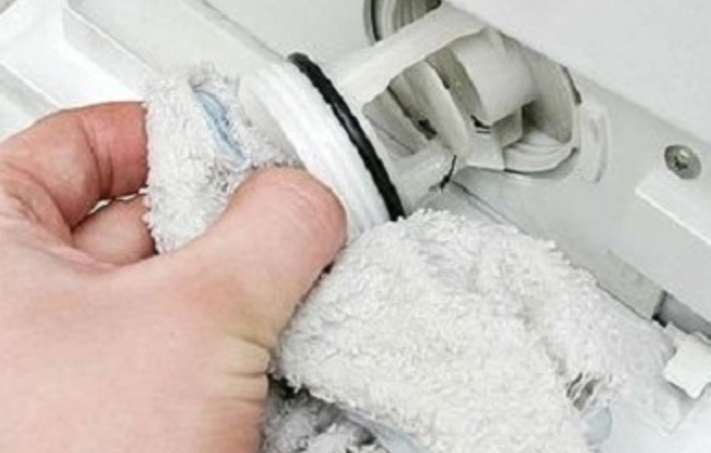
we find a round black plug behind the door – a trash filter;
we cover the space around the washing machine with rags;
place a container under the filter plug (for convenience, the machine can be tilted back slightly);
unscrew the nozzle clockwise;
We wait until all the water leaves the tank.
The empty machine can be disassembled. Turn the machine back-on or walk around it, then unscrew the rear panel and tighten the drive belt. There's no need to remove the heating element right away—let's run a diagnostic first. The instructions are as follows.
We take a photo of the wiring connected to the “chip” so as not to mix up the phases during reassembly.
We release the wiring connected to the heating element.
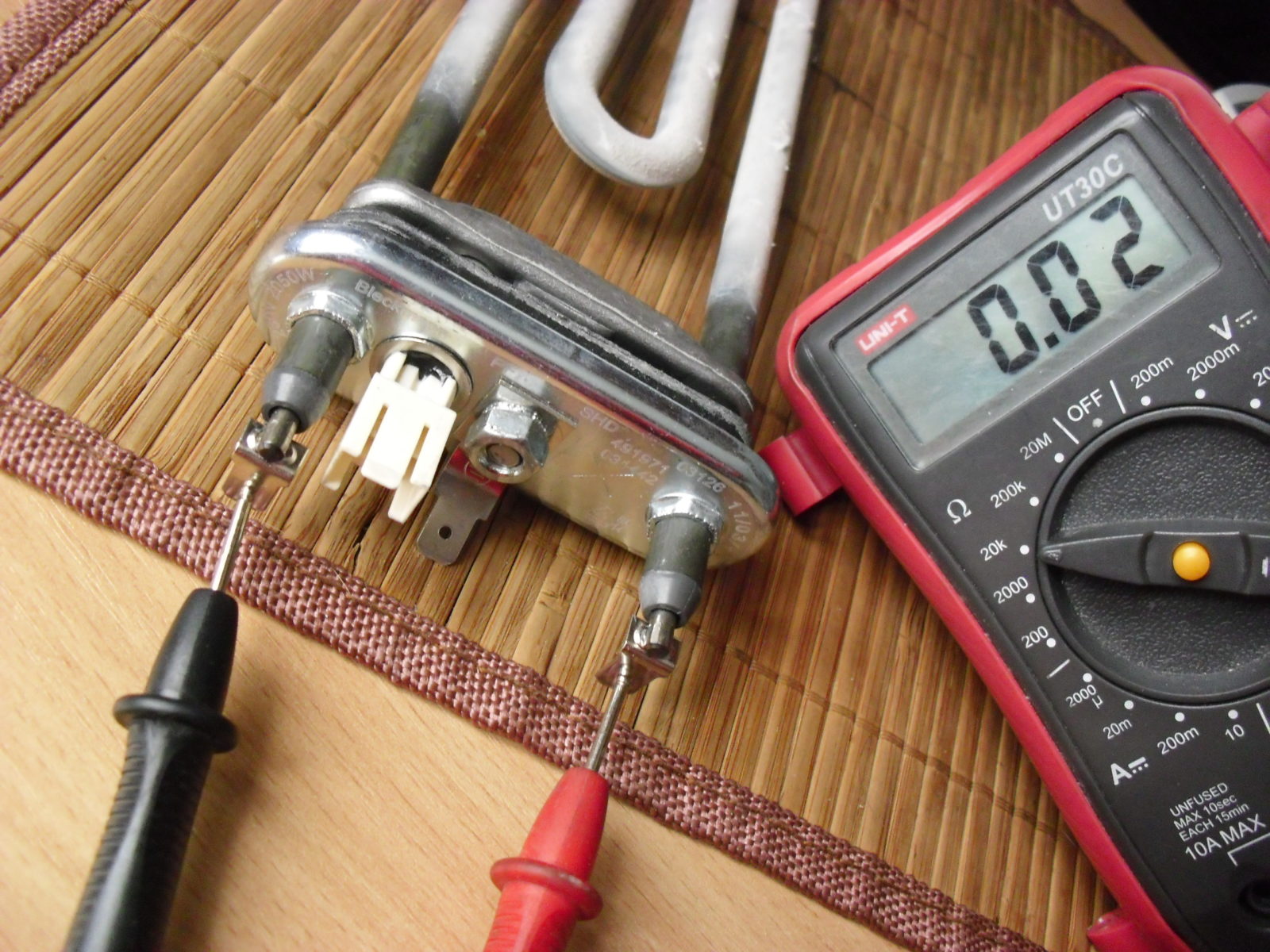
We turn on the multimeter in ohmmeter mode.
We touch the contacts with the probes.
We record the indicator (the norm is from 20 to 30 Ohm).
After replacing the heating element, a high-temperature test cycle is started.
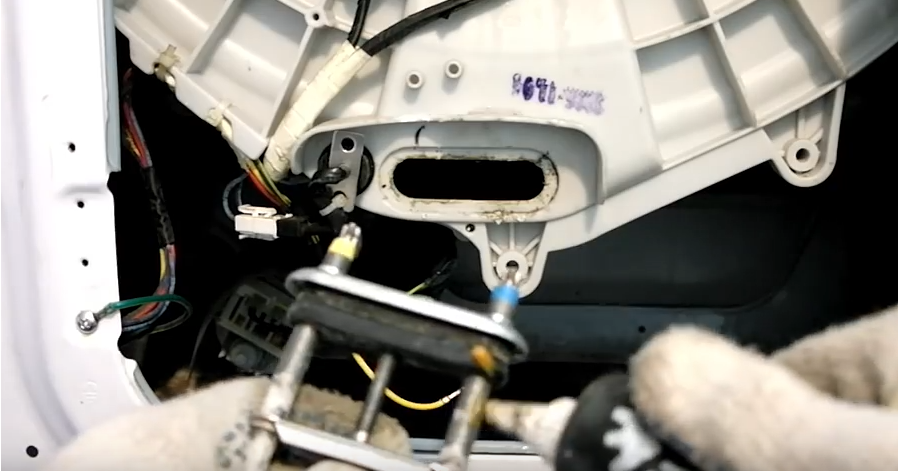
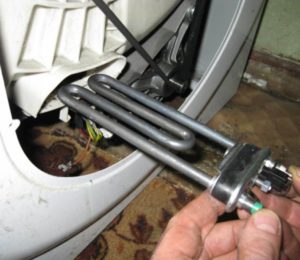
If the tester returns a different value, repair is not possible and the heater needs to be replaced. First, remove the heating element: loosen the retaining bolt and push it inward, then loosen the housing of the device and remove it. All actions must be done carefully, as the rubber seal must not be damaged. Otherwise, the required tightness of the container will be violated.
After disassembling, we clean the "nest," then take the new heating element, secure the nut, and apply lubricant to the seal. Then, we install the heater in its housing, secure it with fasteners, and connect the wiring. We replace the drive belt and rear panel, and connect the Whirlpool to the power supply. After the repair, run a test cycle—a wash without laundry and heat it to at least 50 degrees Celsius. Wait 20 minutes, then touch the door glass with your hand. If it feels hot, the replacement was successful.

 If the door glass of your Whirlpool washing machine remains cold 20 minutes after starting the high-temperature cycle, there's a problem with the water heating system. There are several possible causes for this lack of heat, but the most common culprit is the tubular electric heater, or heating element. The element can fail partially or completely. Running the machine with a faulty heater is dangerous. Immediate diagnostics are necessary, followed by repair or replacement of the heating element.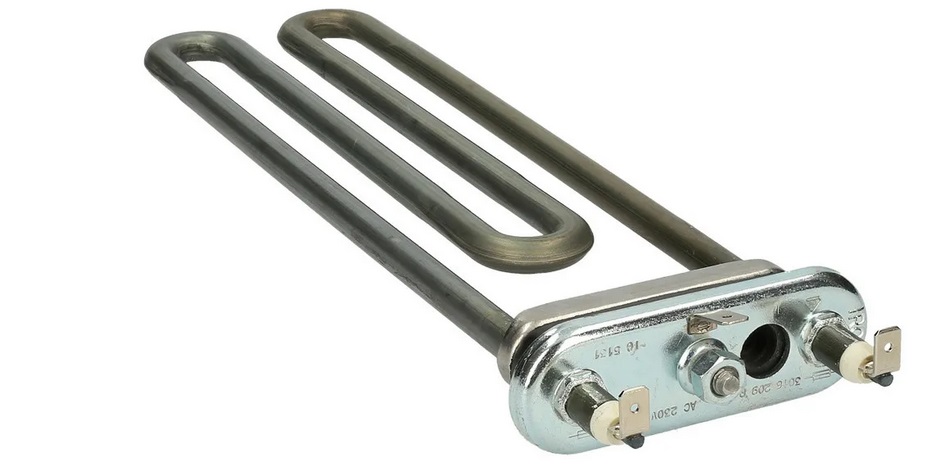














Add a comment