
Replacing the heating element in a Bosch washing machine
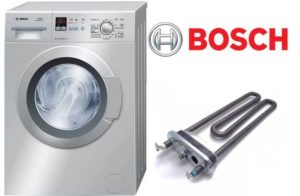 Even reliable equipment like Bosch can fail. A typical failure for this brand's machines is the heating element burning out, usually due to operating conditions.
You can replace a heating element yourself; we'll show you how. Then you can decide whether to call a professional.
We prepare everything necessary
Replacing the heating element in a Bosch washing machine is considered moderately difficult. It requires minimal tools, but plenty of patience. So, here's what you need:
- flat and Phillips screwdriver;
- bit wrench;
- 10mm Torx bit;
- resistance tester.
As for the heating element, you buy only the original spare part. It's best to look at the markings on the heating element itself to determine which heating element you need when you dismantle it. Or tell the salesperson your Bosch washing machine model, and they'll suggest a suitable one. The original part is slightly more expensive than the generic one, but you can get it for around $15.
We provide access to the heater
The heating element in the German brand Bosch is located behind the front panel, which often discourages users from attempting repairs themselves. Accessing the heating element requires time-consuming disassembly. Prepare the appliance first by disconnecting it from the power supply and moving it to a clear area of the room. Now proceed to disassembling the appliance:
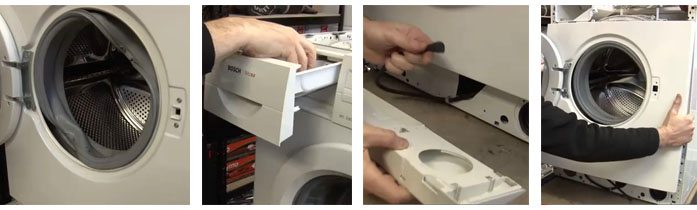
- Using a Phillips screwdriver, unscrew the screws holding the case cover in place. They're located on the back. Then remove the cover.
- Remove the powder receptacle from its seat.
To remove the detergent drawer in a Bosch washing machine, you need to press the latch located above the conditioner compartment and then pull the detergent drawer towards you.
- Find 2 screws behind the powder receptacle and unscrew them.
- Carefully remove the control panel, avoiding pulling it forward to avoid damaging the wires. Place the panel on top of the machine.
- Now, using a flat-head screwdriver, remove the bottom panel of the washing machine, behind which is the drain filter and two screws holding the front panel, these are the ones that need to be unscrewed.
- Next, we remove the hatch cuff inside the drum by loosening and removing the metal clamp.
- Then we remove the blocking lock by unscrewing two screws and disconnecting the power wires from the lock.
- Now nothing is holding the front part of the case, so we carefully remove it.
We are changing the heating element
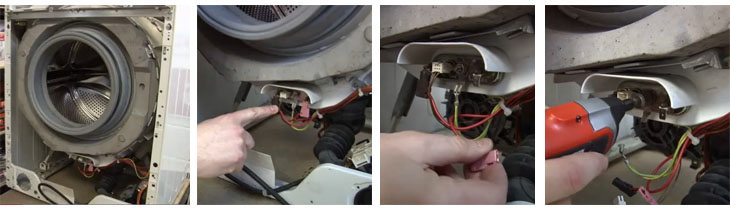
Once the panel is removed, we find the heating element at the bottom, under the tank. For accuracy, you can check its functionality using a tester by placing the probes on the contacts of the heating element. If the resistance is around 25-35 Ohms, then the heating element is working properly; otherwise, replace the part.
To remove the heating element from its seat, you need to:
- First remove the terminals with wires,
- then remove the thermistor;
- then, using a Torx head, unscrew the screw located at the base of the heating element;
- press the screw inward, you can tap it lightly;
- Use a flat-head screwdriver to pry the base of the heating element and pull the part towards you.
If you can't remove the heating element so easily, spray its base with WD-40 and wait a bit, then try again. If you're 100% sure the heating element is burned out, pull it out without fear of breaking it.
So, the heating element has been removed. Now you need to clean the mounting area for the new heating element. Then install the thermistor removed from the old element onto the new part and lubricate the base of the heating element with Fairy grease to ensure a better fit. When installing the new element, be careful that the heating element fits correctly, otherwise leaks will occur. After installing the heating element into the socket, tighten the nut on the retaining bolt, but do not overtighten it so as not to squeeze out the rubber seal. Finally, connect all the wires according to the polarity and proceed to assembling the washing machine body in reverse order.
A few words about the symptoms of such a breakdown
A faulty heating element in a Bosch washing machine can manifest itself in a variety of ways. The primary symptom is, of course, a lack of water heating, which you can tell by placing your hand on the drum door. Additionally, in most models, the display will show error code F19, while others may be indicated. errors in Bosch washing machines Read the article on our website.
Another symptom of a faulty heating element that requires replacement may be a blown fuse. A faulty heating element can also cause the RCD circuit breaker installed in your electrical panel to trip. Moreover, it is not at all necessary that the heating element has burned out; it is possible that the contact has simply come loose.
To prevent rapid heater failure, descaling your washing machine on a regular basis will help. You can use both special products and citric acidBut a Calgon water softener is unlikely to help with this. Keep an eye on your equipment. And for those who prefer videos to reading, we offer a video below.
Interesting:



2 reader comments
Add a comment
Headings
Washing machine repair




For buyers




For users


Dishwasher




Good job, boy.
Thank you very much, everything is clear and understandable.