
How to replace the door lock on a Bosch washing machine?
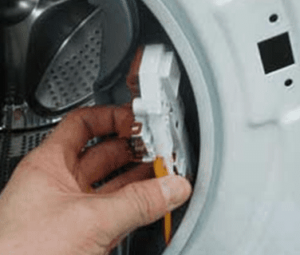 Anyone can replace the door lock on a Bosch washing machine. All you need is a little background knowledge, a hex screwdriver, a few safety precautions, and following the instructions. Now let's learn the algorithm and how to diagnose the door lock.
Repair procedure algorithm
Replacing the locking device on a Bosch washing machine is easy if you're prepared and anticipate potential difficulties. First, grab a flat-head screwdriver and an Allen key, which will be useful for disengaging the locking device. Then, disconnect the power to the washing machine, disconnect it from the sewer and water supply, turn the machine so the back panel is facing you, and begin working:
- remove the two bolts from the back that secure the washing machine cover;
- we push the cover from front to back, trying to lift it up to detach the panel from the plastic clips;
- tilt the body back so that the drum “moves away” from the front wall;
- we put our hand into the freed space between the body and the drum;
- with the other hand we hold the blocker from below;
- Using a flashlight and a hex key, we release the UBL from the retaining bolts and wiring;
- remove the locking device;
- We install a new blocker.
On Bosch washing machines, it is recommended to access the locking mechanism from the top.
Removing the UBL through the cover is quicker, but it's tricky—you have to practically "blindly" remove it, by feel. If the "dark" method isn't an option, you can try accessing the locking mechanism through the hatch opening. Remove the outer clamp from the cuff, tuck the released end of the rubber band into the drum, and then remove the lock and locking mechanism.
The difficulty with the second method is that you have to interact with the cuff. The sealing rubber is responsible for the tightness of the tank and, if displaced or improperly installed, will lead to leaks. But with careful handling and adherence to safety precautions, the risks are minimal.
Checking the locking device
It's important to understand that replacing the door lock is a last resort. Before purchasing a new lock, it's recommended to test the old one for functionality. It's easy to diagnose it yourself:
- we study the electrical circuit of the UBL (it is necessarily provided in the factory instructions);
- turn on the “Resistance” mode on the multimeter;
- we apply the probes to the contacts of the blocker;
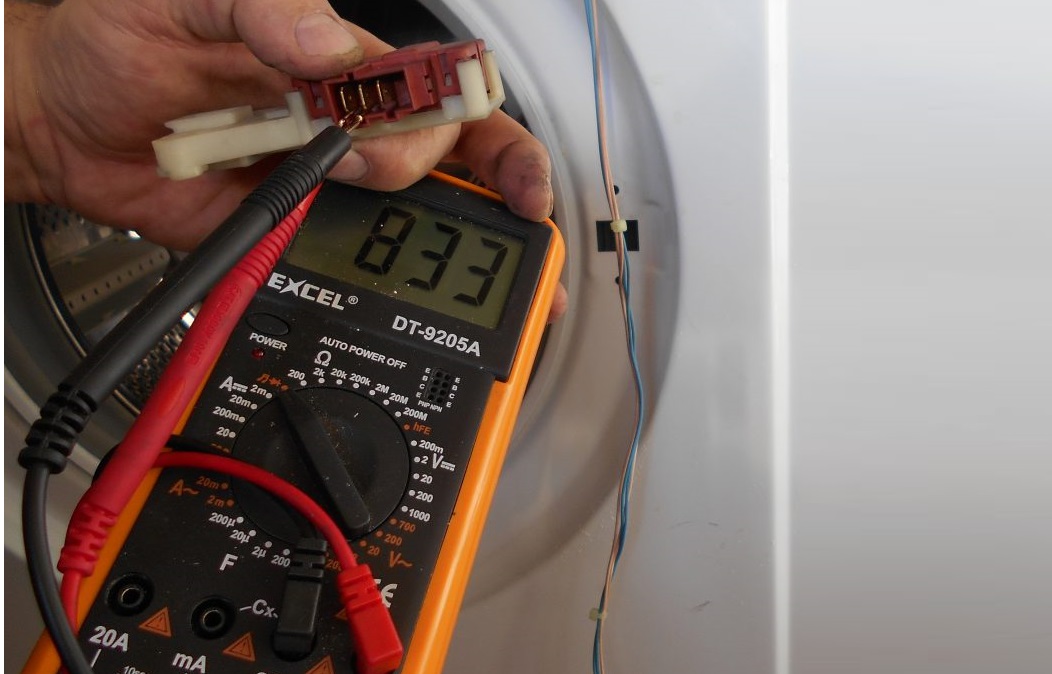
- evaluate the result (a working device will show a three-digit number);
- We test the UBL for the common contact (if “0” or “1” appears, then the device is working properly).
Modern door locks are not repairable. It's much easier and cheaper to find an original replacement and replace the device. When choosing a door lock, use the Bosch serial number as a guide. This part is inexpensive, but you'll have to wait several days for it to arrive, as the components are manufactured exclusively in Germany.
Causes of the problem
The door locking system needs to be replaced when problems with closing occur. Specifically, the standard locking mechanism engages, but there's no clicking sound from the electronic locking system. In this situation, the wash cycle won't start. The control module doesn't receive information about the drum's tightness, waits a certain amount of time, and then signals a malfunction. The display shows the code "E03," and if the washing machine doesn't have a display, a corresponding indicator will appear.
Problems with the UBL are indicated by the error code “E03”.
The UBL is responsible for the electronic locking of the hatch, which provides additional protection of the door from accidental opening during the cycle. Thanks to this measure, the user is protected from centrifugal force and possible flooding. But there's a downside: if the device is faulty, the wash won't start. There are several reasons why the safety interlock might fail.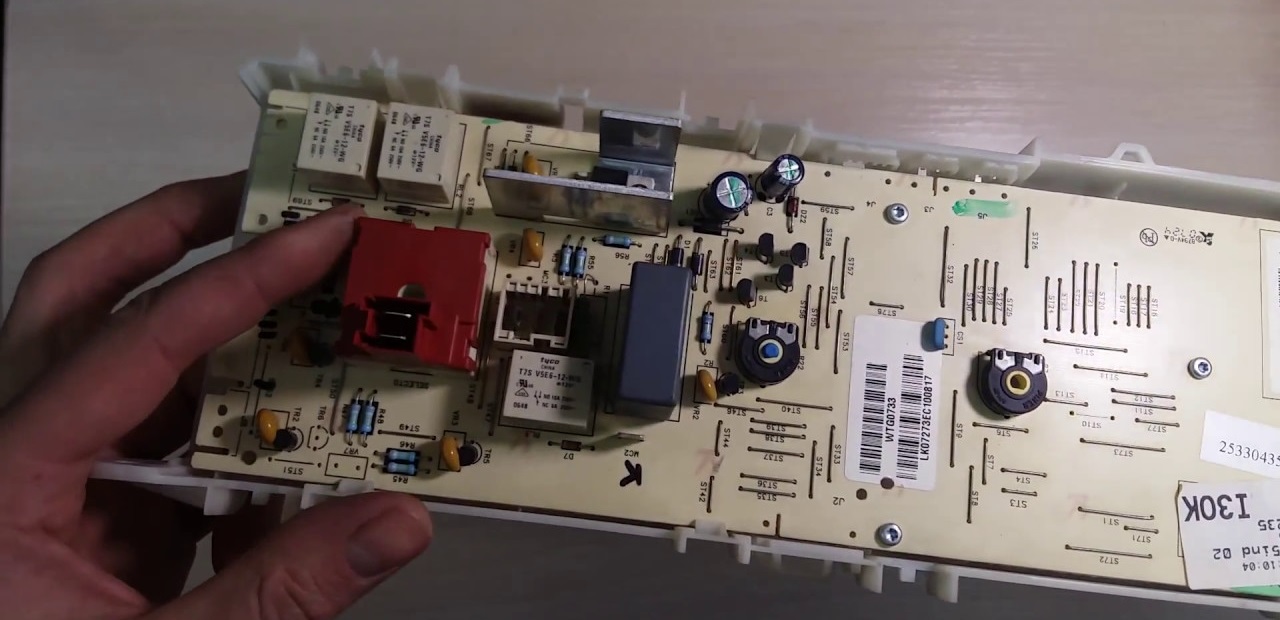
- Natural wear and tear. Over time, the bimetallic plates of the blocker gradually wear down, which inevitably leads to a loss of electrical conductivity. Eventually, the blocker ceases to function and fails permanently. Repair is not possible; replacement is recommended.
- Clogged. The contacts may be clogged, affecting electrical conductivity. The device needs to be disassembled and cleaned.
- Loss of communication with the control board. The unit won't recognize the signal from the door lock if the tracks are burned out, the module components are damaged, or the firmware is corrupted.
It is strongly recommended not to repair the electronic unit outside of a service center!
Anyone can diagnose and replace a blocker themselves. However, if the problem lies with the control board, you should contact a service center. Keep in mind that the electronic module is a fragile and expensive part, requiring special care and specialized equipment. At home, it's easy to damage the module, even to the point of fatality.
Interesting:
Readers' comments
Headings
Washing machine repair




For buyers




For users


Dishwasher




Add a comment