
Replacing the seal on a Zanussi washing machine
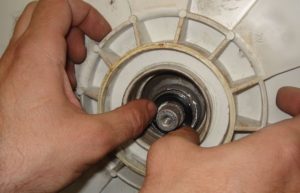 Grease leaks on the back wall, rattling noises, and excessive vibration are all signs that the seal on your Zanussi washing machine needs to be replaced. Often, not only the rubber gasket but also the bearings need to be replaced. In any case, the repair follows the same plan: almost complete disassembly of the machine, removal of the drum, splitting it in half, and knocking out the shaft. We'll explain in detail what this all looks like in the step-by-step instructions and what to pay special attention to.
We will collect everything necessary for repairs
Removing and replacing an oil seal is a labor-intensive and time-consuming task. To simplify the process, it's important to carefully prepare for the procedure. First of all, you need to disconnect the washing machine from the utilities, move it away from the wall, placing it in the center of the room, or move it to the workshop. Secondly, collect the required set of tools in advance.
When replacing oil seals, you will definitely need:
- screwdrivers (slotted and Phillips);
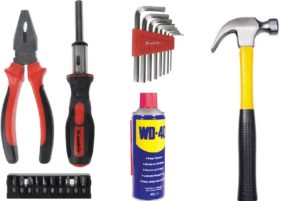
- pliers or pliers;
- hammer;
- set of open-end wrenches;
- set of socket heads;
- WD-40 lubricant-cleaner;
- sealant (must have moisture-resistant properties);
- grease (for treating bearing units, shafts and seals);
- car puller, drift, metal pin or chisel (for knocking out bearings).
The third step is to secure replacement parts. If you have time, it's best to first disassemble the washing machine, remove the damaged components, bring them to the store, and select an equivalent using a sample. Alternatively, you can determine the size of the parts based on the Zanussi model and serial number. Be sure to consult the manufacturer's instructions, which detail the parameters and types of bearings and seals used.
When repairing a Zanussi washing machine, use only original components!
Replacement components should only be purchased from trusted sellers. Ideally, they should be ordered directly from the manufacturer. Purchasing third-party seals from other brands, even if they are the correct size and type, is not recommended. While these "outside" parts can be used, they will quickly become unusable. Once prepared, cover the area around the washing machine with plastic or rags. Now you can begin the repair.
What is the difficulty in removing the drum?
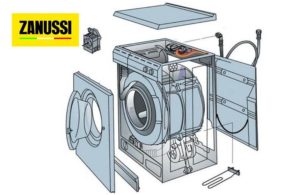
To properly install the seal, you need to remove the tank and drum from the machine. Naturally, this isn't easy: you'll need to almost completely disassemble the machine. You'll need to remove the top, rear, and front panels of the machine, as well as the wiring, heating element, motor, pressure switch, and many other system components. The key is to do everything carefully and consistently. Here are the instructions:
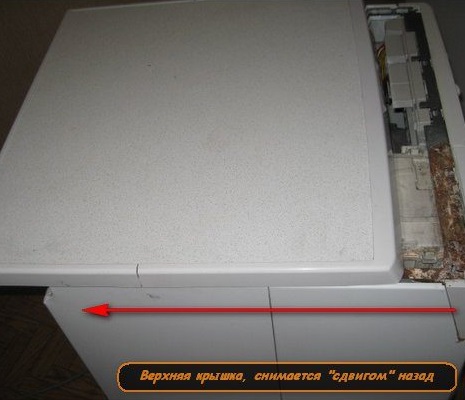
- unscrew the bolts located at the rear end of the top cover of the housing;
- remove the "top";
- pull the handle of the powder receptacle and, holding the special latch, pull it out of the housing;
- release the dashboard from the holding screws and detach it from the washing machine;
- detach the back panel from the case;
- remove the drive belt from the pulley;
- use a screwdriver to pry up the technical hatch door (at the front bottom) and move it to the side;
- open the hatch;
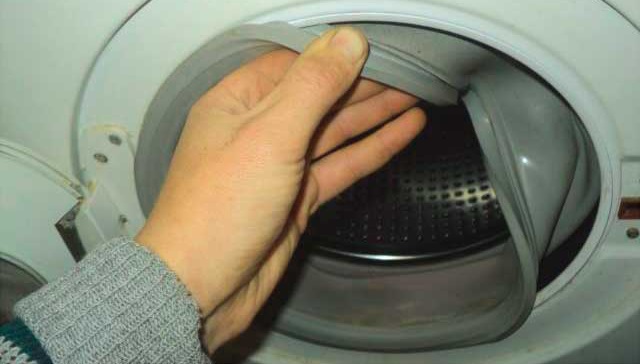
- loosen the outer clamp using a screwdriver and pliers;
- tuck the cuff inside the drum;
- disconnect the wiring from the UBL;
- Unscrew the screws holding the front panel and remove the end.
At this point, the Zanussi is almost completely disassembled—access to the tank and drum is ensured. All that remains is to remove the wiring and several components from the tanks. Specifically, the following must be disconnected:
- sensor from the fill valve;
- drain hose;
- wires running from the tank to the engine, heating element and pump;
- pressure switch tube;
- counterweights;
- shock absorber struts.
The drum is dismantled together with the tank!
Now the drum will be held in place by the top springs only. To remove the drum, you need to push them down and lift the drum. It is best to work with four hands so as not to strain too much.However, you can handle this alone, as the tank is lightweight. The dismantled tank should be placed on a flat, dry surface such as the floor or a table. Next, begin separating it into two halves.
Let's divide the tank into halves
Zanussi washing machines are equipped with detachable tanks, which greatly simplifies the process of separating them. There's no need to cut the tank along the seam or perform other risky maneuvers. It's simple: simply unscrew all the bolts around the tank and release the latches.
If the fasteners are firmly stuck in their seats, treat them with WD-40 cleaner, wait 15-20 minutes, and try again. The main screw is removed last, and the halves are carefully separated. The part with the drum and crosspiece is needed for further repairs.
Stuck parts and fasteners are treated with WD-40 lubricant before dismantling.
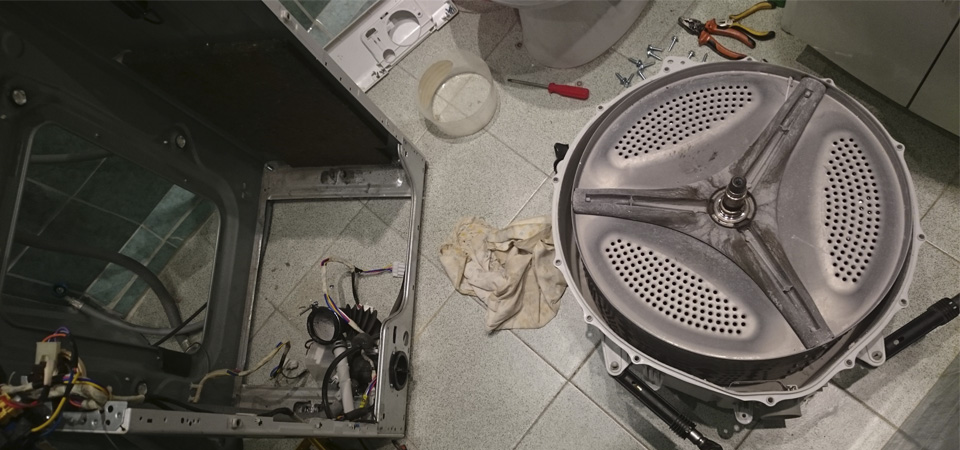
The drum pulley is removed and the bolt is replaced. A puller, drift, chisel, or any metal pin is then placed on the screw. The chosen tool is moved in a circle and tapped with a hammer. This knocks out the shaft for subsequent removal of the seal and bearings. Care must be taken to avoid damaging the assembly.
We put in a new rubber band
Once the tank is split in half, you can begin removing the seals. Carefully inspect the rear of the unit; a round rubber gasket will be visible in the center, under the shaft. Simply pry it out with a flat-head screwdriver and remove it from its seat.
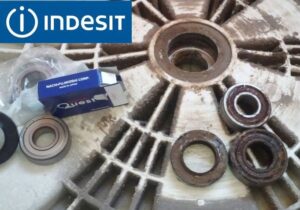
It is better to immediately assess the condition of the bearing unit. If the seal has been damaged for a long time, then there is a high probability that moisture that has penetrated through it has washed the grease out of the bearings. Without sliding, the bearings quickly become unusable—they break and wear out. Therefore, they and the gaskets are replaced at the same time.
The bearing is pulled out of the “socket” as follows:
- a punch or puller is placed on the collar and punched with a hammer, moving in a circle;
- the blows continue until the upper bearing moves;
- Having removed the upper bearing, we take out the lower one in the same way.
After removing the seal and bearings, it's a good idea to thoroughly clean the area. Spray the joint liberally with WD-40, then remove any remaining grease, dirt, rust, and scale. Finally, wipe the area with a dry cloth or let it air dry.
Next we proceed to installing the bearings:
- we lubricate the seat, shaft, seal and bearings with a special grease;
- First we insert the lower bearing (smaller), and then the larger one on top;
- we place the oil seal on the bearing;
- apply a layer of sealant on top.
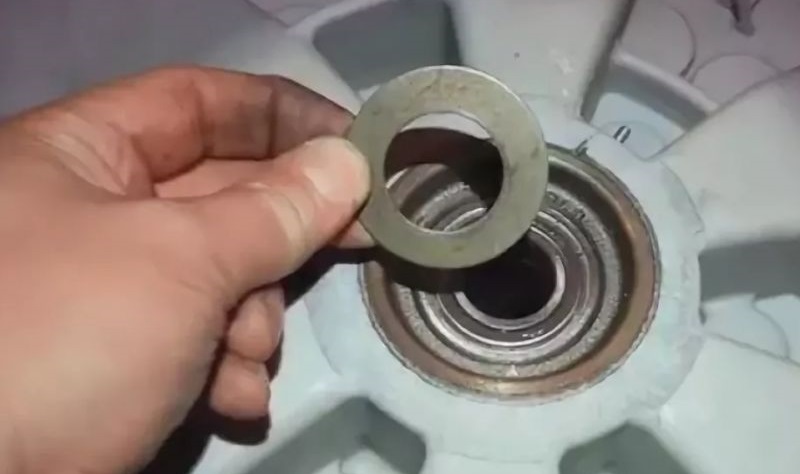
After that, we replace the shaft with the crosspiece and begin joining the halves. We attach the halves together, apply silicone sealant to the seam, then screw in all the removed screws and snap the clamps into place. It's a good idea to immediately check the tank for leaks: plug the existing holes with rags, fill it with water, and inspect the joint. If there are no drips or leaks, everything has been done properly.
New bearings are lubricated with a special grease.
After checking the tank, you can reassemble the Zanussi. Follow the instructions given earlier, but in reverse order. First, hang the drum on the springs, then replace the shock absorbers, hoses, wiring, and pressure switch. Then install the walls, straighten the seal, screw in the dashboard, and insert the powder receptacle.
It is recommended to test the assembled Zanussi washing machine immediately. The first wash should be done empty - without laundry and with detergent. This will flush out excess grease and sealant from the bearing assembly and tank. If any leaks occur, contact a service center.
Interesting:

Readers' comments
Headings
Washing machine repair




For buyers




For users


Dishwasher




Add a comment