What can I use instead of grease for a washing machine seal?
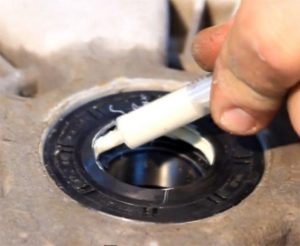
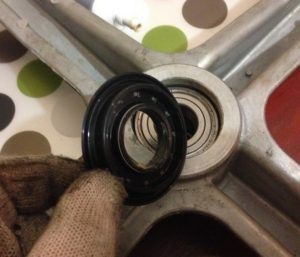
When replacing bearings and the drum seal, be sure to treat the components with a special lubricant. This is necessary to prevent water from entering the unit. Neglecting this step will inevitably lead to rapid wear of the parts. You can't replace the grease for a washing machine seal with improvised means, such as grease. It's best not to skimp on lubricant, as this can lead to undesirable consequences. Let's look at the best lubricants for servicing automatic machines.
Professional lubricants
Today, in specialized stores you can find a variety of lubricants that differ in characteristics, cost, and purpose. To repair and maintain washing machines, you must purchase professional products approved by the equipment manufacturers. What lubricants are we talking about?
Indesit recommends the professional lubricant Anderol. This lubricant meets all quality standards and is available in various forms: 100 ml cans and single-use syringes. Indesit also produces Ambligon, a lubricant for oil seals, which is very similar in its properties.
Silicone lubricants are ideal for modern washing machines. They are waterproof, withstand sudden temperature changes, and are not washed off by detergents. Silicone formulations vary widely, so carefully read the product packaging to select the right one for your needs.
Titanium professional greases have proven effective and are also approved for servicing automatic machines. They are even suitable for treating highly loaded seals. These compounds are resistant to temperature fluctuations, and their properties remain consistent throughout their service life.
Good substitutes
If you can't find the original lubricant recommended by your washing machine manufacturer, you can find a suitable replacement. Fortunately, the market is now abundant with professional washing machine maintenance products.
The lubricant must be resistant to high temperatures, of high quality, not harm the equipment, and maintain its properties throughout the entire period of operation.
Please pay attention to the following products:
Grasso is a silicone-based lubricant with excellent water-repellent properties. It is fully suitable for treating seals and bearings in washing machines of all brands.
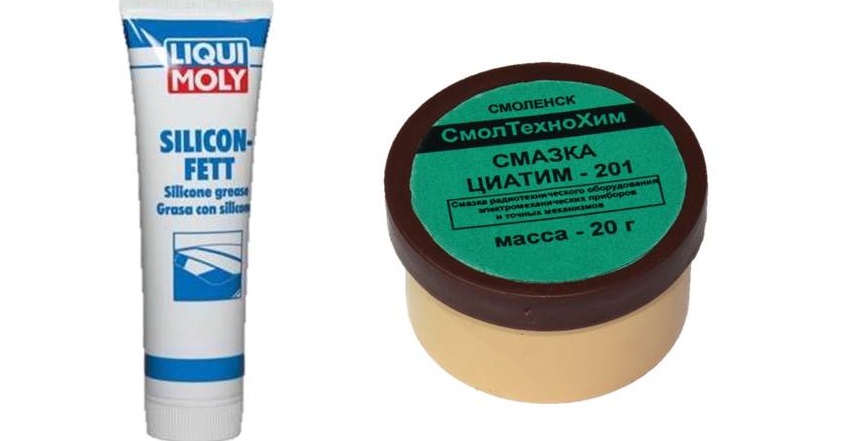
A German development by Liqui Moly, trusted by washing machine repair specialists. This lubricant can function at temperatures ranging from -40°C to +200°C. It's virtually water-resistant.
Litol-24, a universal grease from the Russian manufacturer, is characterized by increased water resistance and withstands chemical and mechanical influences. It retains its properties throughout its service life and withstands temperature fluctuations well.
Litin-2 is manufactured by SHELL, a testament to its high quality. This highly specialized formulation was originally developed for use in harsh conditions. It is considered a worthy alternative to products designed for sealing washing machine bearings and seals.
"Tsiatim-201" is an antifriction lithium grease developed in the USSR. It is approved for use in automatic washing machines. Its composition is still used in the aviation industry, so the product's quality is beyond doubt. It can withstand high thermal stress and maintains its properties throughout its stated shelf life.
If washing machine parts need to be treated, the lubricants described above can be used. The quality of these compounds is undeniable. They will reliably protect bearings from the damaging effects of moisture and premature wear.
Lubricants to Avoid
Today, there are DIYers who believe they can make their own lubricant. Moreover, they believe their homemade product is in no way inferior in performance to professional products. In reality, it's not that simple. Manufacturers test their products repeatedly, proving their reliability and protective properties, and testing numerous samples to ultimately offer customers a worthy product.
Also, newbies in the repair business try to treat washing machine parts with automotive lubricant, but in this case, it is even worse than homemade one. Any compositions based on petroleum products are absolutely unsuitable for servicing washing equipment. This is explained by several factors:
The average lifespan of such lubricants is 1-2 years. After that, you'll have to disassemble the machine and lubricate the seal again. Why complicate your life when you can immediately treat the bearings with a reliable and long-lasting product?
Automotive lubricants are not resistant to detergents.
Automotive grease will quickly wash out, leaving bearings and seals unprotected.
There are a few more products that experts do not recommend using for treating washing machine components.
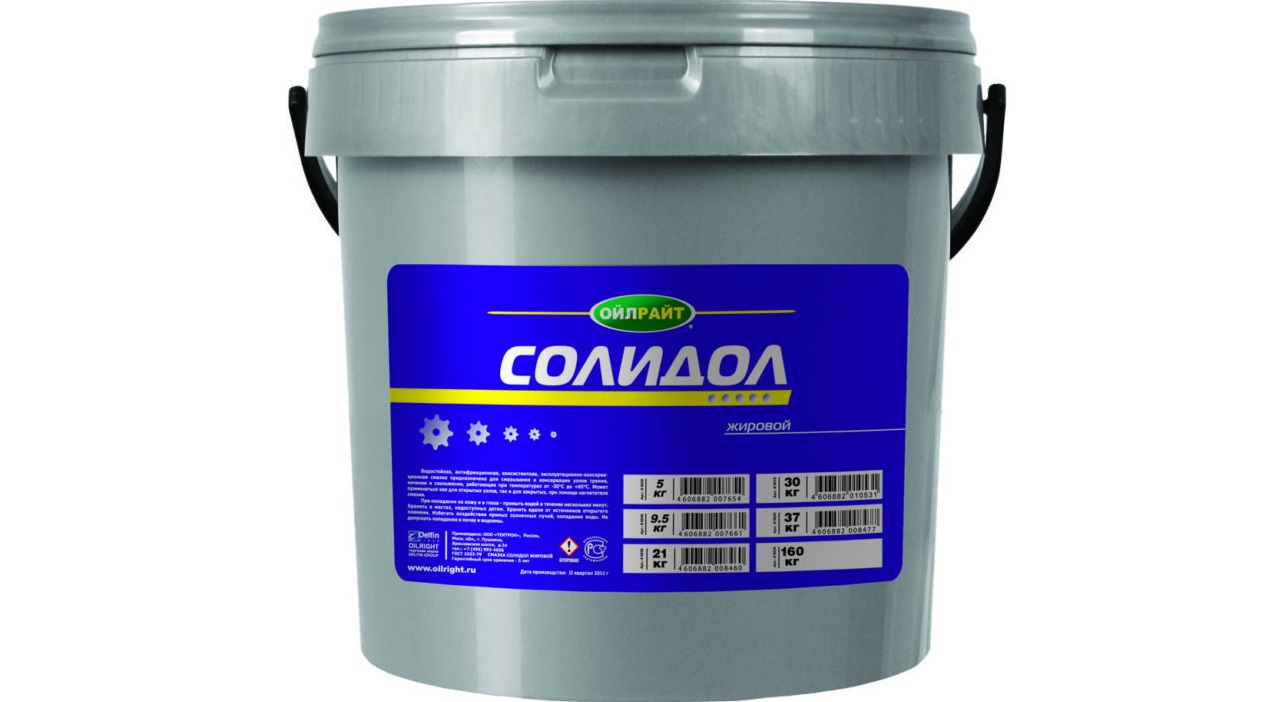
Solid oil and lithol. These are prohibited for use when servicing washing machines. Some "handymen" still use these products, and then are puzzled why the bearings fail again after a short period of time. These compounds only perform their functions under certain loads, typical for cars. Automatic machines have completely different operating conditions, and solid oil and lithol are simply ineffective, failing to protect the components.
Tsiatim-221. Although this is a professional lubricant, it has low hygroscopicity, meaning it loses its properties after prolonged contact with water. Exposure of the seal to liquid is inevitable, so this compound is not recommended for washing machine components.
So, don't skimp on using solid oil, lithol, or homemade lubricant. It's better to pay upfront for a high-quality product and forget about problems with your automatic washing machine's seals and bearings for a long time.
Lubricant characteristics
When choosing a seal treatment, carefully read the information about it. Buying a low-quality product will quickly lead to you having to repair your equipment again. Lubricant for washing machine components should be:
Moisture-resistant. This indicates how quickly the substance is washed out by water. The slower this happens, the longer the bearings are protected from moisture;
resistant to temperature changes;
Safe for the seal. It should not contain any aggressive components that could corrode the rubber;
Viscous. This will prevent the product from spreading throughout its entire service life.
A high-quality lubricant that meets all quality standards cannot be cheap.
It's best to purchase lubricants from specialized stores or washing machine service centers. For a one-time repair, you don't need to buy a whole can; some manufacturers offer lubricant in small syringes. This volume is just right for home use, and the price of the small package is much more attractive.
Apply lubricant correctly
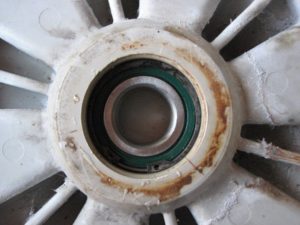
Once the washing machine tub is disassembled and the bearings removed, you need to clean off any dirt and rust from the hub. There should be no debris left on it. Only after thoroughly cleaning the seat can it be treated with lubricant.
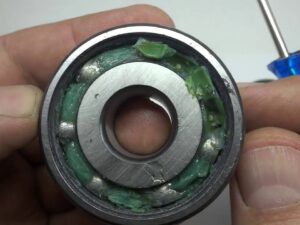
Next, the bearings are lubricated. To do this, remove the protective cover from the part and "fill" the space with the compound. If the bearing is non-separable, artificially apply pressure and force the lubricant into the gaps. The treated metal rings are then "hammered" into place.
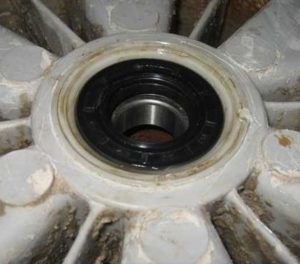
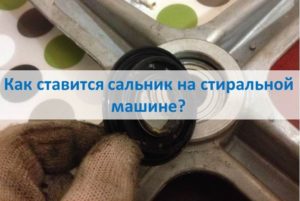
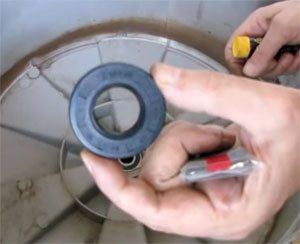
Lubricating the seal is even simpler. Apply a thick, dense layer of the compound to the inside of the rubber seal (the part that contacts the shaft). After that, install the seal over the bearing. All that's left to do is reassemble the machine and run a test wash to check the operation.
You decide. First, you write that you can use CIATIM 201 lubricant. Then you write that CIATIM 221 lubricant CANNOT be used. The difference between 201 OT/221 is in the temperature of 201 Up to +90 degrees 221 to +200 degrees That's all the difference.
How do you do it? Can/can't Litol be used? How does that work? Solidol and lithol cannot be used together because they mutually extinguish each other (like soda and citric acid). Lithol is alkaline, while solidol is acidic. The reaction produces a fine sand deposit, which can cause bearing problems.

 When replacing bearings and the drum seal, be sure to treat the components with a special lubricant. This is necessary to prevent water from entering the unit. Neglecting this step will inevitably lead to rapid wear of the parts. You can't replace the grease for a washing machine seal with improvised means, such as grease. It's best not to skimp on lubricant, as this can lead to undesirable consequences. Let's look at the best lubricants for servicing automatic machines.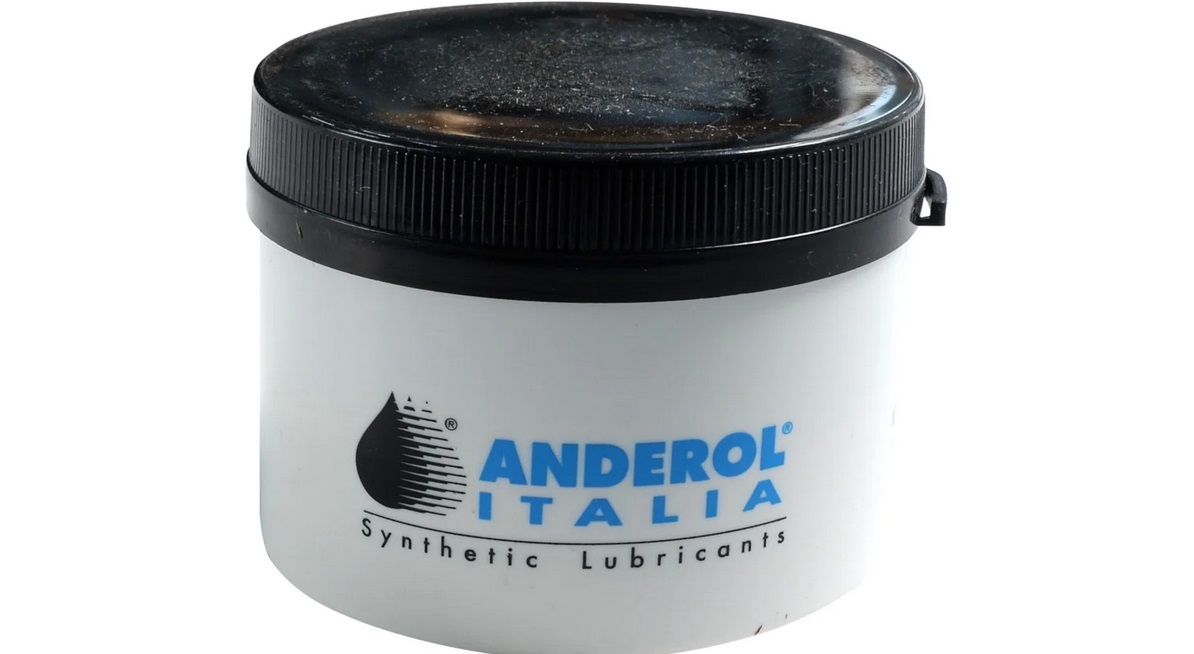














Hello. Is this the MOBIL Mobilgrease XHP 222 grease?
It is prohibited to use Tsiatim 201 in parts exposed to water or where there is high humidity, above 80%. — How is that possible?
Is it possible to lubricate the oil seal with BOSCH gearbox grease?
You decide.
First, you write that you can use CIATIM 201 lubricant.
Then you write that CIATIM 221 lubricant CANNOT be used.
The difference between 201 OT/221 is in the temperature of 201 Up to +90 degrees
221 to +200 degrees
That's all the difference.
How do you do it? Can/can't Litol be used? How does that work?
Solidol and lithol cannot be used together because they mutually extinguish each other (like soda and citric acid). Lithol is alkaline, while solidol is acidic. The reaction produces a fine sand deposit, which can cause bearing problems.