
What can I use instead of washing powder for my automatic washing machine?
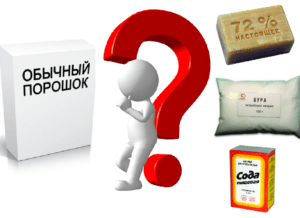 Is there a substitute for expensive washing powder for an automatic washing machine? This question concerns many housewives on a budget, as the current economic climate has seen washing powder become increasingly expensive every year. A seemingly obvious solution is to replace store-bought detergent with homemade detergent. However, it's unclear how this homemade detergent will wash, how it will affect the washing machine, and how expensive its ingredients will be. Let's address these questions together.
Components not for automatic washing machines
You can quickly find dozens of recipes online for various homemade laundry detergents that are supposedly safe for your washing machine and remove stains better than any expensive detergent. We strongly advise against taking these "advisors" at their word; instead, apply logic and draw the appropriate conclusions. Let's give an example.
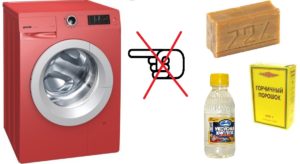 Many people recommend it washing powder made from soap and soda ashRecipes for this powder can be found on dozens of websites online, and hundreds of homemakers recommend it for washing in their washing machines. In fact, this powder is only good for hand washing or in a semi-automatic washing machine; it cannot be used in a washing machine, since it is half soap. Why is soap bad for an automatic washing machine?
Soap solution settles in the washing machine's drum, drain pipe, hose, and drain filter, eventually partially clogging the drain holes. Worse yet, the soap solution damages the pump by blocking the impeller. As a result, the washing machine malfunctions and won't work without a thorough cleaning. What ingredients should you avoid when making homemade laundry detergent for your automatic machine?
- Soap, soap shavings, etc.
- Mustard powder of any consistency.
- Concentrated aggressive chemicals (vinegar essence, acids, caustic alkali).
- Crushed and ground plants with more or less large fractions.
Even if you clean your washing machine regularly and, on the contrary, use household powders containing the above-mentioned components irregularly, the risk of breaking the washing machine is very high.
A simple recipe
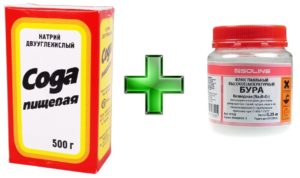 If you're dealing with more stubborn stains, you can try making your own laundry detergent for lightly soiled laundry in an automatic washing machine. Take 200g of borax and 200g of baking soda, mix them together, and pour into a dry, airtight container. When it's time to wash, use a measuring cup to measure out about 30g of detergent per 2kg of laundry, pour this into a glass, then fill the glass to the brim with hot water and stir with a spoon.
After this, you can pour the simplest washing solution into the powder drawer and start your favorite washing program. When using this powder, it's best not to wash items in cold water, but boiling water is also a no-no! The optimal temperature range is 40-60°C. 0WITH.
Multi-component recipe
Slightly more effective, but certainly completely safe for your clothes and washing machine, is the following recipe for homemade detergent. It's not a complete replacement for store-bought detergent, but in some cases it does the job quite well. Here are the ingredients:
- 200 g baking soda;
- 200 g borax;
- 200 g of table salt;
- 100 ml wine vinegar.
Wine vinegar will act as a fabric softener, leaving your clothes soft and smelling fresh.
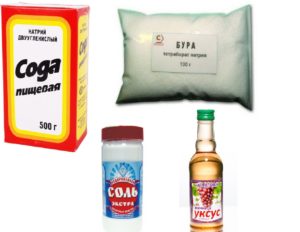 All of the above ingredients can be mixed except for the wine vinegar. Pour the vinegar into a separate container and place it next to the jar containing the baking soda, borax, and table salt mixture. Here's how to use the solution.
- Using a measuring cup, measure out 40 g of powder and 2 teaspoons of vinegar for every 2 kg of laundry.
- Pour the powder into the main wash compartment.
- Pour vinegar into the rinse aid compartment.
- Place not too soiled colored items into the drum and start the wash.
Can this detergent be used to wash pure whites or heavily faded colored items? Experience shows that this is not recommended. We conducted tests and found that it ruined a white item in one out of three washes. The quality of washing colored items with homemade powder also does not reach the level of commercial powder, but it is still quite possible to wash sometimes with this product. It’s precisely “wash occasionally,” and not replace regular powder with homemade one.
How to increase the effectiveness of home remedies?
Experienced housewives rightly claim that if you wash your clothes correctly, you won't need any expensive laundry detergents. Their advice is very simple, yet many have forgotten it, having become accustomed to the convenience of automatic washing machines.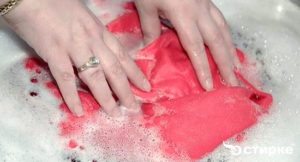
- Before placing items in the washing machine drum, soak them in a basin of water for 10-15 minutes. Dissolve a small amount of household detergent in the water first. This short time will allow the detergent to absorb the stains. Then, spin the items, place them in the washing machine, and run the wash cycle.
- Before washing, you can sort clothes not only by fabric type and color, but also by type of stain. For example, soak items stained with blood in cold water, and treat items with red wine stains with ammonia mixed with hydrogen peroxide. After this, the stains can be easily washed out even using household powder.
- Before washing, assess the soiling of each item. If the item is heavily soiled, set it aside and wash it separately, then with an expensive detergent.
Don't overuse household detergents; they are not suitable for use in a washing machine, even if they don't contain substances that are clearly harmful to the machine's systems.
In conclusion, no home remedy can completely replace regular washing machine detergent. However, alternating regular detergent with homemade detergent can save you a lot of money when washing in an automatic washing machine. All that's left to do is make your own. Good luck!
Interesting:



Readers' comments
Headings
Washing machine repair




For buyers




For users


Dishwasher




Add a comment