
How to replace the heating element in an Ariston washing machine
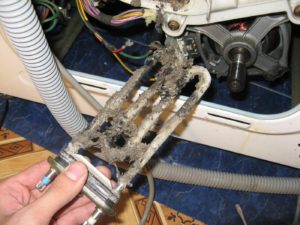 There are certain signs that the heating element has stopped working properly, such as water not heating up during a wash cycle. To check, simply touch the loading door 10-15 minutes after the machine starts working. If the heating element is working properly, the door will be warm. However, if the door remains cold, it's time to consider replacing the heating element in your Ariston washing machine.
What are the causes of breakdowns?
Heating element failure is one of the most common problems in Hotpoint Ariston washing machines. Fixing it doesn't require complete or partial disassembly of the machine.
Most often, the heating element is to blame for water heating failure, but sometimes the wires connected to it are also at fault. Therefore, checking for proper operation begins with these wires.
TEN stands for tubular electric heater. It consists of a metal tube and a wire, which is what actually heats it. It's worth noting that the wire experiences certain stress during heating and cooling, which can lead to its failure.
Another cause of heating element failure is scale buildup. This prevents water from heating and leads to overload of the heating element. By the way, scale can cause serious damage not only to the heating element, but also to the drum. It is impossible to completely eliminate this process, but it can be slowed down using special chemicals.
Sometimes the lack of water heating is due to the control device or incorrect operation temperature sensorThese problems can be detected using a tester. Incidentally, you can also use it to diagnose a faulty heating element yourself.
Preparing for repairs
Replacing a washing machine's heating element is fairly simple, but it should only be done after some preparation. Disconnect the machine from the power supply and water supply. This will ensure the safety of the repair.
For ease of use, it's a good idea to move the machine to a more spacious location. Before replacing the heating element on an Ariston washing machine, you need to assemble the following tools:
- screwdrivers;
- tester;
- wrenches;
- pliers.
Important! It's best to purchase a new heater with the heating element removed and use it as a sample.
Procedure for carrying out work
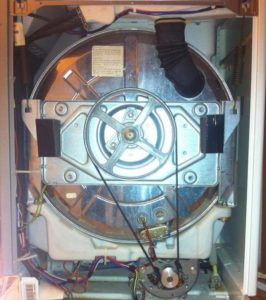
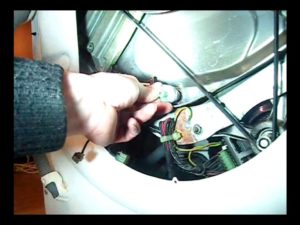 How to remove the heating element in an Ariston washing machine. First, you need to determine the heating element's installation location. In this company's washing machine, it's located at the rear of the machine. The exact location can be determined by the wires to which the heater is connected. The heating element itself is mounted inside the machine; only the terminals are visible on the outside.
In models of this brand, the heaters are typically installed behind a small hatch located on the rear of the unit. The hatch cover is attached to the body with hardware, and removing it allows immediate access to the heating element. Using the prepared tool, disconnect all wires and the temperature sensor. After this, you can proceed to removing the heater from the machine.
Before removing the heating element, remember to drain the water. To remove the heating element in an Ariston washing machine, there's no need to unscrew the central nut; simply loosen it. Then, you can push the pin in using the prepared tool.
After draining the water, it makes sense to check the condition of the debris filter, especially if you know that it has not been cleaned for a long time.
When removing the heating element, remember that there's a rubber insulating gasket on the seat, which prevents it from being removed. Therefore, use a flat-head screwdriver to pry the gasket out and carefully remove it.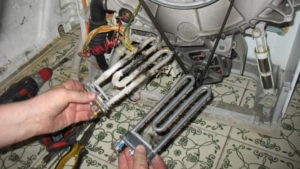
Be prepared for the heating element to be difficult to remove. In some cases, it may take a long time to rock it back and forth and pull it toward you before it gives way. Be careful not to break off the contact or damage the gasket.
After removing the heater and purchasing a new part, you can begin installing it. To do this, insert the heating element into the vacated hole. Some models include a special support for the heater. After this, tighten the central nut and connect the wires. It is not recommended to overtighten the nuts.
To test the replaced heater, reconnect the disconnected connections and run the machine in idle mode, setting the water temperature to between 60 and 80 degrees Celsius. Regularly check the temperature of the loading door; if the new heater is installed correctly, the plastic will warm up after a while.
Interesting:

Readers' comments
Headings
Washing machine repair




For buyers




For users


Dishwasher




Add a comment