
How to change the lock on an Indesit washing machine?
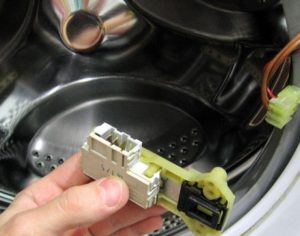 Replacing the lock on an Indesit washing machine doesn't require a lot of tools or decades of experience. Anyone can handle replacing the locking mechanism with just a screwdriver, a hex key, and the proper instructions. The key is to proceed carefully, consistently, and remember safety precautions. Now, let's dive into the details, with specific steps and recommendations.
Instructions for replacing the part
Before replacing the door lock, you need to prepare. First, find a hex key and a screwdriver to release the fasteners holding the door lock in place. Next, disconnect the Indesit washing machine from all power supplies and move it away from the wall or cabinet, ensuring easy access to the back wall. Then, follow the instructions.
- Using a Phillips-head screwdriver, unscrew the two screws holding the top cover on the back panel. Then, push the top cover away from you, lifting it slightly until the latches engage and the part comes off. Be prepared for the fact that it will take time to move, as the plastic fasteners on the Indesit are very tight and do not budge the first time.
- After removing the lid, tilt the washing machine back and run your hand down the front wall. Try to locate the connector with the wires. To make this easier, it's best to use a flashlight.
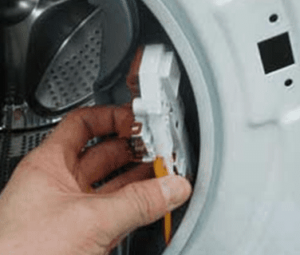
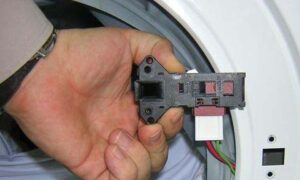
- Take a hex key and try to loosen the two screws securing the lock. It's recommended to hold the device on the opposite side with your other hand to prevent the part from falling down.
- Once the part is released, pull it out through the top.
- We install the new UBL, acting in reverse order.
On Indesit machines, the door locking device can be accessed through the top cover or the bottom of the washing machine.
If you can't remove the lock "in the dark," you can take the long way around: loosen the outer clamp on the hatch cuff, tuck the end of the rubber band inside, and unscrew the door. Then remove the locking mechanism, and then the locking device.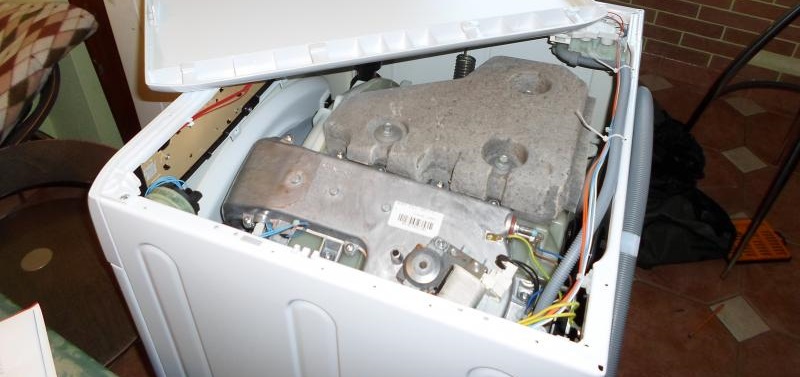
But the first method has an undeniable advantage: the user doesn't touch the clamp, and the seal stays in place. The problem is that reinstalling the seal is very difficult, and a mistake often results in a broken seal and subsequent leaks. However, there is a downside: the machine will need to be moved frequently, so it's best to have a couple of extra hands on the job.
Element diagnostics
But don't rush to replace the door lock system right away. Before heading to the store, it's worth checking the old unit for functionality. We look for the electronic circuit diagram of the blocker in the user manual, study it and turn on the multimeterWe set the tester to measure resistance, connect the probes to the neutral and live wires, and look at the values displayed on the display. If a three-digit number appears, the device is OK; if less, there's a problem. We also test the common contact: if it reads 0 or 1, replacement is not necessary.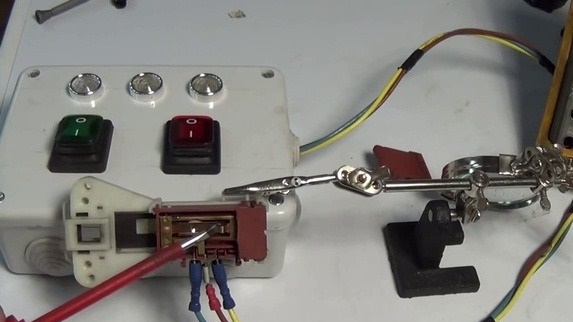
A faulty locking device can't be repaired; it's easier and cheaper to just buy a new one. Finding a replacement isn't difficult either – inexpensive devices are available at stores that sell Indesit parts. The key is to tell the seller the model's serial number or remove the old device and show it as a sample.
Why did the part break?
If the door only closes halfway, the mechanical lock engages, but there's no second click, there's a problem with the hatch lock. The control board isn't receiving a signal that the drum is fully sealed, so the safety system doesn't start the cycle and alerts the user. Typically, a corresponding indicator light on the dashboard lights up or a fault code appears on the display.
An electronic lock provides double protection against accidental opening. It prevents the door from opening during a wash cycle, preventing leaks and flooding the room and the appliance itself. But if there is a failure in the blocker, the program will not start. One of the following reasons causes the stop.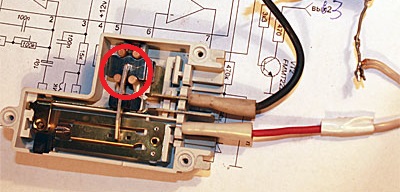
- Wear. The longer the machine is used, the more the bimetallic plates of the locking system wear. This wear affects the electrical conductivity and overall operation of the locking system. In this case, repair is ineffective—only replacement is possible.
- Blockage. Although rare, it can happen that the blocker's connector becomes clogged with dust or other debris. It needs to be disassembled and cleaned.
- Problems with the electronic unit. Burnt-out tracks, faulty triacs, or firmware issues prevent the module from receiving a locking signal from the door locking system.
Anyone can clean or replace the locking device themselves. However, diagnosing or repairing the board at home is strongly discouraged. Remember that the module is fragile, complex, and expensive. One wrong move and you'll be spending a significant amount of money.
Interesting:
Readers' comments
Headings
Washing machine repair




For buyers




For users


Dishwasher




Add a comment