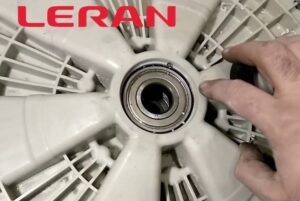
Replacing the drum bearings requires almost complete disassembly of the machine, removing the drum, and knocking out worn metal rings. After all this work, a novice mechanic might think that pressing a bearing into a washing machine is a piece of cake. After all, all that's left to do is clean the bearing housing and install the part. In reality, the components fit tightly, requiring heavy hammering. It's important not to overdo it, as this can cause the unit to crumble. Let's look at how to carefully seat the components.
The standard method for beginners
Professional repair shops have specialized equipment that can quickly install bearings. Beginners repairing a washing machine for the first time don't have such tools, and making one for a one-time use is pointless. Let's look at how to press-fit bearings using a common tool.
First, you should prepare for the work:
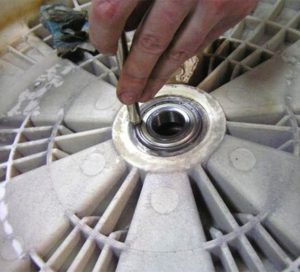
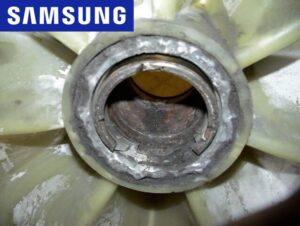
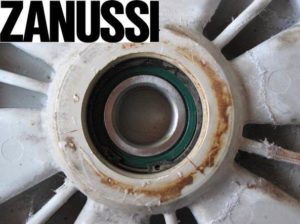
Clean the bearing seat of any dirt or wear marks. The seat should be free of any shavings or other debris that could hinder the bearing installation.
Prepare the bearings. Without unpacking the part, place it in the freezer for a couple of hours. Remove the parts from the refrigerator before installation.
At sub-zero temperatures, metal contracts, so a couple of hours in the freezer can make it easier to press in the bearings.
There are several ways to assemble a bearing assembly. One can do it with a chisel or a drift. Experts believe it's safer to take a different approach. To drive in a new bearing without damaging it, you will need a metal washer that matches the size of the bearing and a hammer.
The algorithm of actions is very simple:
insert the bearing into the "socket";
place a washer on top (due to the fact that it is the same diameter as the bearing, the impact force will be evenly distributed over the part, and the risk of “breaking” the unit will be reduced to zero);
Use a hammer to hit the washer several times from different sides.
This is a safe way to drive bearings into their sockets. You'll need a smaller washer for the inner bearing and a larger one for the outer one. The risk of damaging new components is minimal, so this method is recommended for beginners.
Press for professionals
Washing machine repair specialists are constantly looking for new, innovative solutions to optimize the installation process. A screw press for washing machine bearings will be useful for professional craftsmen. For beginners who will only do repairs once or twice, buying this device is pointless, although if you have the desire, why not.
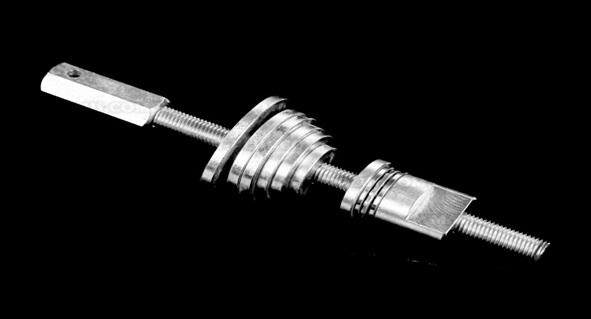
The design of the professional press is simple. The device consists of:
screws;
nuts;
a set of washers of different diameters (the set includes 6 pieces, starting from the size corresponding to the 202 bearing, ending with 207. They are also suitable for bearings of the 300 series).
The bearings are compressed together using a screw and nut, and the dimensional washers ensure that the forces from the structure are applied exactly where needed, so as not to damage the installed part.
The lower nut is easily removed from the screw stud. The element is initially designed for a 203 bearing. If a 204 or 205 ring, i.e., one with a larger diameter, is installed, another washer is lowered onto the nut, and only then is the bearing secured in the press. The screw consists of two parts: the stud itself and the upper nut, which is firmly secured with a pair of bolts. It has a hole for a standard Phillips-head screwdriver, which makes it easy to hold the assembly while pressing in the bearings.
Let's take a look at how to install washing machine bearings using a press. For example, let's say we need to press in rings 205 and 206. The procedure is as follows:
Use your fingers to insert the inner and outer bearings into the “socket” so that they are retained in the tank lid;
prepare a press-fitting and two washers of the appropriate diameter;
place a ring for a 206 bearing on the bolt from the side of the fixed nut, insert the stud into the “socket”, the edge of the screw will “come out” on the other side;
put a washer for the 205 bearing on the stud;
take the removable nut, tighten it on the screw until it stops by hand;
secure the press from below with a screwdriver (inserting it into the hole on the “fixed” nut), tighten the top with a key until the bearings are completely pressed in;
Unscrew the structure and remove the press.
Using a professional press, it is possible to install both bearings simultaneously.
You can try assembling the structure yourself or buy a ready-made press designed by specialists, costing approximately $14 (about 500 hryvnias or $18.50 USD). Even after adding shipping costs, the product will still pay for itself after the first repair.

 Replacing the drum bearings requires almost complete disassembly of the machine, removing the drum, and knocking out worn metal rings. After all this work, a novice mechanic might think that pressing a bearing into a washing machine is a piece of cake. After all, all that's left to do is clean the bearing housing and install the part. In reality, the components fit tightly, requiring heavy hammering. It's important not to overdo it, as this can cause the unit to crumble. Let's look at how to carefully seat the components.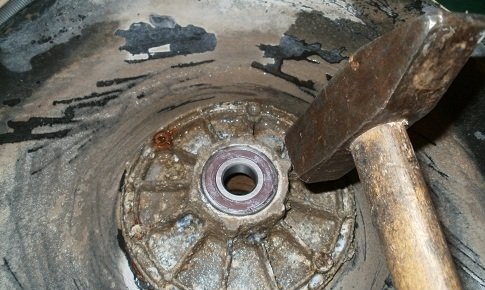














Add a comment