Power surges can damage many components of your washing machine. The first thing to address is the main control unit, as repairs to it will be costly for the owner. To avoid unexpected expenses due to unstable power supply, it's best to take action in advance and protect your washing machine from power surges. Let's look at the steps you should take during the upcoming maintenance.
Will a surge protector do the job?
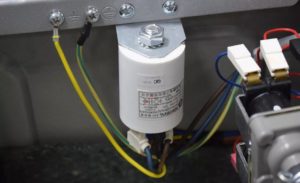
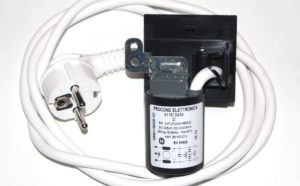
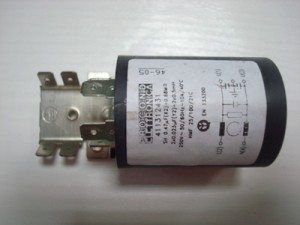
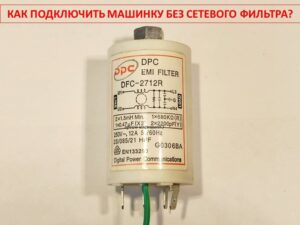
The basic protection for any electrical appliance is a surge protector. This component is built into the washing machine's body during factory assembly. A significant power surge can damage the filter, but it will protect other, more expensive components from damage. The operating principle of a surge protector is simple: it only allows oscillations with a frequency of 50 GHz to pass through; more frequent or rare waves are blocked by the element.
Another function of the line filter is to hold and transfer to ground the reverse current waves created during operation of the asynchronous Electric motor. Thanks to this procedure, the washing machine's other components are relatively reliably protected from electric shock. If the washing machine didn't have a surge protector, many parts would be subject to frequent "electrical shock attacks." This applies to the following components:
heater;
asynchronous engine;
main control module;
equipment control panels.
The filter element protects components not only from high-voltage electrical system fluctuations but also from low-voltage ones. A faulty filter element often completely blocks the washing machine. Using a washing machine with a faulty surge protector is unsafe and incorrect.
Stabilizer
No amount of preparatory measures can 100% protect your washing machine from damage. If a power surge occurs, a successful outcome is only possible in 70% of cases. In the remaining 30% of cases, expensive appliances will need to be repaired.
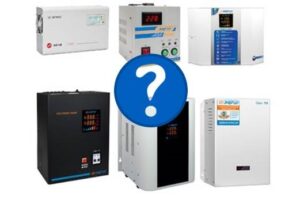
To protect your washer-dryer, it's best to connect it to the power grid using a stabilizer.
Selecting a voltage stabilizer requires great care. It's important not to overpay while ensuring the safety of your washing machine. When choosing, pay special attention to the unit's power rating. It should be sufficient to supply all connected appliances with the necessary power. Calculate the stabilizer's minimum rated power in advance, and remember to factor in a small "power reserve"—approximately 20% of the total.
The algorithm of actions that can be used when calculating the power of a stabilizer is quite simple:
Consider how many appliances, in addition to the washing machine, will be protected by the stabilizer you purchase;
study the instructions for each piece of equipment, find in the manual the amount of power consumed by the equipment;
add up all the values found (for example, you recorded a number of about 3.5 kW);
add a small reserve of 20% of the resulting amount.
In our case, the potential stabilizer's power cannot be less than 4.2 kW (3.5 x 1.2 = 4.2). When purchasing a protective element, the value obtained through calculations can only be rounded up.
Another criterion worth considering when choosing a stabilizer is the number of phases. When purchasing protection for a washing machine or other household appliance, buyers often wonder whether a single-phase or three-phase stabilizer is suitable. This depends on the wiring of each specific building; in most cases, multi-story buildings have single-phase power systems, but there are exceptions.
Therefore, study the electrical panel; the meter always indicates how many phases the electrical wiring has. If there is only one, then you will need a single-phase stabilizer; if there are three, then you can purchase either one three-phase protective element or three single-phase ones. However, when connecting several stabilizers at once, you cannot do without the help of a professional electrician.
When connecting a washing machine to a stabilizing element, be sure to install a residual-current device or a residual-current circuit breaker for greater electrical network safety.
An RCD will protect your washing machine from strong voltage surges that exceed the stabilizer's operating limits. If you don't have experience with electrical wiring, it's best to entrust the installation of protective devices to a professional.

 Power surges can damage many components of your washing machine. The first thing to address is the main control unit, as repairs to it will be costly for the owner. To avoid unexpected expenses due to unstable power supply, it's best to take action in advance and protect your washing machine from power surges. Let's look at the steps you should take during the upcoming maintenance.
 Electric motor. Thanks to this procedure, the washing machine's other components are relatively reliably protected from electric shock. If the washing machine didn't have a surge protector, many parts would be subject to frequent "electrical shock attacks." This applies to the following components: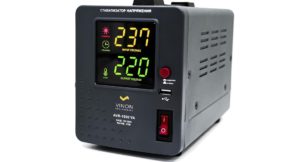















Add a comment